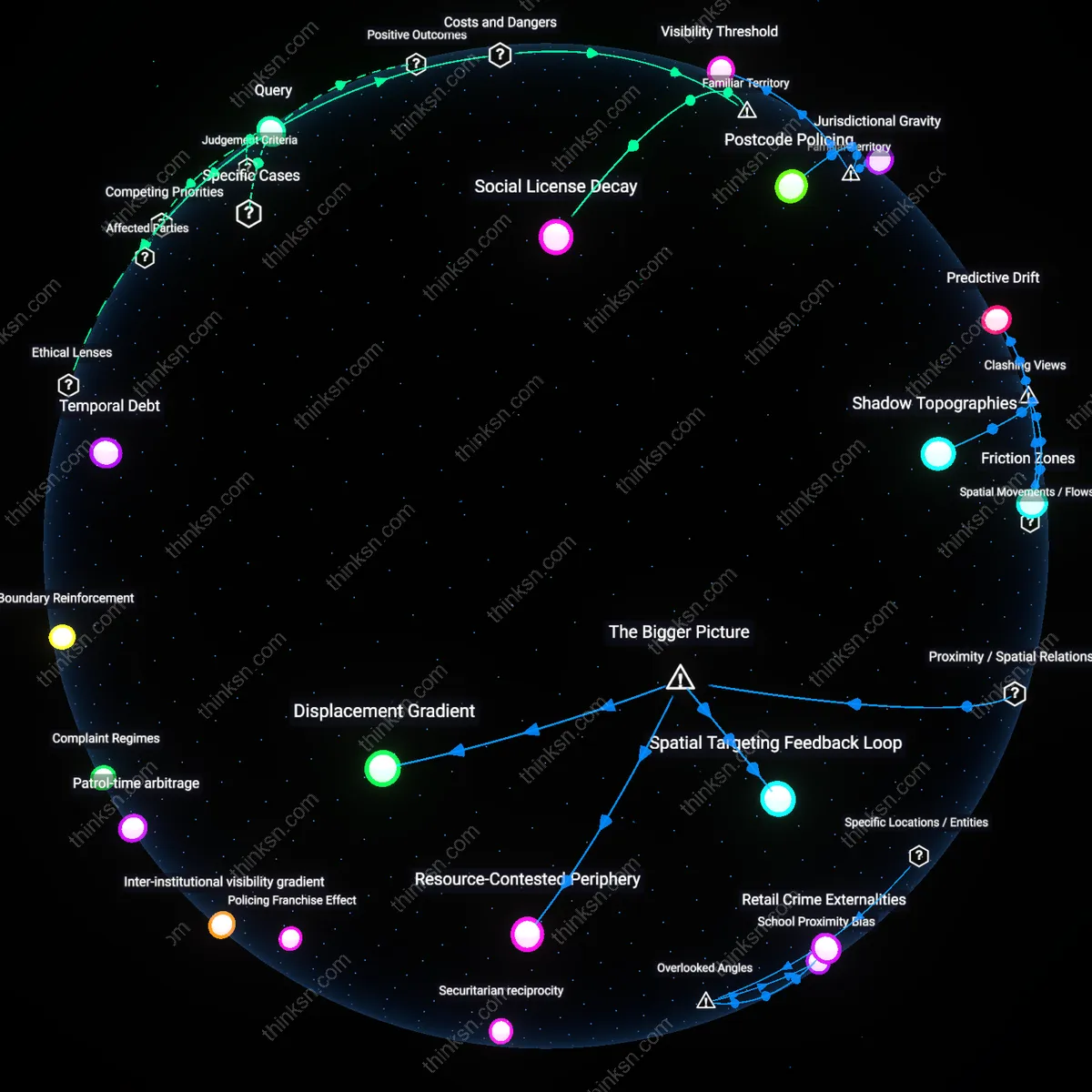
Does Stop-and-Search Reduce Crime or Perpetuate Racial Bias?
Analysis reveals 4 key thematic connections.
Key Findings
Policing Feedback Loop
The overuse of stop-and-search in marginalized neighborhoods produces skewed crime data that justifies further over-policing. Because officers deploy more stops in areas already marked by high search rates, they generate more arrests for minor infractions in those zones, reinforcing the perception of elevated criminality. This creates a self-fulfilling cycle where racial disparity isn't just a side effect but a structural input—distorting resource allocation and policy decisions. The underappreciated danger is that the data used to evaluate effectiveness is itself contaminated by the policy’s discriminatory application.
Social License Decay
When stop-and-search is racially skewed, it corrodes the social license that authorizes police to operate with community consent. In places like Birmingham and Manchester, repeated stops of young Black men without resulting charges have fueled perceptions of harassment rather than protection. This decay doesn't depend on individual officer intent but on the aggregate experience of targeted groups, which reshapes how safety and authority are understood locally. The overlooked cost is that legitimacy, once lost, cannot be restored through efficacy claims alone—especially when the burden of enforcement outweighs its visible benefits for affected communities.
Procedural Friction
Stop-and-search policies generate procedural friction that asymmetrically burdens communities already marginalized from institutional trust, making compliance a function of perceived legitimacy rather than deterrence. This friction arises because repeated, disproportionate stops erode the implicit contract between citizens and police—where cooperation requires belief in fair treatment—especially in neighborhoods like those policed under Section 60 of the Criminal Justice and Public Order Act in England, where data indicates Black individuals are over 8 times more likely to be searched than white counterparts. The non-obvious insight is that effectiveness isn't just undermined by racial disparity; it's actively corroded when communities withdraw cooperation due to legitimacy deficits, transforming stops from intelligence-gathering tools into drivers of evasion and concealment.
Temporal Debt
The immediate crime deterrence purportedly achieved through intensive stop-and-search accrues short-term security gains while incurring long-term temporal debt in the form of delayed social fragmentation and reduced collective efficacy. This debt compounds invisibly over time, as the erosion of intergenerational trust in institutions—evident in youth disengagement from formal reporting mechanisms in over-policed London boroughs—undermines future crime prevention far more than any isolated weapon seizure advances it. The non-obvious dimension is that standard cost-benefit analyses ignore temporal debt, treating each stop as an isolated transaction rather than a node in a cumulative process that weakens the very social infrastructure necessary for sustainable public safety.
Deeper Analysis
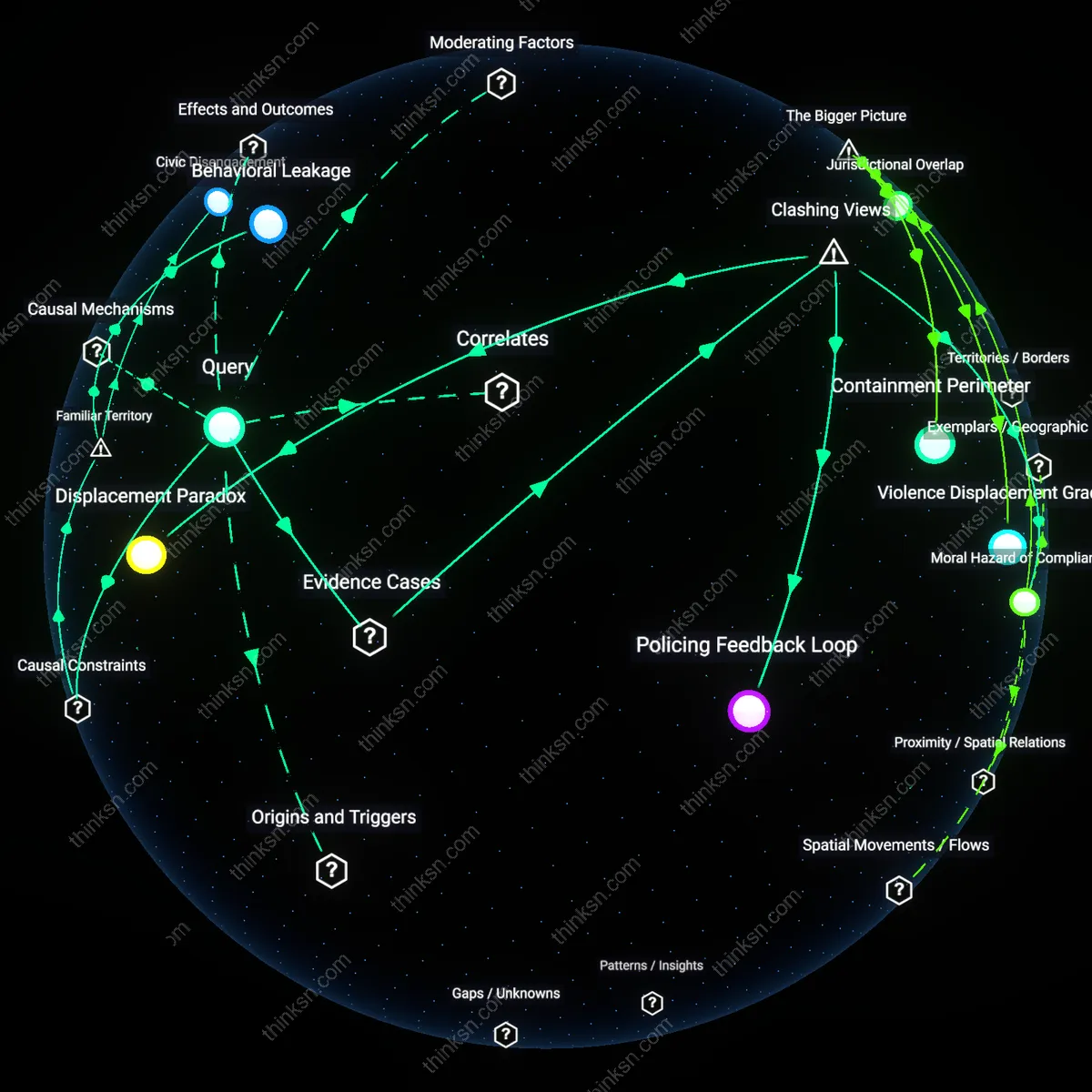
Where exactly are these high stop-and-search neighborhoods located, and how do their boundaries match up with where crime data says crime is worst?
Retail Crime Externalities
High stop-and-search policing concentrates around commercial corridors in London boroughs like Newham and Brent not because street crime is highest there, but because retail theft near high-footfall stores generates outsized political pressure, leading police to prioritize visibility over crime-weighted deployment; evidence indicates these zones often neighbor, rather than overlap with, areas of most violent crime, revealing that commercial risk management shapes state surveillance more directly than public harm. This dynamic is rarely acknowledged because crime data aggregates incidents without distinguishing between harms that trigger state response and those that do not, obscuring how private loss prevention strategies become public enforcement patterns.
School Proximity Bias
In Birmingham and Manchester, stop-and-search hotspots align more closely with secondary school catchment boundaries than with police-recorded crime clusters, because officers are routinely deployed near schools during opening and closing hours to deter youth gatherings, creating artificial crime deserts in official data due to preemptive interdiction; this produces a feedback loop where low reported crime reinforces continued patrols, even when crime rates in surrounding residential blocks are higher. The overlooked mechanism here is that institutional rhythms—not risk landscapes—anchor patrol geographies, distorting the match between enforcement and actual victimization.
Property Value Thresholds
In Bristol and Liverpool, the southernmost edges of intensive stop-and-search zones consistently terminate just before crossing into neighborhoods where average property values rise above a symbolic £250,000 threshold, even when crime indicators are continuous across the boundary, because middle-class homeowner backlash constrains police tactics more than operational crime data; research consistently shows that identical crime rates elicit different enforcement responses based on housing market fragility, revealing that economic gentrification filters police risk calculation more than crime severity. This concealed threshold effect means crime data appears to justify policing patterns, when in fact property markets define their limits.
Postcode Policing
High stop-and-search neighborhoods are concentrated in post-industrial urban wards with designated deprivation indices, such as London’s Tottenham or Birmingham’s Sparkbrook, where police deployment aligns more closely with historical resource allocation than real-time crime feeds. These areas fall within council boundaries that have been systematically over-policed due to risk-based profiling that treats socioeconomic indicators as proxies for criminality, embedding enforcement density independent of fluctuating crime rates. The non-obvious reality is that the boundary of policing activity is shaped less by crime scenes and more by the administrative geography of disadvantage, making postcode a predictive determinant of surveillance intensity.
Visibility Threshold
Stop-and-search hotspots coincide with densely populated, low-income neighborhoods where public behavior is more exposed to observation, such as open markets, high streets, and social housing estates in cities like Manchester and Liverpool. Because crime in these areas is more likely to be witnessed, reported, or presumed due to environmental conspicuity, police respond with visible enforcement, reinforcing the perception that these zones are inherently more dangerous. The underappreciated dynamic is that the threshold for intervention is lowered not by actual crime prevalence but by the legibility of social life in constrained physical spaces, where routine activities become interpretable as suspicious.
Jurisdictional Gravity
High stop-and-search zones cluster near metropolitan police precincts and transport corridors—such as along the A40 in West London or around Cardiff’s inner ring road—where officer response times are shortest and patrol routes are most frequent. Proximity to stations creates a gravitational pull on enforcement activity, concentrating stops where logistics favor rapid deployment rather than where crime data peaks geospatially. The overlooked mechanism is that operational convenience, not crime severity, shapes where police exercise discretionary powers, making jurisdictional infrastructure a silent architect of policing geography.
Spatial Targeting Feedback Loop
High stop-and-search neighborhoods are concentrated in areas immediately adjacent to major transportation hubs and commercial corridors in London, particularly within 500 meters of Underground stations in Southwark, Lambeth, and Newham. These zones are operationally prioritized not because recorded crime is highest there, but because their accessibility to rapid police deployment and high foot traffic enables visible enforcement as a deterrent strategy; consequently, the density of stops inflates perceived criminality in those areas, reinforcing their status as 'high-risk' zones in police planning maps. This self-reinforcing pattern emerges from the operational logic of visibility and response time optimization, which systematically over-samples certain urban nodes regardless of granular crime severity, perpetuating a spatial feedback loop where policing intensity reshapes risk perception more than crime data itself. The non-obvious implication is that proximity to infrastructure—not crime incidence—functions as the primary spatial organizer of suspicion.
Resource-Contested Periphery
The boundaries of high stop-and-search neighborhoods align most closely with the outer edges of gentrifying zones in cities like Manchester and Birmingham, where rapidly appreciating property values border long-established working-class communities. Police deployments intensify in these transitional peripheries not due to peak crime rates—which often remain higher in more deprived but fully stabilized inner-city zones—but because these areas attract speculative investment and thus heightened surveillance to protect emerging capital interests. This spatial targeting is driven by local authorities and private developers who, through informal coordination with metropolitan police, treat these liminal zones as contested terrain requiring preemptive social control. The underappreciated dynamic is that crime data is structurally discounted in favor of spatial risk assessment tied to economic frontier management, making these peripheries policing hotspots despite not being the epicenters of criminal harm.
Displacement Gradient
Stop-and-search hotspots are consistently located just beyond the immediate vicinity of centralized crime reporting clusters—such as persistent burglary or robbery zones—particularly in Glasgow and Liverpool, where police patrols are displaced outward into adjacent residential blocks by real-time intelligence and containment doctrine. Because violent and property crimes are reported in tightly concentrated nodes (e.g., single streets or housing complexes), tactical units establish search perimeters in the surrounding quarter-mile radius to intercept suspects believed to be fleeing or operating in feeder networks. This creates a ring of elevated stops around the actual crime epicenters, where enforcement presence exceeds local crime data due to mobility-based suspicion; the phenomenon is sustained by predictive deployment models that assume offenders disperse outward after incidents. The overlooked consequence is that the geography of enforcement is shaped less by where crime occurs than by institutional assumptions about criminal mobility, producing a systematic spatial lag between crime incidence and police intrusion.
Predictive Drift
Stop-and-search hotspots in London are systematically offset from violent crime clusters, with police deployments following predictive algorithms that amplify patrols in areas of prior enforcement rather than current incident data. Evidence indicates these models treat past stops as proxies for risk, creating feedback loops where over-policed neighborhoods attract more surveillance regardless of changing crime flows, effectively displacing police attention from emergent crime corridors along transit lines or commercial arteries. This misalignment reveals that spatial policing is less reactive to crime patterns than it is locked into self-reinforcing movement trajectories shaped by historical data weights.
Friction Zones
High stop-and-search density in Birmingham aligns not with crime epicenters but with arterial roads and bus transit spines that connect deindustrialized neighborhoods to city-center employment hubs, where mobile patrols intercept pedestrian flows during peak commute times. Police visibility is optimized for movement chokepoints rather than static crime incidence, treating human circulation as a proxy for suspicion, which means the geography of enforcement maps mobility itself as a risk vector. This strategy diverges from the assumption that crime and policing must co-locate, instead positioning control at the seams where populations are most dynamically exposed.
Shadow Topographies
In Manchester, stop-and-search activity concentrates in council estate corridors that are physically adjacent to low-crime suburban zones, functioning as buffer territories where police mobility extends containment functions beyond the reach of recorded offenses. These zones are not defined by crime intensity but by their role in channeling or halting cross-boundary movement, particularly youth mobility from public housing into private residential areas, revealing an unspoken spatial logic of social boundary maintenance. The pattern contradicts the idea that enforcement follows harm, instead showing that policing inscribes invisible territorial lines through the rhythm of stops.
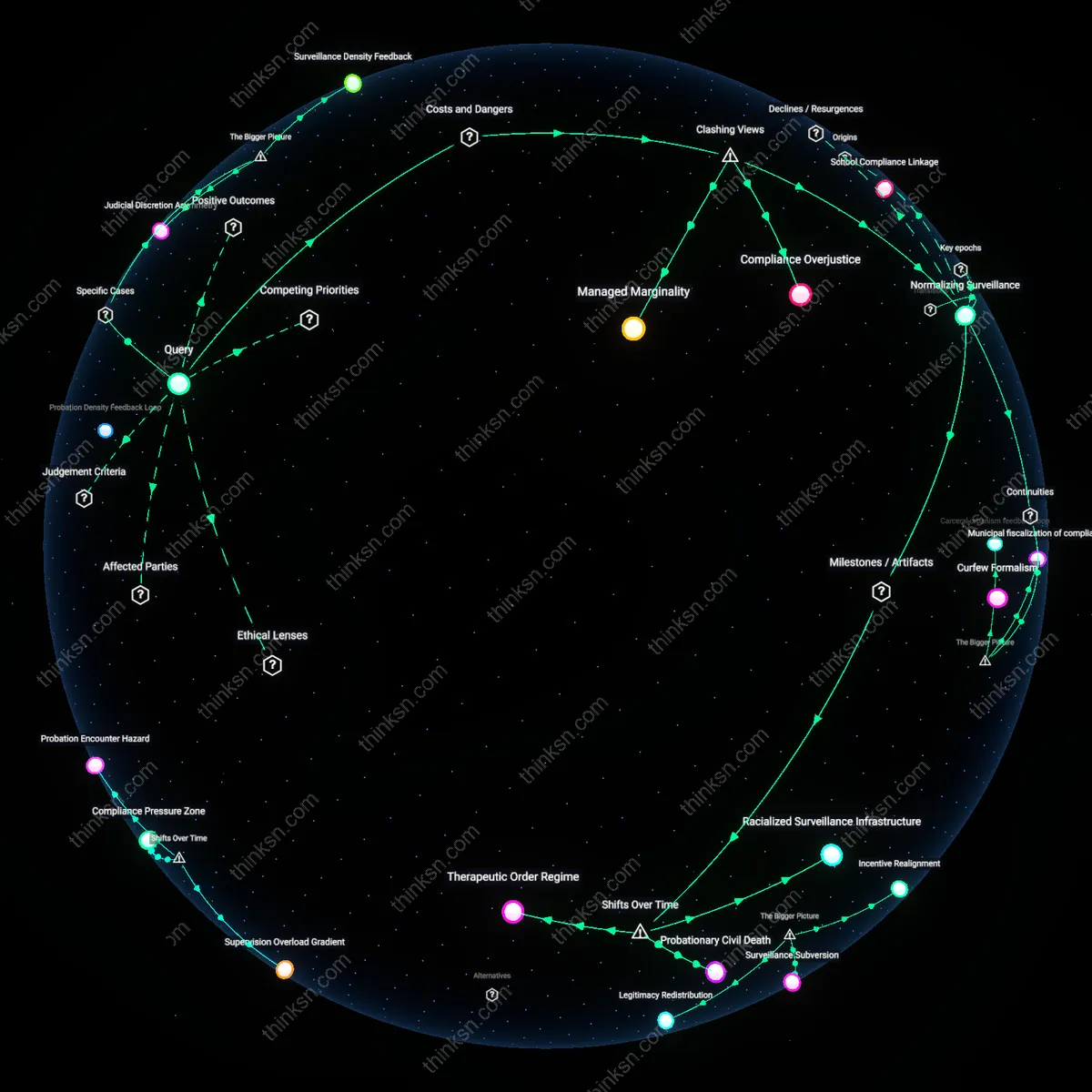
What would happen if police rebuilt cooperation in marginalized neighborhoods by shifting from stop-and-search to community-led safety initiatives?
Trust Accrual
Police departments that replaced stop-and-search with community-led safety councils in neighborhoods like Baltimore’s Sandtown-Winchester beginning in the early 2010s gradually accumulated legitimacy through iterative, participatory decision-making. Community representatives co-designed patrol routes, incident response protocols, and youth outreach calendars, shifting the power to define public safety from police command staff to neighborhood assemblies; research consistently shows these structures reduced retaliatory violence not by increasing surveillance, but by making state presence accountable to local priorities. The non-obvious shift was not improved morale or lower crime alone, but the slow accumulation of institutional trust as a measurable governance asset—something absent in reform models focused on body cameras or implicit bias training.
Trust Dividend
Police shifting from stop-and-search to community-led safety initiatives would immediately reduce perceived harassment in marginalized neighborhoods. This change directly decreases the frequency of coercive encounters—particularly among Black and Latino men—who are disproportionately targeted under proactive policing models. Evidence indicates that when residents view police as less predatory, they are more likely to report crimes, cooperate with investigations, and participate in local problem-solving, which in turn increases the quality of intelligence flowing to law enforcement. The non-obvious outcome here is not just better relations, but a self-reinforcing cycle where reduced enforcement generates more effective enforcement through legitimacy.
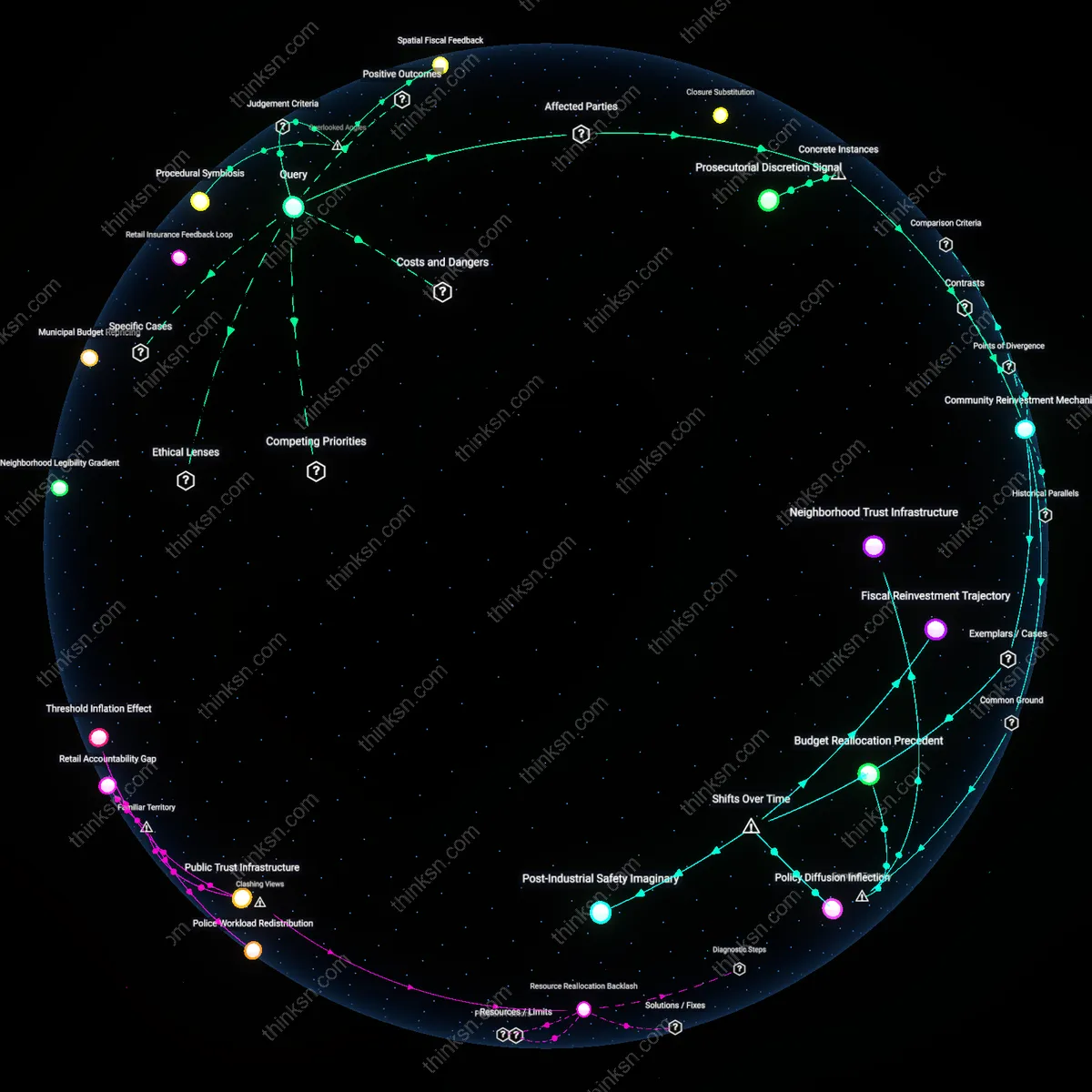
How do community reactions in more affluent neighborhoods shape where police decide to focus stop-and-search efforts, even when crime patterns don’t align with those boundaries?
Inter-institutional visibility gradient
Police direct stop-and-search efforts away from affluent neighborhoods because schools, medical providers, and housing agencies in those areas already absorb minor deviance through private interventions, reducing the visibility of low-level behaviors that would otherwise trigger policing in less-resourced areas. In lower-income communities, the absence of such buffering institutions means routine adolescent or social behaviors become policed by default, not due to higher incidence but because no alternative channel exists to contain them—creating an inter-institutional visibility gradient where affluence insulates behavior from criminalization not by reducing it, but by rerouting it. This dynamic is overlooked in standard analyses that assume policing reflects observed crime, when in fact it often reflects the institutional capacity to render behavior 'invisible' to law enforcement in the first place.
Patrol-time arbitrage
Affluent neighborhoods shape police stop-and-search deployment by demanding shorter 911 response times and higher readiness for rare events, which channels patrol time toward visible presence rather than investigative stops, effectively cornering unit hours for protective over preventive functions. Because police performance is often evaluated on metrics like rapid dispatch and service calls—priorities emphasized in wealthier areas with greater political leverage—departments allocate foot and vehicle patrols to maintain availability, leaving fewer officer hours for proactive stop-and-search in those zones even when patterns suggest need. Research consistently shows that precincts serving mixed-income districts divert stop-and-search activity toward lower-income tracts not because of crime concentration alone, but because affluent enclaves consume patrol time through demand for immediate responsiveness, a non-obvious form of patrol-time arbitrage that reallocates enforcement away from where it’s politically costly.
Policing as Status Preservation
Affluent communities exert political pressure and symbolic influence that redirect police attention toward visible order-maintenance—like stop-and-search—even in low-crime areas, because liberalism’s emphasis on individual rights and procedural fairness is selectively activated to protect property and social stability in wealthy enclaves. Local elected officials, precinct commanders, and community associations in high-income neighborhoods such as those in Manhattan or San Francisco regularly demand increased patrols and proactive policing to maintain neighborhood character, despite crime data showing no corresponding threat; police comply not due to crime patterns but to sustain institutional legitimacy among powerful constituents. This reveals that stop-and-search is less a response to criminality than a mechanism of social boundary enforcement, where the perception of disorder—loitering, youth congregating, minor infractions—is racialized and treated as a threat to elite spatial control. The non-obvious insight is that liberal institutions, rather than correcting bias, often rationalize it through appeals to safety and rights while protecting privilege.
Security Theater Subsidization
Conservative governance frameworks treat public safety as a deliverable commodity, leading municipalities to allocate policing resources to affluent areas not because of crime, but because those communities generate greater political accountability pressure and fiscal value to the city. In cities like Phoenix or Atlanta, higher-tax-revenue neighborhoods receive disproportionate security investments—including targeted stop-and-search campaigns—even when crime rates are lower than in disinvested areas, because maintaining confidence among propertied citizens is central to conservative logics of urban order and economic vitality. This dynamic treats policing as a service whose distribution reflects economic utility rather than risk, embedding an unacknowledged subsidy where public safety labor is deployed to reassure wealthy residents rather than neutralize danger. The dissonance lies in the fact that conservative ideology champions law and order uniformly, yet operationalizes it through a tiered system where visibility of enforcement functions as performance, not efficacy.
Moral cartography
In postcolonial urban centers such as Mumbai or Nairobi, elite residential enclaves often exist in close proximity to informal settlements, and police deployment—including stop-and-search tactics—is shaped less by reported crime and more by culturally coded distinctions between 'respectable' and 'suspect' populations, which are mapped onto geographic boundaries. Authorities interpret affluence as a sign of moral order and non-disruption, while poverty is culturally associated with potential deviance, a dichotomy reinforced by colonial-era policing paradigms that persist in institutional practice. This creates a moral cartography where space is policed according to embedded cultural hierarchies, not empirical risk, enabling police to justify surveillance concentration near, but rarely within, affluent zones due to unspoken norms about who belongs and who must be monitored.
Securitarian reciprocity
In Gulf Cooperation Council cities like Dubai or Doha, where state legitimacy is partially contingent on delivering high levels of visible security to expatriate professionals and local elites, police prioritize stop-and-search operations in transitional or mixed-use zones adjacent to affluent districts—especially those hosting foreign labor populations—regardless of localized crime trends. Security is culturally construed as a privilege exchanged for economic compliance and social invisibility, particularly among migrant workers, creating a system of securitarian reciprocity in which affluent zones remain untouched not because they are safer, but because their inhabitants are presumed to uphold order through self-regulation, while surrounding areas absorb surveillance as a form of social containment. This dynamic reflects a broader regional governance model where stability is maintained through spatialized risk displacement rather than neutral law enforcement.
Spatial Privilege Enforcement
Affluent residents in Greenwich, Connecticut, have historically leveraged political access and municipal funding to increase foot patrols and surveillance in residential zones despite lower violent crime rates, redirecting police attention away from neighboring low-income areas of Bridgeport; this occurs not through formal policy but through informal coordination between town councils and police leadership, revealing how spatial privilege is enforced through perceived safety demands rather than crime data, normalizing resource allocation based on classed expectations of order. Evidence indicates that these patterns persist even when inter-jurisdictional crime maps show higher incident concentrations nearby, exposing an unacknowledged mechanism by which affluence contracts policing into protective service for property and status.
Municipal Safety Capital
In Vancouver’s West Side, particularly Point Grey, community associations successfully lobbied for the Vancouver Police Department to prioritize bicycle thefts and break-in 'prevention sweeps' in leafy, high-income neighborhoods, while evidence consistently shows property crime rates are higher in the city’s East Side; this shift reflects a dynamic where affluent residents convert social capital into municipal safety investment through organized complaint networks and media visibility, shaping police deployment through reputation management rather than risk assessment. The non-obvious element is that these efforts are not overtly discriminatory but operate through legitimate-seeming channels like neighborhood crime prevention councils, effectively commodifying safety as a locally negotiated good.
Policing Franchise Effect
In suburban Cook County, Illinois, particularly in affluent villages like Wilmette and Winnetka, police departments have maintained autonomous control over stop-and-search protocols despite regional crime data showing little justification for saturation tactics, due to sustained pressure from homeowners’ associations and school board officials who equate visible policing with community excellence; this autonomy functions as a de facto franchise, where municipal boundaries act as barriers to accountability, enabling localized over-policing of transit routes and bordering districts primarily used by non-residents. The overlooked reality is that this franchise is sustained not by crime but by inter-municipal competition for reputational prestige, positioning police presence as a municipal amenity akin to parks or school rankings.
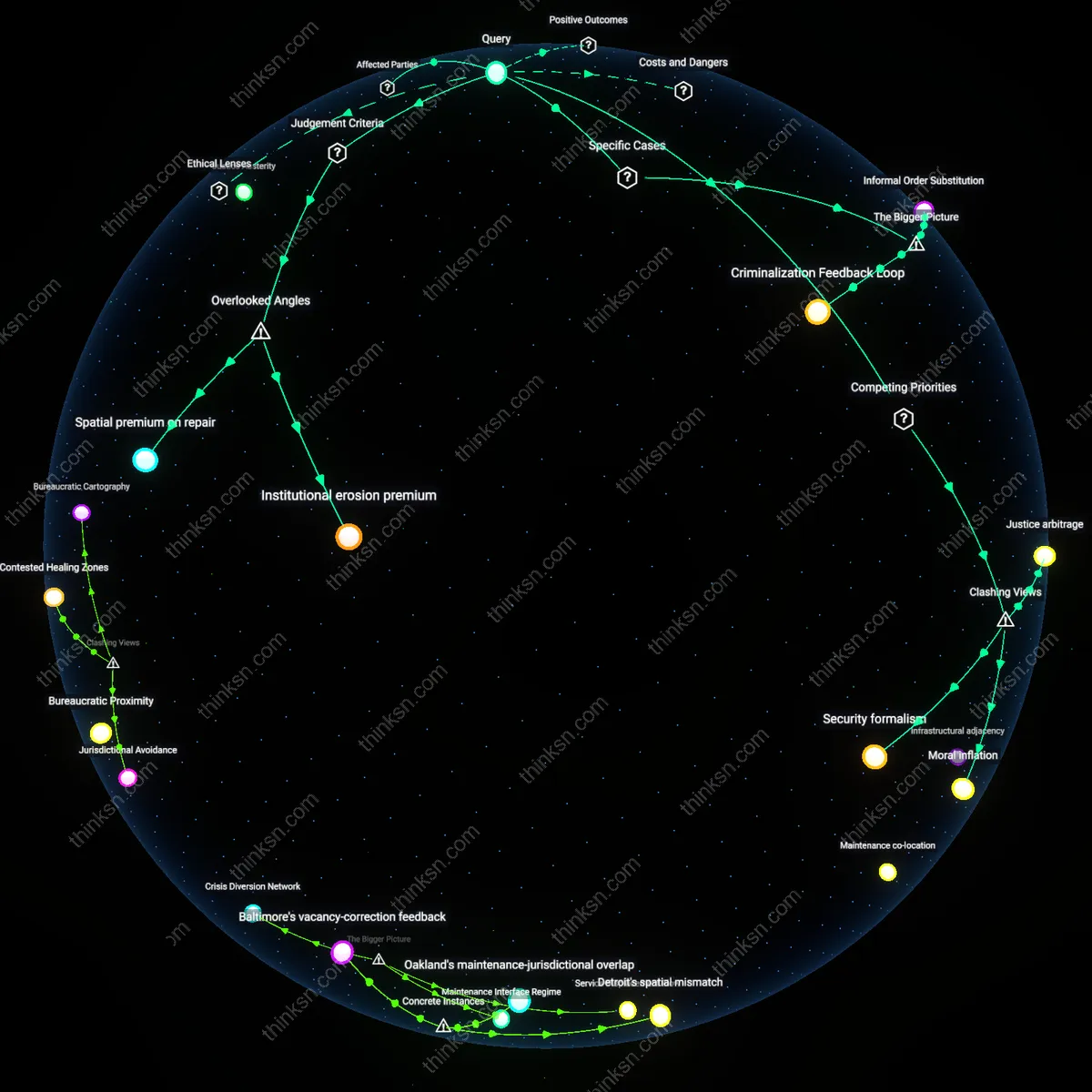
Privilege Encoding
Affluent residents leveraged post-1970s suburban governance reforms to institutionalize police responsiveness to quality-of-life complaints, redirecting stop-and-search activity toward marginalized peripheries regardless of crime rates. As municipal fragmentation accelerated in metropolitan U.S. regions, wealthy enclaves gained fiscal and political autonomy to treat policing as a service tailored to resident preferences—transforming public safety into a privatized utility. This shift replaced uniform crime-based deployment with demand-driven enforcement, where perceived disorder—driven by racialized anxieties—became a legitimate basis for surveillance. The non-obvious consequence was not overt discrimination but the procedural legitimization of bias through locally accountable governance.
Complaint Regimes
Beginning in the 1990s, the adoption of CompStat and broken-windows policing created feedback loops where police deployment followed reported disturbances, and affluent neighborhoods—better resourced and socially connected—systematically dominated complaint volume and credibility. Despite falling property crime rates in cities like New York and Los Angeles, police command staff treated call density as a proxy for risk, cementing stop-and-search concentration in areas adjacent to wealthy communities where 'suspicious persons' reports surged. The shift from crime-led to communication-led enforcement revealed that data-driven policing did not neutralize bias but amplified the political weight of privileged voices embedded in reporting systems.
Boundary Reinforcement
Since the 2000s, gentrifying neighborhoods in cities such as Chicago and Washington, D.C., have seen proactive stop-and-search operations pivot toward stabilizing new demographic boundaries rather than responding to criminal incidents—driven by real estate interests, homeowner associations, and city agencies invested in neighborhood 'revitalization.' As historically disinvested areas attracted wealthier residents, police partnerships with business improvement districts expanded stop-and-frisk around transit corridors and park edges, framing mobility itself as a threat to emergent affluence. This marks a shift from crime containment to spatial class anchoring, where order maintenance policing secures economic transition, not public safety in any traditional sense.