Is Limiting Grandparents Influence on Gender Identity Exploration Justified?
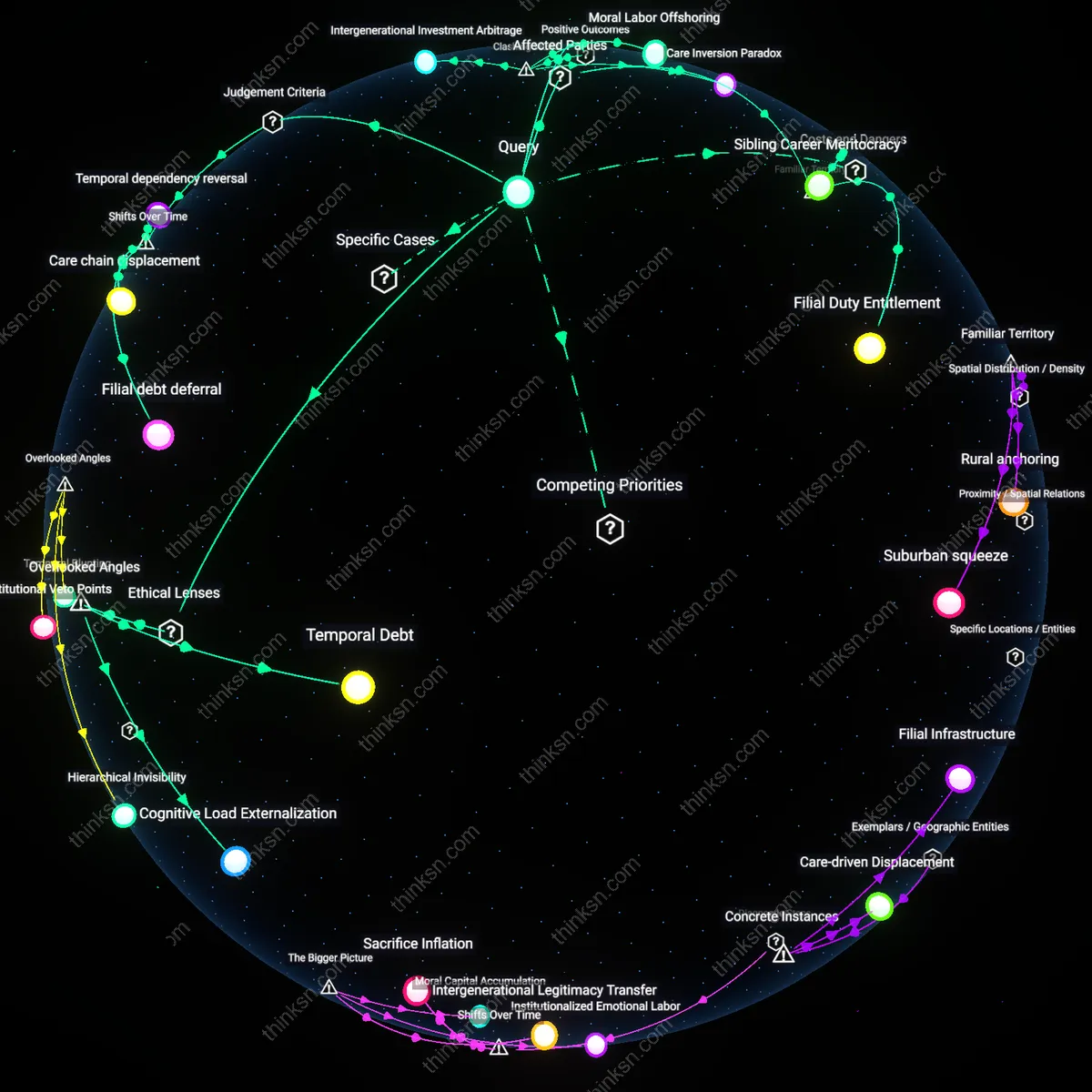
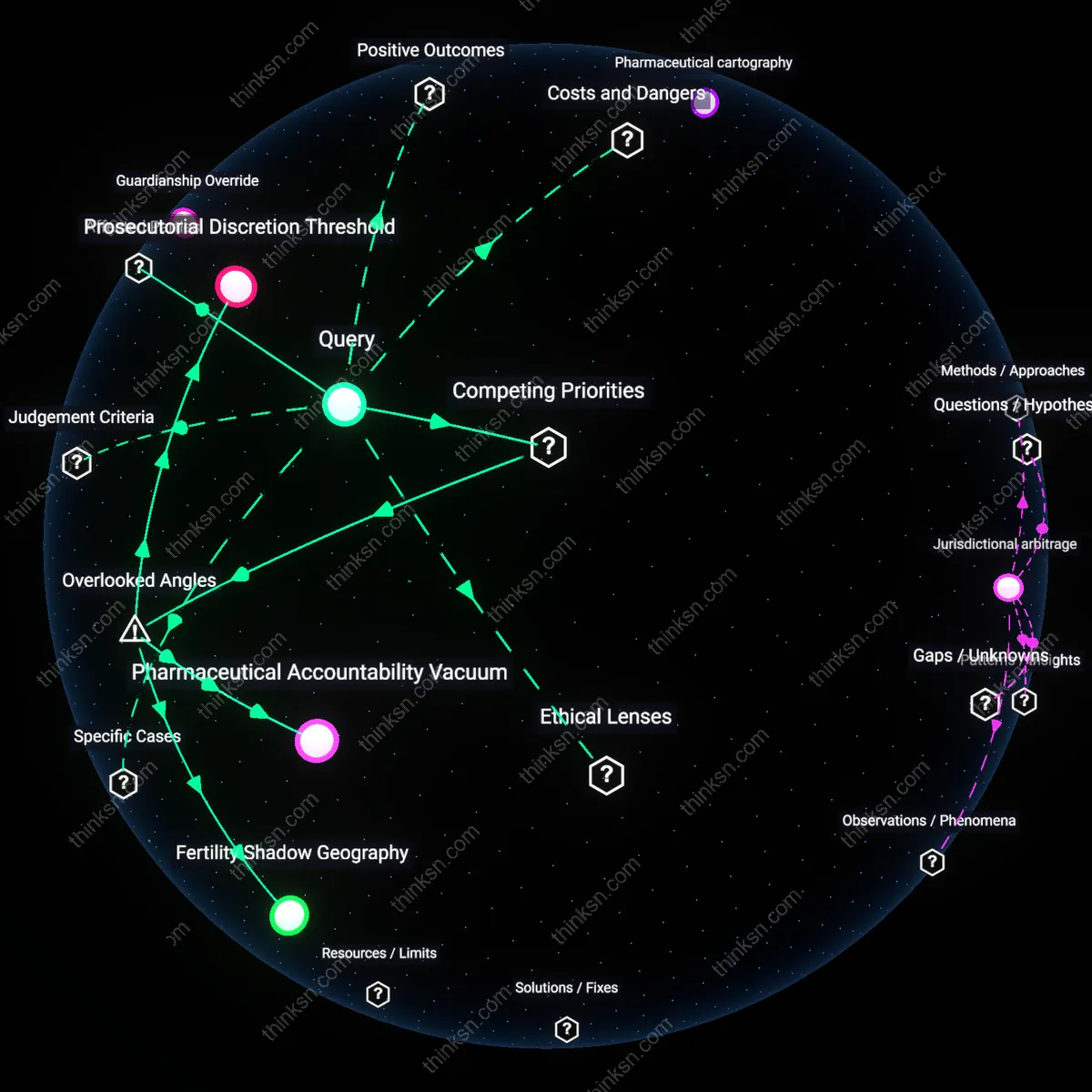
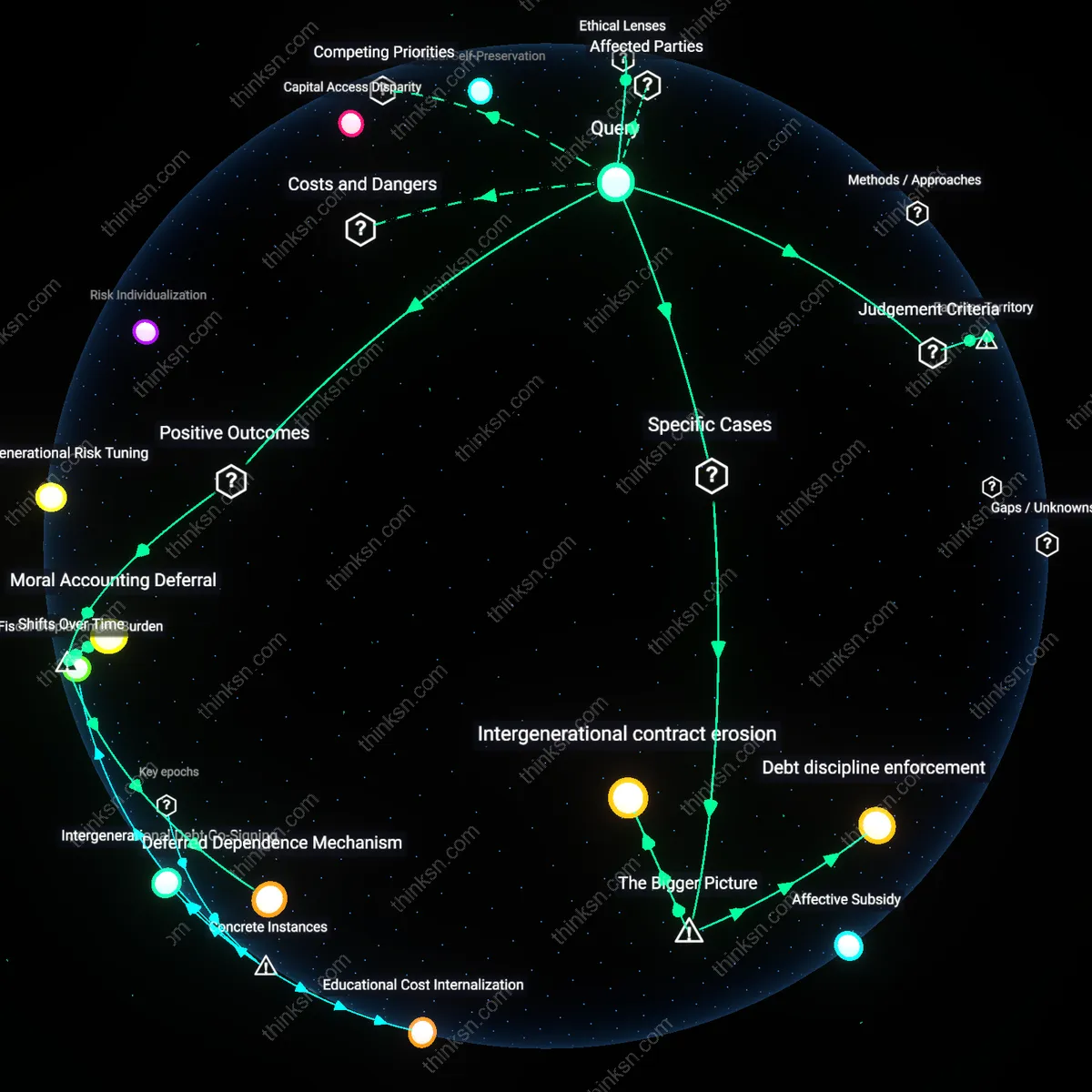
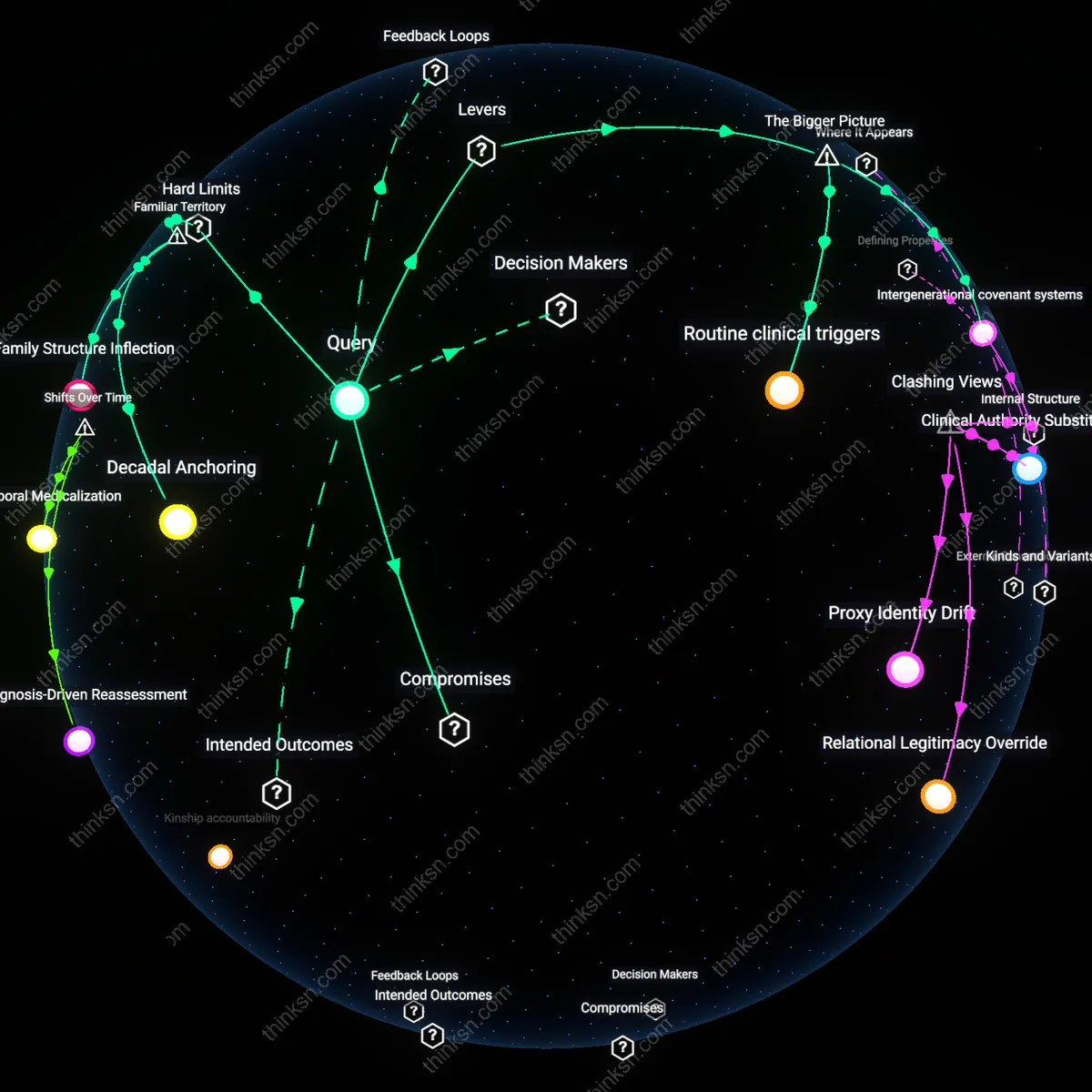
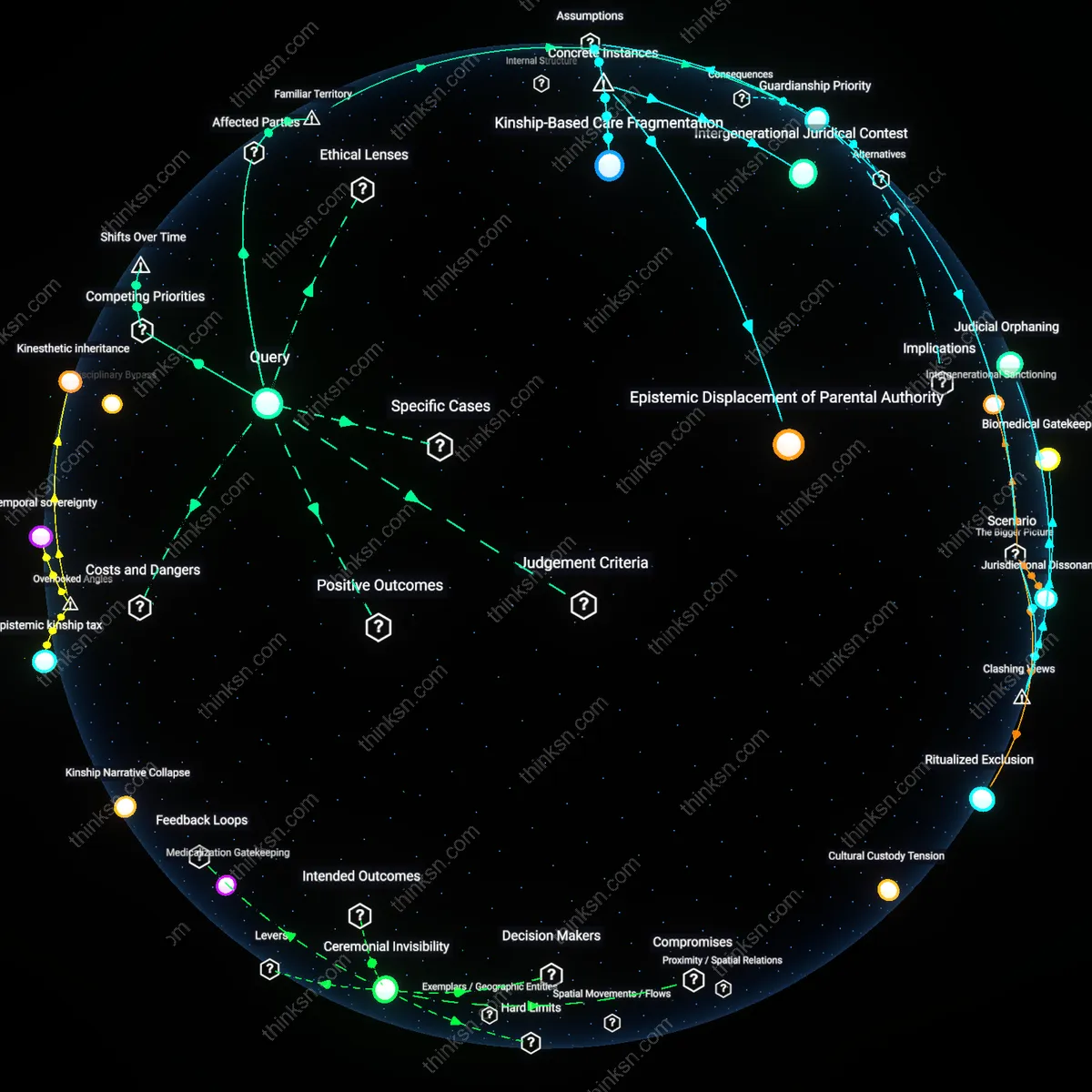
Analysis reveals 3 key thematic connections.
Key Findings
Guardianship Priority
Yes, limiting a grandparent’s influence is ethically justifiable because parents hold primary legal and custodial authority over their teen’s development, a structure reinforced by family courts, pediatric ethics, and child protection frameworks. This arrangement centralizes decision-making within the immediate household, treating grandparents as peripheral to core developmental boundaries despite emotional ties, which most people already accept when considering medical consent, schooling, or therapy access. The underappreciated reality is that this deferral to parents isn’t based on idealized parenting but on functional accountability—when harm or conflict arises, institutions intervene with the parents, not extended kin, making their influence structurally dominant and socially insulated by design.
Generational Custody
Yes, limiting a grandparent’s influence is ethically justifiable because elders often embody socially conservative norms shaped by their historical context, which can conflict with contemporary understandings of gender identity embraced by younger generations and validated in queer youth support systems. Most people intuitively associate grandparents with tradition, religious values, or outdated labels—commonly referencing phrases like 'they just don’t understand'—and this cultural script positions their influence as potentially obstructive rather than affirming. What’s rarely acknowledged is that this generational divide is not accidental but actively managed through youth shelters, school-based GSAs, and social media communities that deliberately bypass familial gatekeepers to preserve space for identity experimentation.
Guardianship Fracturing
Limiting a grandparent's influence on a teen's gender identity exploration is ethically justifiable when parental authority has been legally and socially reconsolidated post-1980s, displacing extended kin networks as legitimate actors in child development decisions. This shift—from community-based child-rearing models in pre-industrial agrarian societies to the modern nuclear family hegemony—centralized moral and legal responsibility within parents, making grandparental intervention an extrajudicial claim on identity formation; the residual authority they retain is cultural rather than institutional, creating a fracture between biological lineage and custodial agency. What is underappreciated is that this transition didn't merely demote grandparents—it redefined their influence as optional rather than constitutive, rendering their resistance to a teen’s self-definition less a moral counterweight and more a boundary violation in the eyes of clinical and legal norms.
Deeper Analysis
What would happen if grandparents could override parental decisions about a teen's gender identity exploration in crisis situations?
Judicial Orphaning
Grandparents would become legal petitioners to terminate parental rights under dependency court frameworks, reframing gender identity exploration as evidence of unfitness. In states like Texas or Oklahoma, where conservative family courts already accept religious objections to gender-affirming care, judges might accept grandparent claims that parental support for transition constitutes neglect, invoking statutes like the Texas Family Code’s ‘best interest’ standard. This transforms family conflict into a state-supervised custody realignment, where the crisis becomes less about gender and more about which generation wields moral authority over child welfare, exposing how courts can institutionalize intergenerational dissent under the guise of protection.
Biomedical Gatekeeping
Health systems in regions with restrictive laws, such as Florida under the ‘Parental Rights in Medicine Act,’ would condition access to puberty blockers or mental health services on grandparent consent when declared ‘necessary’ by court-appointed guardians. Medical providers, fearing liability, would require legal overrides, making grandparents de facto arbiters of treatment despite lacking legal custody. This shifts gender-affirming care from a guardianship-based model to a multigenerational consent regime, revealing how clinical protocols can be weaponized to enshrine generational conflict into medical necessity.
Kinship Sovereignty
Tribal nations exercising sovereign jurisdiction, such as the Navajo Nation or Cherokee Nation, could leverage customary adoption practices to assume custody of teens during identity crises, bypassing state family courts entirely. Grounded in ancestral kinship networks, grandparent-led placements would invoke cultural reintegration rather than medical intervention, positioning gender exploration as a disruption to communal continuity. This redefines crisis not as a psychological emergency but as a spiritual dislocation, exposing how Indigenous governance can challenge mainstream LGBTQ+ advocacy paradigms by prioritizing collective identity over individual self-determination.
Intergenerational Juridical Contest
Grandparents asserting legal authority over a teen’s gender identity care would transform family conflict into a formal custody contest, as seen in the 2022 Texas Directive where state child welfare agencies, under Governor Abbott’s order, investigated parents who provided gender-affirming care as potential child abuse—inviting relatives to petition courts for custody; this reveals that crisis designations enable third-party kin to exploit legal standing when state policy frames gender care as harm, converting private disagreements into public jurisdictional battles over medical legitimacy.
Epistemic Displacement of Parental Authority
When grandparents override parental decisions during a teen’s gender exploration, it disrupts the parent’s role as mediator of medical knowledge, exemplified by the UK’s *Bell v Tavistock* (2020) ruling, where external parties challenged clinicians’ and parents’ joint judgment on puberty blockers—establishing that institutional doubt in adolescent capacity can retroactively delegitimize parental consent, empowering elder kin to claim superior moral foresight despite lacking clinical or daily caregiving involvement.
Kinship-Based Care Fragmentation
In Indigenous Two-Spirit youth cases within Canadian reserves, such as the 2018 Wabano Centre reports in Ottawa, extended family elders have historically guided gender-variant youth through ceremonial recognition—yet when settler legal systems allow grandparents to override modern gender exploration, it severs continuity between ancestral practices and contemporary identity support, producing divergence between cultural guardianship and statutory custody, where the appearance of familial protection masks systemic erasure of native epistemologies.
How did the role of grandparents in shaping teen identity shift from being seen as wisdom-keepers to potential obstacles in gender exploration?
Temporal sovereignty
Grandparents' lived time—accumulated decades operating under fixed gender ontologies—functions as a structural resistance to teen gender fluidity not because of malice but because their identity coherence depends on the irreversibility of past social investments. This temporal sovereignty, rooted in mid-20th-century kinship economies where gender roles secured survival-level labor allocations, positions elders as custodians of temporal order rather than cultural gatekeepers; their resistance emerges from a material grammar of time-as-linear that underpins autobiographical validity. The overlooked mechanism is not generational conflict per se but the way elder identity collapses without a stable timeline, making their pushback less about rejecting youth and more about self-preservation in a nonlinear present—an insight that recasts intergenerational tension as a clash of temporal economies.
Kinesthetic inheritance
Grandparents shape teen identity through bodily imitation—gestures, gait, vocal pitch, posture—transmitted implicitly during co-residency or repeated interaction, creating a subverbal archive of gendered movement that teens must actively unlearn during gender exploration. This transmission operates through kinesthetic inheritance, a system where motor memory becomes ideological, embedding mid-century gender comportments in muscle memory before conscious identity forms; its power lies in operating beneath discourse, making it invisible in conversations focused on language or belief. The underappreciated factor is that resistance to gender transition often surfaces not in words but in the body’s refusal to align—traced not to prejudice but to deeply somatic legacies held in grandparental presence, reframing 'obstacle' as a form of embodied temporal entanglement.
Epistemic kinship tax
Teens undergoing gender exploration pay an epistemic kinship tax when accessing grandparental wisdom—accepting gendered assumptions embedded in advice about love, work, or safety as the price of intergenerational connection. This tax persists because elder narratives are structured around gendered risk models (e.g., daughter-as-vulnerable, son-as-protector) forged in pre-feminist social landscapes, making their guidance simultaneously valuable and ideologically loaded. The overlooked dynamic is that rejecting the advice risks severing epistemic lifelines, forcing youth into a no-win choice between authenticity and ancestral knowledge—an invisible toll that reveals wisdom transmission not as neutral but as a contested site of identity negotiation, where the cost of access shapes the self as much as the content.
Medicalization Gatekeeping
The ascendance of clinical psychology as the dominant arbiter of gender identity in adolescence repositioned grandparents as unauthorized interlocutors in development, rendering their experiential guidance epistemically inert or actively disruptive. When pediatric endocrinology and school-based mental health systems formalized protocols for gender transition, they instituted a professional hierarchy that excluded non-medical familial voices—particularly elders whose moral frameworks were coded as pre-clinical, thus pathologizing intergenerational disagreement as developmental risk. This medical-gatekeeping dynamic reframed elder resistance not as cultural continuity but as psychosocial interference, exposing how biopolitical institutions, under liberal democratic mandates, systematically displace kinship networks from sovereignty over identity decisions—privileging therapeutic consensus over narrative inheritance.
Kinship Narrative Collapse
Migration from geographically concentrated extended families to nuclear, urbanized, and digitally mediated kinship networks fragmented the intergenerational storytelling through which identity was once co-constructed, leaving grandparents symbolically present but narratively absent. As teen identity formation shifted from ancestral mythos to algorithmic suggestion—where TikTok and peer-driven discourse replaced fireside transmission—grandparents could no longer embed gender within legacy and lineage, making their interventions appear dislocated rather than dialectical. This narrative collapse didn’t merely weaken authority; it severed the temporal scaffolding that once allowed elders to shape becoming, transforming their role from co-author to spectator—or, when they contest the new orthodoxy, antagonist in a story they no longer help write.
Disciplinary Bypass
The medicalization of gender identity in the late 20th century shifted authority over adolescent development from familial elders to clinical institutions, transferring the symbolic role of gatekeeper from grandparents to pediatric endocrinologists and therapists. As diagnostic criteria like the DSM-III’s inclusion of Gender Identity Disorder (1980) and subsequent revisions standardized treatment protocols, access to gender-affirming care became channeled through medical gatekeeping rather than intergenerational consensus, undermining grandparents’ traditional role in puberty rites and identity validation. This bureaucratic displacement—centered in urban clinics and insurance-driven care pathways—revealed how state-sanctioned expertise dissolved kinship-based authority, a shift rarely acknowledged because it reframed family conflict as clinical compliance rather than intergenerational tension.
Archive Inversion
The digitization of personal narrative in the early 2000s, particularly through platforms like LiveJournal, YouTube, and Tumblr, repositioned identity formation as a peer-produced and self-archived process, marginalizing oral transmission from older generations. As LGBTQ+ youth began documenting their gender explorations online in real time, producing blogs, coming-out videos, and community tags, they created persistent, searchable records that functioned as both validation and pedagogy—displacing grandparents’ stories as primary mnemonic resources. The non-obvious consequence is that digital archives became the new repositories of identity legitimacy, transforming grandparents from custodians of continuity into auditors of deviation, a reversal untraceable through institutional records alone.
What happens to a teen's sense of belonging when a tribal nation places them with grandparents to restore cultural continuity, but the teen feels it erases their gender identity?
Intergenerational Custody Tension
Placing a teen with tribal elders to restore cultural continuity can destabilize their sense of belonging when custodial authority disrupts gender identity recognition, because tribal kinship systems often lack institutional mechanisms to negotiate modern gender self-determination. This creates a quiet conflict where elders—acting in good faith as cultural custodians—unwittingly replicate epistemic erasure by interpreting identity through lineage-based ontologies rather than personal agency. The overlooked dimension is that child placement within tribal nations is not just a cultural restoration act but a jurisdictional performance, embedding unspoken expectations about gendered roles in lineage transmission that can alienate gender-expansive youth even as they gain ancestral connection.
Ceremonial Invisibility
A teen’s sense of belonging erodes when cultural reintegration relies on ceremonial participation that presumes gendered roles, because rites of passage and community rituals in many tribal nations assign spiritual and social functions based on birth-assigned sex. The teen may be welcomed into kinship but excluded from meaningful ritual roles that validate their identity, producing a form of spiritual dislocation masked as inclusion. What is underappreciated is that cultural continuity often depends on performative gender norms during ceremonies—making visibility contingent on conformity, not just presence—so gender-variant youth face symbolic exile even within restorative kinship structures.
Kinship Bureaucracy Gap
When tribal child welfare practices prioritize lineage proximity over identity-affirming environments, belonging fractures because existing kinship placement frameworks are administratively blind to gender identity as a safeguard criterion. Unlike state foster systems that increasingly document and assess LGBTQ+ needs, tribal social services—especially underfunded ones—lack both policy templates and third-party oversight to mediate identity conflicts within extended family placements. The overlooked reality is that the very decentralization and cultural sovereignty that protect tribal autonomy also create accountability vacuums where a teen’s gender identity can be silently overruled by unchallenged familial authority, reframing cultural preservation as a structural loophole for identity suppression.
Cultural Custody Tension
Transferring custodial responsibility to tribal elders to revive pre-colonial kinship models intensifies intergenerational conflict when modern gender identities clash with traditional binary roles, revealing a moral prioritization of collective cultural survival over individual autonomy. This shift emerged prominently after the 1978 Indian Child Welfare Act, which empowered tribal jurisdictions to place children within culturally aligned kin networks, but today’s gender-expansive youth expose a residual rift between decolonizing practices and evolving identity rights. The non-obvious insight is that the very mechanism meant to heal historical rupture—restoring elder-led upbringing—can inadvertently reproduce exclusion under the guise of continuity.
Kinship Temporal Dissonance
When a tribe relocates a teen to live with grandparents as a means of repairing cultural transmission severed by boarding school eras, the teen’s gender nonconformity may be misrecognized not as identity but as social disruption, reflecting a practical yardstick of communal cohesion overriding personal expression. This dynamic crystallized during the late 20th-century tribal resurgence, when nations actively reclaimed child-rearing authority after decades of federal assimilationist policy, yet now face internal adaptation challenges as LGBTQ+ visibility increases among Native youth. The unacknowledged consequence is that restoration projects, oriented toward a pre-contact past, struggle to integrate forward-moving social trajectories, producing a dissonance between revived traditions and emerging selves.
Intergenerational Anchoring
Placing Alaska Native youth with elders on the Yukon River fosters belonging through land-based learning, where cultural tasks like ice fishing and tanning moosehide create shared purpose that accommodates Two-Spirit identities when elders engage in decolonial listening, as seen in Gwitchyöu elders in Fort Yukon affirming nonbinary kinship roles; this reveals that continuity rituals can expand gender inclusion when rooted in subsistence interdependence rather than rigid tradition.
Cultural Recalibration
When Māori whānau in Tūhoe reared urban-raised tamariki (children) in Te Urewera with kuia (grandmothers), the restoration of te reo Māori and whakapapa (genealogy) created space for gender-fluid expression within tribal narratives of atua wāhine (female deities), as documented in the 2018 Te Kāhui Mana Ririki report, showing that cultural revival can redefine belonging to encompass pre-colonial gender diversity when ancestral knowledge systems are actively reinterpreted.
Identity Reconciliation
In the Navajo Nation’s K’é kinship program, placing LGBTQ+ adolescents with elder relatives in Tséhootsooí strengthened belonging through the revival of Hózhó (balance) teachings, where grandparent mentors in Window Rock integrated Nádleehi identity into ceremonial roles during 2020 virtual healing circles, demonstrating that cultural continuity can enhance gender affirmation when traditional relational ethics are applied to kinship restructuring.
Identity Displacement Paradox
The teen’s sense of belonging fractures not because they reject tradition, but because the tribe’s effort to reclaim cultural sovereignty inadvertently enforces a binary social order that mirrors settler morality. Many tribal nations, in rebuilding governance after centuries of forced assimilation, adopt kinship models that privilege heteronormative and cisnormative structures as part of cultural reassertion—evident in some Cherokee and Navajo kinship codes being invoked to justify exclusion of Two-Spirit identities. Here, the risk is not intergenerational alienation but the misrecognition of queerness as foreign, revealing that decolonization efforts can become boundary-policing projects. The underappreciated contradiction is that restoring cultural continuity may require erasing the very pluralism that Indigenous cosmologies historically embraced.
Intergenerational Sanctioning
Placing a teen with tribal elders to restore cultural continuity intensifies gender identity erasure when elders enforce normative gender roles as a condition of belonging. Tribal elders, as gatekeepers of tradition, often derive authority from their adherence to culturally recognized roles—many of which are rooted in binary, heteronormative frameworks; when teens express non-conforming gender identities, elders may reject or discipline them to maintain ritual legitimacy within the nation's governance structure. This conflict arises because federal recognition and tribal sovereignty depend on demonstrable continuity of tradition, incentivizing elders to prioritize cultural orthodoxy over individual identity development—making sanction not just social but politically consequential. The non-obvious insight is that elder authority is not merely familial but institutional, amplified by federal policies that condition tribal legitimacy on cultural preservation.
Jurisdictional Dissonance
A teen's gender identity is destabilized when tribal placement practices operate under a legal framework that recognizes tribal–grandparent custody as culturally restorative but conflicts with state child welfare standards affirming gender autonomy. The Indian Child Welfare Act (ICWA) mandates placement with extended family or tribal members, prioritizing cultural continuity over individual development metrics, yet state-level gender-affirming care laws increasingly protect trans youth—creating jurisdictional friction. Courts often defer to tribal sovereignty in ICWA cases, but when gender identity becomes a contested issue, state child protection systems may lack standing to intervene, leaving teens in placements where gender expression is suppressed. The underappreciated dynamic is that legal pluralism—multiple overlapping jurisdictions—does not resolve in favor of the child’s identity when tribal sovereignty is legally valorized above evolving norms of psychological well-being.
Ritualized Exclusion
Efforts to restore cultural continuity through grandparental placement inadvertently alienate gender-nonconforming teens when ceremonial participation—central to belonging—is conditioned on gender-normative conduct. In many tribal nations, access to rites of passage, naming ceremonies, and spiritual roles depends on alignment with traditional gender roles, which are often codified in oral teachings upheld by elders. When teens reject or diverge from these roles, they are excluded from community rituals not as punishment but as a systemic mechanism to preserve cultural integrity. This exclusion functions as a quiet, normalized process rather than overt rejection, making it invisible to external advocates—yet it severs the very sense of belonging the placement was meant to restore. The insight is that cultural preservation mechanisms operate through subtle ritual barriers, not just legal or familial decisions.
Explore further:
- What could communities do to keep cultural ceremonies meaningful without requiring gender conformity from gender-variant youth?
- Where do tribal efforts to restore cultural traditions clash most with Native LGBTQ+ youth’s lives today?
- How do other Indigenous communities outside the Navajo Nation approach grandparent involvement in teens' gender identity, and what can that tell us about the role of cultural tradition in shaping acceptance?