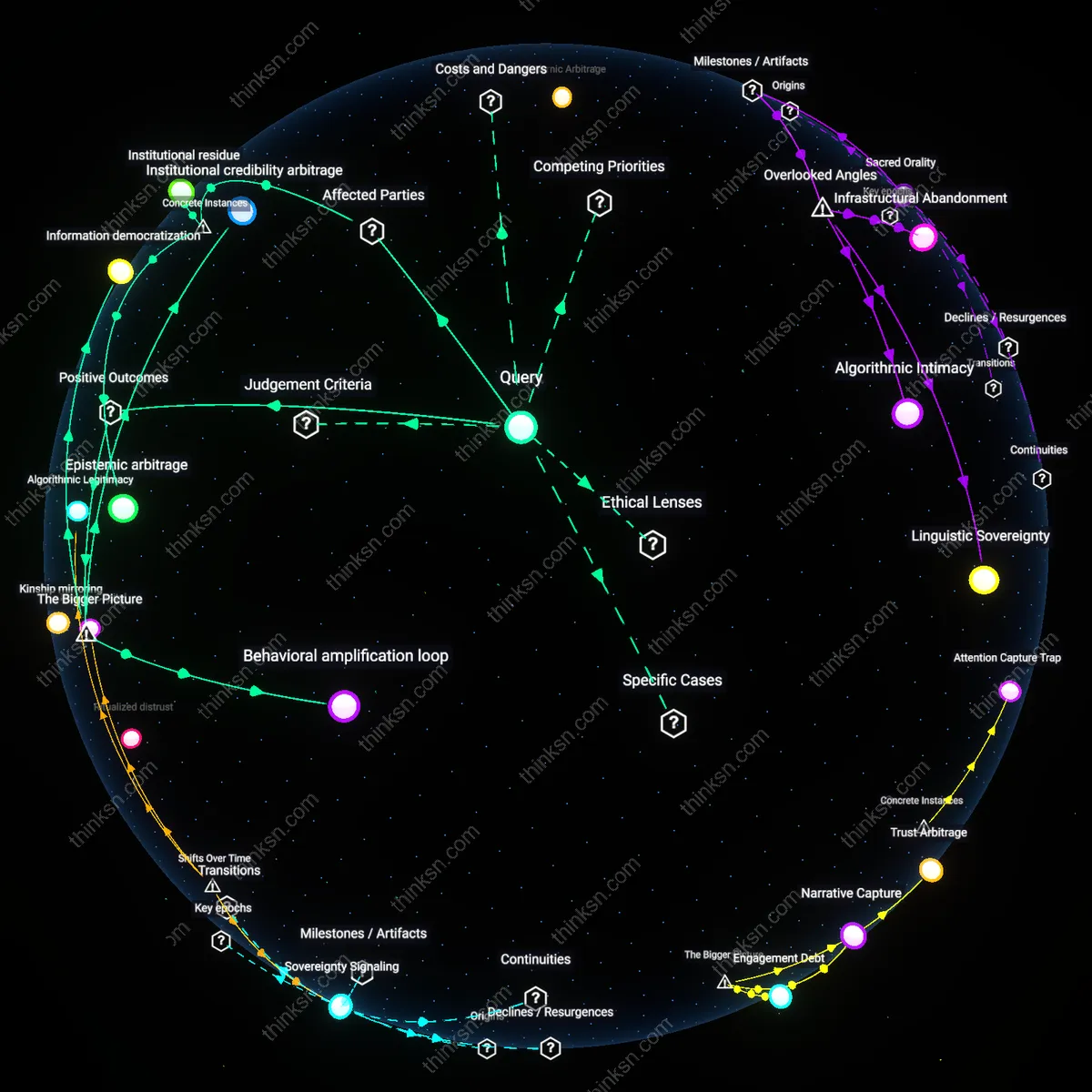
Vaccine Skepticism: Proportionate Response or Broader Distrust?
Analysis reveals 6 key thematic connections.
Key Findings
Data Integrity Theater
Public skepticism toward vaccine manufacturers stems primarily from demonstrable data manipulation, as evidenced by the 2018 University of Pittsburgh rotavirus vaccine data investigation, where researchers systematically duplicated image panels in at least five publications supporting vaccine immunogenicity claims; this fabricated data entered regulatory review processes and remained undetected for years due to inadequate verification protocols at journals and oversight bodies, revealing that the material breach of scientific norms—rather than abstract distrust—fuels targeted public doubt when exposed. The non-obvious insight is that skepticism is not uniformly distributed but concentrates around discrete, verifiable episodes of fraud that validate concerns about epistemic gatekeeping failures within technical institutions.
Institutional Legitimacy Drain
Public skepticism is better explained by a collapse in institutional authority, as seen in the Nigerian boycott of the 2003 polio vaccine in Kano, where local leaders suspended participation in the Global Polio Eradication Initiative over fears that U.S.-funded vaccines were vehicles for population control or sterilization; despite no evidence of data tampering, resistance emerged from historical trauma related to colonial medicine and reinforced by post-independence geopolitical mistrust, showing how vaccine rejection functions as a political act when authority is perceived as externally imposed. The underappreciated mechanism here is that epistemic resistance crystallizes not from scientific literacy gaps but from sovereignty disputes over who controls public health decisions.
Manufactured Doubt Infrastructure
Skepticism arises less from isolated data fraud or passive distrust than from active epistemic sabotage by organized actors, exemplified by the 2015–2019 network of anti-vaccine influencers who amplified the retracted 1998 Wakefield study through coordinated social media campaigns, repurposing its discredited narrative to implicate pharmaceutical companies in a generalized conspiracy; platforms like Facebook enabled microtargeting of parental anxiety clusters, transforming a defunct case of scientific misconduct into enduring public doubt through algorithmic amplification rather than personal experience or institutional failure. This reveals that public skepticism is not merely reactive but is structurally produced by infrastructures designed to exploit uncertainty for influence, not truth.
Colonial Immunization Legacies
Public skepticism toward vaccine manufacturers in postcolonial regions stems more from historical patterns of coerced immunization under colonial rule than from contemporary data practices, with Western pharmaceutical expansions in the Global South during the mid-20th century often replicating extractive medical missions that prioritized geopolitical influence over local consent. This dynamic, evident in mass vaccination campaigns across French West Africa and British India, embedded a lasting cultural memory where institutional health authority is associated with foreign control rather than public service. The shift from colonial medicine (pre-1960s) to global health governance (post-2000s) did not erase these power asymmetries but rebranded them, revealing how residual distrust is rooted in the continuity of structural paternalism rather than isolated incidents of data fraud.
Post-Socialist Institutional Drift
In Eastern Europe, vaccine skepticism intensified after the 1990s due to the collapse of state-controlled healthcare systems, which previously guaranteed medical access even when compromised by scarcity, creating a cultural shift where public trust eroded less from data manipulation and more from the sudden marketization of health under newly privatized, Western-aligned regulatory institutions. Countries like Serbia and Ukraine saw pharmaceutical authorities transform from state monopolies into opaque, donor-dependent agencies during EU accession talks, making vaccine rollout appear disconnected from civic accountability. This transition revealed that distrust emerged not from scientific deceit per se, but from the dislocation of medical authority during a period when institutional continuity was sacrificed for neoliberal reform.
Evangelical Clinical Sovereignty
In the American evangelical heartland, resistance to vaccine manufacturers surged after 2010 as religious communities began interpreting medical authority as a spiritual battleground, shifting from earlier ambivalence during the 1980s AIDS crisis to an organized assertion of bodily autonomy grounded in eschatological self-governance. This transformation crystallized during the 2014–2019 anti-mandate movements, where local churches framed clinical trials and FDA approvals as infringements on divine stewardship of health, reinterpreting scientific institutions as agents of end-times control. The turn was not about falsified data but about a realignment of epistemic authority—once invested in the nation-state and now relocated to congregational discernment—marking a new phase where faith-based agency supersedes institutional credibility.