Extraterrestrial Artifacts Upend Science and Religion
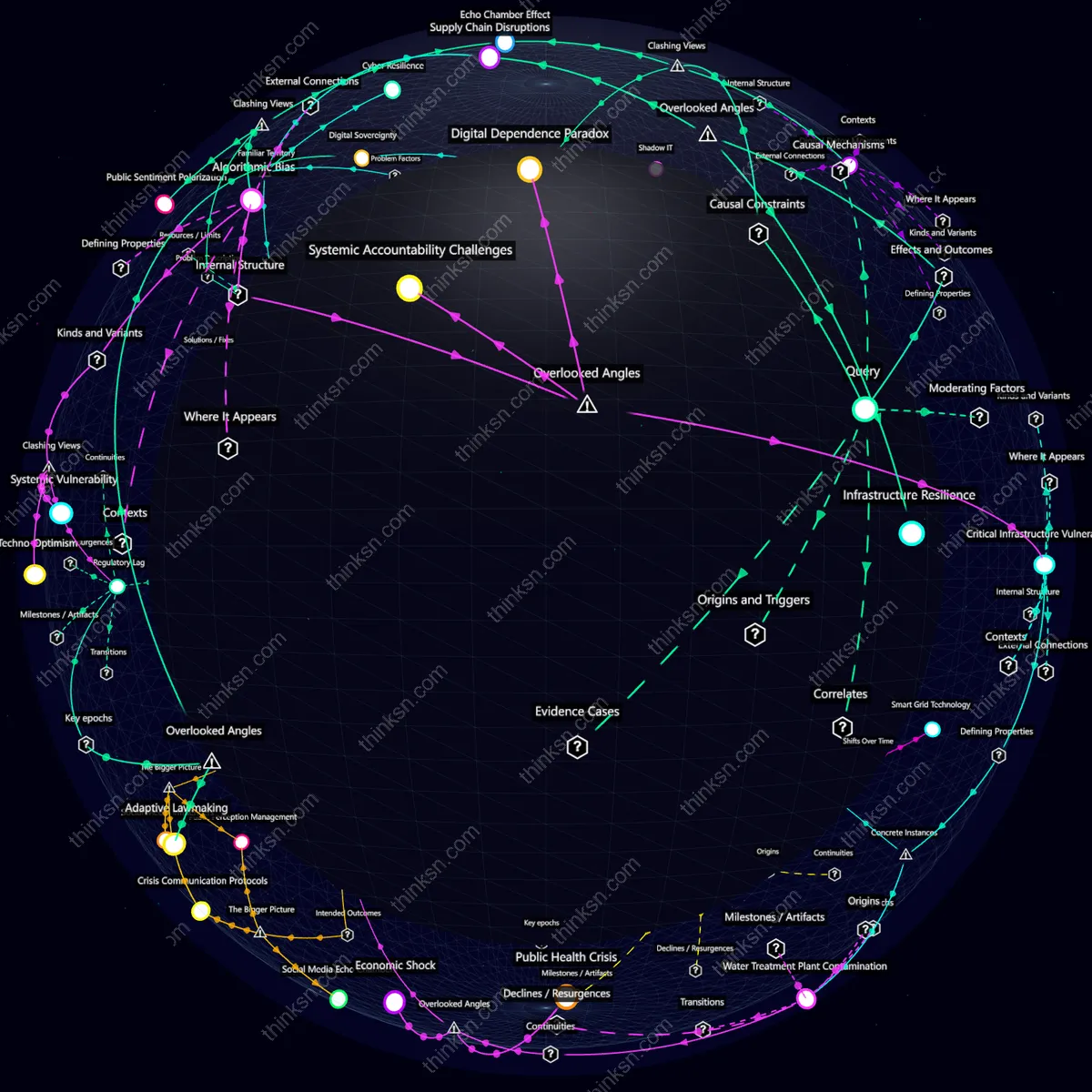
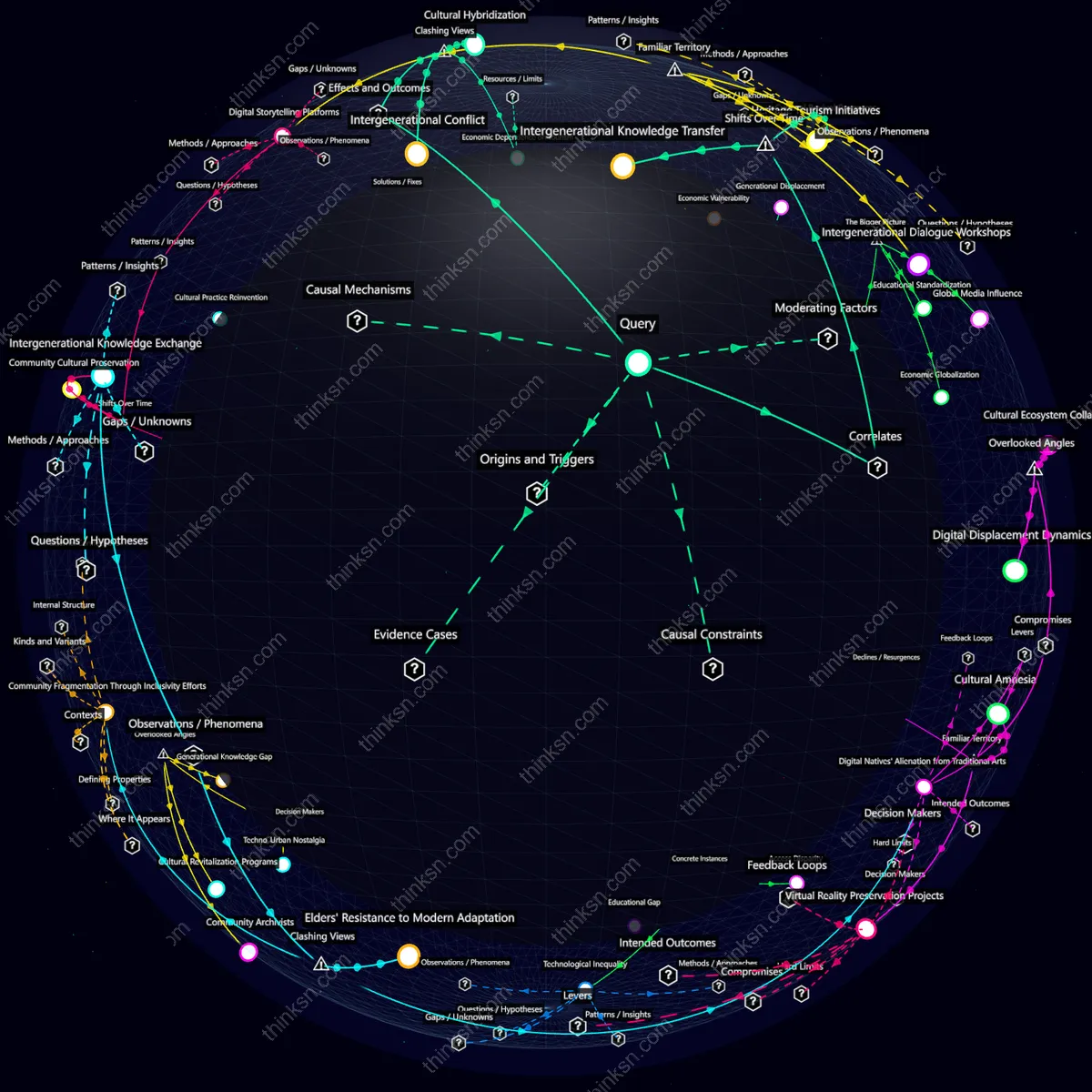
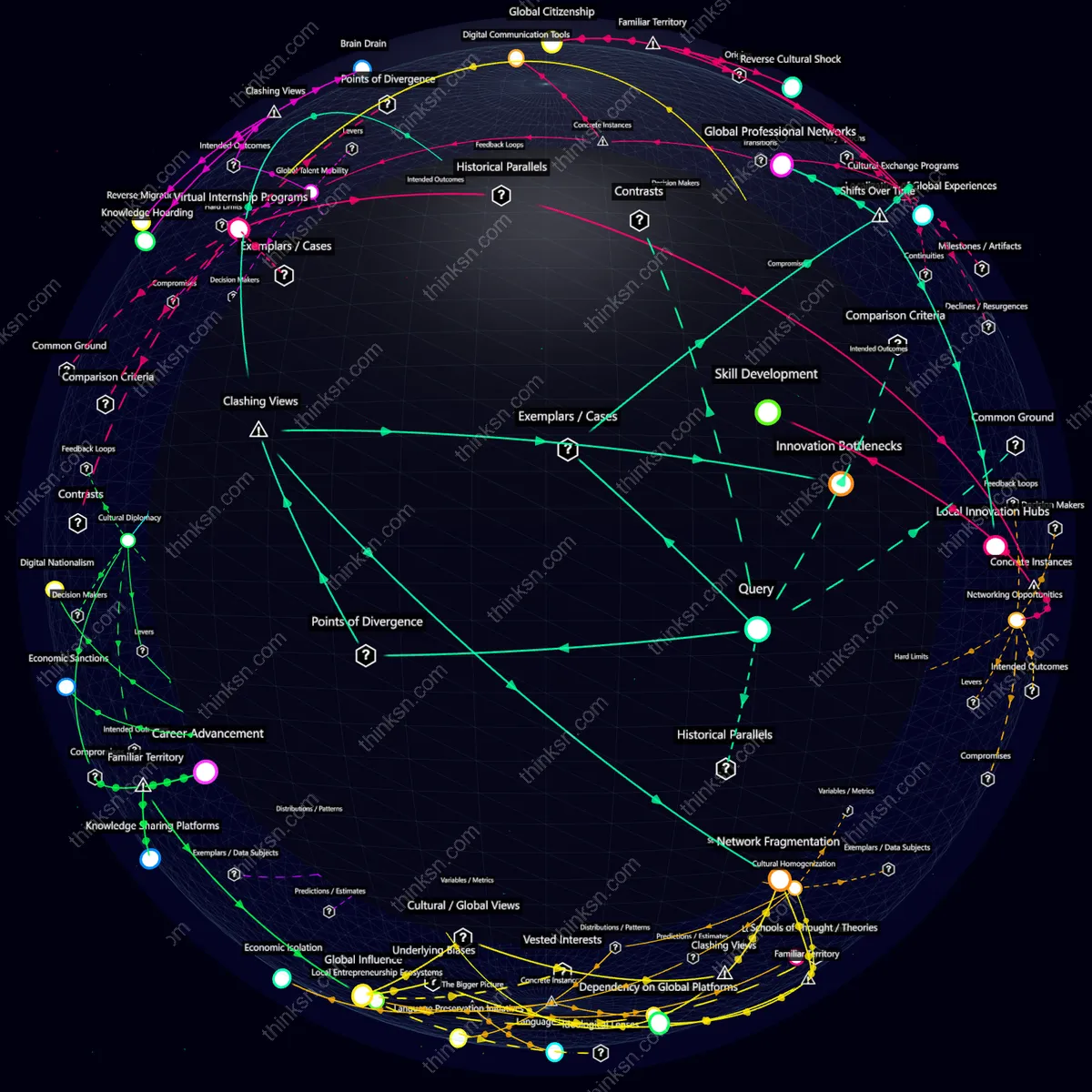
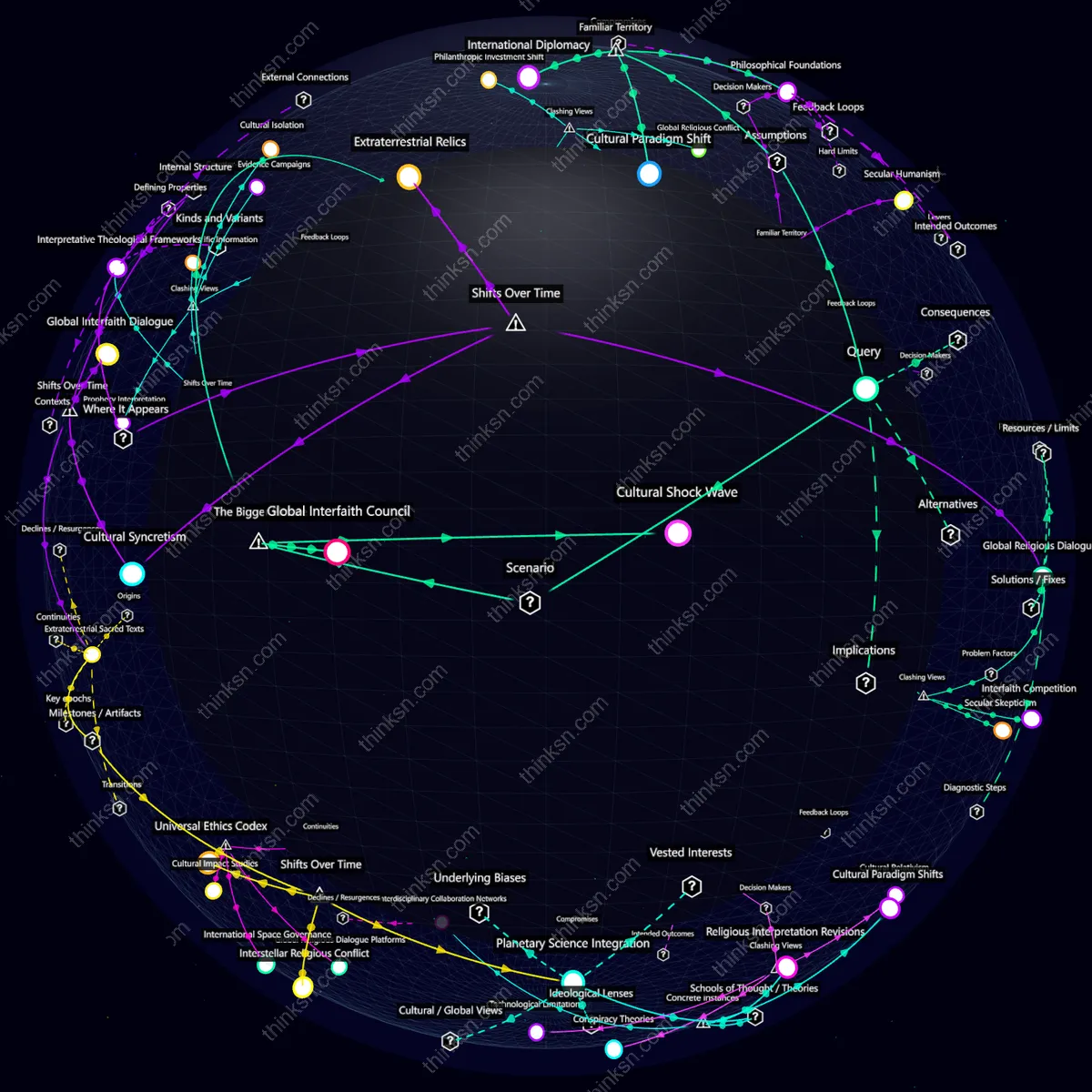
Analysis reveals 6 key thematic connections.
Key Findings
Global Interfaith Council
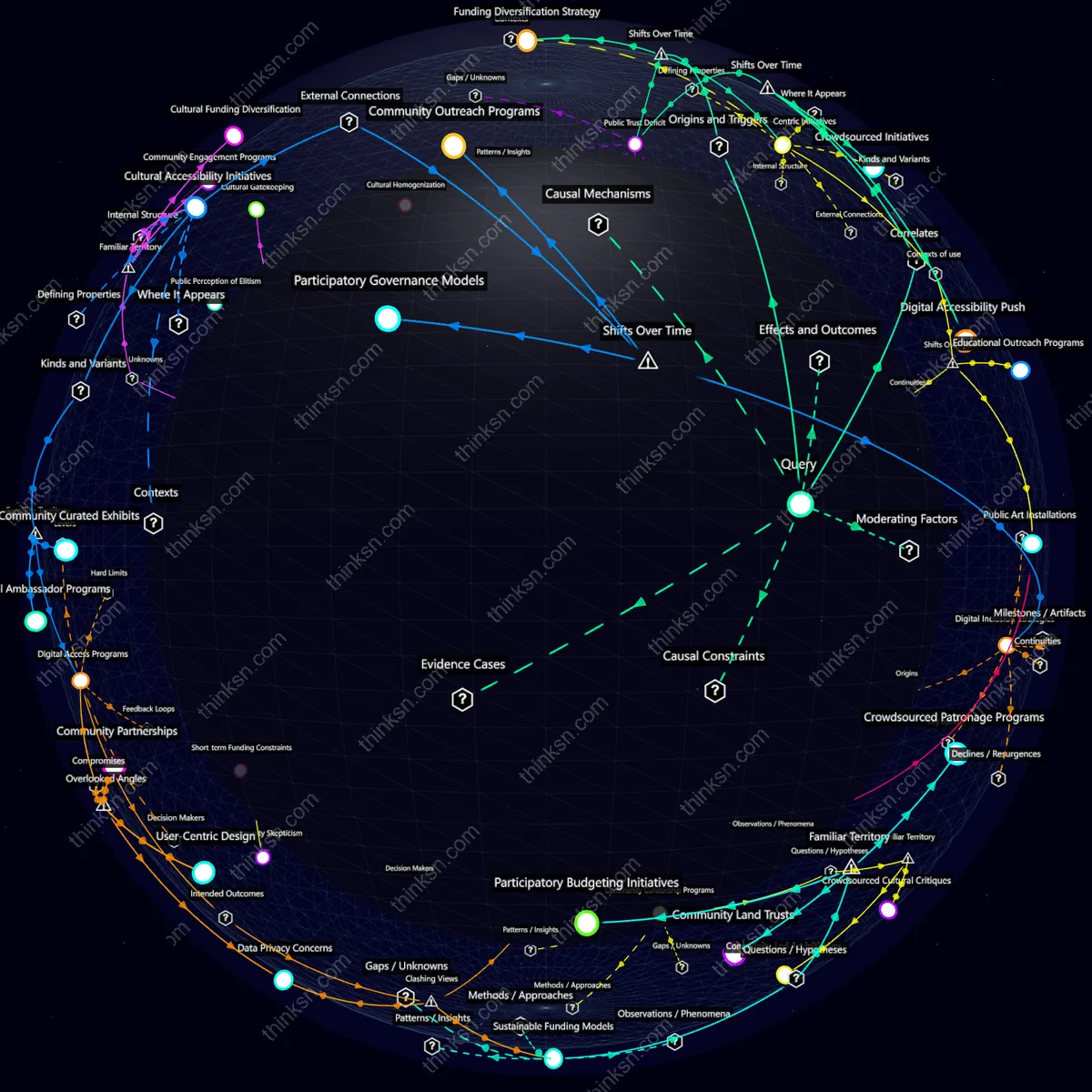
The formation of a Global Interfaith Council accelerates as religious leaders seek to unify disparate theological interpretations of extraterrestrial artifacts, potentially silencing minority viewpoints and fostering inter-religious tensions.
SETI Research Funding Surge
A sudden surge in funding for SETI research sparks an arms race in scientific discovery but also leads to increased militarization of space exploration, heightening geopolitical competition and the risk of conflict over extraterrestrial resources.
Cultural Shock Wave
The shock wave of cultural impact reverberates globally as traditional religious narratives clash with empirical evidence, leading to widespread societal disorientation and a surge in alternative spiritual movements seeking to reconcile faith and science.
Cultural Paradigm Shift
The discovery of extraterrestrial artifacts would trigger a profound cultural paradigm shift, compelling global scientific communities to reconsider the origins and uniqueness of human civilization. This shift could lead to an erosion of traditional religious doctrines that prioritize Earth as the sole cradle of intelligent life, fostering interfaith dialogue centered around cosmic unity but also exacerbating tensions between those who resist new paradigms.
International Diplomacy
The emergence of extraterrestrial artifacts would reshape international diplomacy and security dynamics. Nations might vie for control over these relics, leading to heightened geopolitical competition and potential conflicts. However, the shared nature of such a discovery could also galvanize unprecedented global cooperation in scientific research and space exploration initiatives, underlining both the risks and opportunities inherent in collaborative efforts.
Philosophical Foundations
The revelation of extraterrestrial artifacts would challenge philosophical foundations, prompting existential questions about human identity, purpose, and morality. Philosophers and ethicists would grapple with new moral dilemmas surrounding the treatment of alien life or relics, potentially reshaping ethical frameworks to accommodate an expanded view of sentient existence beyond Earth's boundaries.
Deeper Analysis
What would be the potential strain and trade-offs on SETI research funding if extraterrestrial artifacts were discovered, and how might this affect global science and religion?
Global Religious Conflict
The discovery of extraterrestrial artifacts could polarize religious communities globally. Fundamentalist groups might see it as a challenge to their belief systems, leading to increased funding for SETI research by those seeking evidence against theism, while conservative factions may reduce such funding due to doctrinal objections.
Government Security Concerns
National security agencies could view extraterrestrial artifacts as potential threats or strategic assets, redirecting substantial public funds from SETI research towards defense and intelligence operations. This shift would stifle scientific inquiry into the origins and significance of these discoveries.
Philanthropic Investment Shift
Private donors might channel their funding away from SETI to more immediate humanitarian or technological projects, perceiving extraterrestrial artifacts as an existential threat rather than a source of wonder. This shift could undermine long-term SETI research by depleting steady financial support.
What strategies could be formulated to address the philosophical and theological challenges arising from the discovery of extraterrestrial artifacts?
Religious Fundamentalism
The discovery of extraterrestrial artifacts challenges religious fundamentalists' views on humanity's unique place in the cosmos, leading to a reevaluation of core doctrines. This shift may spark internal conflict within religious institutions and cause some adherents to double down on traditional beliefs, risking social fragmentation.
Secular Humanism
The emergence of extraterrestrial artifacts forces secular humanists to confront the limits of their worldview by questioning human-centric assumptions. This could lead to a renaissance in philosophical thought and a broader acceptance of non-human intelligence, but also risks alienating those who feel threatened by such paradigm shifts.
Interstellar Diplomacy
The identification of extraterrestrial artifacts necessitates the establishment of interstellar diplomacy frameworks. Decision-makers within global governance bodies will grapple with unprecedented ethical and strategic dilemmas, potentially leading to fragile international coalitions that could unravel under political pressure or scientific uncertainty.
Explore further:
- What strategies could religious fundamentalist groups employ to mitigate or counteract the perceived threats from extraterrestrial artifacts to their belief systems?
- What strategies should be formulated to address potential interstellar diplomatic relations arising from the discovery of extraterrestrial artifacts and their impact on global science and religion?
What strategies could religious fundamentalist groups employ to mitigate or counteract the perceived threats from extraterrestrial artifacts to their belief systems?
Censorship of Scientific Information
Religious fundamentalist groups often employ censorship to control the flow of information about extraterrestrial artifacts that could challenge their doctrines. By restricting access to scientific research and discoveries, they aim to protect traditional beliefs but risk isolating their communities from mainstream knowledge and innovation.
Interpretative Theological Frameworks
To maintain doctrinal purity in the face of extraterrestrial evidence, fundamentalist groups may develop new interpretative frameworks that integrate or explain away such findings within existing religious narratives. This approach can foster internal unity but also create external skepticism and division among broader faith communities.
Propaganda Campaigns
Fundamentalists might launch propaganda campaigns to discredit extraterrestrial evidence, often through media outlets sympathetic to their cause. Such efforts aim to shape public perception but can backfire by alienating more moderate believers and attracting scrutiny from secular authorities.
Cultural Isolation
Religious fundamentalist groups may retreat into cultural isolation in response to extraterrestrial artifacts, reinforcing internal belief systems and practices. This creates a fragile dependency on communal support, risking external influence and potential erosion of core tenets.
Counter-Evidence Campaigns
Fundamentalists might launch counter-evidence campaigns against the authenticity or significance of extraterrestrial artifacts to protect their religious doctrines. This strategy may backfire by exposing internal divisions, drawing attention from critics and skeptics who can exploit these inconsistencies.
Prophecy Interpretation
Groups interpret ancient prophecies as foretelling the arrival of extraterrestrial beings, aligning their beliefs with modern discoveries. This reframing can strengthen internal cohesion but also exposes them to criticism from more orthodox members who view such reinterpretations as heretical.
Explore further:
- How would interpretative theological frameworks change in response to the discovery of extraterrestrial artifacts, and how would these changes be mapped across different religious communities globally?
- How might global propaganda campaigns address and shape public perception regarding the discovery of extraterrestrial artifacts in relation to science and religion?
How would interpretative theological frameworks change in response to the discovery of extraterrestrial artifacts, and how would these changes be mapped across different religious communities globally?
Extraterrestrial Sacred Texts
The discovery of extraterrestrial sacred texts would challenge existing interpretative theological frameworks by forcing religious scholars to redefine the nature of divine communication and revelation. This could lead to a reevaluation of scriptural authority, causing internal strife within communities resistant to change while fostering innovation in others.
Global Interfaith Dialogue
The emergence of extraterrestrial artifacts would necessitate unprecedented global interfaith dialogue to navigate the theological implications. While promoting unity and understanding across diverse religious traditions, this process risks highlighting doctrinal inconsistencies and conflicts that could undermine trust between communities.
Cultural Syncretism
Extraterrestrial artifacts would prompt cultural syncretism as religions incorporate alien elements to reinterpret their doctrines. This syncretic approach may enrich religious narratives but also dilute traditional practices, leading to a loss of identity for some adherents who resist such assimilation.
Extraterrestrial Relics
The discovery of extraterrestrial relics would compel interpretative theological frameworks to redefine their cosmic perspective, potentially leading to the reinterpretation of creation narratives and divine omnipresence. For instance, the Catholic Church might face internal debates and doctrinal shifts akin to those during Copernicus's time.
Global Religious Dialogue
Interpretative theological frameworks would necessitate unprecedented global religious dialogues, as seen in the ecumenical movement post-World War II. However, this dialogue could also highlight and exacerbate existing ideological divides within and between religions, complicating efforts towards mutual understanding and cooperation.
Explore further:
- How might extraterrestrial sacred texts evolve over time if discovered, and what are the potential impacts on global science and religion?
- What are the potential systemic failures and measurable strains on global religious dialogue if extraterrestrial artifacts were discovered, challenging existing beliefs?
How might extraterrestrial sacred texts evolve over time if discovered, and what are the potential impacts on global science and religion?
Interstellar Religious Conflict
The discovery of extraterrestrial sacred texts could spark interstellar religious conflicts as Earth religions compete to interpret and integrate these texts, leading to schisms within established faiths. The risk lies in the potential for violent confrontation if differing interpretations are seen as existential threats.
Planetary Science Integration
Extraterrestrial sacred texts might be integrated into global science curricula, shifting educational paradigms and redefining scientific inquiry to include theological perspectives. This could lead to a fragile dependency on religious interpretations for academic advancement in certain regions, where religious orthodoxy trumps empirical evidence.
Universal Ethics Codex
The emergence of an intergalactic ethics codex based on extraterrestrial texts could transform international law and ethical frameworks. However, the adoption of such a codex might be uneven, leading to conflicts between nations that adhere strictly to Earth-centric laws versus those embracing universal ethics.
What are the potential systemic failures and measurable strains on global religious dialogue if extraterrestrial artifacts were discovered, challenging existing beliefs?
Secular Skepticism
The discovery of extraterrestrial artifacts could amplify secular skepticism towards religious dialogue, polarizing societies and undermining interfaith initiatives. As scientific evidence challenges existing beliefs, traditional religious institutions may face a credibility crisis, leading to fragmented communities and reduced cooperation.
Interfaith Competition
Competing interpretations of extraterrestrial artifacts among different faiths could intensify interfaith competition rather than fostering dialogue. Religious leaders might leverage these findings to assert doctrinal superiority, creating a climate where collaborative efforts are overshadowed by theological disputes and ideological conflicts.
Cultural Isolationism
The emergence of extraterrestrial evidence could trigger cultural isolationism within religious communities as they seek to protect their traditional beliefs from external influences. This could manifest in increased barriers to intercultural exchange, leading to a fragmented global landscape where meaningful dialogue becomes increasingly difficult.
How might planetary science integration reveal new perspectives on the impact of extraterrestrial artifacts on global scientific and religious paradigms?
Cultural Paradigm Shifts
The discovery of extraterrestrial artifacts through planetary science could catalyze a cultural paradigm shift, challenging existing religious and scientific beliefs. Institutions like NASA might face pressure to balance public curiosity with rigorous verification, risking misinformation and societal unrest if not managed properly.
Religious Interpretation Revisions
Planetary discoveries may prompt religious scholars to reinterpret sacred texts or doctrines in light of new scientific evidence. For instance, the Vatican's Pontifical Academy of Sciences might engage with findings from Mars rovers, leading to theological debates on creation and divine intervention.
Interdisciplinary Collaboration Networks
Planetary science integration can foster interdisciplinary collaboration between scientists, theologians, philosophers, and ethicists. However, this could also create dependency issues where the credibility of findings hinges on cross-disciplinary validation, risking delays or misinterpretations if communication breaks down.
In the context of cultural isolationism, how would the discovery of extraterrestrial artifacts likely exacerbate systemic strain within global scientific and religious communities, potentially leading to significant disruptions or failures in cross-cultural communication and cooperation?
Skepticism Towards Extraterrestrial Intelligence
Cultural isolationist nations might view the discovery of extraterrestrial artifacts as a threat to national sovereignty and identity, leading them to reject or downplay evidence. This skepticism can exacerbate systemic strain by discouraging global collaboration among scientists and increasing reliance on unverified theories within isolated communities.
Religious Fundamentalism
The revelation of extraterrestrial artifacts could intensify religious fundamentalist movements, which perceive such discoveries as contrary to their beliefs. These groups may engage in disinformation campaigns or physical protests against scientific institutions, creating significant disruptions and fostering an environment where cross-cultural dialogue is stifled.
Resource Allocation Conflicts
Cultural isolationism leads to fragmented research efforts with limited funding and resources allocated only for national projects. This restricts the ability of smaller nations to contribute meaningfully to global scientific endeavors, potentially leaving them out of critical discussions on extraterrestrial findings and undermining collective progress.
How would interdisciplinary collaboration networks evolve over time in response to the discovery of extraterrestrial artifacts, and what are the mechanisms driving these changes in global science and religion?
Global Religious Dialogue Platforms
The discovery of extraterrestrial artifacts catalyzes urgent global religious dialogue to reconcile diverse interpretations and theological frameworks. This leads to the creation of new interdisciplinary collaboration networks that bridge scientific and spiritual perspectives, with unintended consequences such as heightened sectarian tensions over competing explanations.
International Space Governance
The emergence of extraterrestrial artifacts necessitates a rethinking of international space governance to include protocols for handling alien technologies. This drives the evolution of interdisciplinary collaboration networks within and between nations, with fragile dependencies on political stability and scientific cooperation.
Cultural Impact Studies
The interdisciplinary collaboration networks expand to incorporate cultural impact studies that analyze societal responses to extraterrestrial discoveries. These studies reveal unexpected social dynamics, such as the rise of new religious movements and the decline of traditional belief systems, highlighting systemic fragilities in established institutions.
What strategies could be formulated to address skepticism towards extraterrestrial intelligence in the context of discovering artifacts from space?
Cultural Relativism
The rise of cultural relativism challenges skepticism by highlighting Earth's own biases in interpreting extraterrestrial artifacts. This shift could lead to a more nuanced understanding but also risks ignoring universal scientific principles, potentially undermining collaborative efforts among international research bodies.
Conspiracy Theories
Prominent conspiracy theories exploiting public fear and doubt can significantly amplify skepticism towards ETI discoveries. Governments and institutions face the risk of being seen as hiding information, leading to a breakdown in public trust unless transparent communication strategies are employed.
Technological Limitations
The acknowledgment of current technological limitations forces scientists to be cautious about over-interpreting data from space artifacts. This restraint can slow down the acceptance of new evidence but also ensures that claims made are robust and scientifically sound, balancing skepticism with rigorous verification processes.