Could Abolishing Party Systems Spark Radical Divide?
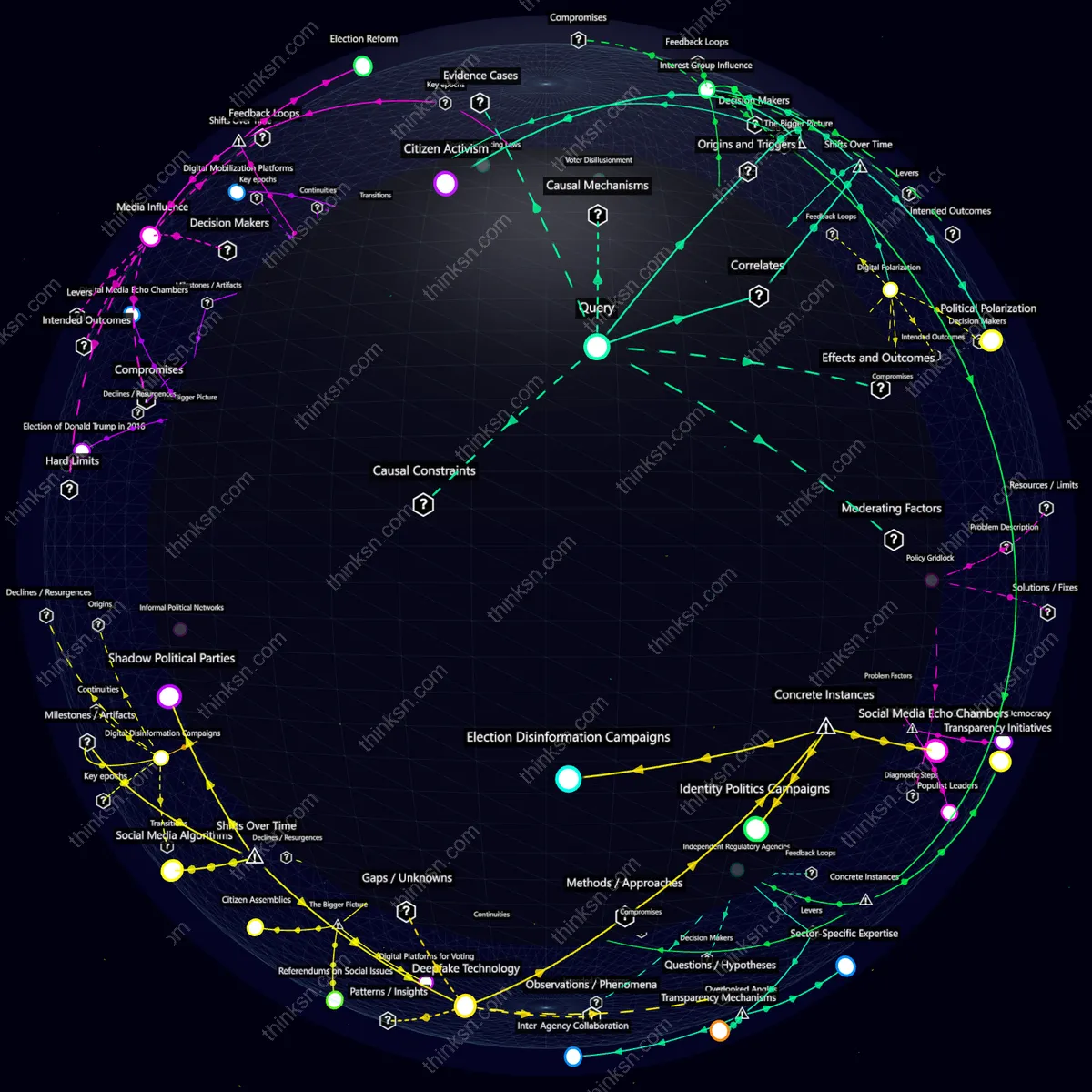
Analysis reveals 6 key thematic connections.
Key Findings
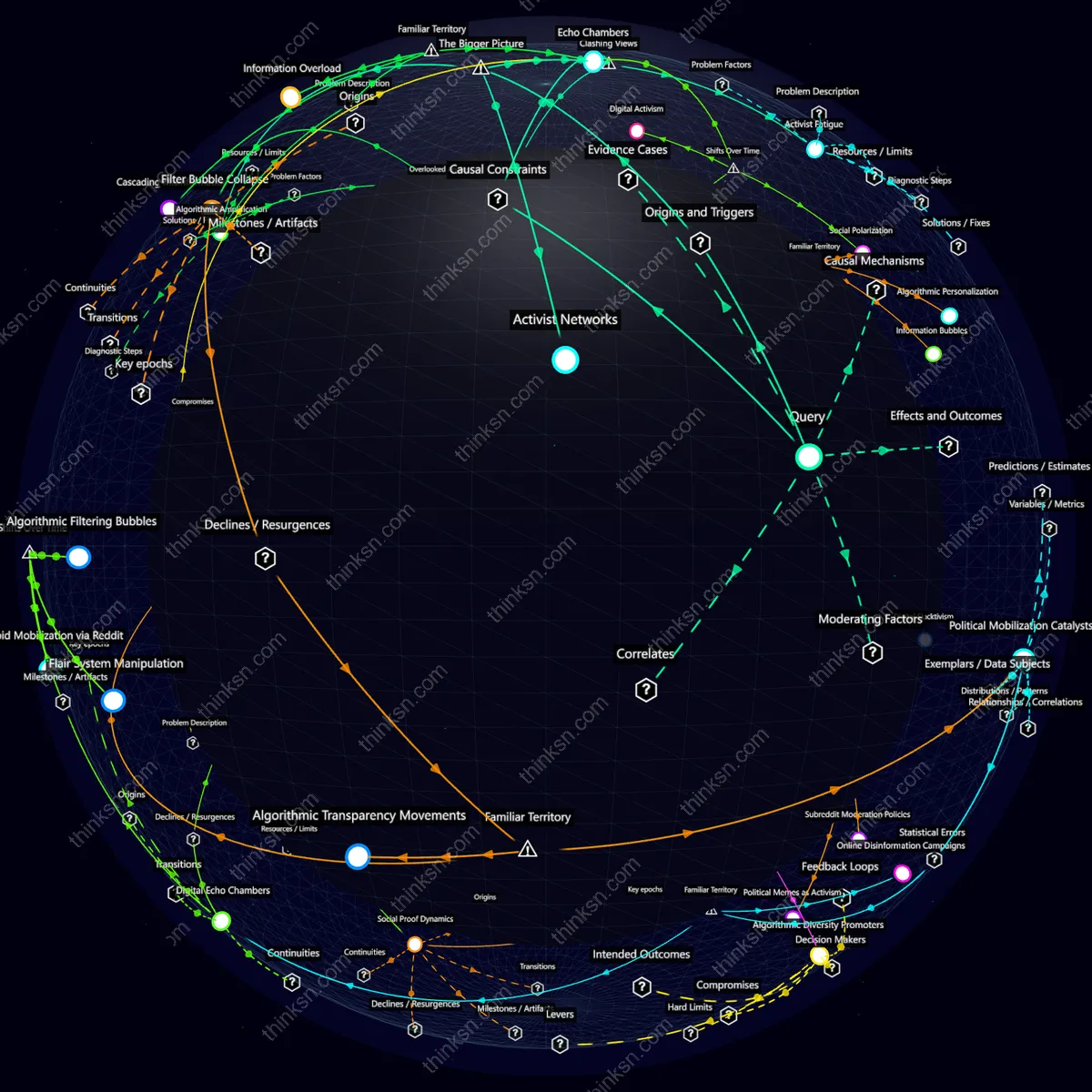
Political Fragmentation
Eliminating traditional parties could lead to political fragmentation, where a plethora of micro-parties emerge. This shift might increase voter confusion and polarize politics further as smaller groups cater exclusively to niche interests, undermining broader consensus-building.
Citizen Activism
The dissolution of established party structures could empower citizen-led activism but also create a vacuum where radical fringe groups fill the void, potentially leading to more extreme political rhetoric and less moderate policy-making. This dual-edged sword highlights the fragile balance between grassroots movements and political extremism.
Digital Polarization
Without traditional parties as moderating forces, digital platforms could exacerbate polarization by amplifying extreme voices and niche communities. This scenario underscores the systemic risk of unchecked online discourse in shaping political attitudes towards extremity and divisiveness.
Independent Candidates
The rise of independent candidates as a response to party elimination could initially seem like a democratic triumph. However, over time, the lack of organized platforms and resources can marginalize new voices while entrenched incumbents leverage personal networks, leading to an echo chamber effect where only well-established individuals gain traction.
Political Polarization
Eliminating traditional parties might initially reduce the clear ideological lines between left and right. Yet, as political identities harden without guiding party frameworks, polarization can intensify among smaller, more ideologically homogeneous groups, leading to fragmented coalitions that struggle to find common ground on national issues.
Interest Group Influence
Without the moderating influence of major parties, interest groups could wield unprecedented power by directly supporting candidates who align with their narrow agendas. This shift can lead to policy-making dominated by extreme positions rather than broad public interests, exacerbating social divides and undermining democratic processes.
Deeper Analysis
How has the rise of independent candidates affected the polarization of politics over time, and what mechanisms drive this trend?
Election Financing Laws
Loopholes in election financing laws have allowed wealthy independent candidates to bypass traditional campaign finance restrictions, enabling them to flood the airwaves and social media with their message. This has raised concerns about the influence of money on political discourse, undermining the level playing field intended by these regulations.
Voter Disillusionment
Independent candidates often capitalize on voter disillusionment towards established parties, particularly in areas where traditional party identities have weakened. This can lead to a fragmented electorate and increased polarization as voters gravitate towards more extreme positions, seeing independent voices as the only viable alternative.
Social Media Platforms
The rise of social media platforms has provided an unprecedented avenue for independent candidates to reach audiences directly, often bypassing traditional gatekeepers like the mainstream press. This shift can intensify political polarization by amplifying niche voices and reinforcing existing biases, making it harder for moderate or centrist views to gain traction.
Political Fragmentation
Independent candidates have exacerbated political fragmentation by challenging the dominance of major parties. This can lead to a proliferation of niche issues and decrease voter confidence, as the lack of clear ideological lines makes it harder for voters to align with any single candidate or party.
Media Influence
The rise of independent candidates has amplified media influence in shaping public opinion. Media outlets often focus on these candidates' unique narratives and personal stories, which can overshadow traditional party platforms and policy debates, potentially leading to a more sensationalist political discourse.
Election Reform
Independent candidacies have spurred calls for election reform, such as ranked-choice voting or open primaries. While intended to foster greater voter choice and reduce polarization, these reforms could also create fragile dependencies on complex electoral systems that are difficult to implement and maintain.
Explore further:
- How has political fragmentation evolved over time in response to the absence or weakening of traditional political parties, and what are its implications for polarization?
- What strategies could be formulated to mitigate media influence that might exacerbate political polarization if traditional parties were eliminated?
How has political fragmentation evolved over time in response to the absence or weakening of traditional political parties, and what are its implications for polarization?
Digital Mobilization Platforms
The rise of digital mobilization platforms has fragmented political engagement by enabling niche movements to bypass traditional party structures. This shift amplifies the voices of extreme factions, polarizing public discourse and undermining bipartisan efforts.
Populist Movements
Populist movements often exploit political fragmentation by framing themselves as alternatives to ineffective or corrupt mainstream parties. Their success can lead to a further erosion of centrist politics and an increase in political instability, as they challenge the status quo with radical proposals.
Policy Gridlock
Political fragmentation exacerbates policy gridlock by reducing the likelihood of cross-party cooperation. This leads to inertia on critical issues, undermining public trust in institutions and further polarizing communities along ideological lines.
Digital Media Echo Chambers
Social media platforms have exacerbated political fragmentation through echo chambers that reinforce existing beliefs and isolate individuals from opposing viewpoints. This has undermined the ability of traditional parties to bridge ideological divides and foster consensus-building.
Election of Donald Trump in 2016
Trump's election marked a pivotal moment where political fragmentation was crystallized, reflecting deep fractures within American politics. His victory highlighted the limitations of conventional party platforms in addressing voter discontent and signaled a shift towards more fragmented and polarized governance.
Explore further:
- How do populist movements evolve in political systems without traditional parties, and what mechanisms lead to more extreme polarization over time?
- How might policy gridlock increase as a result of eliminating traditional political parties, and what are the measurable systemic strains this would place on governance stability?
How do populist movements evolve in political systems without traditional parties, and what mechanisms lead to more extreme polarization over time?
Digital Disinformation Campaigns
As populist movements harness digital platforms, disinformation campaigns amplify polarizing narratives. While this can rapidly mobilize base support and marginalize opposition, it also erodes trust in institutions and fuels conspiracy theories, destabilizing democratic processes.
Informal Political Networks
Populist movements often rely on informal networks like social media groups and community hubs. While these enable grassroots mobilization and bypass traditional party structures, they can also hinder transparency, accountability, and the formation of coherent policy platforms, leading to governance challenges.
How might policy gridlock increase as a result of eliminating traditional political parties, and what are the measurable systemic strains this would place on governance stability?
Diverse Ideological Coalitions
The formation of diverse ideological coalitions in place of traditional parties increases the complexity of negotiating policy priorities, as smaller groups with narrower agendas struggle to find common ground. This can exacerbate gridlock by making it harder to achieve broad consensus.
Populist Leaders
Populist leaders emerging in a post-party system often exploit voter frustration and dissatisfaction, further polarizing political debates and reducing the likelihood of compromise on contentious issues. Their influence can deepen policy gridlock by shifting focus away from pragmatic governance towards divisive rhetoric.
Citizen Direct Democracy
Increased reliance on direct democracy mechanisms like referendums in a party-less system can lead to rapid shifts in political priorities, overwhelming legislatures and administrative bodies with frequent demands for change. This unpredictability hampers long-term planning and policy stability.
How do digital disinformation campaigns evolve over time in relation to the absence of traditional political parties, potentially leading to more extreme and polarizing politics?
Social Media Algorithms
As social media algorithms evolved to prioritize engagement metrics over factual accuracy, digital disinformation campaigns became more sophisticated and pervasive. This shift led to a feedback loop where false narratives spread faster than truth, amplifying polarization and undermining democratic discourse.
Shadow Political Parties
The emergence of shadow political parties facilitated by anonymous online platforms has blurred the lines between legitimate political advocacy and covert disinformation operations. These groups exploit algorithmic biases to manipulate public opinion, often with minimal oversight or accountability, leading to heightened societal divisions.
Deepfake Technology
The advent of deepfake technology has escalated the threat posed by digital disinformation campaigns. Sophisticated synthetic media can create convincing but entirely fabricated scenarios, making it extremely difficult for audiences and fact-checkers to discern truth from deception, thus eroding public trust in institutions.
How might diverse ideological coalitions evolve over time if traditional political parties were eliminated, and what mechanisms could lead to more extreme or polarized politics?
Political Fragmentation
As traditional political parties fade away, diverse ideological coalitions proliferate, intensifying political fragmentation. This shift increases voter uncertainty and alienates centrist voters who feel no single coalition represents their views comprehensively, risking the erosion of democratic norms and institutions.
Online Mobilization
The rise of online platforms as hubs for ideological mobilization enables rapid formation and radicalization within diverse coalitions. Social media algorithms that prioritize engagement amplify extreme viewpoints, leading to echo chambers where moderation is penalized, thus accelerating political polarization.
Interest Group Influence
Without traditional party structures to mitigate conflicts of interest, interest groups gain unprecedented influence over policy-making through direct funding and lobbying diverse ideological coalitions. This dynamic can lead to regulatory capture, where the interests of these groups dominate at the expense of broader public welfare.
In what ways could deepfake technology be used to manipulate public opinion and exacerbate political polarization in a scenario without traditional political parties?
Social Media Echo Chambers
Deepfake technology can amplify social media echo chambers by spreading fabricated political narratives that align with users' biases. This distorts public perception and accelerates the polarization of online communities, often leading to a fragmented reality where misinformation spreads unchecked.
Identity Politics Campaigns
In an environment without traditional parties, deepfakes can manipulate identity politics by creating or exaggerating divisive issues. For example, a deepfake showing a prominent figure making inflammatory remarks could ignite mass protests and deepen societal rifts along ethnic or religious lines.
Election Disinformation Campaigns
Deepfake technology poses significant risks in election contexts by undermining trust in democratic processes. By strategically releasing fabricated content that influences voter behavior, deepfakes can skew election results and entrench political polarization without accountability mechanisms to counteract them.
What strategies could be implemented to mitigate the influence of interest groups if traditional political parties were eliminated, and how might this affect political polarization?
Transparency Initiatives
Implementing strict transparency measures can reduce the shadowy influence of interest groups by requiring public disclosure of lobbying activities and campaign funding. However, this could also provoke resistance from powerful lobbyists who may push for loopholes or alternative channels to maintain their sway.
Direct Democracy Mechanisms
Introducing direct democracy tools like referendums and initiatives allows citizens to bypass traditional political parties and directly influence legislation. This can dilute the power of interest groups by spreading decision-making authority, but it may also lead to voter fatigue or manipulation by groups adept at framing issues.
Independent Regulatory Agencies
Establishing independent regulatory bodies with strong oversight powers over lobbying and campaign finance could curb undue influence from interest groups. However, these agencies might face pressure to soften their stance if industry leaders can sway key appointments or funding allocations.
Explore further:
- How has the implementation and evolution of direct democracy mechanisms over time influenced the trajectory towards more extreme and polarized political outcomes in contexts where traditional parties have diminished or disappeared?
- Could the establishment of independent regulatory agencies mitigate the polarization resulting from the elimination of traditional political parties?
How has the implementation and evolution of direct democracy mechanisms over time influenced the trajectory towards more extreme and polarized political outcomes in contexts where traditional parties have diminished or disappeared?
Digital Platforms for Voting
The rise of digital platforms for direct voting empowers citizens to express immediate preferences but often leads to echo chambers where extreme views flourish, polarizing public opinion and undermining nuanced policy debates.
Referendums on Social Issues
While referendums allow communities to directly address contentious social issues, they can also exacerbate divisions by framing complex problems as binary choices, often leaving minority opinions marginalized or silenced.
Citizen Assemblies
Citizen assemblies aim to bridge divides through deliberative democracy but risk becoming less effective if dominated by single-issue groups or lacking in diversity, thereby distorting the representation of broader societal interests.
Could the establishment of independent regulatory agencies mitigate the polarization resulting from the elimination of traditional political parties?
Sector-Specific Expertise
The establishment of independent regulatory agencies with sector-specific expertise can shift public attention towards technical solutions rather than ideological debates. This could mitigate polarization by framing issues through a non-partisan lens, but risks creating silos where experts become disconnected from broader societal concerns.
Transparency Mechanisms
Transparent decision-making processes within independent regulatory agencies can enhance public trust and reduce skepticism towards governance. However, over-reliance on transparency without addressing underlying political dynamics might lead to superficial reforms that do not tackle deeper structural issues contributing to polarization.
Inter-Agency Collaboration
Encouraging collaboration among independent regulatory agencies can foster a network effect where shared norms and practices emerge. This could mitigate polarization by promoting cross-sectoral understanding, but might also create dependencies on informal networks that lack formal oversight mechanisms.