Space Elevators: Revolutionizing Transportation or Inviting Sabotage?
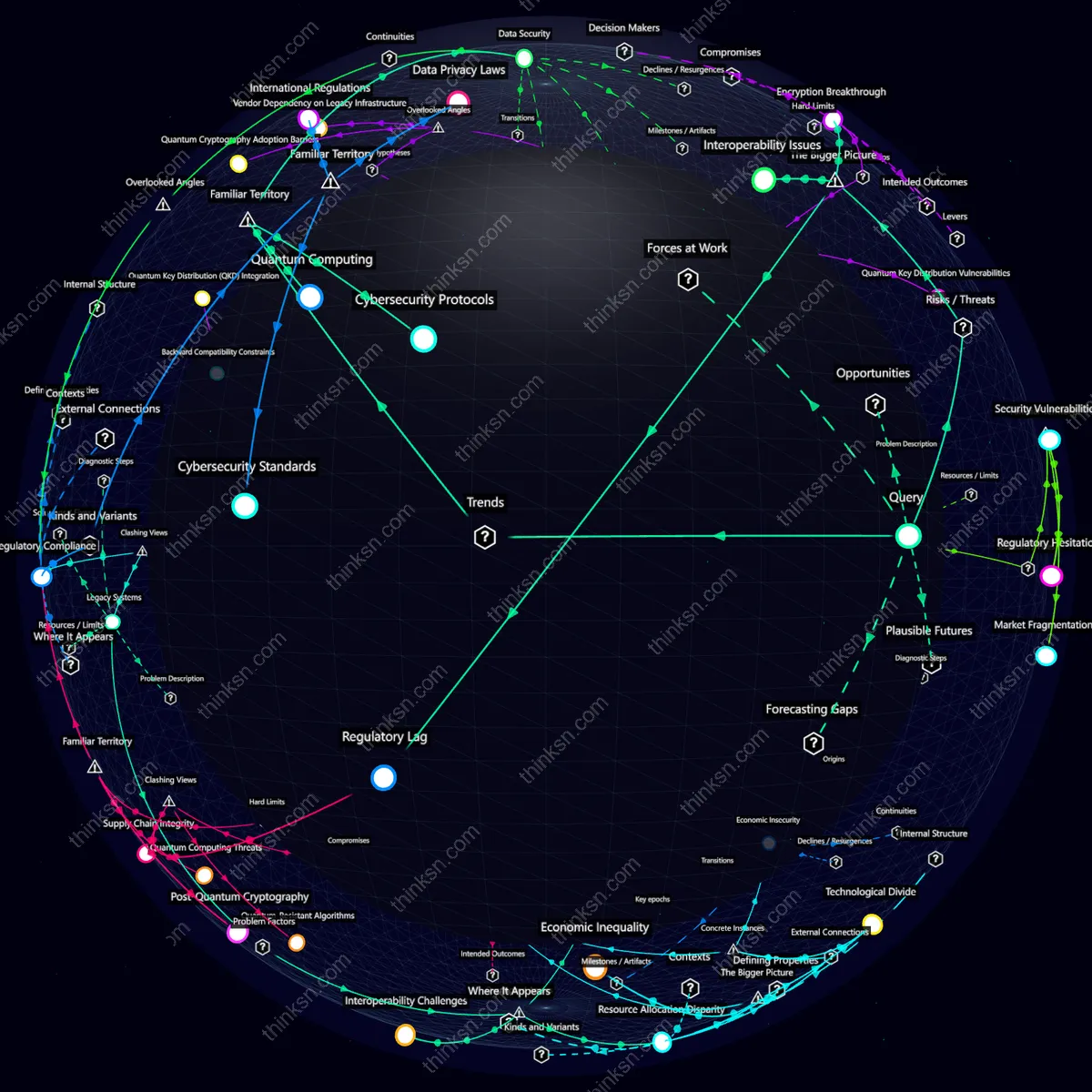
Analysis reveals 5 key thematic connections.
Key Findings
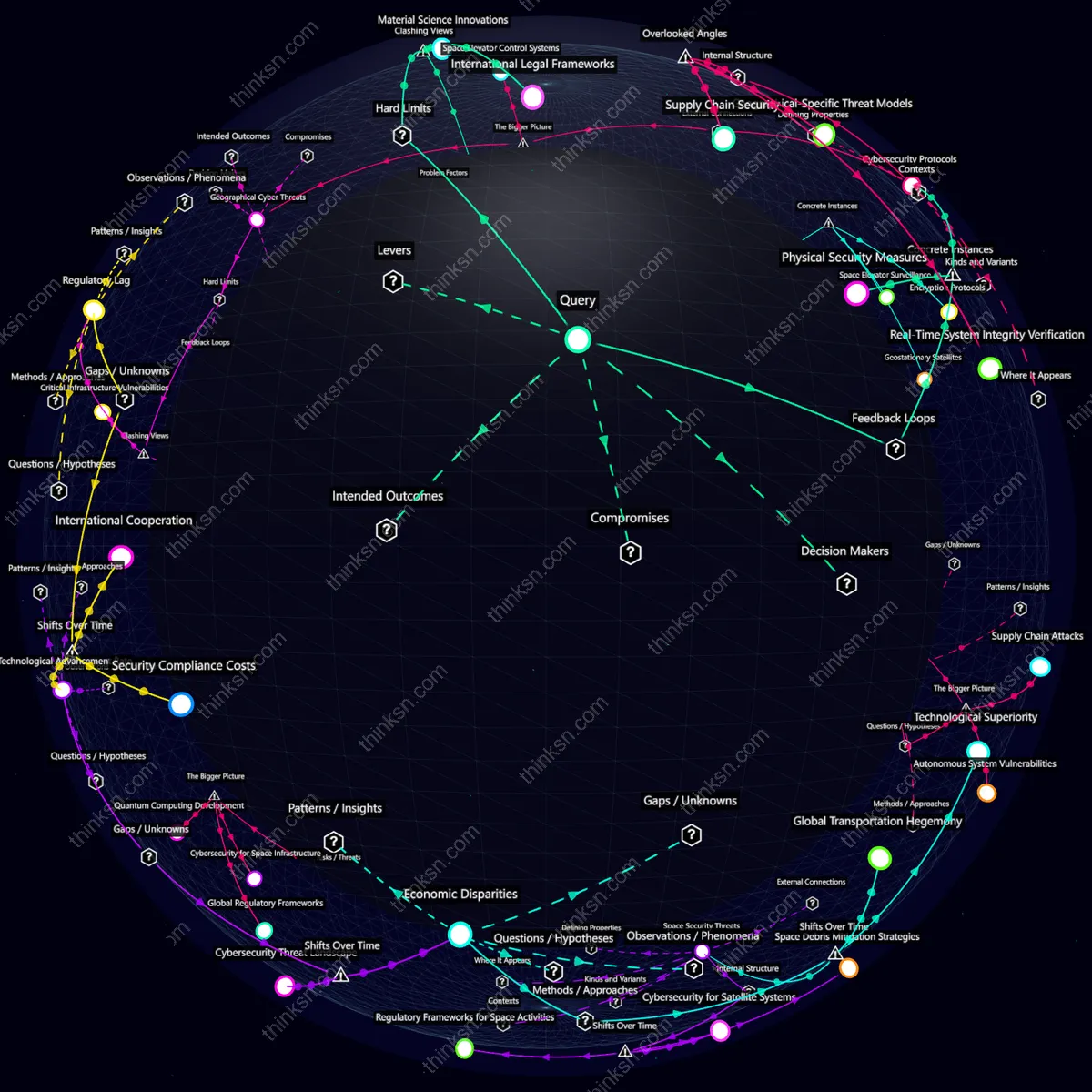
Cryptography and Data Integrity
Implementing robust cryptographic protocols and data integrity checks is essential for securing the operational systems of space elevators. However, this measure also creates a dependency on advanced cybersecurity skills and infrastructure, which may be vulnerable to sophisticated cyber attacks from nation-states or criminal organizations.
Material Science Innovations
The security of space elevators relies heavily on the development of new materials resistant to both physical damage and espionage. While these innovations can significantly enhance structural integrity, they also necessitate continuous research and investment in material science, potentially diverting funds from other critical areas like payload capacity or passenger safety.
International Legal Frameworks
Establishing international legal frameworks to govern the use of space elevators is crucial for preventing sabotage and espionage. However, such regulations may face opposition from countries with competing interests in space exploration, leading to geopolitical tensions that could delay or derail critical security measures.
Cybersecurity Protocols
The implementation of robust cybersecurity protocols for space elevators becomes a critical task as these structures become key infrastructure. A breach could result in catastrophic failures or even sabotage, underscoring the need for continuous monitoring and rapid response mechanisms to protect against espionage.
Physical Security Measures
Space elevator construction sites will face heightened physical security risks due to their revolutionary potential. This necessitates constant surveillance and access controls, similar to those seen around nuclear facilities or major defense contractors, which can create bureaucratic hurdles for legitimate researchers and engineers.
Deeper Analysis
What are the cybersecurity protocols needed to protect the structural and operational components of space elevators across different geographical regions?
Geographical-Specific Threat Models
Cybersecurity protocols for space elevators must account for geographical-specific threat models, as regional cyber threats and adversarial capabilities vary widely. For instance, a protocol designed for a high-threat area like Eastern Europe may not suffice in the more politically stable regions of North America or East Asia, leading to potential vulnerabilities if protocols are overly generalized.
Real-Time System Integrity Verification
Ensuring real-time system integrity verification is crucial for space elevators but introduces a complex trade-off between security and operational efficiency. Continuous monitoring can prevent unauthorized access or tampering, yet it also creates data processing bottlenecks and requires advanced computational resources that may be challenging to maintain in remote locations.
Supply Chain Security
Cybersecurity protocols must include stringent supply chain security measures for space elevators' components. Given the reliance on specialized materials from various international suppliers, a single compromised part could jeopardize overall system integrity. This dependency highlights the need for robust third-party audits and secure logistics practices to prevent sabotage or espionage.
Space Elevator Control Systems
Cybersecurity protocols must tightly integrate with real-time monitoring and control systems of space elevators to prevent unauthorized access or sabotage. However, overly stringent security measures can lead to operational delays and increased costs, creating a tension between safety and efficiency.
Geographical Cyber Threats
Different regions pose unique cyber threats to space elevator infrastructure, necessitating tailored cybersecurity protocols. For instance, the proximity of coastal elevators to maritime surveillance networks increases vulnerability to naval cyber espionage, highlighting the need for region-specific threat assessments.
Satellite Communication Security
Effective cybersecurity protocols for space elevators rely heavily on secure satellite communication channels, which are themselves vulnerable to interception and jamming. Ensuring robust encryption and redundancy in these systems is crucial but introduces complexity that can complicate emergency response scenarios.
Explore further:
- What strategic interventions are necessary to mitigate geographical cyber threats in protecting space elevators from sabotage and espionage, considering their potential revolutionary impact on transportation?
- What are the key components and categories involved in securing satellite communication for the protection of space elevators from sabotage and espionage?
What strategic interventions are necessary to mitigate geographical cyber threats in protecting space elevators from sabotage and espionage, considering their potential revolutionary impact on transportation?
Critical Infrastructure Vulnerabilities
The concentration of cyber threats on critical infrastructure like space elevators can lead to a disproportionate allocation of security resources, leaving less visible but equally vital systems under-protected. This skewed focus may inadvertently increase systemic risk by creating single points of failure that could be exploited.
Regulatory Lag
The rapid evolution of cyber threats outpaces regulatory frameworks, especially concerning emerging technologies such as space elevators. This lag can create legal vacuums where malicious actors exploit ambiguities and lack of oversight to engage in espionage or sabotage with reduced risk of prosecution.
Geopolitical Tensions
The strategic importance of space elevators as revolutionary transportation infrastructure intensifies geopolitical competition, leading states to prioritize covert cyber operations over transparent collaboration. This dynamic can exacerbate mistrust and hinder international cooperation on cybersecurity measures, making it easier for adversaries to exploit vulnerabilities.
Explore further:
- How might regulatory lag impact the effectiveness of security measures for space elevators against sabotage and espionage as technology advances?
- How might geopolitical tensions evolve over time in response to the development and operation of space elevators, and what security measures could mitigate potential threats from espionage and sabotage?
What are the key components and categories involved in securing satellite communication for the protection of space elevators from sabotage and espionage?
Encryption Protocols
Advanced encryption protocols are crucial for satellite communication security but can also introduce delays and complexity that hinder real-time data transmission. For instance, a U.S. company developing secure satellite links faced significant challenges in balancing cybersecurity needs with operational efficiency.
Geostationary Satellites
Relying on geostationary satellites for communication can expose countries to the risk of espionage and sabotage due to their fixed position, making them prime targets. In 2018, a Chinese satellite reportedly intercepted signals from a U.S. military satellite in geosynchronous orbit, highlighting vulnerabilities in such systems.
Space Elevator Surveillance
Deploying surveillance satellites specifically to monitor space elevators for sabotage attempts can deter potential threats but also attract unwanted attention and cyber-attacks on these critical infrastructure nodes. Russia’s recent efforts to enhance its orbital reconnaissance capabilities have raised concerns about the security of international space assets.
How might regulatory lag impact the effectiveness of security measures for space elevators against sabotage and espionage as technology advances?
Technological Advancement Rate
As technology for space elevators rapidly advances, regulatory frameworks struggle to keep pace, creating a vacuum where outdated regulations allow potential security vulnerabilities to go unaddressed. This lag can enable malicious actors to exploit the gap between technological and legal capabilities, undermining efforts to safeguard these critical infrastructure projects.
Security Compliance Costs
Regulatory lag increases compliance costs for space elevator operators as they must navigate a patchwork of outdated regulations while implementing cutting-edge security measures. This financial burden may divert resources from proactive threat detection and mitigation, focusing instead on meeting minimum standards that fail to address emerging risks posed by advanced espionage or sabotage techniques.
International Cooperation
Regulatory lag exacerbates the challenge of international cooperation in enforcing security measures for space elevators. Differing regulatory approaches among nations can create legal loopholes exploited by saboteurs and spies, leading to a fragmented response that weakens global efforts to protect this emerging infrastructure from sophisticated threats.
How might geopolitical tensions evolve over time in response to the development and operation of space elevators, and what security measures could mitigate potential threats from espionage and sabotage?
Space Dominance Race
As space elevators lower the cost of access to orbit, a new Space Dominance Race emerges. States like China and the U.S. vie for control over strategic orbital positions and resources, heightening geopolitical tensions and increasing risks of militarization in space.
Cyber Espionage
With critical infrastructure tied to space elevators, cyber espionage escalates as nations seek to sabotage or exploit vulnerabilities. Incidents like the Stuxnet worm targeting Iran's nuclear program foreshadow more aggressive and disruptive cyber attacks on space-based assets.
International Space Treaty Revisions
Pressure mounts for international treaties to address new security threats posed by space elevators, leading to complex negotiations over sovereignty, liability, and military activities in space. The 1967 Outer Space Treaty's limitations on weaponization are re-examined amid rising tensions.
How might different rates of technological advancement among nations impact the security and surveillance strategies required to protect space elevators from espionage and sabotage, considering emerging insights and subjective viewpoints?
Cybersecurity Threat Landscape
As nations with faster technological advancement rates develop more sophisticated cyber capabilities, they may also create vulnerabilities that smaller or slower-advancing countries can exploit. This uneven development increases the risk of espionage and sabotage targeting critical infrastructure like space elevators.
Economic Disparities
The disparity in technological advancement rates between nations can exacerbate economic inequalities, leading to resentment and potential instability. Countries lagging behind may resort to non-traditional methods such as espionage or sabotage of advanced projects like space elevators to level the playing field.
What are potential emerging cyber espionage tactics that could target space elevator systems, and how might these threats evolve as technology advances?
Quantum Computing Capabilities
As quantum computing advances, cyber espionage threats could evolve to exploit vulnerabilities in space elevator systems' encryption protocols. Quantum computers may break current cryptographic protections, enabling attackers to intercept and decrypt sensitive communications and data transfers, potentially leading to catastrophic disruptions or control over critical infrastructure.
Autonomous System Vulnerabilities
Cyber espionage tactics could target the autonomous navigation systems of space elevators, exploiting weak points in AI decision-making algorithms. This could lead to scenarios where attackers manipulate elevator operations, causing delays, malfunctions, or even structural damage, with severe implications for global supply chains and space exploration efforts.
Supply Chain Attacks
Cyber espionage actors might infiltrate the supply chain of companies manufacturing components for space elevators, injecting malicious code or counterfeit parts. Such actions could go undetected until critical moments, leading to sudden failures that compromise the structural integrity and operational safety of these systems.
In what ways could economic disparities between nations impact the security and vulnerability of space elevators to sabotage and espionage, considering their potential to revolutionize global transportation?
Technological Superiority
Countries with significant economic disparities often see the wealthy nations monopolizing advanced technologies like space elevators. This technological superiority creates a power imbalance, where less economically endowed nations may feel compelled to undermine such infrastructures through sabotage or espionage as they seek to level the playing field.
Space Security Threats
Economic disparities between nations can lead to heightened geopolitical tensions and increased vulnerability of shared global resources. Space elevators, due to their strategic importance, become targets for espionage and sabotage by economically disadvantaged states aiming to disrupt the economic power dynamics.
Global Transportation Hegemony
The development of space elevators could further entrench a hegemonic position for economically dominant nations in global transportation networks. This can exacerbate international inequalities, encouraging covert operations from less influential countries seeking to destabilize the global order and reduce their own strategic disadvantage.
What potential risks and benefits arise from using quantum computing to enhance security measures for space elevators, considering emerging technologies and diverse perspectives on cybersecurity?
Quantum Cryptanalysis Threats
The emergence of quantum computers poses a significant threat to traditional cryptographic systems used in space elevator security. For instance, Shor's algorithm could break RSA encryption, exposing real-time communication and control protocols to interception by malicious actors with access to powerful quantum processors.
Post-Quantum Encryption Standards
As organizations scramble to develop post-quantum cryptographic standards, there is a risk of creating overly complex or rigid solutions that may not adapt well to rapid technological changes in space elevator security infrastructure. This could lead to vulnerabilities if adversaries exploit the time lag between standardization and implementation.
Quantum Key Distribution Vulnerabilities
While quantum key distribution offers theoretically unbreakable encryption, it relies on assumptions about the current state of quantum technology and theoretical models. A real-world example is the potential for side-channel attacks or implementation flaws that could undermine the security promises of QKD systems in space elevator communications.
What are the architectural components and categories necessary for ensuring space security threats do not compromise the integrity of space elevators?
Space Debris Mitigation Strategies
As space elevators become operational, the accumulation of space debris poses a critical threat. Effective mitigation strategies are essential but often require international cooperation that can be hindered by geopolitical tensions, leading to fragile dependencies on peace and stable global relations.
Cybersecurity for Satellite Systems
The interconnectedness of satellite systems with ground control necessitates robust cybersecurity measures. A successful cyber attack could disrupt the operation of space elevators, causing significant financial losses and endangering human lives due to fragile dependencies on secure communication channels.
Regulatory Frameworks for Space Activities
Lack of a unified international regulatory framework can lead to competitive overuse of orbital paths around the Earth's equator. This could result in congested orbits, increasing the risk of collisions and compromising the integrity of space elevators through unintended consequences stemming from unregulated space activities.
How might post-quantum encryption standards evolve to protect space elevators from cyber threats as they become critical infrastructure for global transportation in the future?
Cybersecurity for Space Infrastructure
As space elevators become critical transportation hubs, post-quantum encryption standards must evolve to protect against sophisticated cyber threats. However, rapid standardization could lead to implementation delays and vulnerabilities if legacy systems cannot be swiftly updated.
Global Regulatory Frameworks
The development of international regulations for post-quantum cryptography is crucial but challenging due to geopolitical tensions and varying technological readiness among nations. This delay in regulatory harmonization could hinder the secure deployment of space elevators, leaving them exposed to cyber attacks from state or non-state actors.
Quantum Computing Development
The pace at which quantum computing capabilities advance poses a significant threat to current encryption methods. Space elevator operators must anticipate and adapt to potential breakthroughs in quantum technology that could render existing post-quantum standards obsolete, leading to catastrophic security failures.