Could Cryptocurrency Volatility Breed Financial Instability?
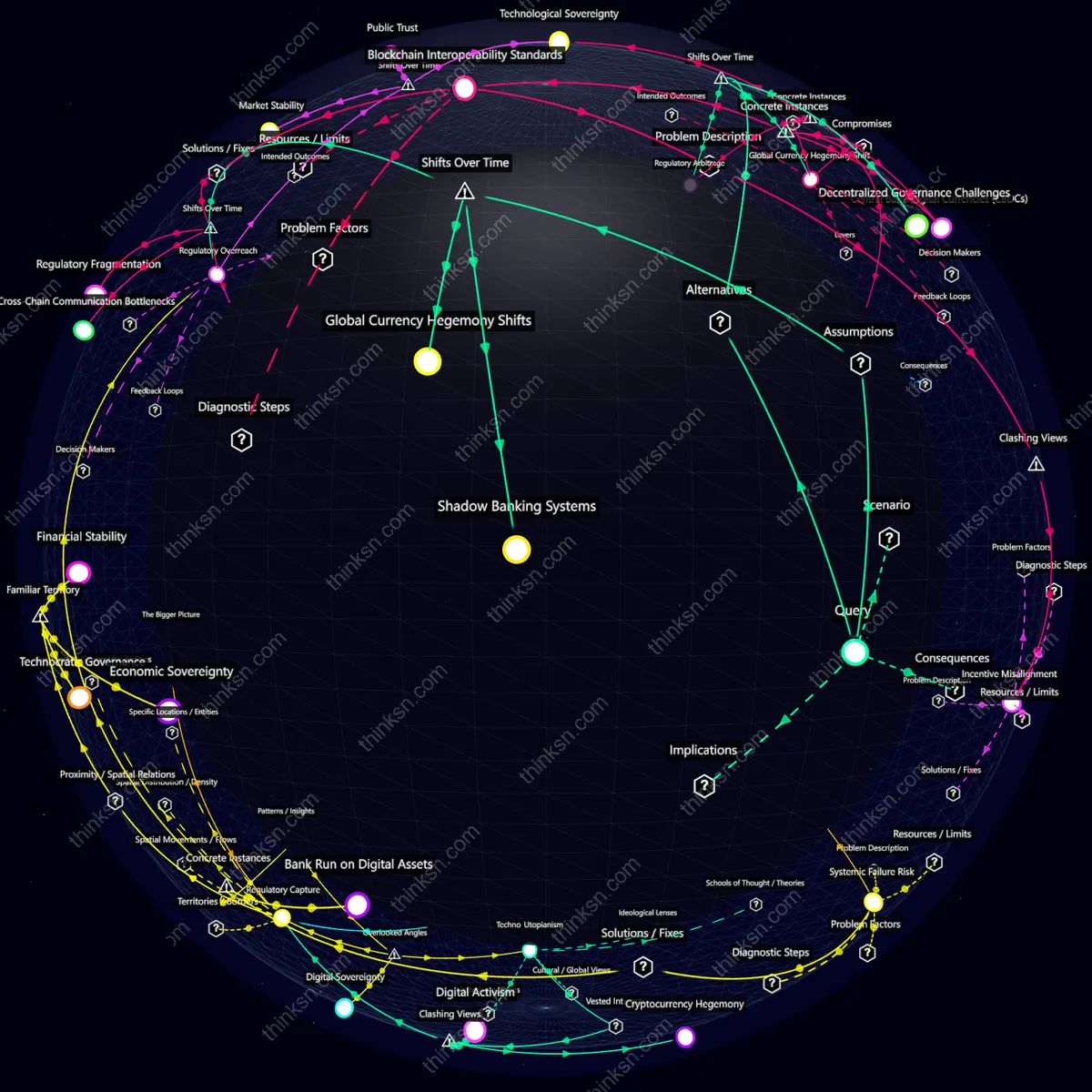
Analysis reveals 5 key thematic connections.
Key Findings
Market Volatility
Increased use of cryptocurrencies in daily transactions amplifies market volatility due to their high price fluctuations. This can lead to rapid shifts in value, deterring mainstream adoption and creating a cycle where frequent speculative trading exacerbates instability.
Regulatory Lag
Governments and regulatory bodies struggle to keep pace with the rapid evolution of cryptocurrencies, leading to gaps in oversight. This lack of regulation can incentivize illicit activities such as money laundering, further destabilizing financial systems by undermining trust and security.
Technological Dependence
Widespread reliance on digital platforms for cryptocurrency transactions exposes users to cyber threats and technical failures. A major hack or system outage could freeze funds and disrupt commerce, revealing a critical dependency on robust cybersecurity measures that may not yet be in place.
Regulatory Challenges
Governments face significant regulatory challenges in adapting to the rapid adoption of cryptocurrencies. The lack of robust oversight mechanisms can create loopholes for money laundering and tax evasion, further complicating financial stability and increasing systemic risks.
Consumer Behavior
The shift towards cryptocurrency transactions alters consumer behavior, potentially leading to speculative bubbles driven by herd mentality rather than economic fundamentals. This shift can result in sudden market crashes when large numbers of users exit en masse, highlighting the fragility of such systems.
Deeper Analysis
What are the potential regulatory challenges that could exacerbate financial instability if cryptocurrencies become a primary medium for daily transactions, and how would these challenges be measured under stress-test conditions?
Market Volatility
Increased market volatility due to regulatory uncertainty can lead investors and traders to adopt riskier strategies, exacerbating financial instability as cryptocurrencies become more mainstream. This fragility is particularly pronounced during economic downturns when speculative investments are most volatile.
Cross-Border Transactions
The lack of uniform global regulations for cross-border crypto transactions can create legal grey areas that facilitate money laundering and other illicit activities, undermining financial stability. Such regulatory gaps expose the system to significant risk, as enforcement agencies struggle to keep pace with technological advancements.
Consumer Protection
Insufficient consumer protection measures in the face of rapid adoption can lead to a surge in fraudulent schemes and investor losses, eroding public trust and stability. This is especially critical during stress tests when regulatory frameworks are challenged by unprecedented transaction volumes.
Anti-Money Laundering Frameworks
As cryptocurrencies become a primary medium for daily transactions, existing anti-money laundering (AML) frameworks struggle to keep pace with the rapid innovation and anonymity features of new digital assets. This regulatory gap can exacerbate financial instability by allowing illicit activities to flourish unchecked, potentially undermining trust in the broader financial system.
Cross-Border Transaction Regulation
The expansion of cryptocurrency usage across borders presents significant challenges for regulators who are accustomed to national frameworks. The lack of uniform global regulation creates a fragmented landscape where illicit actors can exploit jurisdictional loopholes, leading to increased financial instability and potential risks for economic security.
Consumer Protection Laws
Insufficient consumer protection laws in the context of cryptocurrencies leave users vulnerable to fraud and scams. As adoption rates increase, the failure to implement robust regulatory measures can lead to a surge in fraudulent activities, eroding public confidence and exacerbating financial instability through widespread losses.
Explore further:
- How might evolving cross-border transaction regulations impact the stability of cryptocurrency markets due to increased daily use in transactions?
- How might existing consumer protection laws be strained or fail to adequately protect consumers in a scenario where cryptocurrencies are widely used for daily transactions and experience significant market fluctuations?
How might evolving cross-border transaction regulations impact the stability of cryptocurrency markets due to increased daily use in transactions?
Regulatory Arbitrage
Cryptocurrency exchanges exploit regulatory differences between jurisdictions to attract users seeking lower fees and fewer restrictions. This practice can create a race to the bottom in terms of compliance standards, posing systemic risks such as money laundering.
Anti-Money Laundering (AML) Compliance
As cross-border transaction regulations tighten, AML requirements for cryptocurrency firms become more stringent. This increases operational costs and can lead to a chilling effect on innovation and user adoption due to the high compliance burden.
Blockchain Transparency Initiatives
Efforts by regulators to enhance blockchain transparency through technology like smart contracts may inadvertently expose users' transactional data, raising privacy concerns. This could deter daily use of cryptocurrencies among individuals wary of surveillance and data misuse.
Global Financial Stability Board (FSB) Guidelines
The FSB's issuance of guidelines on monitoring and managing risks from virtual currencies under evolving cross-border regulations has significant implications. These guidelines can either stabilize cryptocurrency markets by providing clarity and uniformity or exacerbate volatility if interpreted inconsistently across jurisdictions.
Explore further:
- How might regulatory arbitrage evolve as cryptocurrencies become more prevalent in daily transactions, and what are its implications for financial instability due to market fluctuations?
- What are the impacts of AML compliance requirements on the adoption and stability of cryptocurrencies in daily transactions?
How might regulatory arbitrage evolve as cryptocurrencies become more prevalent in daily transactions, and what are its implications for financial instability due to market fluctuations?
Cryptocurrency Evasion
As cryptocurrencies gain traction in daily transactions, regulatory arbitrage evolves into a tool for evasion, allowing individuals to skirt financial regulations through decentralized networks. This shift increases systemic risk as regulators struggle to keep pace with rapidly evolving technologies.
Market Volatility Exploitation
Regulatory arbitrage becomes intricately linked with market volatility exploitation, where traders take advantage of price discrepancies across jurisdictions and asset classes due to differing regulatory environments. This dynamic intensifies financial instability as sudden changes in regulations trigger massive capital movements.
Global Financial Decentralization
The rise of cryptocurrencies catalyzes a shift towards global financial decentralization, challenging traditional banking systems' dominance and leading to fragmented regulatory landscapes that complicate international cooperation. This evolution risks undermining national economic stability as arbitrage opportunities grow.
What are the impacts of AML compliance requirements on the adoption and stability of cryptocurrencies in daily transactions?
Regulatory Scrutiny
Increased regulatory scrutiny due to AML compliance often leads financial institutions to impose stricter Know Your Customer (KYC) policies, inadvertently stifling the adoption of cryptocurrencies by users who prefer anonymity and privacy.
Transaction Monitoring Systems
The deployment of advanced transaction monitoring systems in banks and exchanges to comply with AML regulations can create technical barriers for smaller cryptocurrency platforms, leading to a market consolidation that may be exploited by unregulated entities operating outside traditional financial frameworks.
Cross-Border Transactions
Cross-border transactions involving cryptocurrencies face heightened scrutiny due to differing AML standards across countries, causing delays and increased costs for legitimate users while potentially pushing illicit activities into less regulated jurisdictions.
Explore further:
- How could the integration of Transaction Monitoring Systems impact the stability and security of financial markets when using cryptocurrencies for daily transactions?
- What strategies can be formulated to mitigate financial instability in cross-border transactions due to market fluctuations if cryptocurrencies become widely used in daily transactions?
How could the integration of Transaction Monitoring Systems impact the stability and security of financial markets when using cryptocurrencies for daily transactions?
Regulatory Compliance
Transaction Monitoring Systems enhance regulatory compliance by flagging suspicious activities, yet they can also create a false sense of security among financial institutions. This may lead to complacency and inadequate scrutiny of low-probability but high-impact risks.
Crypto Fraud Detection
As Transaction Monitoring Systems become more adept at detecting fraud in cryptocurrency transactions, they inadvertently target legitimate activities by misidentifying them as suspicious due to the complex nature of blockchain analytics. This can lead to unwarranted freezing of funds and legal disputes.
Data Privacy Concerns
The integration of advanced monitoring systems raises significant concerns about data privacy, particularly with the increasing use of personal financial information for transaction analysis. Financial institutions face pressure from regulators while customers demand more transparency and protection of their private data.
What strategies can be formulated to mitigate financial instability in cross-border transactions due to market fluctuations if cryptocurrencies become widely used in daily transactions?
Cryptocurrency Volatility
The adoption of cryptocurrencies in cross-border transactions can lead to significant volatility due to market fluctuations, undermining financial stability. Central banks and regulatory bodies face the challenge of balancing innovation with risk management to mitigate potential economic shocks.
Regulatory Harmonization
Efforts to harmonize regulations across borders pose a complex challenge as different jurisdictions have varying levels of acceptance towards cryptocurrencies, leading to fragmented enforcement. This disparity can create loopholes for illicit activities and hinder the seamless flow of cross-border transactions.
Blockchain Interoperability
The lack of interoperability between blockchain platforms poses a significant barrier to efficient cross-border transactions using cryptocurrencies. Without standardization, businesses may face higher operational costs and delays, impacting their competitiveness in the global market.
How might blockchain interoperability affect the stability and fluctuation risks in a cryptocurrency-driven daily transaction environment?
Cross-chain Transactions
As cross-chain transactions become more prevalent through blockchain interoperability, the risk of security breaches increases due to complex interactions between different blockchains. This can lead to sudden and unpredictable fluctuations in cryptocurrency values as users might panic-sell during perceived vulnerabilities, destabilizing daily transaction environments.
Smart Contract Standardization
Standardization of smart contracts across interoperable blockchains simplifies cross-platform transactions but also introduces a 'lock-in' effect where developers and businesses become dependent on specific blockchain ecosystems. This dependency can stifle innovation and reduce competition, ultimately affecting the flexibility and resilience of the cryptocurrency market.
Decentralized Finance (DeFi) Integration
Integration of DeFi platforms with interoperable blockchains enhances liquidity and access to financial services globally but also exposes users to higher risks due to the lack of regulatory oversight. This can lead to rapid asset price swings as speculative trading increases, impacting daily transaction stability.
Cross-Chain Transaction Volume
Increased cross-chain transaction volume due to blockchain interoperability can lead to heightened liquidity risks in cryptocurrency markets. As funds move between chains, sudden surges in activity on less mature or stable platforms could trigger volatility spikes, endangering the financial stability of daily transactions.
Regulatory Compliance Challenges
As blockchain interoperability grows, regulatory bodies face increasing challenges in monitoring cross-chain transactions. This creates an environment where compliance becomes fragmented or inadequate, potentially leading to legal grey areas that exploit vulnerabilities and expose users to illicit activities or financial losses.
Explore further:
- What are the potential impacts of cross-chain transactions on financial stability in a scenario where cryptocurrencies dominate daily transactions?
- What would be the impact on financial stability if cross-chain transaction volume significantly increased due to extensive use of cryptocurrencies in daily transactions, and how could this exacerbate market fluctuations during a stress test scenario?
What would be the impact on financial stability if cross-chain transaction volume significantly increased due to extensive use of cryptocurrencies in daily transactions, and how could this exacerbate market fluctuations during a stress test scenario?
Market Volatility
A surge in cross-chain transaction volume can amplify market volatility, as rapid shifts in liquidity between chains create unpredictable price movements. This can lead to heightened risk for traders and investors who rely on stablecoin pegs or other collateral-backed assets.
Regulatory Scrutiny
As cross-chain transactions grow, regulators worldwide may increase scrutiny over financial institutions' compliance with anti-money laundering (AML) and know-your-customer (KYC) regulations. This could introduce operational overhead for exchanges and stifle innovation if overly restrictive.
Smart Contract Interoperability
The rise in cross-chain transactions highlights the need for robust smart contract interoperability standards, as flaws or inefficiencies can lead to systemic risks across interconnected networks. This exacerbates the challenge of maintaining security and consistency across diverse blockchain ecosystems.
Decentralized Finance (DeFi) Liquidity Pools
Increased cross-chain transaction volume can lead to heightened liquidity risks in DeFi platforms, as rapid asset movement between chains may overwhelm pools designed for intra-chain transactions. This can exacerbate price volatility during market stress tests, as seen when the 2020 'Black Thursday' crash exposed vulnerabilities in inter-chain liquidity management.
Smart Contract Vulnerabilities
As cross-chain transaction volume surges, so does reliance on complex smart contracts that bridge different blockchain ecosystems. These contracts are prone to unforeseen bugs or exploits, as demonstrated by the 2021 Poly Network hack, which exploited a cross-chain bridge protocol and drained millions of dollars in cryptocurrencies.