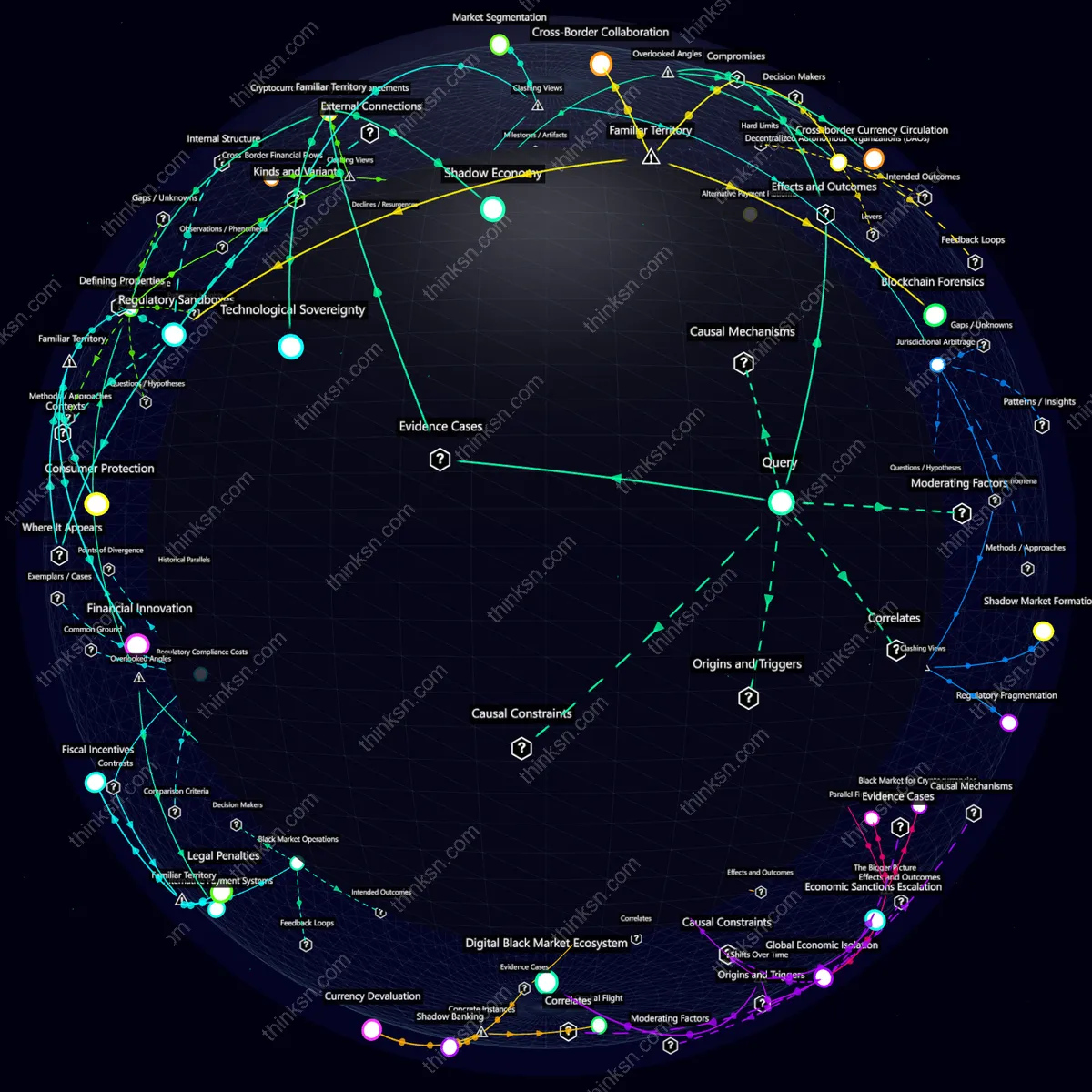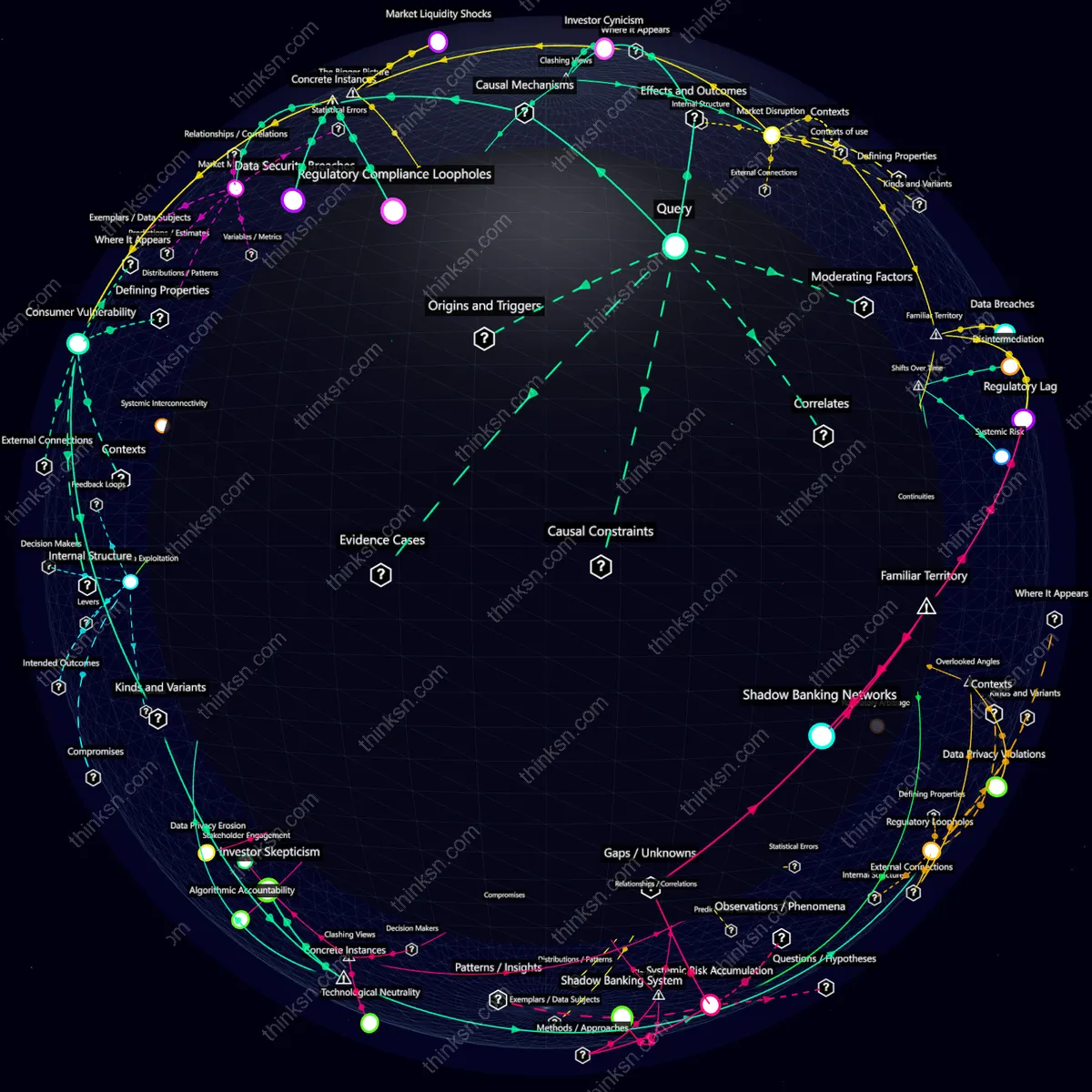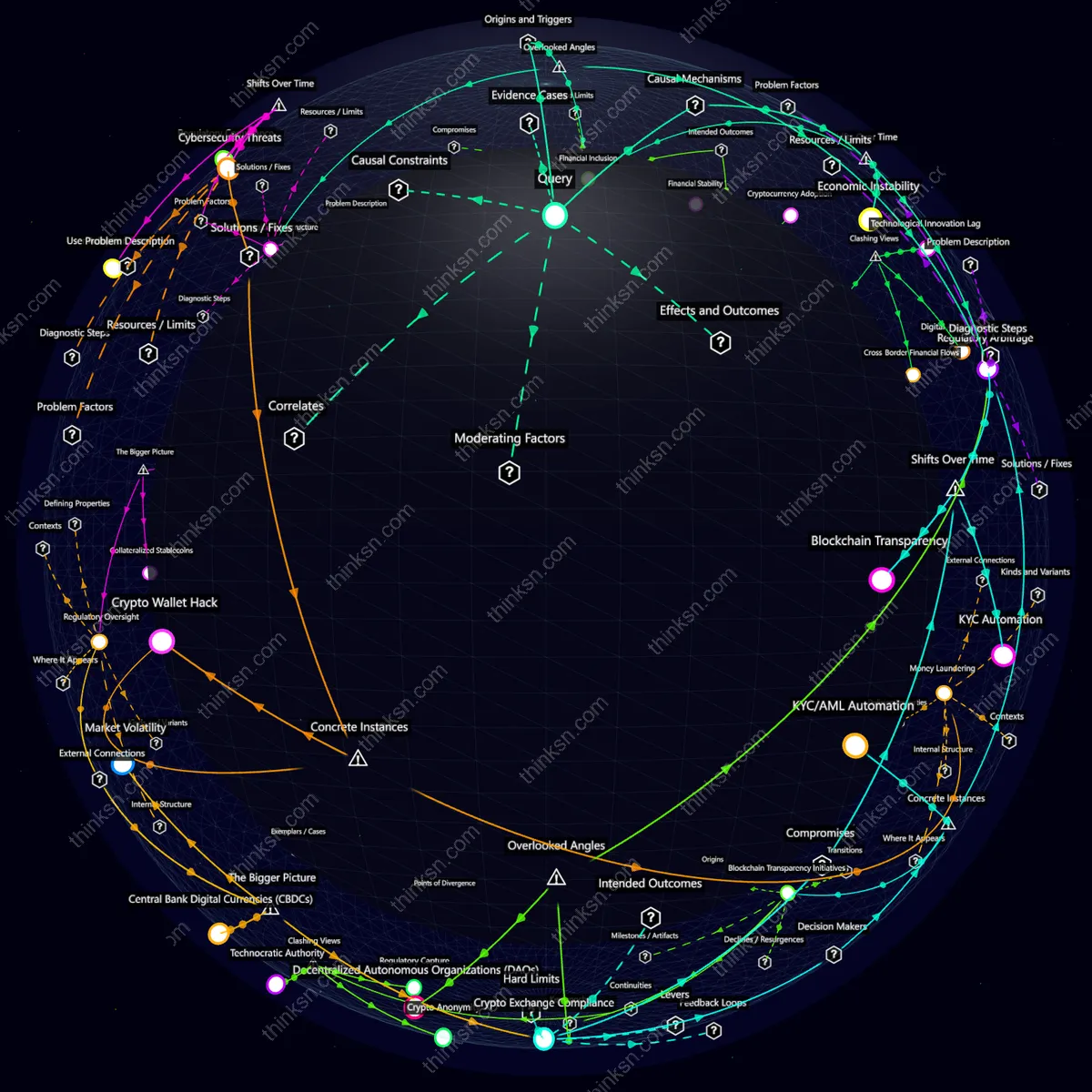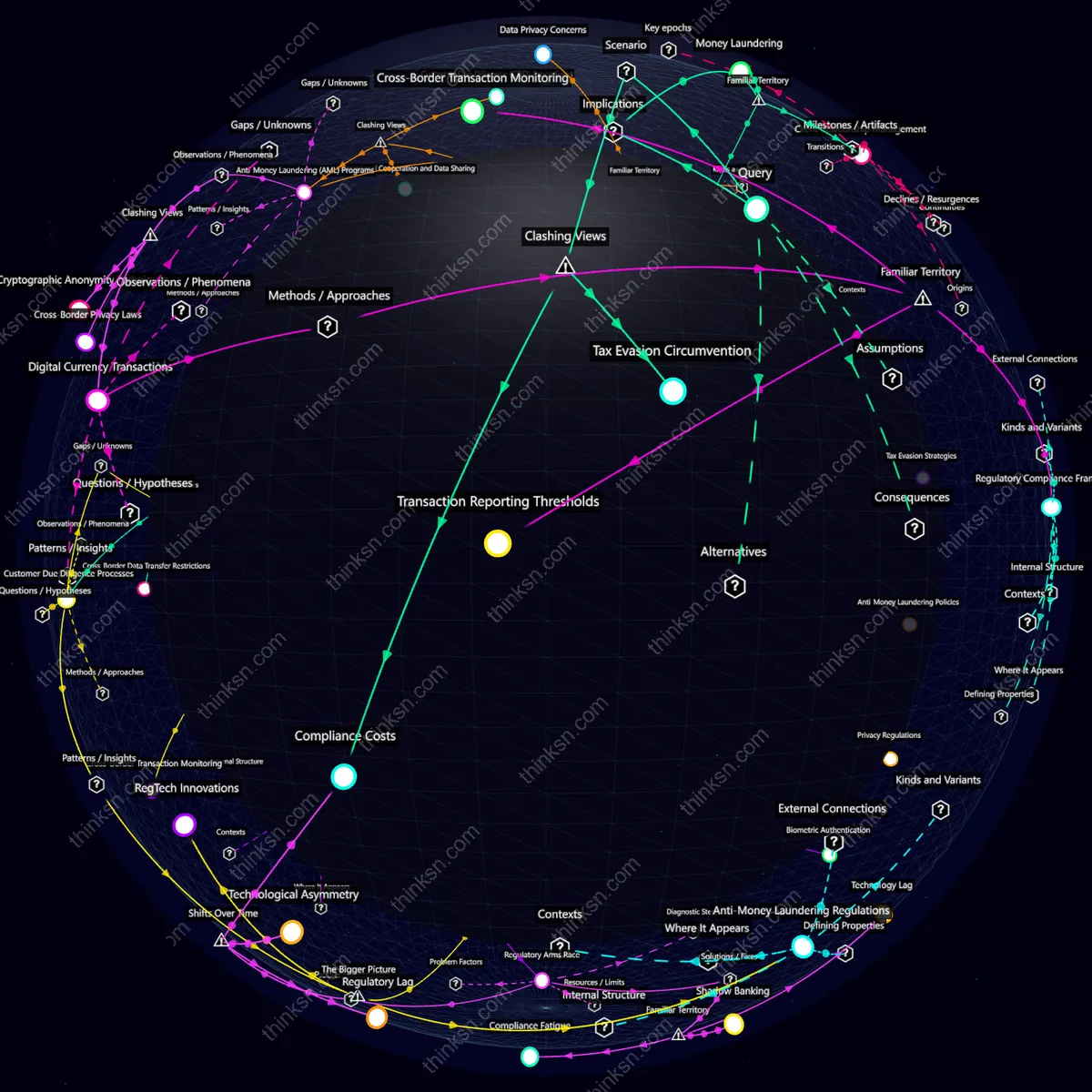
Lack of crypto regulation may lead to tax evasion
Key Findings
Crypto Tax Gaps
Cryptographic technologies expand tax evasion opportunities because regulatory systems designed for centralized banks cannot track decentralized, cross-border crypto transfers.
Different countries have different rules for taxing cryptocurrency. This mismatch lets people move money across borders using crypto in ways that avoid detection. Traditional financial systems rely on banks to report transactions. Crypto bypasses banks, using direct transfers that are hard to track. Because no single set of rules governs these transactions globally, enforcement lags. Authorities like the OECD struggle to get digital platforms to share data. The speed and secrecy of crypto transfers make it easy to hide ownership and income. Most crypto use may be legitimate, but the system's design helps some users hide wealth. National tax systems cannot effectively monitor these cross-border flows. Without unified oversight, crypto creates new opportunities to evade taxes. The technology outpaces regulation, leaving a structural gap in enforcement.
Crypto Tax Gap
The design of cryptocurrency networks enables tax evasion by removing traceable financial intermediaries, and without global reporting rules, tax systems cannot enforce compliance.
National tax systems are losing control over digital assets. This happens because cryptocurrency transactions are borderless and decentralized. They operate outside traditional banking networks. These networks used to provide data for tax enforcement. After 2017, blockchain technology became mature enough for global use. Cryptocurrencies then gained wide liquidity and user anonymity. Transactions now bypass banks and other financial intermediaries. This removes the main source of information for tax authorities. There is no global agreement on reporting crypto transactions. Rules like those for bank accounts do not apply. Distributed ledger technology allows value to move quickly and secretly. These transfers are hard to reverse or trace. Most tax systems still depend on honest self-reporting for crypto gains. But the design of crypto networks makes concealment easy. Without global cooperation, this gap will persist. Individual choices are shaped by a system that favors secrecy. Current laws cannot fully apply to these new transaction methods. Enforcement fails where traceability is missing. A coordinated global reporting system is needed. Only such a system can restore tax authority over digital assets.
Crypto Tax Loophole
Unregulated crypto corridors create a structural tax enforcement gap by allowing cross-border value transfers without identity checks or bank oversight, making tracking and taxation nearly impossible.
Without mandatory reporting rules for crypto assets, some countries allow money to move hidden from tax authorities. Paraguay offers cheap power and lax rules for mining operations. It does not require proof of identity for owning crypto wallets. People can send money across borders without bank oversight. This avoids traditional monitoring systems. Most countries cannot track these flows across multiple jurisdictions. There is no global rule for reporting crypto ownership like there is for banks. Without such rules, tracking and taxing crypto transfers becomes very hard. This creates a new kind of tax enforcement gap. It is not just a small leak. It is a structural gap caused by lack of intermediaries like banks.
Deeper Analysis
What if global coordination on crypto taxation were driven more by the strategic interests of tax haven jurisdictions themselves rather than external pressure?
Crypto Tax Shift
Tax havens boost global crypto compliance by adopting strict rules to attract legitimate firms, not to obey pressure but to stay competitive.
Some tax havens are changing how they operate. They are no longer just hiding money. Now they want to be trusted financial hubs. This shift happens when their survival depends on long-term trust, not short-term secrecy. The Caribbean nations show this trend. They created clear rules for digital assets. They do this to attract real blockchain businesses. These firms want to follow international standards. So the tax havens set up open licensing systems. They follow rules like those from the FATF. But they do it to gain an edge, not just to obey. This move turns secrecy into a weakness. It changes the offshore world from within. Now being transparent is more profitable than hiding. This shift does not come from global pressure. It comes from their own economic interests. As a result, tax compliance grows. Much of this progress starts inside tax havens. They adapt to stay important in a regulated digital economy.
Crypto Tax Havens
Tax havens undermine global tax enforcement by modernizing regulations to appear compliant while continuing to shield ownership, thus maintaining their role in cross-border tax avoidance.
National tax authorities lose power when financial secrecy countries adapt crypto rules to attract digital assets. The Cayman Islands, for example, use blockchain monitoring but still hide who owns companies. This lets them appear modern and compliant while shielding owners. Other tax havens do the same. They upgrade their image using technology without sharing real ownership data. This creates a gap between appearance and reality. They meet the look of global standards but not the substance. As major countries struggle to track crypto flows, these places become trusted gateways. They draw business by seeming legitimate, not just secret. This strengthens their role in helping people avoid taxes. The key force shaping global crypto tax rules isn't pressure from rich nations. It's the tax havens themselves, shaping rules to keep themselves central.
Explore further:
- What happens to the stability of these transparent licensing regimes if a major crypto economy rejects FATF-aligned standards and creates a parallel compliance system?
- What would happen to global crypto tax evasion if tax havens stopped competing for digital asset flows and instead faced mandatory, uniform transparency standards enforced by international bodies?
What if a major economy decided to fully recognize and legitimize crypto transactions by eliminating capital gains taxes on them—how would that affect global tax compliance norms?
Crypto Tax Haven Effect
A major economy exempting crypto gains from tax weakens global tax norms by making capital mobility more powerful than cooperation, because no global system exists to share transaction data in real time.
When a major economy stops taxing crypto gains, it creates a powerful example that weakens global tax enforcement. Other countries face pressure to follow suit or lose wealthy investors to the tax-free zone. This shift does not depend on illegal evasion alone. It happens because legal tax avoidance in one key nation makes it harder for others to justify strict rules. The situation is like the era before global bank reporting rules, when secret offshore accounts spread because a few countries allowed them. Today, no strong global system exists to track crypto transactions in real time. Without common rules for sharing data across exchanges and wallets, each country acts alone. Most still depend on people reporting their own gains. As more countries offer exemptions, compliance becomes a matter of choice, not enforcement. One nation’s decision to exempt crypto gains, without enforcing data sharing, does not just create loopholes. It signals that moving money freely matters more than tax fairness. This shift undermines the idea that all nations should cooperate on tax rules. Over time, these choices make global tax unity less likely. The result is not accidental. It follows directly from the lack of binding global reporting standards for digital assets.
Crypto Tax Loophole
Removing crypto capital gains taxes creates a tax avoidance channel because strict local rules let foreign actors mask transactions through compliant entities, turning regulatory clarity into global arbitrage.
When a major economy removes capital gains taxes on cryptocurrency, it does more than attract local investors. It turns its legal system into a gateway for global crypto money. Japan did this in 2017 by legalizing crypto exchanges. It set strict rules to track money. But those rules only applied inside Japan. Foreign users found a way around them. They sent money through approved Japanese firms to hide where it came from. This let them bring money back home without paying taxes. The trick is not hiding the transaction. It is using legal firms to clean the money’s path. Blockchains record every payment. But they cannot show who truly owns the money or why it moved. A legal label makes shady flows look clean. One country’s clear rules create confusion for others. The first mover shapes how money moves globally. This weakens worldwide tax efforts. It happens not because governments lack tools. It happens because only one country sets the rules. Without shared tax rules across nations, this gap will stay. One country’s policy breaks the unity of global tax systems. Legal status in one place becomes a weapon for tax avoidance elsewhere.
Crypto Tax Havens
Crypto tax havens appear compliant through modern rules but reject data sharing, so regulatory upgrades do not reduce tax evasion opportunities because they lack real transparency.
Some offshore financial centers have introduced modern rules for digital assets. They present these rules as steps toward global tax compliance. But adopting regulations does not always mean they share financial information. Many of these places still do not join international tax reporting systems. The OECD’s Common Reporting Standard includes automatic exchange of bank data. Yet participation remains low among these jurisdictions. Studies by the IMF and World Bank show most do not share ownership details. They follow anti-money laundering rules on the surface. But they avoid deeper cooperation with tax authorities. This creates an image of strong oversight without real transparency. Their legal systems appear reformed but block effective tax enforcement. These centers gain legitimacy without opening their records. As a result, regulators assume more rules mean less secrecy. But the same places adopt only those standards that attract business. They reject those that allow tax authorities to see who owns what. Without access to ownership data, tax oversight fails. So the move to licensed systems does not close tax loopholes.
Would the structural tax enforcement deficit persist if crypto transactions were conducted exclusively through regulated financial intermediaries, regardless of jurisdictional policies?
Crypto Tax Gap
Tax enforcement fails for non-custodial cryptocurrency transactions because no reporting entities exist to track value transfers, making compliance at exchanges irrelevant.
When people use cryptocurrency wallets they control, tax authorities lose visibility. This happens because value moves without going through banks or exchanges. In places like Paraguay, cheap energy and anonymous wallets create conditions like old offshore banking hubs. But unlike banks, there are no automatic reports on who sent or received funds. Even if every exchange followed the rules, enforcement still fails. Rules only cover transfers between regulated platforms. They miss transactions before funds reach any exchange. The core problem is that no one reports activity from personal wallets. This reporting gap exists by design, not by weak laws. Systems like the Common Reporting Standard can't work when there's no account relationship. Multilateral efforts focus only on exchanges, not the source of funds. Without requiring data on senders and beneficiaries of crypto transfers, gaps remain wide. The tax enforcement gap remains even if all intermediaries comply. Value moves outside regulated channels entirely. Reporting systems cannot capture what they cannot see. The structure itself defeats oversight.
Crypto Tax Loopholes
Tax enforcement fails in crypto because the system allows value to move without custodians or identity checks, making ownership invisible even when entry points are regulated.
Financial transparency fails in cryptocurrency systems when it relies on voluntary cooperation instead of enforceable rules for regulated firms. This happens because cryptocurrencies allow anyone to send value without needing approval or oversight. There are no custodians to verify who owns what, and users can transact without revealing real-world identities. Transactions on blockchains are final and cannot be reversed, so regulators cannot intervene after the fact. Traditional audits depend on records from banks, but in crypto, ownership is spread across countless private wallets. Even compliant firms cannot track where money goes once it leaves their system. Data shows an increasing share of crypto transfers cannot be traced. Regulatory checks at entry points do not stop value from flowing into unmonitored networks. Without global rules that require identity tracking built into the system itself, gaps remain. The presence of regulated exchanges does not fix the problem. Tax evasion persists because ownership can be hidden directly in the technology.
What happens to the stability of these transparent licensing regimes if a major crypto economy rejects FATF-aligned standards and creates a parallel compliance system?
Crypto Regulation Split
Stable crypto licensing falls apart when a major economy breaks from global rules, because smaller ones depend on shared trust built through common standards.
When a major crypto economy leaves international standards and sets its own rules, it challenges stable licensing systems elsewhere. The stability of these systems relies on smaller nations seeing legitimacy in global ties, not independence. The Caribbean's shared digital rules show how small economies choose credibility over self-rule. They depend on approval from global regulators to maintain trust. If a major player breaks away, it forces others to pick between connecting with global markets or going it alone. This divide weakens trust not by moving money but by breaking shared beliefs in common rules. Without a single global standard, mutual recognition collapses. A credible alternative to the main global framework undermines stability by ending the belief in one modern regulatory model.
Crypto Tax Tracking
Tax enforcement in crypto remains feasible because governments require reporting from service providers and use technical tools to trace transactions through hybrid financial links.
The idea that cutting out intermediaries blocks tax enforcement assumes governments can't adapt to new technology. This is not true. Major countries have found ways to monitor transactions even without traditional middlemen. They do this by requiring certain financial services to report activity. Rules like the EU's DAC6 show how reporting can be built into different parts of the system. Crypto companies, wallet providers, and platforms that connect blockchains must now follow these rules. Even when users control their own wallets, most value still moves through regulated points. These include stablecoin issuers and services that analyze blockchain data. New tools can also group transactions to identify likely owners. Together, these steps create enough transparency for audits. Governments can track activity through service providers that are not full custodians but still leave traces. As a result, tax enforcement remains possible. The system works because states use leverage points beyond direct control.
What would happen to global crypto tax evasion if tax havens stopped competing for digital asset flows and instead faced mandatory, uniform transparency standards enforced by international bodies?
Tax Havens And Crypto Rules
Global crypto tax evasion would decline sharply only if a supranational body enforces uniform disclosure rules, removing tax havens' ability to profit from secrecy.
Tax havens control how quickly and fully they adopt financial transparency rules. This lets them appear compliant while still hiding ownership information. They do so by copying the look of regulation without real reform. For example, some offshore areas have adopted basic crypto rules but avoid sharing ownership data. International efforts to coordinate remain weak. This allows jurisdictions to meet minor requirements while keeping secrecy intact. Compliance becomes a tool for competition, not reform. The key advantage of tax havens is their ability to offer secrecy under the cover of legality. If strong global rules forced all countries to disclose ownership data uniformly, this advantage would vanish. A single authority with power over all digital assets could end the current system. It would remove the ability of tax havens to profit from secrecy. Without profitable secrecy, most cross-border crypto tax evasion would no longer be viable. Global crypto tax evasion would fall sharply only if a global body could enforce disclosure and punish non-compliance directly.
Crypto Tax Evasion
Crypto tax evasion persists because no shared legal definition of ownership allows cross-border tax enforcement, making transparency alone ineffective.
Cross-border crypto tax evasion continues because no global legal system clearly defines who owns digital assets. National tax rules cannot work without this foundation. Transparency rules alone do not stop evasion. Disclosure matters only when laws allow tax claims to be enforced. Without shared property rules, one country cannot recognize another’s tax rights. This means assets can be hidden in places where crypto is not treated as taxable property. Even full reporting fails if there is no legal way to seize assets. The IMF has shown tax compliance improves only when property rights are enforceable. The Model Tax Convention works best where laws align. Most countries still do not treat crypto as property before tax liability arises. This gap makes tax rules ineffective. Evasion will fall only when major economies agree on a common legal status for crypto assets. Only then can enforcement work across borders.
Crypto Tax Havens
Crypto tax havens enable global tax avoidance by providing transparent records for local authorities while blocking foreign access, making data available but not usable across borders.
Some financial centers now regulate digital assets in a way that allows full tracking of transactions but blocks foreign tax agencies from accessing ownership data. They require full audit trails for local authorities while refusing to share details with international tax bodies. This creates transparency for local rules but secrecy for foreign tax collectors. Even though all activity is recorded on blockchain ledgers, only domestic agencies can use the data. The system works because these places adopt advanced compliance tools but remain outside global tax-sharing networks. Financial firms in these areas gain credibility through strict local reporting, which protects them from wider scrutiny. As more crypto activity flows through such places, consistent reporting rules do not lead to consistent oversight. The reason is simple: having data is not the same as being able to use it across borders. This setup does not break rules—it builds legitimacy on controlled data access. True global oversight will only happen if international authorities can legally access ownership information, because secrecy alone is not the main problem—uneven data access is.
Crypto Tax Evasion
Crypto tax evasion persists because self-custody removes the third-party reporting needed for tax authorities to track ownership, making global transparency rules ineffective.
International tax transparency depends on banks and financial firms reporting account details. These reports are shared between countries under global agreements. But most crypto transactions happen without banks or intermediaries. People hold their own crypto in private digital wallets. No third party is present to report who owns what. Even if all countries agree on strict reporting rules, many transfers skip any central control point. As a result, tax authorities cannot reliably track ownership. Blockchains like Bitcoin and Ethereum show this trend clearly. Most activity is peer to peer, with no reporting entity. Without such a party, ownership records do not exist by default. Current tax systems assume someone always holds the data. That assumption fails in decentralized networks. Thus, enforcement fails even with full international cooperation. The nature of self-custody breaks traceability at scale. Rules requiring disclosure cannot work where no one can report.
Explore further:
- What would happen to the effectiveness of supranational enforcement if a major economy refused to cede jurisdictional control over its domestic crypto platforms while still participating in international financial systems?
- What if major economies cannot agree on a uniform legal definition of crypto assets—how would enforcement interoperability be achieved without it?
- If decentralized identity systems were widely adopted to link blockchain addresses to verified legal entities, would peer-to-peer crypto transactions still prevent effective tax reporting despite the absence of custodial intermediaries?
What would happen to global tax compliance if a major economy exempted crypto gains but only for residents who fully disclose all wallet addresses and transaction histories to a public registry?
Crypto Tax Transparency
Global tax compliance weakens because public crypto disclosures create fake transparency in countries that lack the tools to verify them.
When a large economy offers tax breaks for crypto gains in exchange for public disclosure of wallet addresses and transaction history, it creates a system where transparency looks real but isn't always. This system fails in countries that lack the tools to verify blockchain data. There, wealthy individuals can appear to comply by publishing their data. But without the ability to analyze this data in real time, local authorities cannot tell truth from fiction. The problem is not missing information. It is the absence of common, enforceable rules for proving where crypto assets come from. Without these, countries cannot trust each other's tax reports. This lets people shift activity to places where oversight is weak on paper but looks strong. Compliance becomes a show. The result is not more fairness. It is a two-tier system. Technologically advanced nations can verify transactions. Others cannot. So global tax rules grow weaker, not stronger. The system favors those with better tools. It leaves behind those without.
What if a major economy mandated protocol-level attribution of ownership for all on-chain transactions—would that eliminate the tax enforcement deficit, or would decentralized networks evolve to bypass such requirements?
Blockchain Privacy Rules
Blockchain networks evade ownership tracking because their design prioritizes censorship resistance and decentralized validation over identity compliance.
A major economy imposing ownership tracking on blockchain transactions would not close tax enforcement gaps. This is because decentralized networks are built to separate identity from transaction power. Their structure resists censorship more than it allows for compliance. Validation happens across many independent nodes, not controlled by gatekeepers. Wallet addresses are created without linking to real-world identities. This setup makes current travel rule efforts fail repeatedly. Most unmonitored transactions flow through non-custodial wallets. When validation is not tied to regulated institutions, and privacy tools are widely available, users can avoid compliance. They do so by switching to alternative blockchains or creating new chains through forking. Exchange delistings show how quickly users migrate under pressure. Past efforts like OECD reporting failed when real-time tracking was missing. Enforcement gaps remain if ledgers keep pseudonymity and finality. Ownership mandates clash with the core feature of blockchains: irreversible value transfer without permission. Forcing transparency would break the network’s basic design. The network would adapt by bypassing these rules. The reason lies in the structure itself. Decentralized operation cannot support full ownership tracking and still function as intended.
Crypto User Moves
Protocol-level identity rules fail because decentralized networks adapt through user-driven forks and privacy tools when state mandates conflict with pseudonymity.
If a national regulator requires blockchain networks to enforce user identity at the protocol level, the rule will fail unless all nodes follow the same identity rules. Decentralized networks stay secure because users are incentivized to participate honestly, not because they obey laws. When regulators force exchanges to verify identities, users shift to privacy-focused networks or create forks that protect anonymity. This shift is common and expected, not rare. The rise of privacy-preserving layer-2 networks after 2020 shows how users respond to pressure. Just as international trade rules struggle with tech-specific laws, top-down mandates fail when user-driven changes can scale quickly. Therefore, requiring identity tracking at the protocol level in a major economy will not solve tax enforcement gaps. Decentralized systems survive by moving functions outside regulated zones.
What happens to transparent licensing regimes if multiple credible alternative compliance systems emerge, rather than just one?
Regulatory Credibility Split
Transparent licensing systems collapse when multiple credible regulatory models exist because shared expectations depend on a single dominant standard.
Global financial rules have long relied on a single authority to define legitimate oversight. This authority, the FATF, sets the standard most countries follow. Stable licensing systems depend on everyone accepting this one standard. After 2008, the FATF expanded its reach to digital assets. Smaller open economies adopted its rules to stay connected to global finance. They needed to appear compliant with the dominant model. But if a major economy follows a different path and still gains trust, a problem arises. Compliance no longer means following the same rules. Trust can exist outside the main system. This shifts how countries judge each other's legitimacy. The basis for mutual recognition weakens when standards no longer share common beliefs. Even without immediate financial shifts, the perception of legitimacy changes. When more than one way to be credible exists, shared expectations erode. Licensing systems depend on those shared expectations for interoperability. If multiple credible systems emerge, the foundation of transparency breaks down. Therefore, transparent licensing systems only hold together when one dominant standard remains unchallenged.
Tech-backed Compliance Shift
Compliance systems become legitimate through shared technical standards, not shared legal norms, when blockchain-based verification replaces traditional reporting.
Some financial regions are moving away from standard tax transparency rules. They use blockchain-based audit systems instead of traditional reporting. This changes how legitimacy is granted in smaller regulatory systems. Singapore shows this shift by requiring proof of transaction history for licensing. It values technical verification over traditional monitoring methods. Compliance now depends on technology, not on common legal standards. Regimes with compatible tech can work together. But they stay closed to outside regulators. This creates systems that are transparent internally but not to others. Other regions are adopting similar architectures. They judge legitimacy by shared data integrity, not shared rules. Recognition now hinges on common technical standards. It no longer depends on common institutions. Stability fades not because rivals appear. It fades because compliance is redefined. It becomes a feature of system design, not legal process.
What happens to tax enforcement resilience if service providers critical for traceability begin operating beyond the reach of national regulations?
Crypto Gatekeepers Matter
Tax enforcement in crypto stays effective because most transactions must pass through regulated conversion points that report user activity.
Governments can track cryptocurrency transactions even when users hold assets in private wallets. This is possible because most people still need to use regulated services to turn crypto into regular money. These services include stablecoin issuers and platforms that move funds between blockchains. Rules in the U.S., U.K., Japan, and the Eurozone require these services to report transaction data. Even if a transfer happens on a decentralized network, it often ends at a controlled exit point. The European Central Bank found over 80 percent of crypto activity involving EU users touches regulated parts of the system. This means tax authorities can enforce rules by focusing on these key entry and exit points. They do not need to monitor every wallet. Control is possible not because they hold assets, but because users must pass through their systems. As long as most value moves through such gateways, enforcement remains strong. The tax system stays effective when rules target these critical conversion points.
Crypto Tax Enforcement
Cross-border crypto tax enforcement fails because most legal systems do not recognize foreign tax claims as enforceable debts, regardless of asset classification.
Cross-border tax claims are hard to enforce today. This is because most countries do not recognize foreign tax debts as legally binding. Even major economies rarely allow foreign tax judgments to be enforced in their courts. International efforts have tried to align rules, but progress has been limited. The 2019 UNIDROIT Guide shows fewer than one in three G20 countries treat foreign tax claims as enforceable. This is true no matter what kind of asset is held. The problem is not whether crypto is classified as property. The real barrier is the lack of mutual recognition in tax enforcement. Courts will not act on foreign tax debts, even for clear, traceable assets. Therefore, treating crypto as property will not fix the enforcement gap. Without cross-border legal recognition, tax claims stay unenforceable.
What would happen to the effectiveness of supranational enforcement if a major economy refused to cede jurisdictional control over its domestic crypto platforms while still participating in international financial systems?
Crypto Tax Gaps
Supranational enforcement fails because major countries exploit fragmented sovereignty to avoid full transparency, keeping tax evasion possible.
Supranational efforts to stop cross-border crypto tax evasion are weak. This is because major countries control their own financial systems. They follow some international rules but do not share ownership data fully. They join global forums but keep key financial details hidden. Compliance becomes a way to gain advantage, not to increase transparency. Enforcement relies on mutual help and voluntary data sharing. When a large economy refuses to share data, it uses its size to stay outside global monitoring. Smaller countries cannot do this. The result is uneven enforcement. Without shared sovereignty, supranational bodies cannot impose uniform rules. Countries can follow technical rules while blocking real oversight. True transparency is not achieved. As long as major countries make their own rules, evasion continues. Different standards across countries protect tax secrecy. This system persists because no authority can override national exemptions.
What if major economies cannot agree on a uniform legal definition of crypto assets—how would enforcement interoperability be achieved without it?
Crypto Tax Enforcement
Cross-border crypto tax enforcement fails without shared property laws because courts must legally recognize crypto as property before they can enforce tax claims.
Cross-border enforcement of crypto taxes fails when countries do not share a common legal framework for property. Most G20 nations treat property differently under civil law. This affects how digital assets are classified. Without clear rules that treat crypto as property, tax claims cannot cross borders. Even full transaction transparency does not help. Courts must recognize crypto holdings as property. Only then can they be seized or taxed. Legal recognition enables enforcement. The 2022 World Bank study confirms this. It shows tax enforcement works only where property laws allow foreign claims. The EU Succession Regulation proves similar enforcement is possible with shared rules. Uniform classification in national laws is essential. Without it, cooperation and reporting standards are not enough. Legal definition comes before action in tax cases.
If decentralized identity systems were widely adopted to link blockchain addresses to verified legal entities, would peer-to-peer crypto transactions still prevent effective tax reporting despite the absence of custodial intermediaries?
Decentralized Identity Systems
Decentralized identity systems challenge global regulatory stability by enabling credible compliance outside the dominant institutional framework through technical trust.
Global regulatory standards stay stable when everyone agrees on one main framework. This agreement relies on the belief that legitimacy comes only from accepted institutions. The Financial Action Task Force shapes this system by setting anti-money laundering rules most countries follow. But now, decentralized identity systems allow verified legal entities to be linked to blockchain addresses using cryptography. These systems do not require central authorities or middlemen to enforce compliance. The European Union’s Digital Identity framework and the World Wide Web Consortium’s verifiable credentials model are real examples. They let users meet compliance needs without depending on traditional institutions. These systems build trust through technology, not through agencies. When tax authorities can trace transactions using these tools, they no longer need gatekeepers tied to existing global standards. This means a licensing system can be legitimate even if it does not follow the dominant international model. The key change is that compliance no longer depends on alignment with one accepted set of rules. Instead, different systems can meet the same goals in different ways. Stability no longer requires one central authority because alternatives can prove their reliability. The existence of these working alternatives breaks the idea that only one regulatory approach can succeed. Decentralized identity enables parallel compliance systems that function just as well without systemic adoption.
What happens to the effectiveness of public blockchain disclosure as a compliance tool when verifying institutions cannot access real-time forensic analysis tools?
Crypto Tax Disclosure
Crypto tax disclosure fails in developing economies because without real-time blockchain analytics and identity tools, authorities cannot verify self-reported data.
When tax authorities require public blockchain disclosures for crypto exemptions, they assume transparency ensures verification. But this only works if authorities can analyze on-chain data in real time. Most developing countries lack access to the tools that link wallet addresses to real identities. Major economies use automated systems to monitor transactions as required by FATF rules. Without such systems, developing economies cannot verify self-reported information. Third-party tools are needed to trace transactions and tie them to users. Without them, reported data looks compliant but cannot be confirmed. There are no global standards to prove who truly controls a crypto wallet. This means verification depends on technical capacity, not legal rules. IMF reports show that without systems to link disclosures to real taxpayers, compliance becomes symbolic. The system splits: data is public, but only some can extract useful intelligence. Verification fails where real-time analysis is missing. As a result, disclosure does not guarantee compliance.
What if a major economy succeeded in mandating real-time on-chain identity verification for all transactions above a threshold value—how would decentralized networks adapt to preserve transactional privacy while maintaining consensus participation?
Crypto Wallet Use
Decentralized networks resist identity rules because their cryptographic design lets users bypass surveillance using privacy tools and alternative chains.
Decentralized networks resist government demands for identity verification because their design protects user anonymity through cryptography. The system relies on distributed validation, not central intermediaries, to confirm transactions. This means no single party controls access or identity. When regulators require exchanges to track user identities, the rules do not bind peer-to-peer transactions. Users can move activity to blockchains that prioritize privacy. They can also adopt tools that hide transaction details without breaking network rules. Privacy-focused blockchains gain users after crackdowns on exchanges. Tracking standards fail to spread in decentralized settings. Mandatory identity checks therefore cannot work at scale. Any attempt to enforce them pushes networks to evolve. Developers can create new versions or shift to protocols that restore anonymity. This preserves the core promise of blockchain: secure, private transfers without relying on official identities. The system adapts to protect its foundational principle.