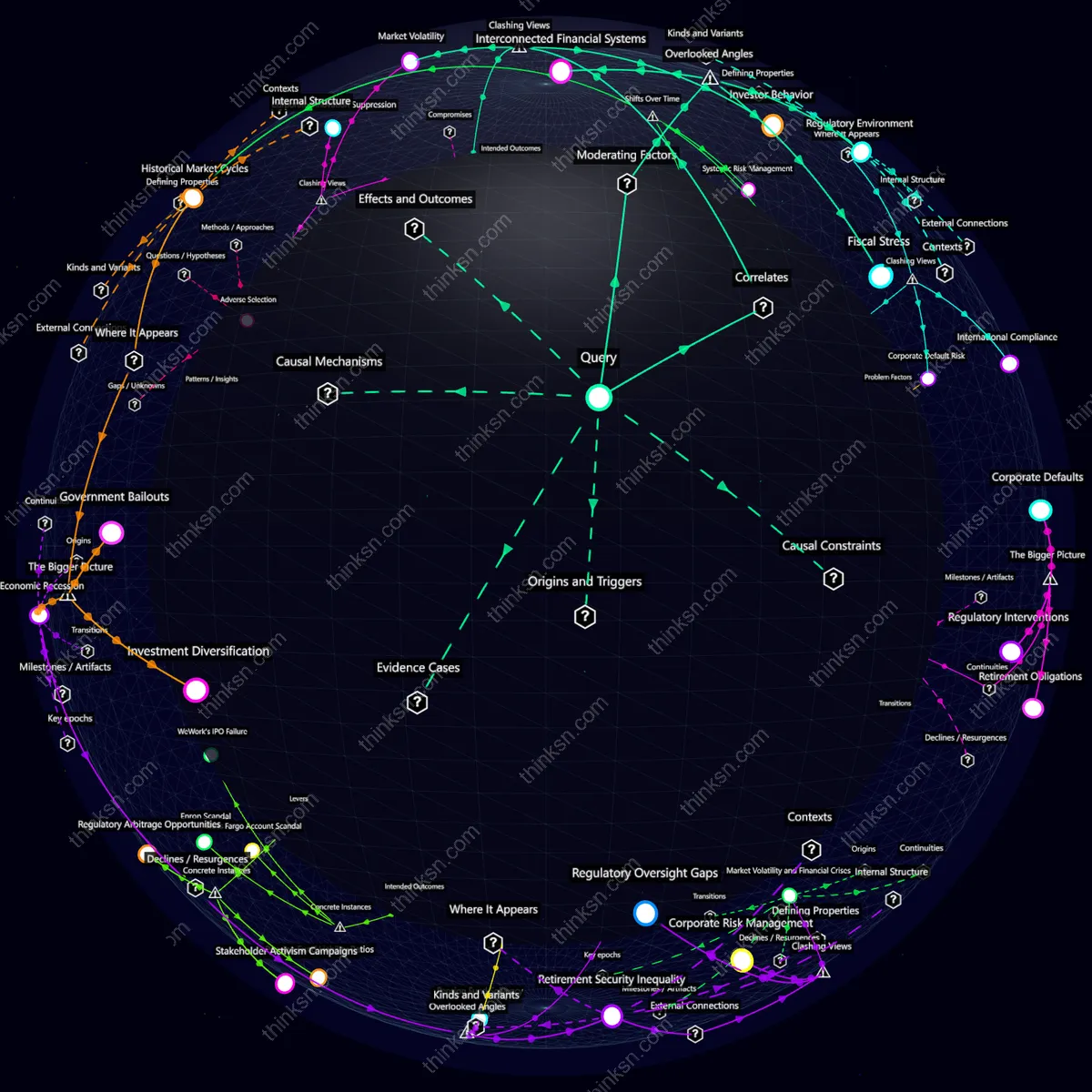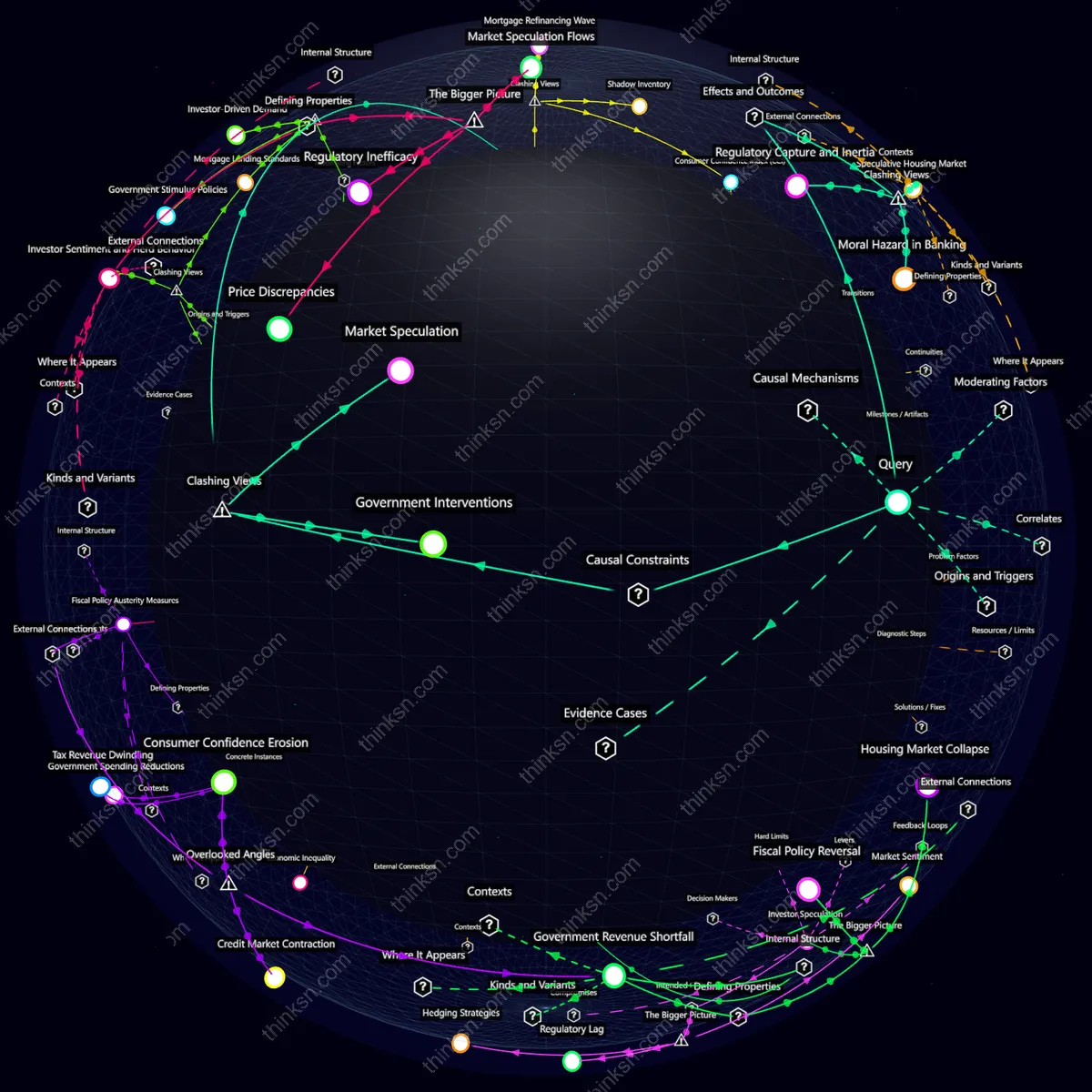
Could Low Interest Rates Spark a Real Estate Bubble?
Key Findings
Housing Price Bubble
A sudden interest rate drop creates a housing bubble when lending is based on rising prices, not income, and the bubble bursts when no more buyers can enter the market.
When interest rates drop suddenly, borrowing money becomes much cheaper. In housing markets with loose lending rules, this cheap credit encourages more people to buy homes as investments. Lenders begin to base loans on expected home price increases, not buyer income. Rising home prices let borrowers take out bigger loans, which pushes prices even higher. This cycle feeds on itself, inflating home values beyond what rent levels can justify. The bubble grows until there are no more eligible buyers left. At that point, prices can no longer keep rising. The system collapses when lending can no longer expand, as seen when loan limits blocked further growth in 2008.
Housing Bubble Trap
A fast drop in interest rates creates a housing bubble because it drives speculative buying that outpaces supply and fails when borrowers can no longer take on more debt.
When interest rates fall quickly, borrowing becomes cheaper. This pushes up asset prices. Lower rates reduce the cost of loans. People take on more debt to buy property. This happens mostly when mortgage credit is easy to get. More households join the housing market. The supply of homes cannot keep up. Prices rise faster than new homes can be built. Higher prices make people expect further gains. This fuels more borrowing. But homes take time to build. Supply cannot respond quickly. The cycle continues until debt levels get too high. Borrowers cannot take on more. Price growth depends only on speculation. It no longer links to income. A sharp rate drop then creates a bubble. The demand relies on future borrowing. Once borrowers hit their limit, the demand vanishes. The bubble bursts.
House Price Limits
House prices are now limited because lending rules tie borrowing to income, not just low rates or home values.
Mortgage lending is now tied to what borrowers earn, not just property values. This change happened because new rules followed the 2007 financial crisis. Regulators in places like Europe and the UK imposed stricter lending standards. They required banks to check borrower income and limit debt relative to earnings. These rules are part of global reforms like Basel III. They stop lenders from offering large loans when interest rates fall. Even if rates drop, people cannot borrow much more than their income allows. That links housing demand to real wage growth. Without easy credit, lower rates do not fuel runaway price increases. The old pattern of bubbles driven by cheap credit no longer holds. Stronger oversight prevents lenders from ignoring repayment risk. Securitization markets are also more controlled now. Government-backed entities no longer freely buy risky loan pools. All this means house prices cannot rise far beyond what workers can afford. The system now resists the kind of crash seen before 2007.
Housing Bubble Trigger
A sudden interest rate drop inflates a housing bubble through credit expansion, but the bubble bursts because price growth outpaces wage growth, making demand unsustainable when rates rise.
A pattern links mortgage credit to home values instead of borrower income. This creates a dangerous reliance. When interest rates drop suddenly, housing prices rise fast. The mechanism depends on price growth faster than wage growth. Demand becomes unsustainable soon after. In the United States before 2007, falling rates inflated a housing bubble. Adjustable-rate mortgages and speculation drove the boom. When rates returned to normal, affordability collapsed. Defaults then cascaded through the system. The initial rate drop expands credit demand. But rising prices sever the connection between housing costs and incomes. This forces the bubble to burst on its own. The burst is inevitable because demand cannot survive without continuously low rates. That condition cannot last without economic harm.
Rate-driven Housing Bubbles
A rate-driven real estate bubble forms and bursts when low interest rates combine with easy mortgage lending and fixed housing supply, causing prices to detach from rental fundamentals.
A sudden drop in interest rates can boost real estate prices in countries with limited housing supply and heavy borrowing. This happens when mortgage systems encourage debt and zoning rules block new construction. Prices then rise mainly due to credit, not higher incomes. When incomes cannot keep up, prices crash sharply and broadly. This pattern appears in many advanced economies. Their housing supply cannot adjust quickly to demand shifts. Low rates alone do not cause the bubble. The real cause is low rates combined with loose lending and tight land rules. This mix lets prices break free from rental values. So a rate-driven housing bubble forms and bursts where easy credit meets fixed supply.