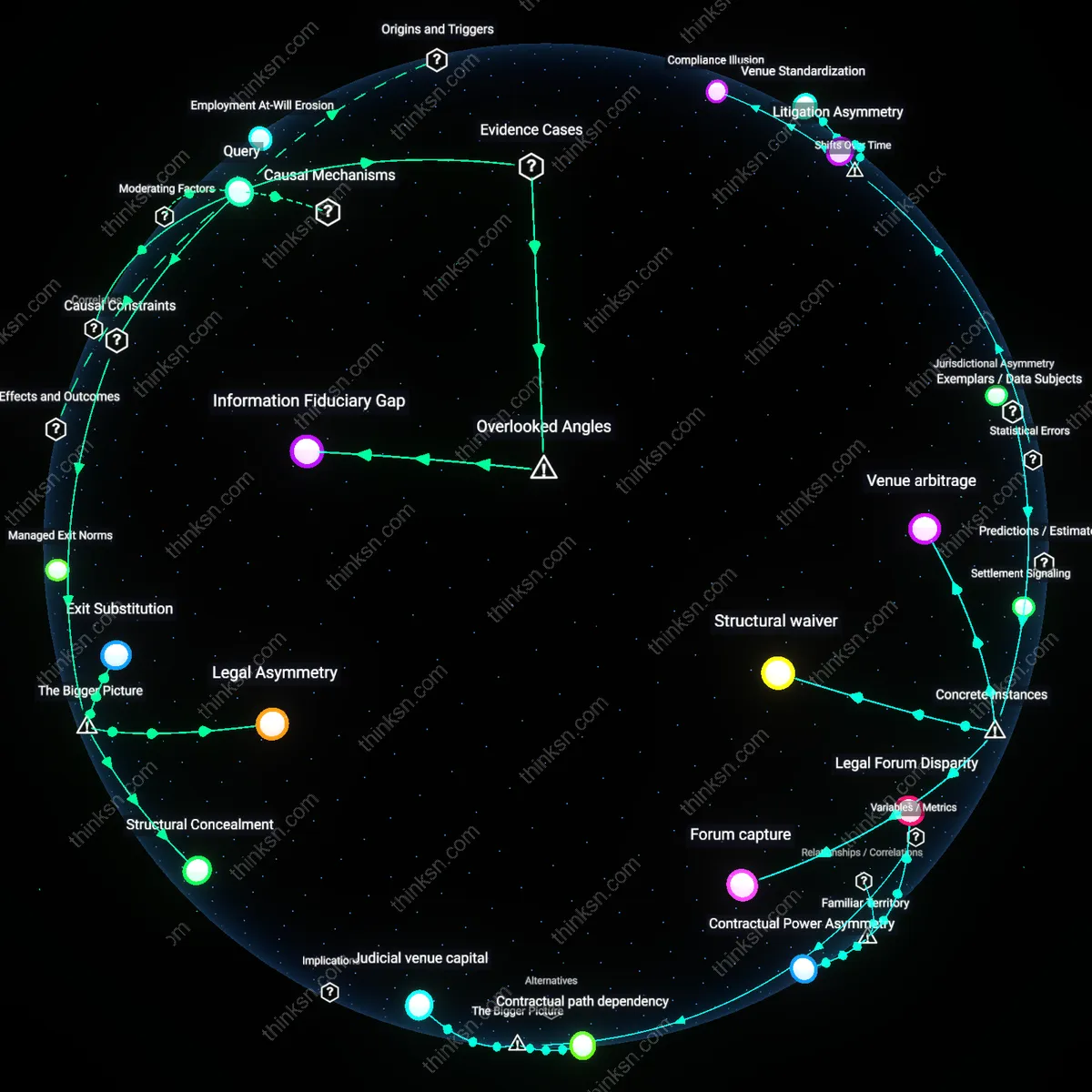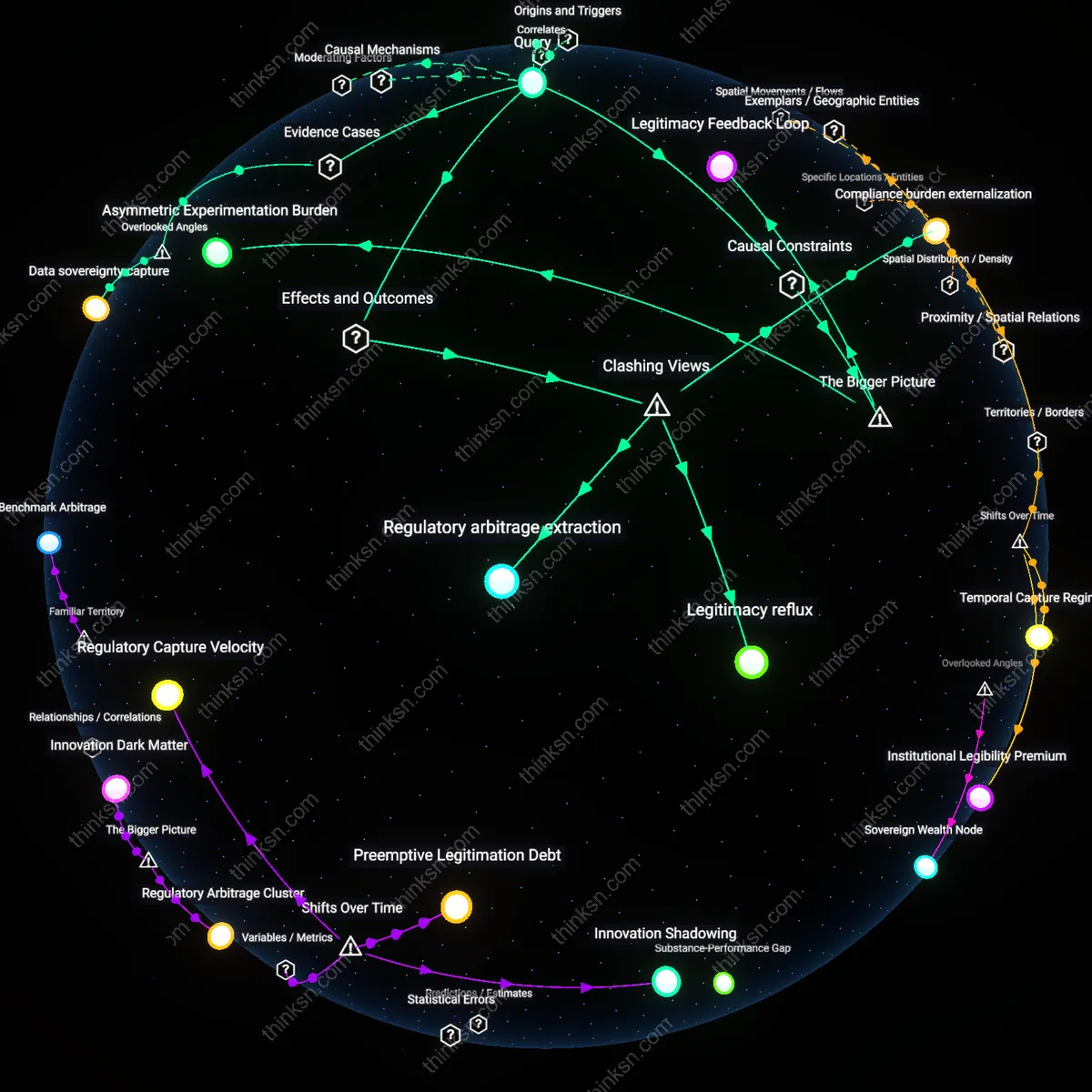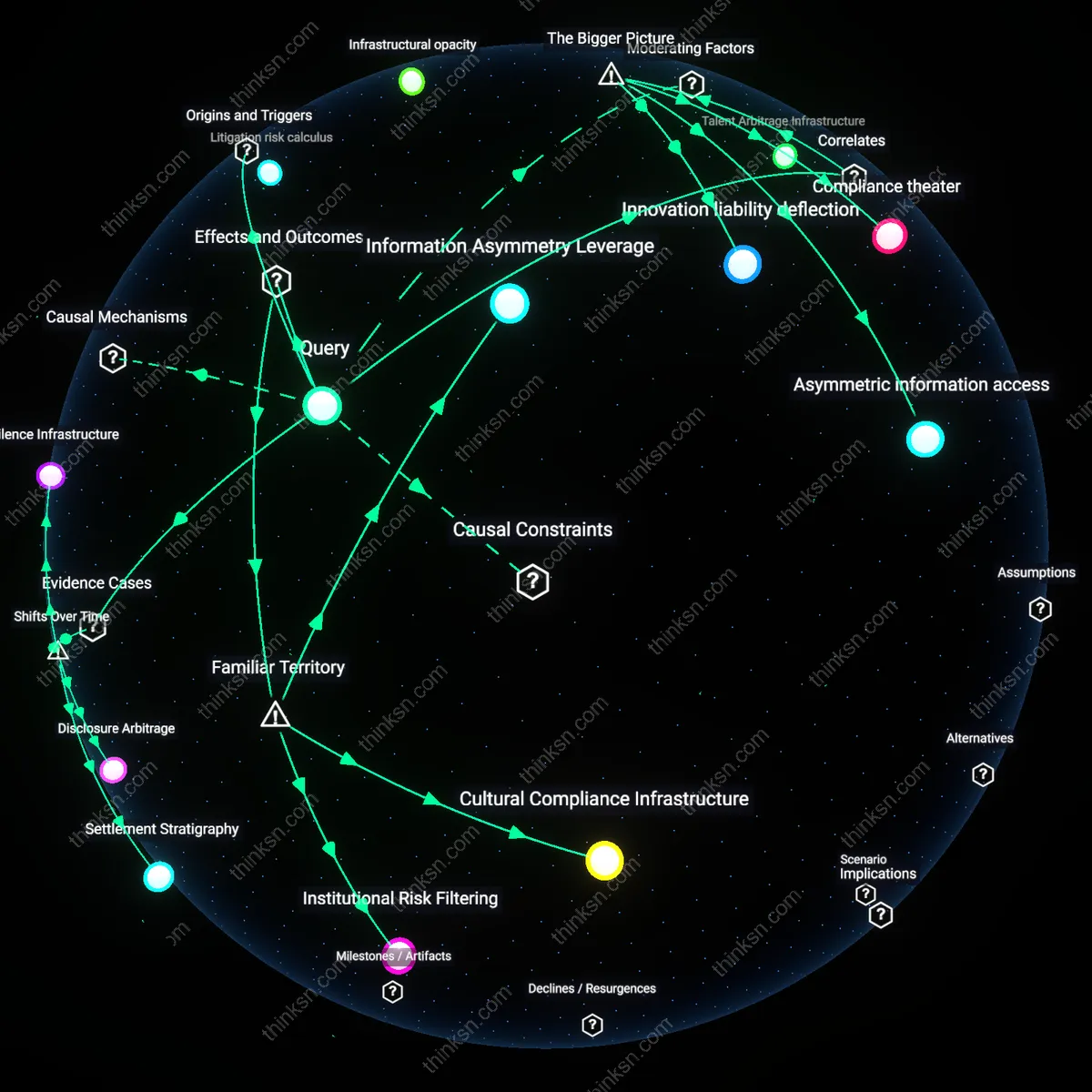
Who Holds Power in Tech Nondisclosure Deals?
Analysis reveals 12 key thematic connections.
Key Findings
Litigation risk calculus
Nondisclosure settlements at tech companies reveal that senior engineers wield disproportionate influence in shaping legal outcomes not through formal authority but by controlling technical narratives that determine litigation exposure. Legal departments rely on engineers to define the feasibility, reach, and implications of technical systems—such as algorithmic bias or data leakage—rendering engineers’ assessments pivotal in estimating potential liabilities; this dependency forces legal teams to negotiate settlement terms that accommodate engineers’ risk profiles, often prioritizing technical stability over legal idealism. The overlooked dimension is that legal strategy is de facto co-authored by engineers through risk estimation, not dictated unilaterally by counsel, shifting power to those who can plausibly frame a product's technical culpability. This reconstitutes the settlement not as a legal act alone but as a hybrid technical-legal forecast.
Infrastructural opacity
Patterns in nondisclosure agreements reflect how senior engineers consolidate power by leveraging the deliberate complexity and obscurity of internal systems, which legal departments cannot independently audit or understand. Legal teams, lacking access to real-time architectural diagrams, deployment logs, or cryptographic implementations, must accept engineers’ accounts of what data flows exist and who accessed them—rendering legal assessments of disclosure risks contingent on engineer-provided epistemic access. What is typically missed is that non-disclosure is less enforced by legal policy than enabled by knowledge asymmetry; engineers who control the interpretive keys to infrastructure implicitly license what can be disclosed, framing settlements not as symmetric legal concessions but as concessions extracted under informational duress. This surfaces technical illegibility as a silent instrument of power.
Career-phase alignment
The recurrence of nondisclosure settlements with senior engineers correlates with a hidden alignment between individual career preservation motives and corporate legal risk mitigation, where engineers nearing retirement or transition deploy settlements as vehicles to neutralize latent technical debt they personally architected. Legal departments acquiesce to favorable engineer terms not solely to suppress scandal but to elicit full system knowledge transfer during exit phases, treating settlements as informal insurance against institutional memory loss. The overlooked dynamic is that these agreements function as shadow knowledge procurement contracts—where legal concessions are exchanged for unstated technical disclosures—revealing that power in settlements stems from engineers’ possession of irreplaceable operational cognition, not just their legal exposure. This recasts bargaining power as contingent on temporal proximity to departure.
Information Asymmetry Leverage
Legal departments control access to settlement terms, which systematically limits senior engineers' ability to benchmark outcomes or coordinate resistance. This restriction operates through confidentiality clauses enforced by corporate counsel who manage disclosure risk, privileging institutional memory over individual precedent. While engineers possess technical authority, they lack visibility into peer negotiations, weakening their positional bargaining power. The non-obvious consequence is that legal departments don’t just enforce policy—they actively shape perceived reality by curating what engineers can know about their own collective leverage.
Cultural Compliance Infrastructure
Nondisclosure settlements reinforce a normative environment where silence is tacitly rewarded through continued employment and project access, particularly for senior engineers whose influence depends on internal credibility. This dynamic is maintained by HR and legal teams who align settlement compliance with cultural fit assessments, effectively embedding legal silence into performance pathways. Although engineers may view themselves as technically autonomous, their integration into the organizational hierarchy depends on adherence to unspoken behavioral contracts. The underappreciated outcome is that legal departments indirectly govern engineering culture by making discretion a precondition for career longevity.
Institutional Risk Filtering
Legal departments use standardized nondisclosure agreements to filter out reputational and regulatory exposure, prioritizing corporate survivability over individual equity—especially in cases of misconduct or IP disputes involving high-impact engineers. This risk mitigation functions through centralized approval workflows that require legal sign-off before any settlement is finalized, positioning counsel as gatekeepers of organizational legitimacy. Senior engineers, despite their rank, must route sensitive exits or disputes through these channels, revealing that technical seniority does not confer autonomy in legal theaters. The overlooked effect is that legal departments don’t merely respond to risk—they selectively determine which engineer claims are structurally legible or suppressible.
Compliance theater
Nondisclosure settlements at tech companies favor legal departments' risk mitigation over engineers' ethical disclosure, revealing a power hierarchy where technical expertise is subordinated to institutional control. Legal teams, under pressure from executives to avoid regulatory scrutiny or reputational damage, standardize settlements that silence engineers—especially those raising concerns about product safety or algorithmic bias—thereby creating a performative appearance of governance. This dynamic persists because the legal function operates within a system of external accountability (e.g., SEC, FTC) that rewards visible containment, not internal truth-telling, making compliance a ritual rather than a corrective process. What’s underappreciated is how this ritual protects organizational legitimacy while systematically eroding technical autonomy.
Asymmetric information access
Settlement patterns show that legal departments leverage exclusive control over procedural knowledge—such as precedent, liability exposure, and forum selection—to shape outcomes that marginalize senior engineers' strategic input. Engineers, despite deep technical understanding, lack access to the institutional memory and legal risk analytics that determine settlement terms, rendering their bargaining power contingent on persuasion rather than authority. This imbalance is structurally enabled by siloed information systems where legal holds epistemic dominance over interpretive frameworks of harm and resolution. The non-obvious insight is that power here isn’t exercised through overt command but through the strategic withholding of decision-relevant knowledge.
Innovation liability deflection
Tech companies increasingly use nondisclosure settlements to preemptively isolate senior engineers from accountability chains when high-risk innovations fail or provoke public backlash, shifting responsibility toward individual silence rather than systemic oversight. This deflection is activated by the acceleration of product deployment cycles, which creates pressure to insulate R&D from legal fallout by binding key technical contributors to confidentiality before issues escalate. The mechanism operates through standardized pre-emptive NDAs and exit agreements, particularly in AI and data-intensive divisions, where legal departments act as circuit breakers for innovation risk. The deeper dynamic is that legal power expands not by stopping innovation but by absorbing its reputational shocks—rendering engineers both essential and expendable.
Settlement Stratigraphy
Nondisclosure settlements at Google between 2014 and 2018 reveal a shift in power from senior engineers to legal departments as a result of increasing investor pressure following high-profile IP litigation. Before the 2016 Oracle v. Google ruling, engineers often negotiated settlement terms that included technical concessions or internal project modifications, embedding their influence into dispute resolution—after 2016, legal departments standardized templates and centralized approval, sidelining engineering input and privileging risk mitigation over technical nuance. This transition from negotiated co-authorship of settlements to legal monopolization of terms shows how external legal defeats recalibrated internal authority, making it non-obvious that judicial outcomes in copyright could reshape intra-corporate hierarchies.
Disclosure Arbitrage
At Facebook (now Meta) between 2011 and 2018, senior engineers initially used nondisclosure settlements as career leverage—exposing systemic bugs or culture flaws in exchange for equity or transfer guarantees—until the 2016 Cambridge Analytica internal review prompted centralized control over all disclosures. The shift from engineer-led disclosure bargaining to legal gatekeeping after 2016 redefined settlements not as conflict resolutions but as assets to be stockpiled and strategically withheld, revealing that legal departments began treating silence as a form of currency. This transition shows how reputational crises transformed disclosure from a liability into a controlled resource, a move analysts rarely trace back to internal power reallocation.
Silence Infrastructure
Apple’s use of nondisclosure settlements evolved after 2019, when senior engineers who once informally mentored junior staff on navigating IP boundaries were replaced by automated compliance systems linked to legal databases, effectively obsoleting their cultural role. Prior to 2017, engineering autonomy was partly maintained through tacit knowledge transfer about what could be disclosed without legal approval; after 2019, algorithmic monitoring and escalation protocols weakened this informal power, folding disclosure decisions entirely into legal risk frameworks. The erasure of this mentorship layer reveals how procedural automation, not just policy changes, dismantled lateral authority, a transformation obscured by focusing only on formal reporting structures.