Does Founding a Dynasty Trust Risk Family Resentment?
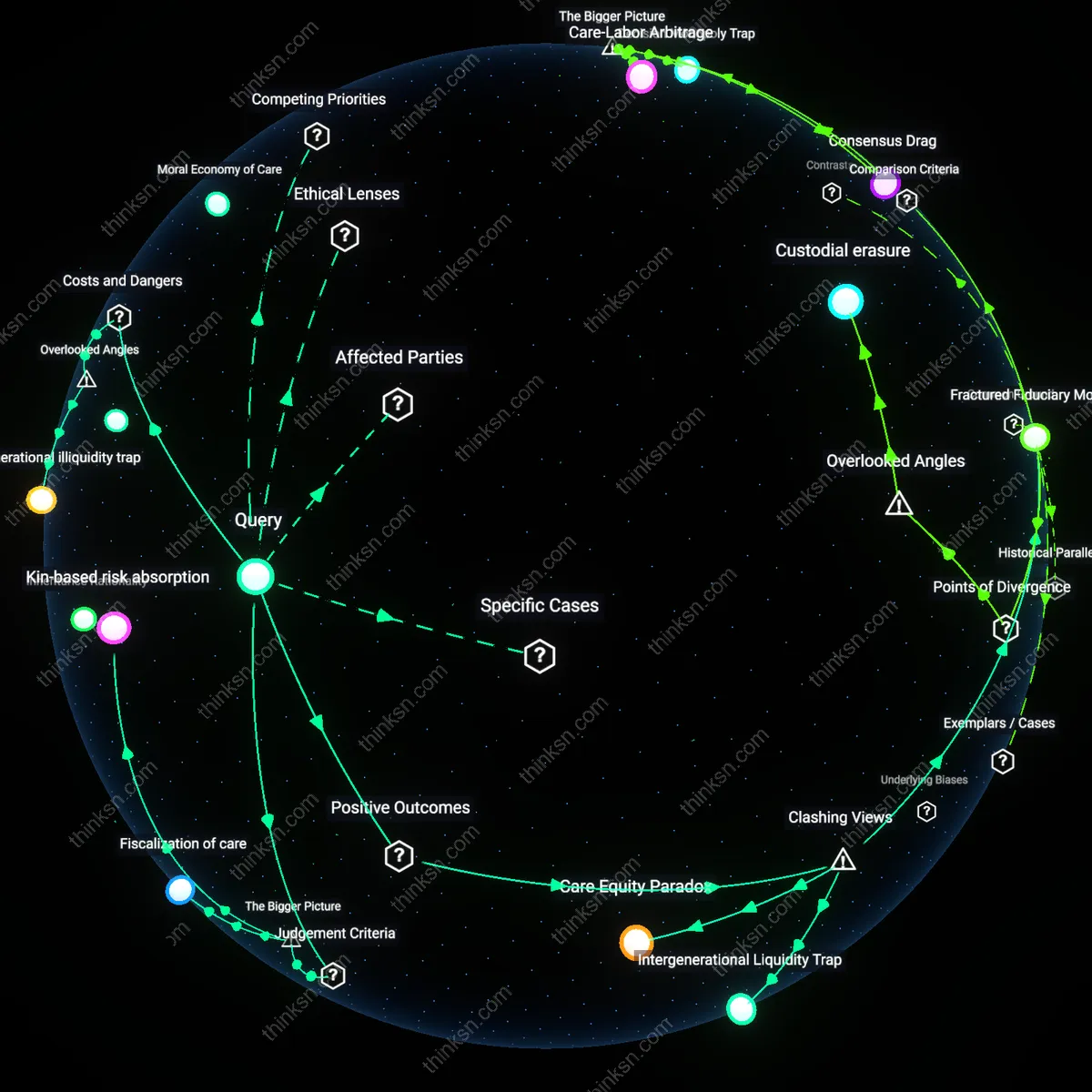
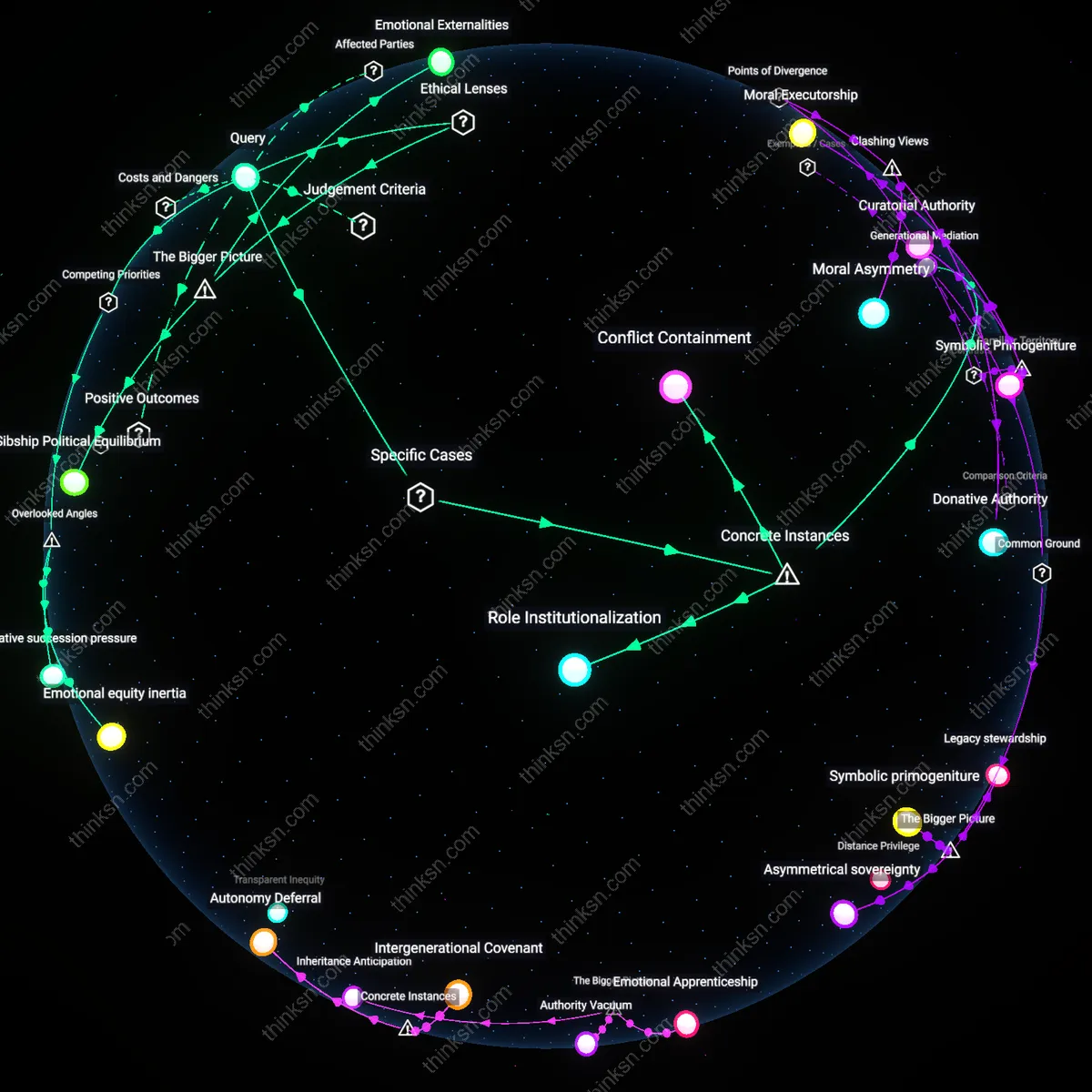
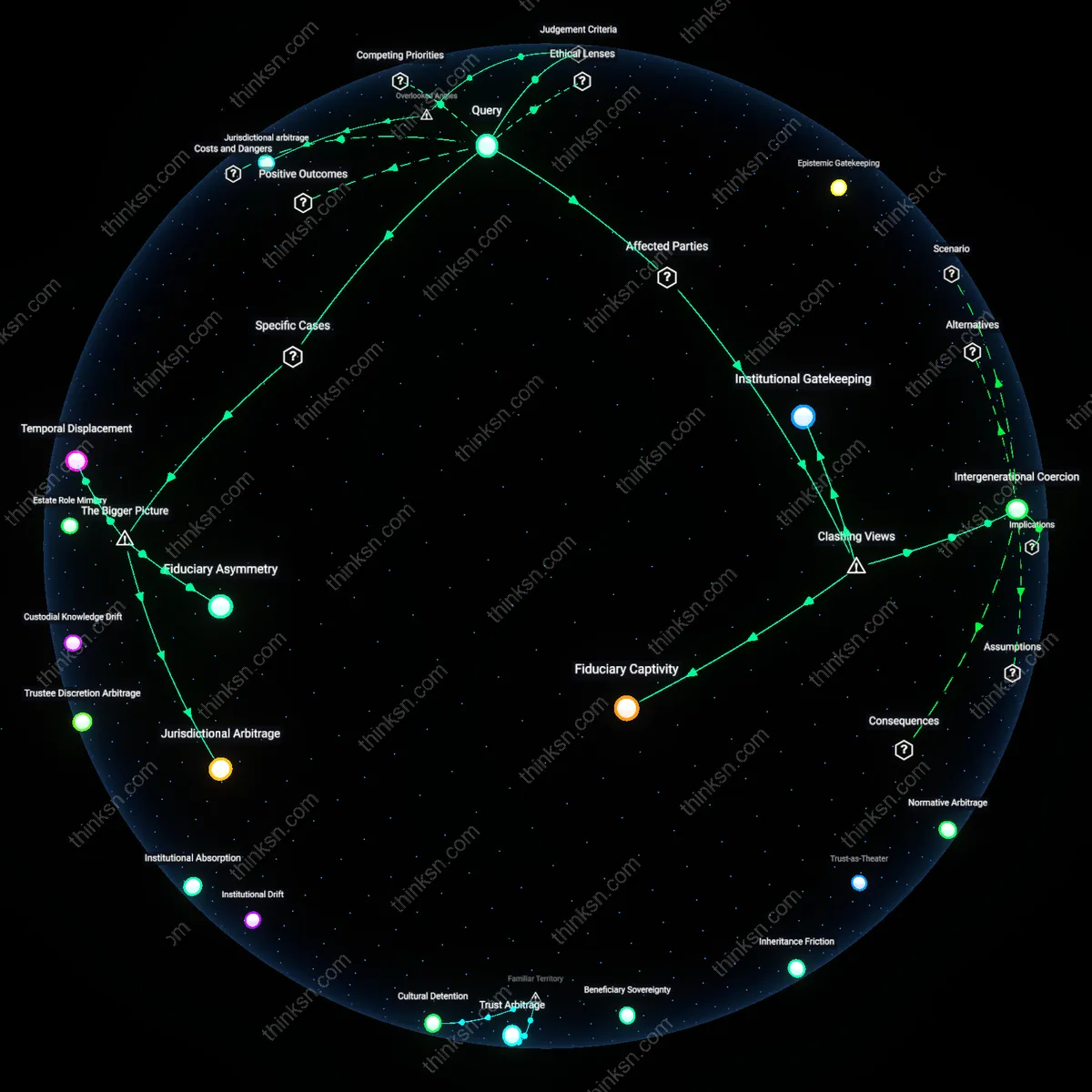
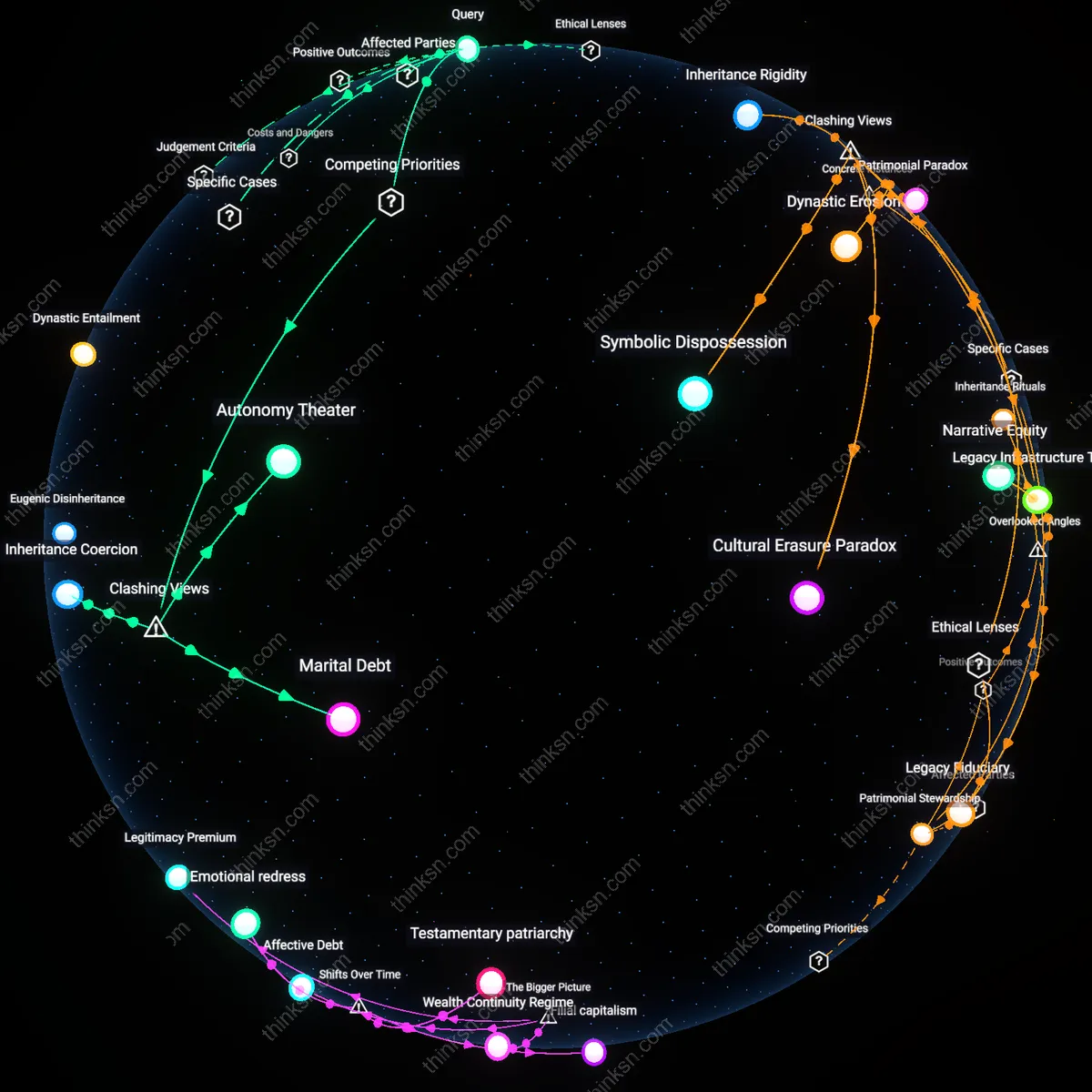
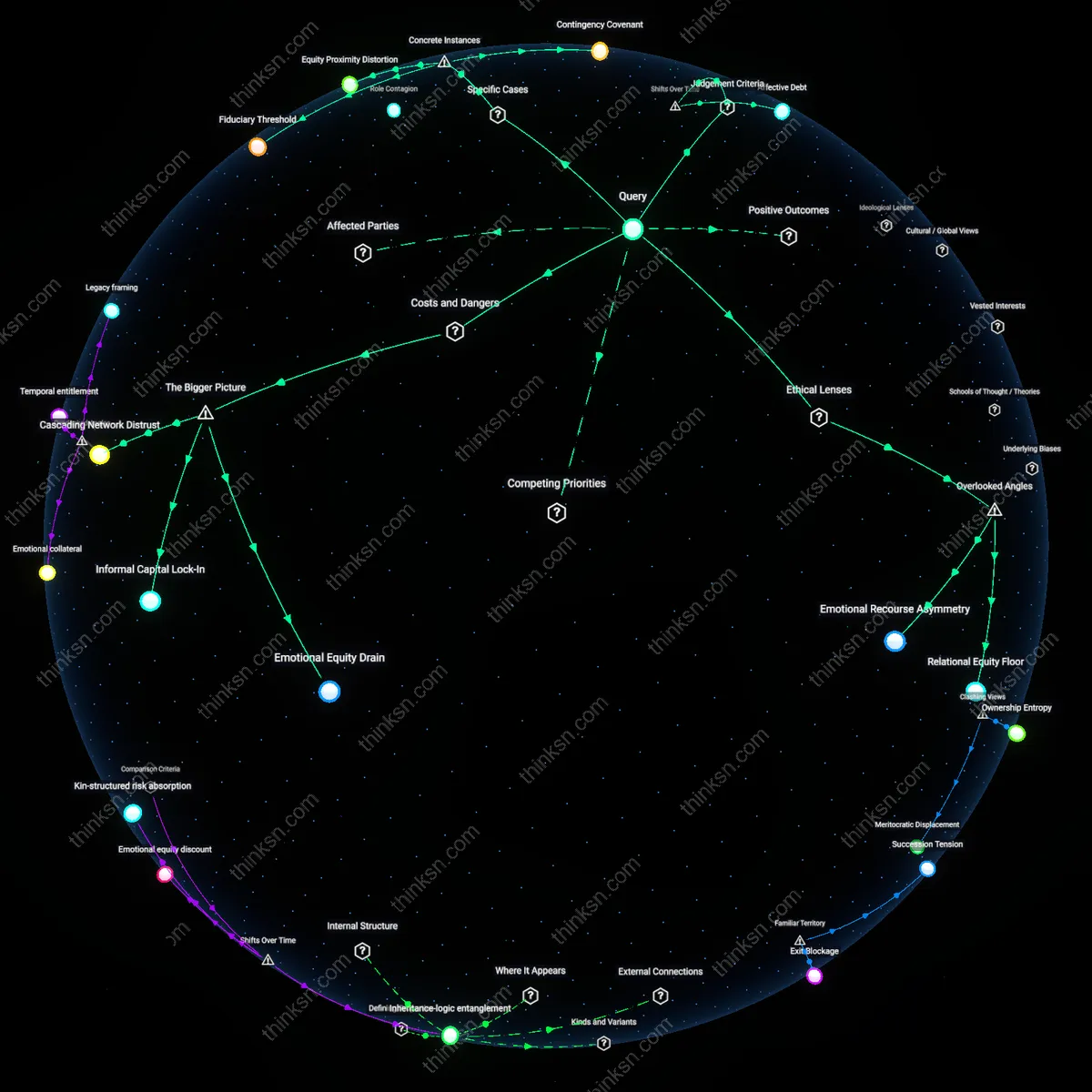
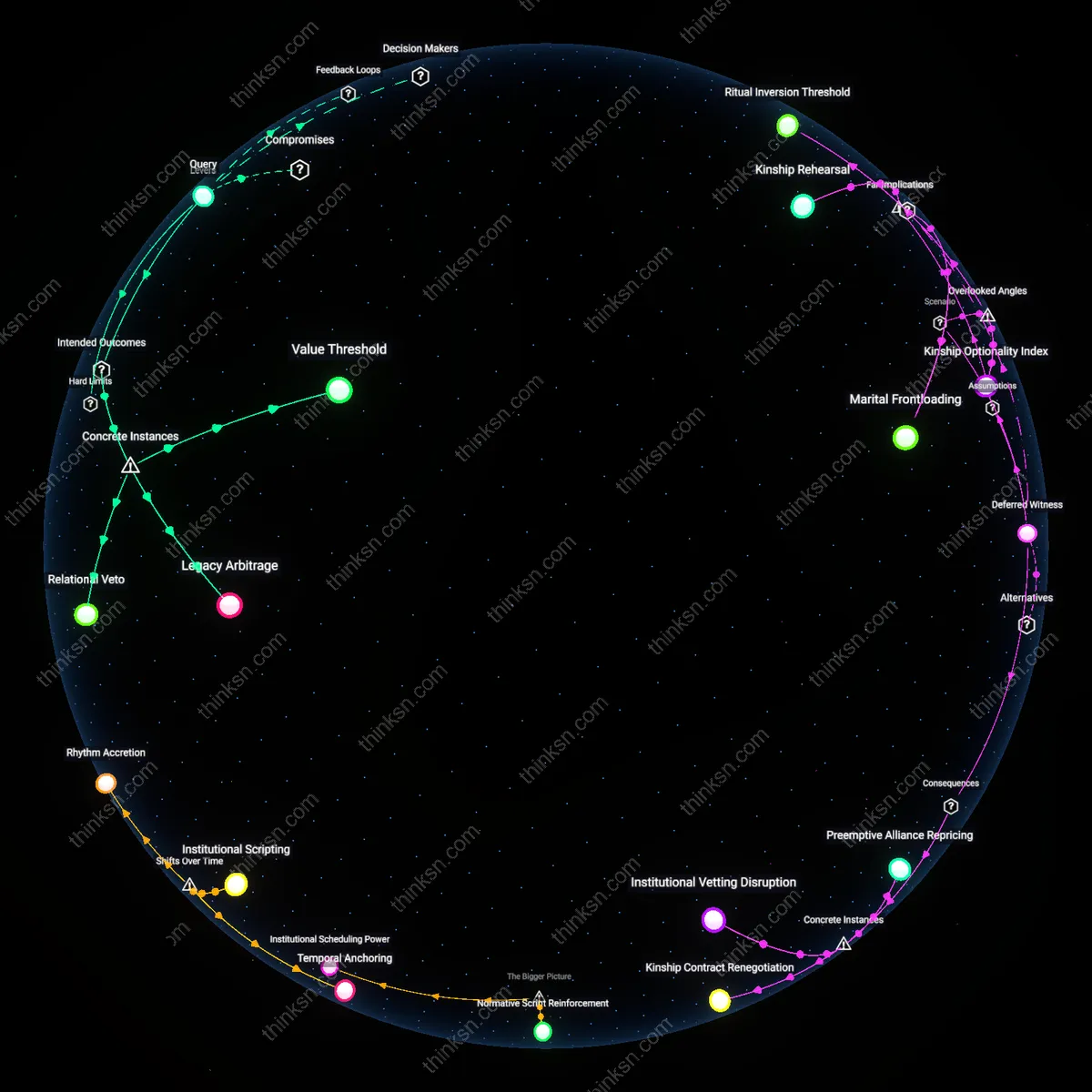
Analysis reveals 12 key thematic connections.
Key Findings
Institutionalized Kinship
Formalizing trust governance through independent fiduciaries mitigates family conflict by replacing familial obligation with procedural legitimacy, a shift cemented in the late 20th century as wealth preservation eclipsed patriarchal succession. Post-1980s trust law innovations in states like Delaware and South Dakota enabled perpetual trusts governed by professional trustees, detaching asset control from bloodline authority and transforming kinship into a regulated stakeholder relationship. This move reframed excluded relatives not as wronged heirs but as external claimants subject to reviewable standards, revealing that dynastic endurance now depends less on familial consensus than on the depersonalization of oversight.
Temporal Fracturing
The rise of modular trust design—where provisions activate based on generational milestones or behavioral benchmarks—reduces conflict by aligning benefit distribution with developmental stages rather than fixed entitlements, a technique refined after the 2000s in response to high-profile trust disputes. By embedding time-triggered adaptations, such as staggered trustee appointments or incentive-based distributions, these structures treat family dynamics as evolving systems rather than static hierarchies, insulating the core dynasty from early ruptures. The non-obvious insight is that the trust itself has become a temporal scaffold, producing different family configurations across its lifespan rather than preserving a single, unified lineage ideal.
Inheritance Illegibility
Opaque succession frameworks—deliberately complex distribution rules and restricted access to trust information—function not as flaws but as conflict-dampening mechanisms, a strategic shift emerging in the 21st century among ultra-high-net-worth families reacting to litigious precedents. By limiting transparency, especially to non-beneficiary relatives, these structures reduce the capacity of excluded kin to formulate legal or moral claims, effectively rendering inheritance unintelligible as a shared family narrative. This deliberate obscurity marks a departure from the mid-20th-century norm of testamentary clarity, revealing that peace is now often maintained not through fairness but through epistemic exclusion.
Governance Scaffolding
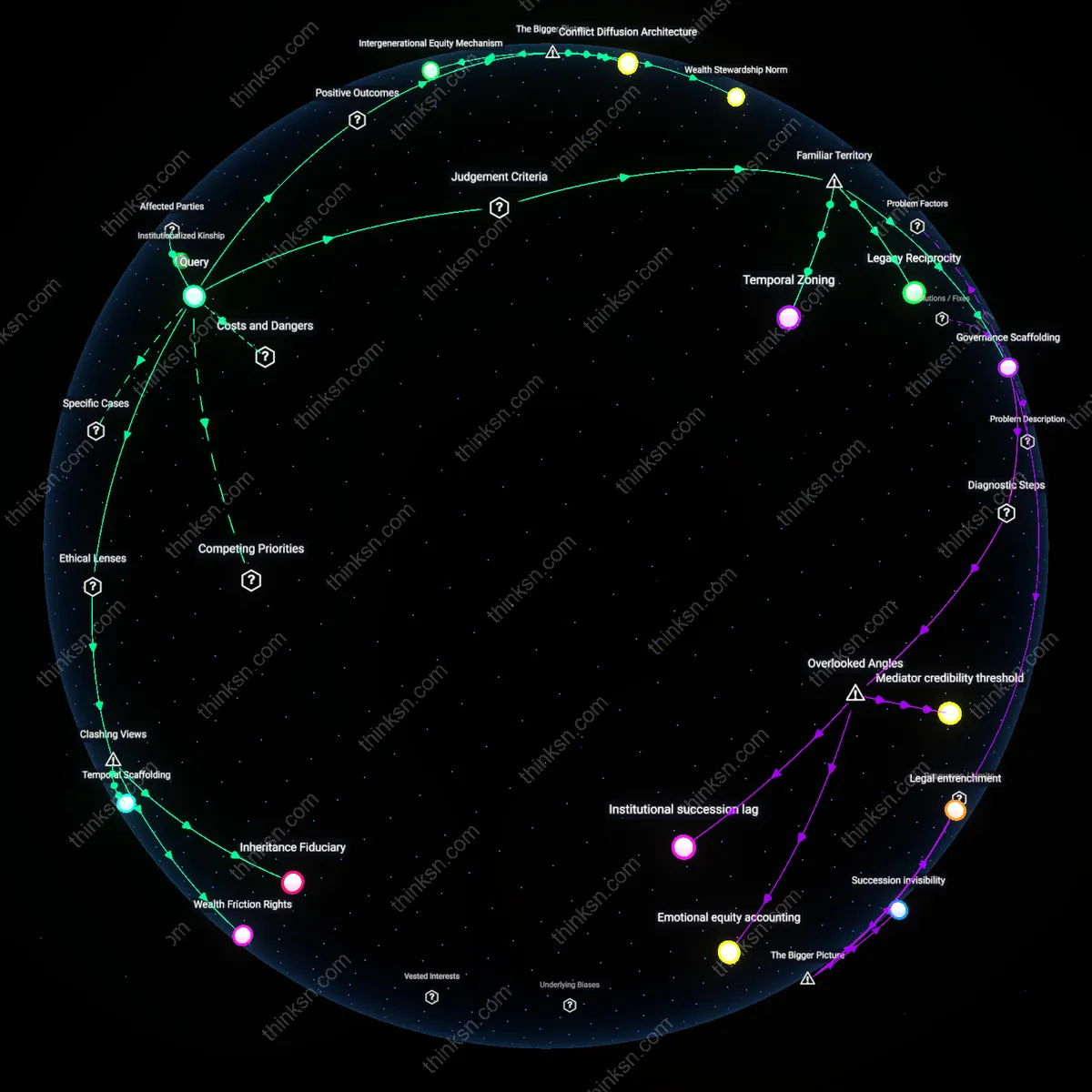
Establish formal trustee oversight with independent fiduciaries to depoliticize distribution decisions and reduce perceived favoritism among branches. This shifts conflict from interpersonal disputes to structured appeals within a legal framework, involving family councils, external mediators, and transparent reporting protocols. Most people associate dynasty trusts with private wealth preservation, but overlook how their longevity demands public-like governance mechanisms—what feels like a family matter must operate with institutional discipline to prevent rupture. The non-obvious insight is that durability depends not on unity, but on managed dissent through procedural legitimacy.
Legacy Reciprocity
Require beneficiaries to contribute service or creative output to a shared family enterprise in exchange for trust benefits, anchoring access to participation rather than mere descent. This embeds economic reciprocity within dynastic continuity, using mechanisms like earned distributions, mentorship obligations, or stewardship rotations across generations. Public discourse fixates on exclusion as a moral failing, yet rarely considers that inclusion without expectation erodes both responsibility and cohesion. The underappreciated dynamic is that perceived fairness emerges not from equal receipt, but from meaningful contribution—transforming entitlement into earned belonging.
Temporal Zoning
Design the trust to expire or restructure at defined generational intervals, limiting the moral authority of distant ancestors over living descendants’ needs. This operates through sunset clauses, amendment triggers, and generation-skipping reevaluations that localize control and insulate current families from rigid founder intent. Common intuition treats dynastic trusts as timeless monuments, yet their greatest risk is the frozen will displacing present realities. The overlooked principle is that intergenerational equity requires temporal humility—the recognition that long-term advantage must yield to evolving familial consensus to avoid revolt by disinheritance.
Intergenerational Equity Mechanism
Structuring dynasty trusts with mandatory educational and milestone-based distributions promotes long-term family cohesion by aligning financial incentives with demonstrable personal development. When trustees release funds only upon completion of degrees, vocational training, or community service, they institutionalize a shared expectation that wealth must be earned through contribution, not merely inherited—embedding social reciprocity within asset management. This condition mitigates resentment from excluded relatives by reframing exclusion not as rejection but as differential timing, thereby diffusing moral hazard and corrosive comparisons. The non-obvious systemic dynamic here is that conditional distributions transform intergenerational wealth into a developmental scaffold rather than a zero-sum inheritance, altering family power structures through time-bound access rather than absolute deprivation.
Wealth Stewardship Norm
Publicly articulating the purpose of a dynasty trust as a vehicle for societal contribution—such as funding scholarships, conservation, or civic projects—recalibrates family expectations and insulates against internal conflict by externalizing its legitimacy. When beneficiaries understand their lineage’s wealth is stewarded for broader communal benefit, not private enrichment, the exclusion of certain relatives becomes less politically volatile because moral authority shifts from familial entitlement to civic duty. This works through institutional transparency and narrative control, where family councils partner with independent foundations to audit impact, thereby embedding democratic oversight into dynastic privilege. The underappreciated dynamic is that public accountability mechanisms can reduce intra-family zero-sum thinking by anchoring wealth to shared external goals.
Conflict Diffusion Architecture
Incorporating binding mediation protocols and independent ombudsman roles into the trust’s governing documents prevents grievances from excluded relatives from crystallizing into open conflict by creating structured outlets for redress. These mechanisms preempt power vacuums where interpretations of fairness might otherwise spiral into factionalism, particularly when trustees are drawn from multiple family branches or include non-relatives such as professional fiduciaries. The system relies on procedural legitimacy—consistent, documented dispute resolution that mimics judicial norms—to depersonalize decisions about access and benefit. What’s rarely acknowledged is that such architectures don’t resolve moral disputes but contain them within rule-bound forums, transforming potentially destructive interpersonal tensions into manageable administrative processes.
Inheritance Fiduciary
Dynasty trusts should be structured as fiduciary obligations to future kin rather than property rights of settlors, reframing exclusion as a procedural duty under deontological ethics. Trust creators are bound not by autonomy alone but by Kantian respect for persons, requiring mechanisms like rotating beneficiary councils or ombudspersons to represent disinherited blood relatives—formalizing their moral claim within the trust’s governance. This challenges the dominant property-centric view by treating familial exclusion as an active ethical burden, not a passive legal consequence, revealing that the true function of dynasty planning is not preservation of wealth but the institutionalization of intergenerational moral accountability.
Wealth Friction Rights
Family conflict from exclusion should be legally recognized as a source of constructive friction that generates new property rights for non-beneficiaries, drawing from Rawlsian political liberalism and the ‘veil of ignorance’ applied to inheritance law. If trust design anticipates contestation—by mandating that a portion of trust income funds a contested claims tribunal for excluded relatives—it transforms resentment into participatory legitimacy. This inverts the conventional aim of conflict avoidance by treating familial dissent not as a failure of estate planning but as a democratic signal revealing hidden entitlements, exposing that equity in dynastic wealth distribution emerges through structured opposition, not consensus.
Temporal Scaffolding
The longevity of a dynasty trust must be legally conditioned on periodic redistributive resets enforced by state-level perpetuity rules, rooted in republican theory’s fear of intergenerational domination. By requiring that every fifth generation vote on whether to include historically excluded branches—via state-supervised plebiscites—the trust becomes a political institution rather than a private familial enclave. This defies the libertarian ideal of permanent asset insulation by asserting that wealth continuity depends on cyclical re-legitimization, uncovering that the sustainability of dynastic wealth is not technical or financial but hinges on recurring exercises of collective familial suffrage.