Is Following Your Passion Really Fulfilling Mid-Career?
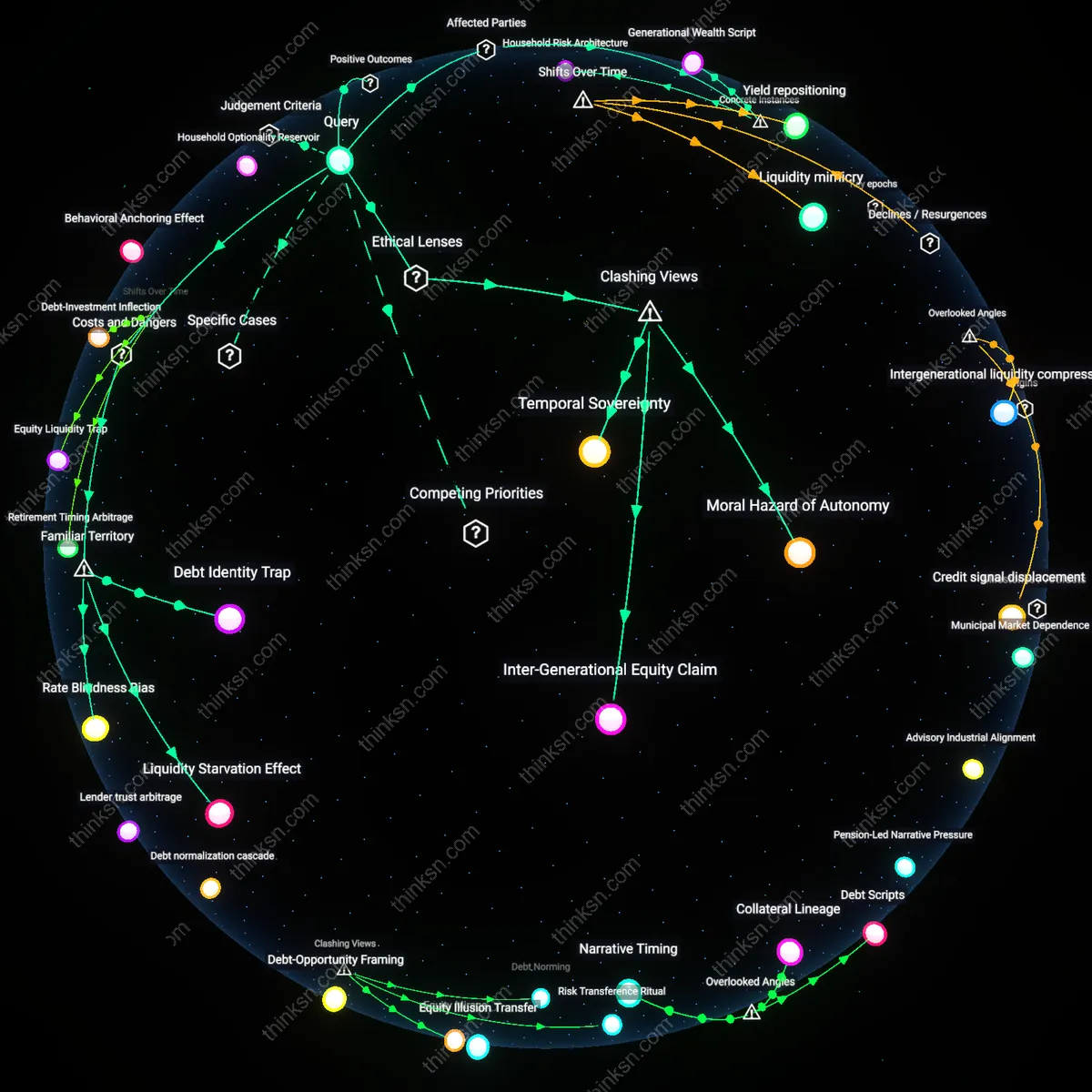
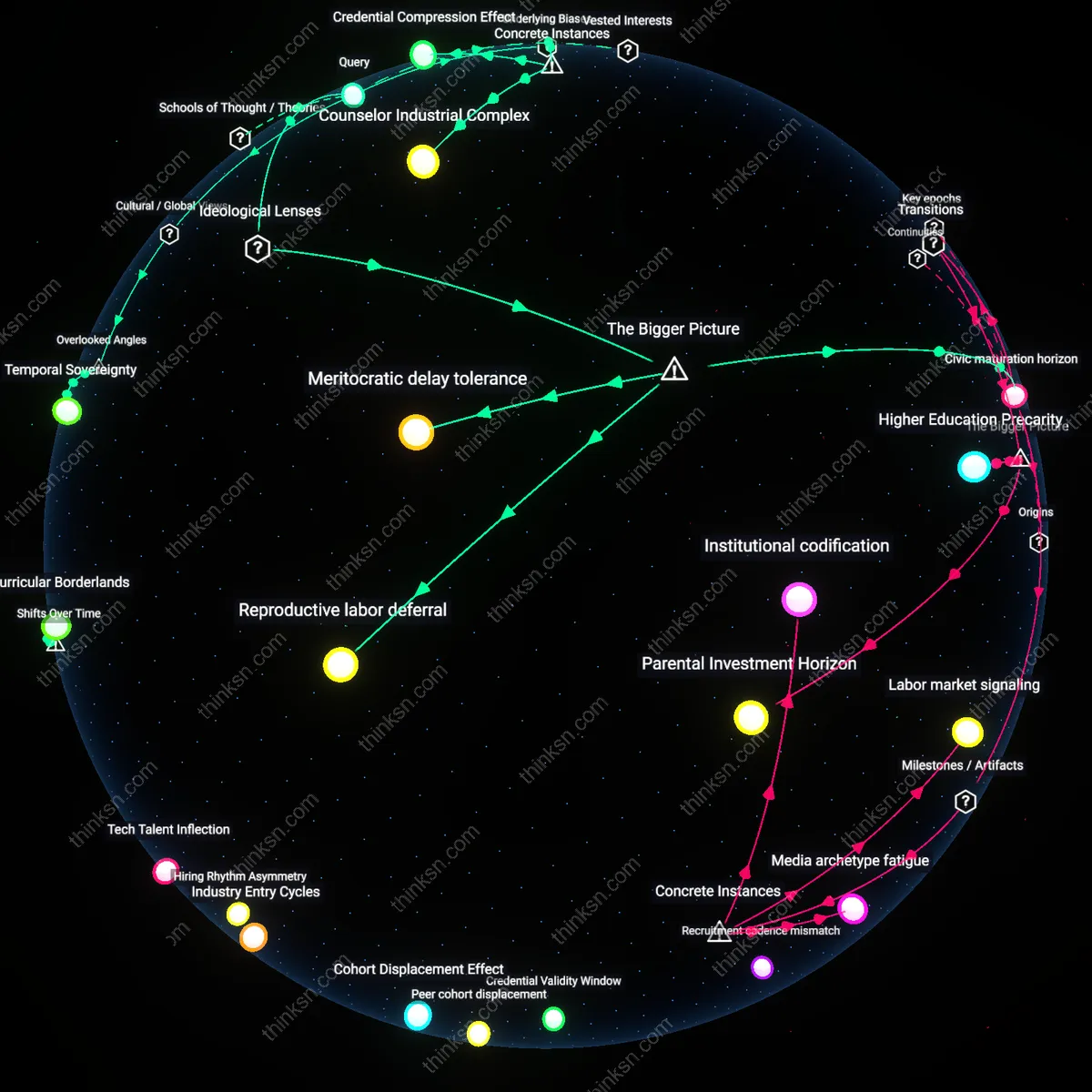
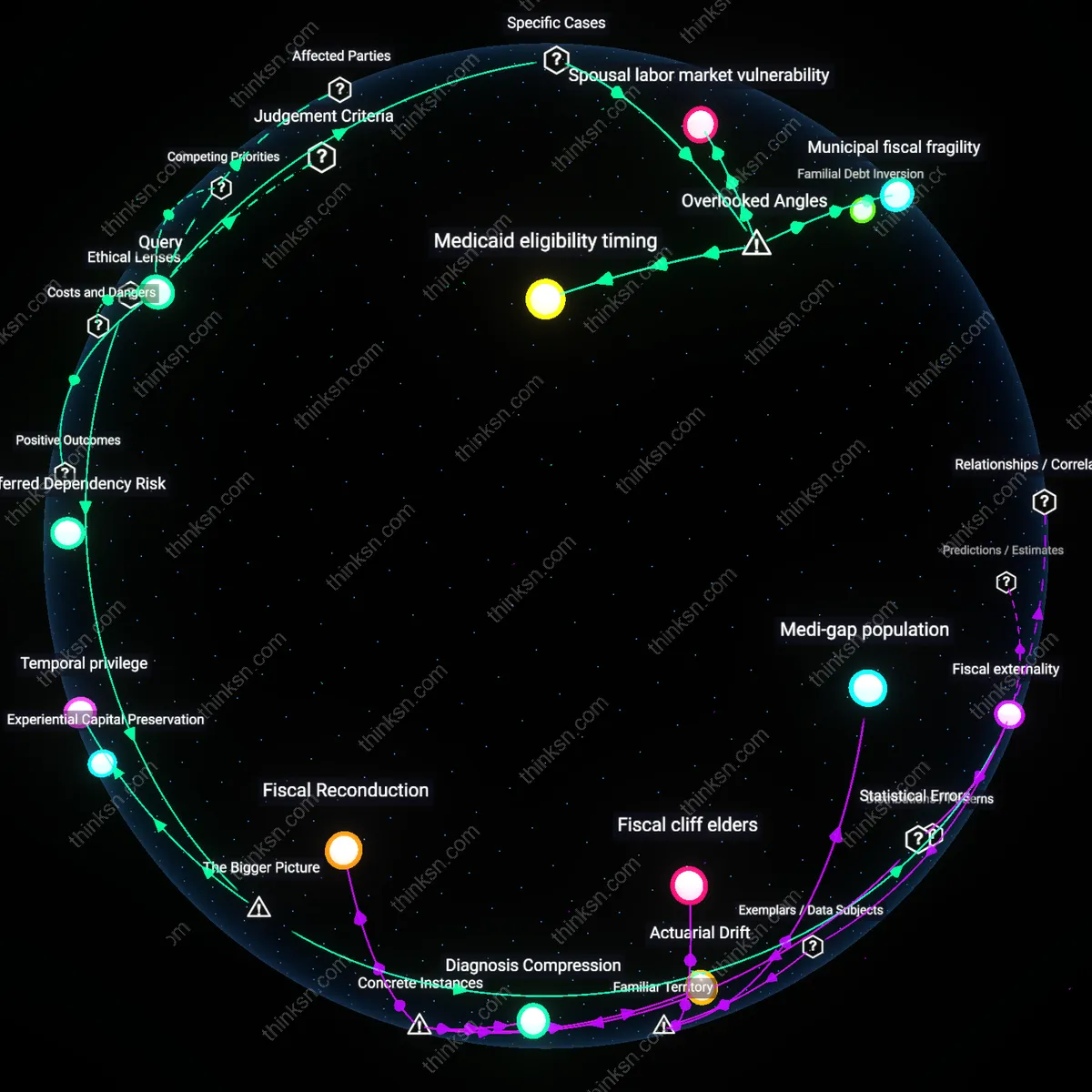
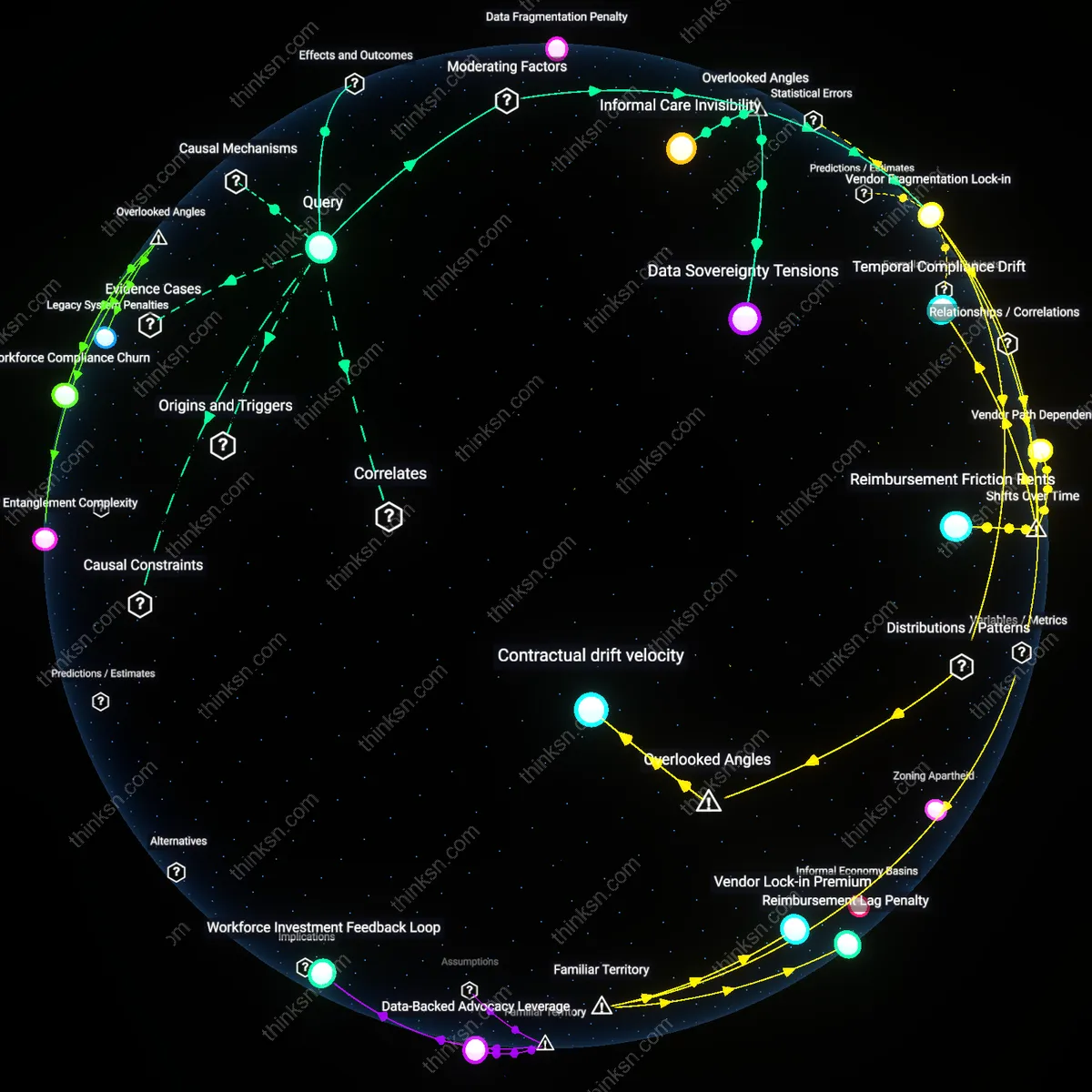
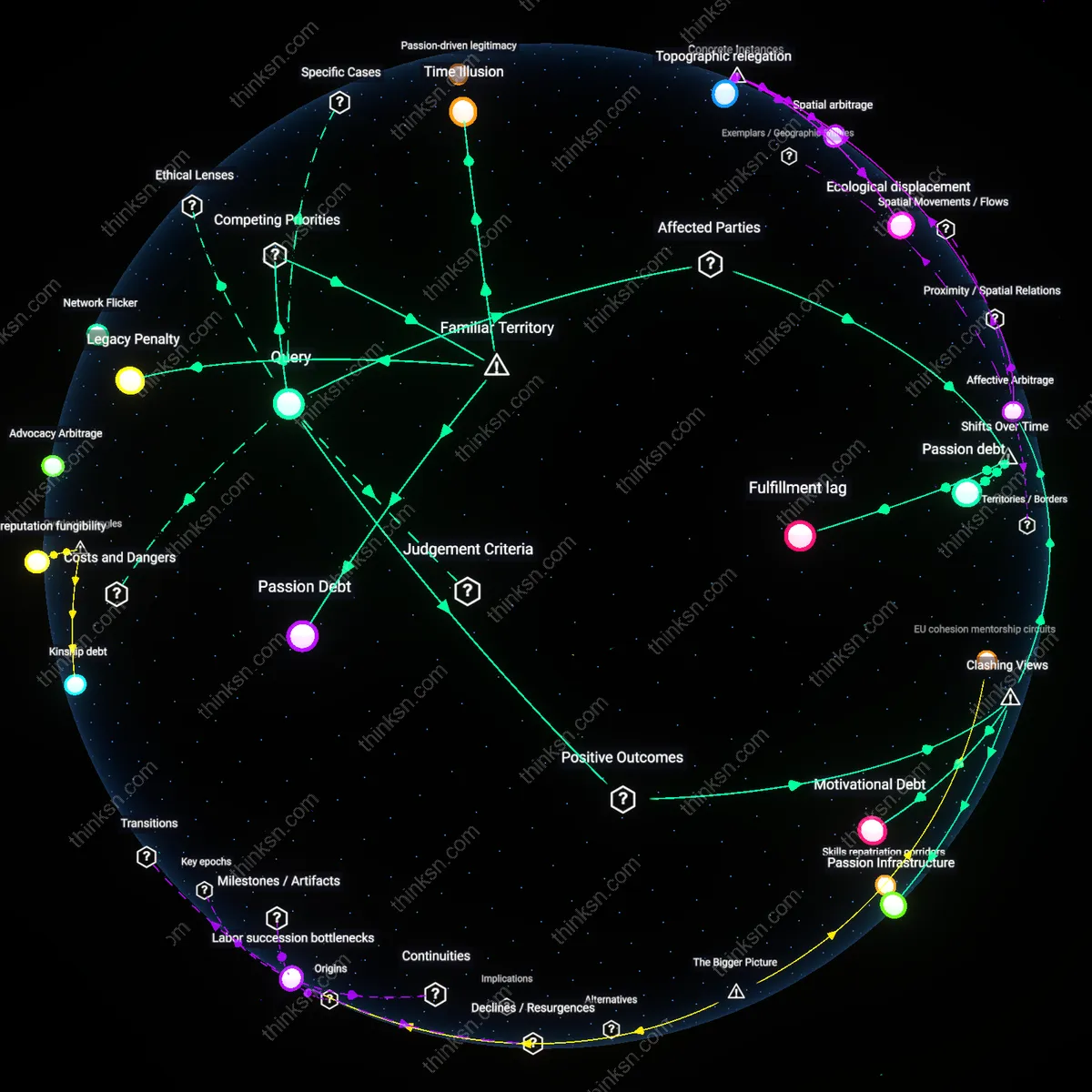
Analysis reveals 9 key thematic connections.
Key Findings
Passion debt
Following one's passion has come to impose long-term psychic costs on mid-career professionals because the late-capitalist shift from stable industrial employment to project-based gig economies since the 1990s reframed personal authenticity as a labor requirement, pressuring individuals to self-commodify their identities; institutions like tech startups and creative agencies now reward only those passions that align with market velocity, leaving others to confront a deficit of purpose when their passion fails to monetize. This reveals a hidden accumulation of unacknowledged emotional and financial liabilities—passion debt—accrued when intrinsic motivation is leveraged as economic risk.
Mentorship deficit
Mid-career professionals who followed their passion in the post-2008 economy increasingly find themselves isolated within flattenized corporate hierarchies that shed middle management, disrupting the historical transfer of wisdom from tenured experts to emerging talent; as legacy institutions like publishing, journalism, and the arts shifted to digital platforms, passionate entrants were celebrated for disruption but not sustained for stewardship. The erosion of structured mentorship pipelines—once normative in the mid-20th century—now leaves passionate individuals without guidance to navigate disillusionment, producing a systemic mentorship deficit.
Fulfillment lag
The promise of fulfillment through passion, amplified by self-actualization discourses in the 1970s and repackaged by Silicon Valley in the 2010s, has generated a delayed-experience gap for professionals entering middle age, who now confront the reality that passion alone does not confer resilience against structural stagnation in overcrowded fields like design, wellness, and social impact; unlike earlier generations whose careers were bounded by clear institutional ladders, today’s passionate workers experience fulfillment years behind their efforts due to oversupply and credential inflation. This temporal distortion—fulfillment lag—exposes a disjuncture between psychological investment and socio-economic return schedules.
Passion Infrastructure
Following one's passion generates fulfillment for mid-career professionals only when embedded in institutional support structures that translate subjective drive into viable roles — such as internal mobility programs in progressive firms like Siemens or public funding for midlife retraining in Nordic innovation agencies; without such scaffolding, passion remains individualized and inert, revealing that fulfillment is less a product of personal authenticity than of coordinated systems that absorb and repurpose it into collective value.
Motivational Debt
Pursuing passion often defers immediate compensation and stability, but for mid-career professionals this deferral accumulates motivational debt — a measurable drop in tolerance for uncertainty and risk after years in structured environments; evidence from longitudinal studies in the German labor market shows professionals who pivot late face higher burnout rates not due to lack of interest, but because their psychological capacity to endure experimentation has eroded, exposing passion-following as a developmental luxury more suited to early career stages.
Affective Arbitrage
Mid-career professionals who follow their passion often succeed not by aligning with pre-existing interests but by leveraging emotional stamina and network capital to arbitrage undervalued domains — for example, a former oil executive transitioning to climate tech not out of lifelong environmental zeal, but by redirecting project management acumen and investor access to a high-impact field, thereby producing fulfillment through strategic repositioning rather than self-expression, which reframes passion as a cover narrative for calculated, late-career influence optimization.
Passion Debt
Pursuing passion over stability in mid-career often leads to financial strain because income volatility increases when professionals shift into lower-paying or uncertain fields they love. Many mid-career workers carry fixed obligations—mortgages, tuition, elder care—that amplify risk when replacing salary with meaning, and the labor market rarely rewards late-stage pivots with proportional compensation. The unappreciated reality is that passion feels like a renewable resource, but economic security is finite and path-dependent, making the trade a deferred cost that compounds over time.
Legacy Penalty
Committing to passion later in one’s career frequently undermines organizational influence and peer recognition, which are typically built through long-term consistency in a field. Mid-career professionals who abandon established reputations for personal fulfillment lose access to decision-making networks, mentorship roles, and succession pipelines that require continuity. What’s rarely acknowledged is that social capital accumulates invisibly over decades and cannot be transferred to a new domain, turning passion pursuits into solitary acts that sacrifice collective impact for individual meaning.
Time Illusion
Following passion assumes discretionary time is available in mid-life, yet this stage is often peak demand for familial and caregiving responsibilities that constrain freedom. Professionals in their 40s and 50s commonly face dual burdens—raising children and supporting aging parents—while still expected to perform at high levels professionally. The overlooked mechanism is that time, unlike money or skill, cannot be outsourced or accumulated, making passion projects structurally incompatible with these overlapping obligations, even when financial or emotional conditions seem favorable.