Is Elite MBA Worth It With Uncertain Salary Gain?
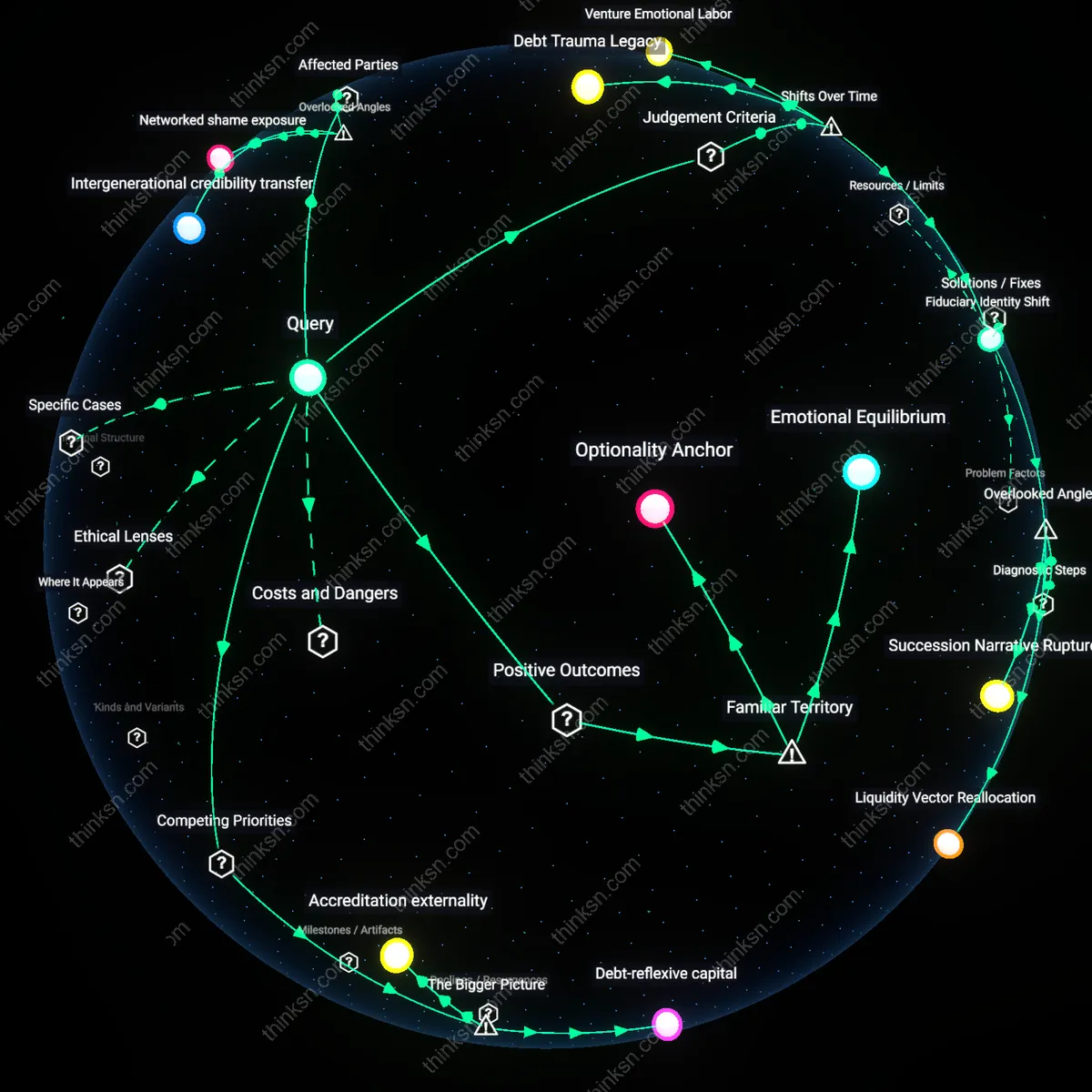
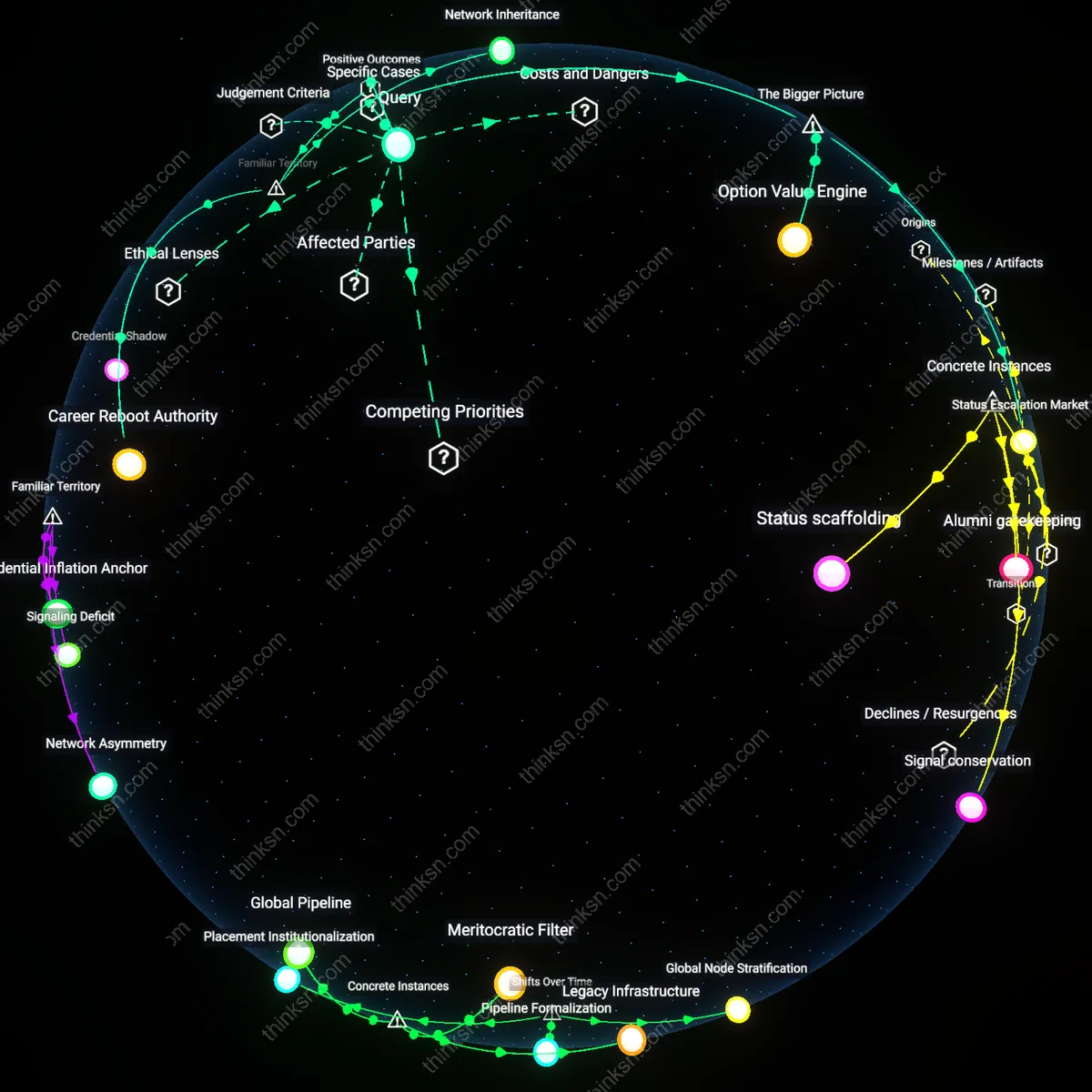
Analysis reveals 5 key thematic connections.
Key Findings
Credential Signaling
Pursuing an elite private MBA is rational because it transmits a high-reliability signal of capability and ambition to top-tier employers in competitive labor markets like management consulting or investment banking. The degree functions as a standardized, expensive, and socially recognized credential that filters candidates in recruiting pipelines at firms such as McKinsey or Goldman Sachs, where pedigree heavily influences early-career hiring. What’s underappreciated is that the signal’s value isn’t in knowledge gained, but in its costliness—only those confident in their future performance can justify the forgone income and tuition, making it resistant to inflation by lower-performing applicants.
Network Inheritance
An elite MBA is rational because it grants immediate access to a densely connected, high-status professional network concentrated in global financial hubs like New York, London, or Singapore. Graduates inherit alumni affiliations that unlock private job markets, board appointments, and venture capital opportunities through trusted referrals at firms like Andreessen Horowitz or Blackstone. The non-obvious insight is that this network isn’t built through individual effort during the program, but is institutionally pre-wired—admission itself activates dormant ties that would otherwise take decades to cultivate organically.
Career Reboot Authority
An elite MBA is rational because it legitimizes a radical career pivot, allowing professionals to exit saturated or declining fields—such as fossil fuel energy or traditional retail—and re-enter as credible candidates in high-growth domains like tech strategy or ESG investing. Top programs like Stanford GSB or Wharton confer institutional endorsement that overrides prior job history, enabling reinvention without signaling risk to employers. The underappreciated aspect is that the degree functions less as education than as a socially accepted 'reset button,' granting permission to change trajectory in ways self-directed learning or online courses cannot.
Status Escalation Market
Pursuing an elite private MBA is rational because it grants access to a status escalation market where admissions offices function as credentialing gatekeepers for elite professional networks, particularly visible at institutions like Harvard Business School, where recruitment pipelines to top-tier private equity and consulting firms are structurally contingent on degree affiliation. The mechanism operates through closed hiring loops—the persistent preference of McKinsey, KKR, and similar firms to recruit from a fixed set of schools—which transforms the MBA not into a pure skill upgrade but into a required bid for entry into a social architecture of privilege, sustained by alumni influence and corporate habit. What is non-obvious is that the salary premium is less a return on human capital than a transfer payment within a coordinated elite reproduction system, where the key enabler is the institutionalized exclusion of equivalent talent from non-target schools.
Option Value Engine
Enrolling in an elite MBA is rational because it functions as an option value engine that resets career trajectory under conditions of labor market uncertainty, as seen in the case of mid-career technologists from firms like Intel or NASA’s JPL who pivot into tech-adjacent venture capital via Stanford GSB. The program’s summer internship requirement, combined with on-campus recruiting monopolized by high-variance industries like AI startups and crypto funds, allows students to experiment with radical career shifts at near-zero personal cost—something that would be prohibitively risky outside the program’s safety net. The systemic driver here is not salary certainty but the compression of search costs and social risk, enabled by the school’s role as a de-risked career laboratory, where the latent value lies in exposure to asymmetric upside bets otherwise inaccessible to stable but siloed professionals.