When Insurer Says Act of God, Is Your Liability Claim Valid?
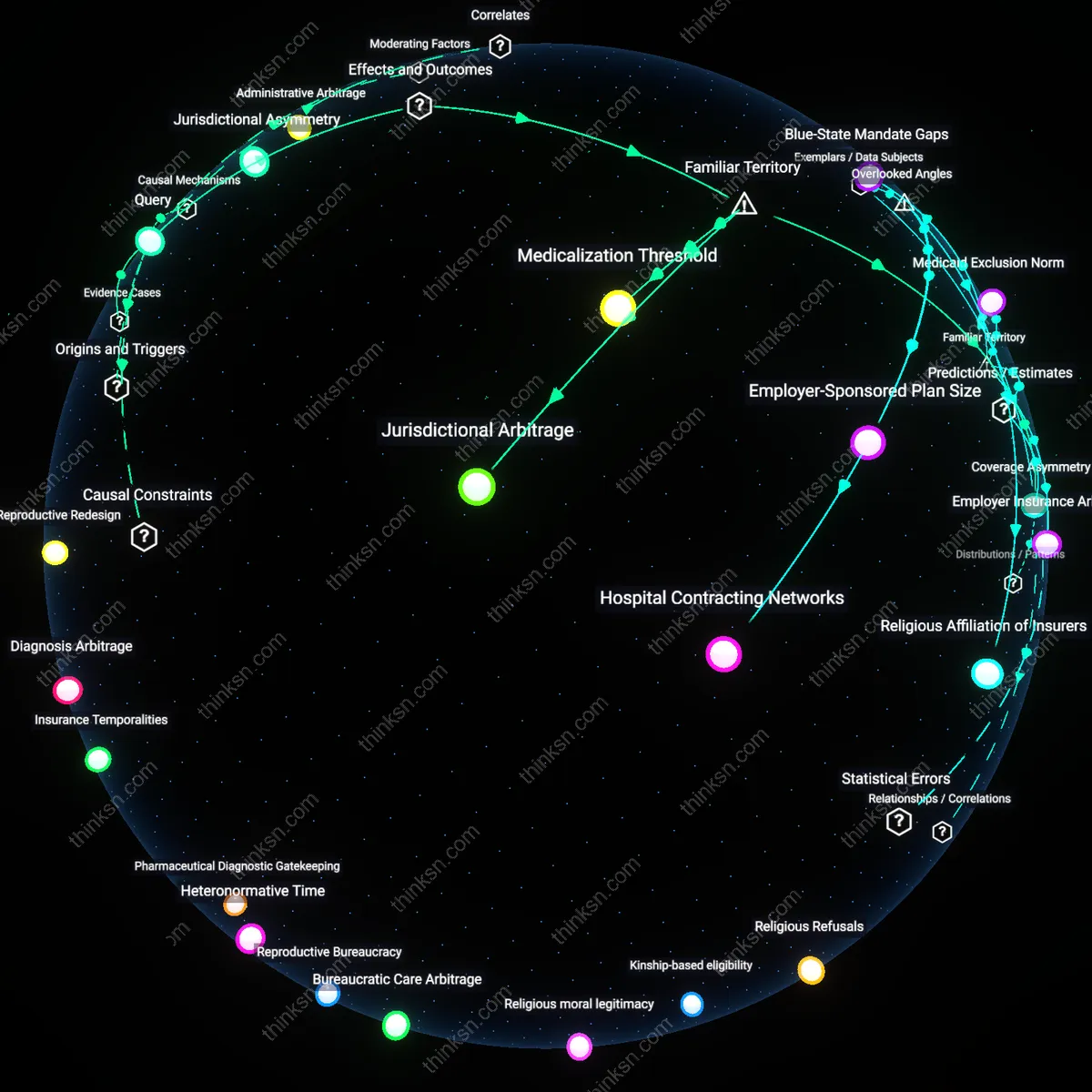
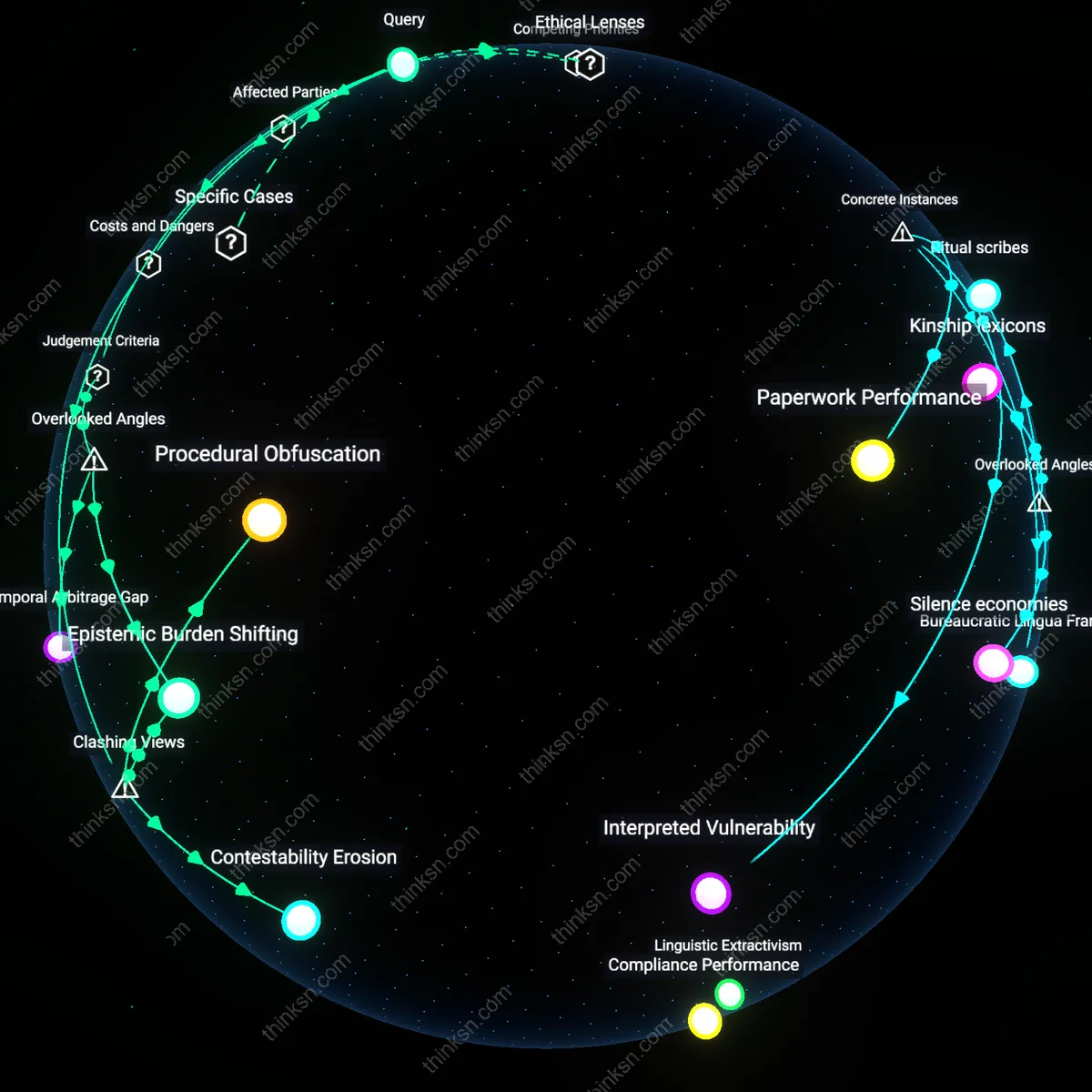
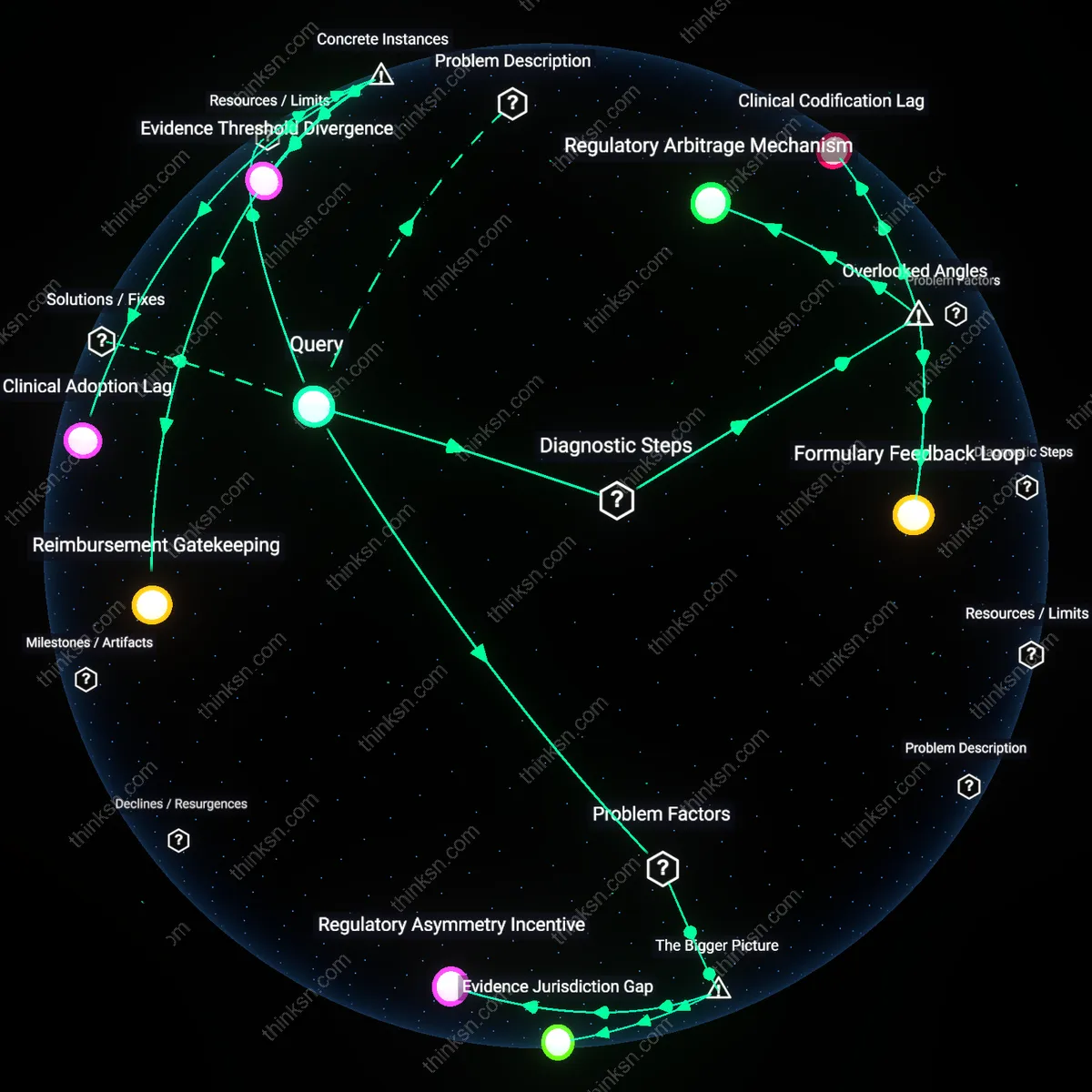
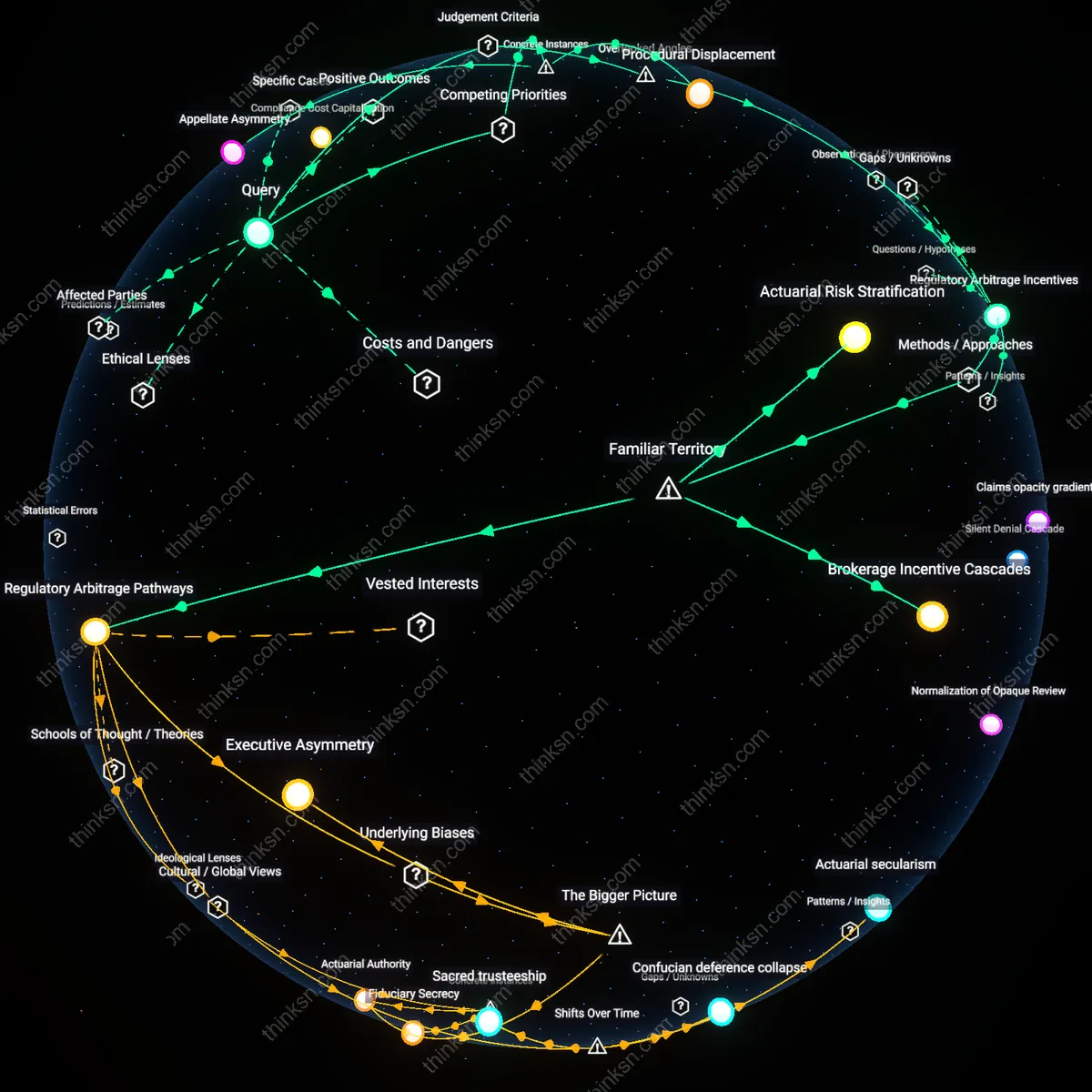
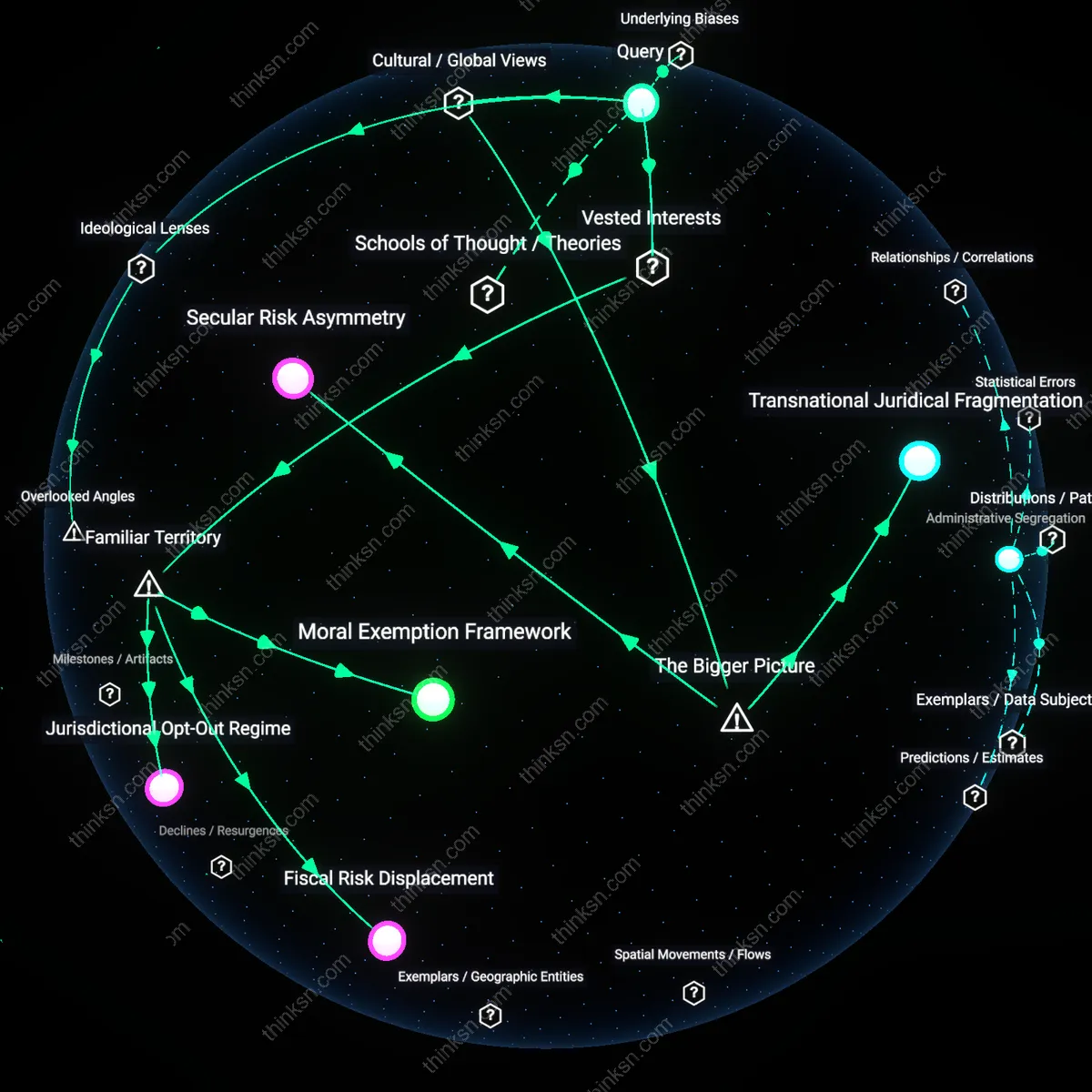
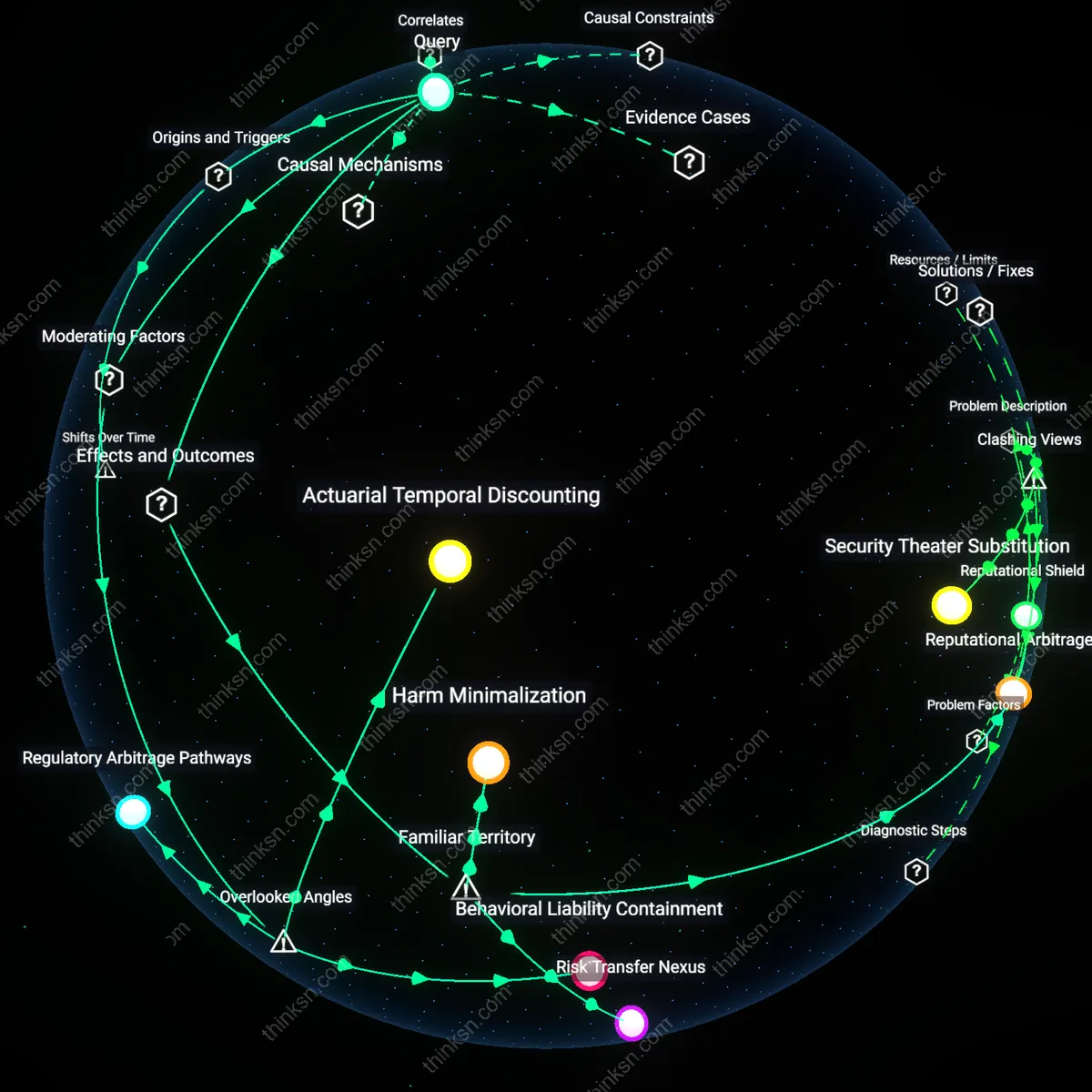
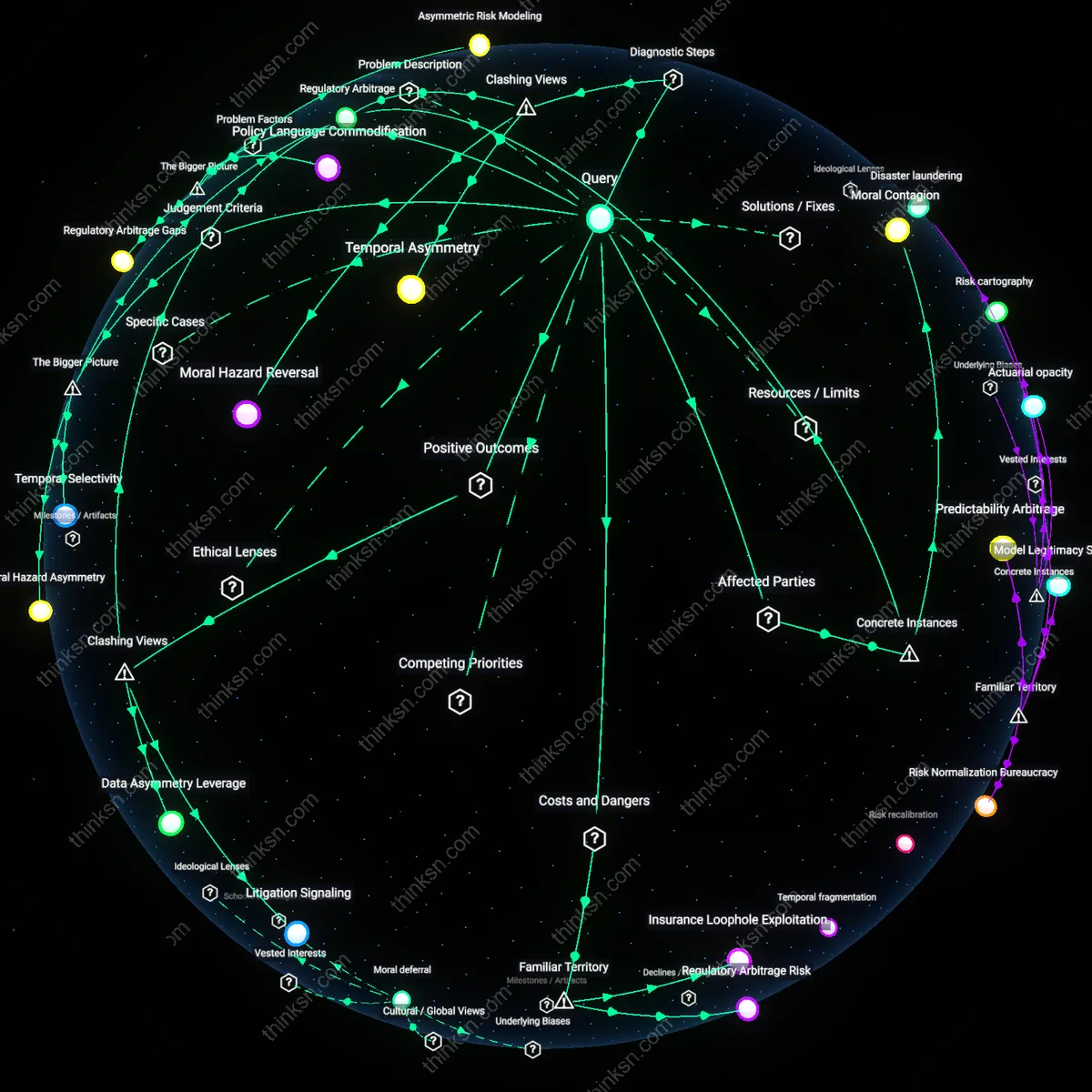
Analysis reveals 14 key thematic connections.
Key Findings
Regulatory Arbitrage
A small business owner can evaluate the legality of an insurer’s 'act of God' denial by examining whether the insurer exploited gaps between state insurance regulations and federal disaster declarations, as seen in the aftermath of Hurricane Maria in Puerto Rico, where insurers classified widespread wind damage as uninsurable 'acts of God' despite policyholders in regulated zones being eligible for federal aid. The Puerto Rico Office of the Commissioner of Insurance lacked enforcement power over federally backed reinsurers, allowing private insurers to shift risk while appearing compliant, revealing how jurisdictional fragmentation enables legal but ethically contested claim denials. This dynamic exposes regulatory arbitrage as a structural mechanism where insurers navigate overlapping authorities to legitimize exclusions that would fail under unified oversight.
Policy Symmetry
A small business owner can assess the validity of an 'act of God' denial by comparing the insurer’s invocation of the term against its prior underwriting behavior, such as in the 2017 Sonoma County wildfires, where insurers like Farmers Insurance denied claims citing unprecedented firestorms as uninsurable events, yet had previously accepted premiums based on risk models that accounted for high fire danger. The California Department of Insurance later found that carriers could not retroactively reclassify expected regional perils as excluded 'acts of God' when those same risks were priced into annual premiums, establishing that policy symmetry—the alignment between risk pricing and claim treatment—determines legal fairness in exclusion claims.
Moral Contagion
A small business owner can judge the legitimacy of an 'act of God' denial by observing how peer claims are treated within the same event zone, as occurred during the 2011 Thailand floods, where multinational firms with global policies saw payouts for 'business interruption' while local suppliers with identical physical damage were denied under 'act of God' clauses, prompting public backlash that reshaped insurer behavior. Reinsurance markets tolerated differential treatment legally, but the perception of systemic inequity activated consumer advocacy groups and trade associations to pressure insurers into retroactive settlements, demonstrating that moral contagion—the spread of reputational risk through perceived injustice—can constrain insurer discretion even when legal standards are minimally enforceable.
Moral Hazard Asymmetry
The small business owner can evaluate the insurer's claim by determining whether the doctrine of 'act of God' is being applied to relieve the insurer of accountability while still expecting full premium compliance from the policyholder, given that insurance contracts assume mutual responsibility but often enforce it asymmetrically during payout disputes; large insurers, backed by reinsurance capital and actuarial models, design contracts that preserve profit stability under volatility while leaving small businesses exposed to ruinous loss, justified by appeals to natural unpredictability. The non-obvious insight here is that 'act of God' clauses function less as neutral legal categories and more as moral justifications for unilateral risk transfer when systemic incentives prioritize insurer solvency over policyholder resilience. This imbalance persists because rating agencies and financial regulators monitor insurer stability far more closely than policyholder recourse, creating a structural tolerance for denial. The concept this reveals is not simply unfairness but a deliberate inversion of moral hazard—where the entity insulated from consequences takes fewer risks, yet still denies liability—hence, moral hazard flipped against the vulnerable.
Temporal Selectivity
A small business owner should scrutinize whether the insurer applied 'act of God' retroactively only after the event occurred, rather than having explicitly defined such an event as excluded at the time of underwriting, because reclassification of risk after loss exposes a pattern of temporal manipulation where historical weather data known at policy issuance is later reframed as 'unforeseeable' to justify denial; this occurs particularly in zones of increasing climate volatility where insurers issue policies with broad perils coverage but later invoke extreme conditions as exogenous, despite actuarial awareness of trended event frequency. What is underappreciated is that this tactic relies on a lag between risk accumulation and claims processing—insurers collect premiums during years of rising risk while preserving the right to redefine causality post-loss, operating through delay as a financial strategy. This dynamic enables selective memory about foreseeability, turning probabilistic models into tools of narrative convenience. The residual concept is not denial per se but the exploitation of time gaps in risk recognition—thus, temporal selectivity.
Litigation Signaling
A small business owner should interpret the invocation of 'act of God' as a tactical pre-litigation move by insurers to pressure claimants into accepting reduced settlements, because insurers strategically deploy the term not when the event clearly falls outside coverage, but when ambiguity exists—especially in cases involving overlapping human and natural causation such as climate-exacerbated storms; this functions as a deterrent to legal challenges by leveraging the high cost and uncertainty of litigation, which disproportionately disadvantages small firms. The non-obvious dynamic here is that denials are less about legal validity and more about behavioral economics, challenging the dominant view that such decisions are primarily doctrinal.
Data Asymmetry Leverage
A small business owner can assess the legitimacy of an 'act of God' denial by analyzing how insurers selectively use meteorological or catastrophe modeling data to reframe insured events as unforeseeable, because major reinsurers and primary insurers now rely on proprietary risk models that classify events post hoc to support exclusionary narratives, while withholding the underlying algorithms or calibration data from policyholders; this creates an evidentiary imbalance where the insurer controls both the claim decision and the scientific justification. The underappreciated reality is that 'act of God' has evolved into a data-mediated construct rather than a legal one, undermining the assumption that contract language alone governs claims outcomes.
Insurance Loophole Exploitation
A small business owner can assess whether an insurer's use of 'act of God' is legally valid by scrutinizing whether the denial coincides with documented policy exclusions that explicitly categorize the event as uninsurable—insurers often rely on vague or buried language to deny claims after disasters, leveraging the public's assumption that natural catastrophes are uniformly excluded. This mechanism functions through standard insurance contract design, where clauses are written in broad legal terms that align with common perceptions of 'unpreventable' events, but in practice are weaponized to avoid payouts even when mitigation efforts were made. The underappreciated risk is that the very familiarity of the 'act of God' label disarms skepticism, allowing insurers to rebrand preventable or ambiguous losses—like flooding in known zones—as unforeseeable, despite predictable climate trends and prior risk assessments.
Regulatory Arbitrage Risk
A small business owner should investigate whether the insurer filed the denial with the state insurance regulator using standardized loss codes, because discrepancies between public claims and regulatory reports reveal when 'act of God' is used as a pretext rather than a compliance-bound classification. This process operates through state-by-state variation in how 'force majeure' events must be reported, creating openings for insurers to apply the term inconsistently across jurisdictions while invoking its moral finality in customer communications. What escapes common awareness is that the term carries legal weight only when matched with procedural transparency—yet the public imagines it as an automatic, self-executing shield, allowing companies to exploit regulatory gaps without public accountability.
Regulatory Arbitrage Gaps
A small business owner can evaluate the legitimacy of an insurer’s 'act of God' denial by examining whether the insurer exploits jurisdictional variations in insurance law to apply more restrictive interpretations of force majeure than local statutes permit. State insurance regulators define 'act of God' with varying stringency, and insurers operating across state lines may invoke broader exclusions in regions where oversight is weaker or definitions are ambiguous, a practice enabled by fragmented federal oversight and the McCarran-Ferguson Act’s delegation of authority to states. This reveals how insurers strategically align contractual language with permissive regulatory environments rather than objective meteorological or legal benchmarks, a pattern often invisible to policyholders without access to comparative regulatory databases or legal counsel. The non-obvious insight is that the denial may be less about the event’s nature and more about the insurer’s operational footprint across regulatory terrains.
Asymmetric Risk Modeling
The validity of an 'act of God' denial can be assessed by uncovering whether the insurer used climate models or historical loss data inconsistent with those it files with state insurance departments to justify premiums. Insurers are required to file actuarial justifications for rates, yet may later invoke unforeseeability when claims arise—despite internal models predicting such events—creating a contradiction between risk pricing and risk refusal. This dissonance is sustained by a lack of public audit rights over proprietary models, allowing companies to retroactively reclassify events as 'unforeseeable' while retaining profits from risk-based pricing. The critical leverage point is that regulatory compliance in pricing does not guarantee good faith in claims handling, exposing a systemic loophole where data is used asymmetrically across underwriting and payout functions.
Policy Language Commodification
A business owner should scrutinize how standardized endorsement clauses—such as anti-concurrent causation (ACC) language—were inserted into their policy via industry-backed drafting groups like the Insurance Services Office (ISO), which produce model forms widely adopted across carriers. These templates often redefine causation so that any damage involving a natural event, even secondarily, can be denied under 'act of God' regardless of preventable contributing factors like maintenance failures or building code compliance. The commodification of exclusionary language through centralized form production enables widespread replication of legally aggressive terms that shift systemic risk onto policyholders, masked as neutral contract terms. The overlooked reality is that the denial logic is not organically derived from the event or law, but pre-engineered into widely sold policy architectures.
Temporal Asymmetry
The business owner should examine whether the insurer applied a post-loss definition of 'act of God' that was not operationally defined at the time of policy purchase, exposing a reversal in evidentiary burden where the event’s unpredictability—once a condition for coverage—is reinterpreted after the fact as a disqualifier. This occurs when actuarial models used in pricing exclude climate trend data available pre-policy but cited post-loss to claim 'unforeseeability,' shifting the contract’s logic from risk pooling to risk disavowal. The dissonance lies in discovering that insurers can legally deny claims not by violating standards but by anchoring decisions in knowledge produced after the contract was signed, subverting temporal integrity in claims evaluation.
Moral Hazard Reversal
The owner must interrogate whether the denial reframes the insured party as complicit in the event’s severity by emphasizing location or structural choices, shifting the moral hazard from insurer to insured despite the event’s natural origin—transforming 'act of God' into a covert attribution of negligence. This manifests when adjusters cite floodplain proximity or roof age not as risk factors but as disqualifying intent proxies, effectively moralizing spatial decisions protected under standard commercial policies. The suppressed insight is that 'act of God' denials often rest not on legal criteria but on a retroactive ethics of vulnerability, penalizing businesses for residing in insured zip codes the insurer willingly underwrote.