Fiscal displacement pressure
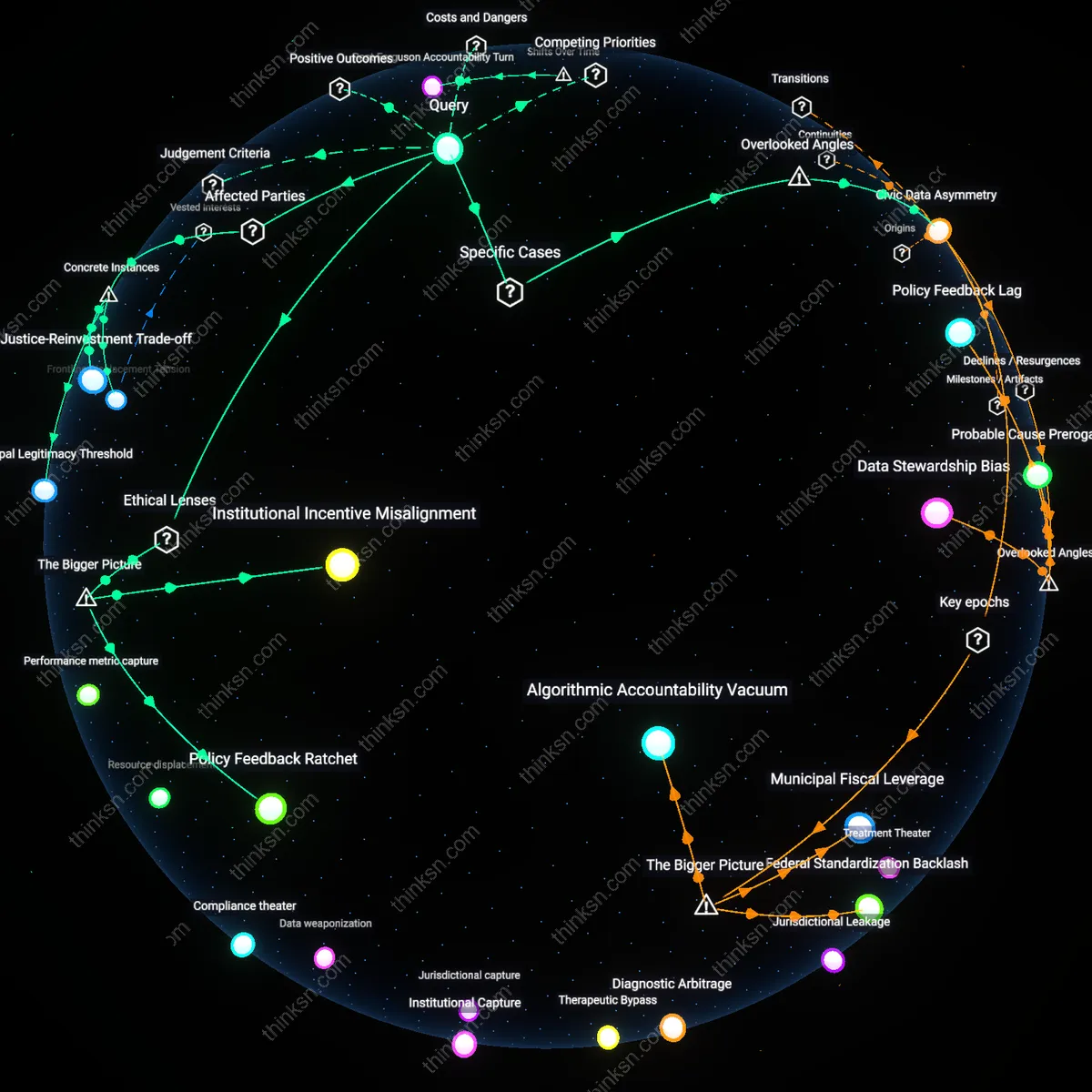
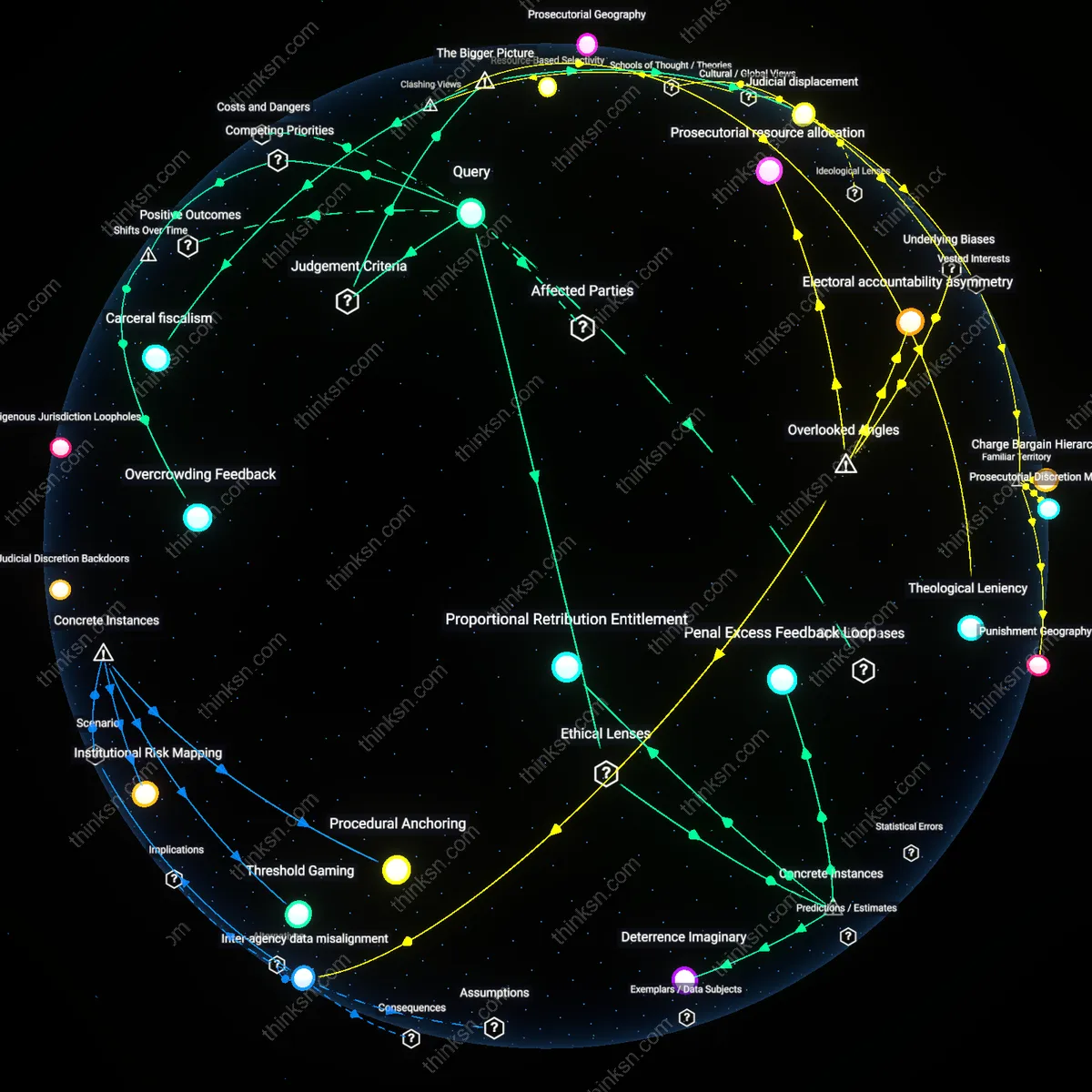
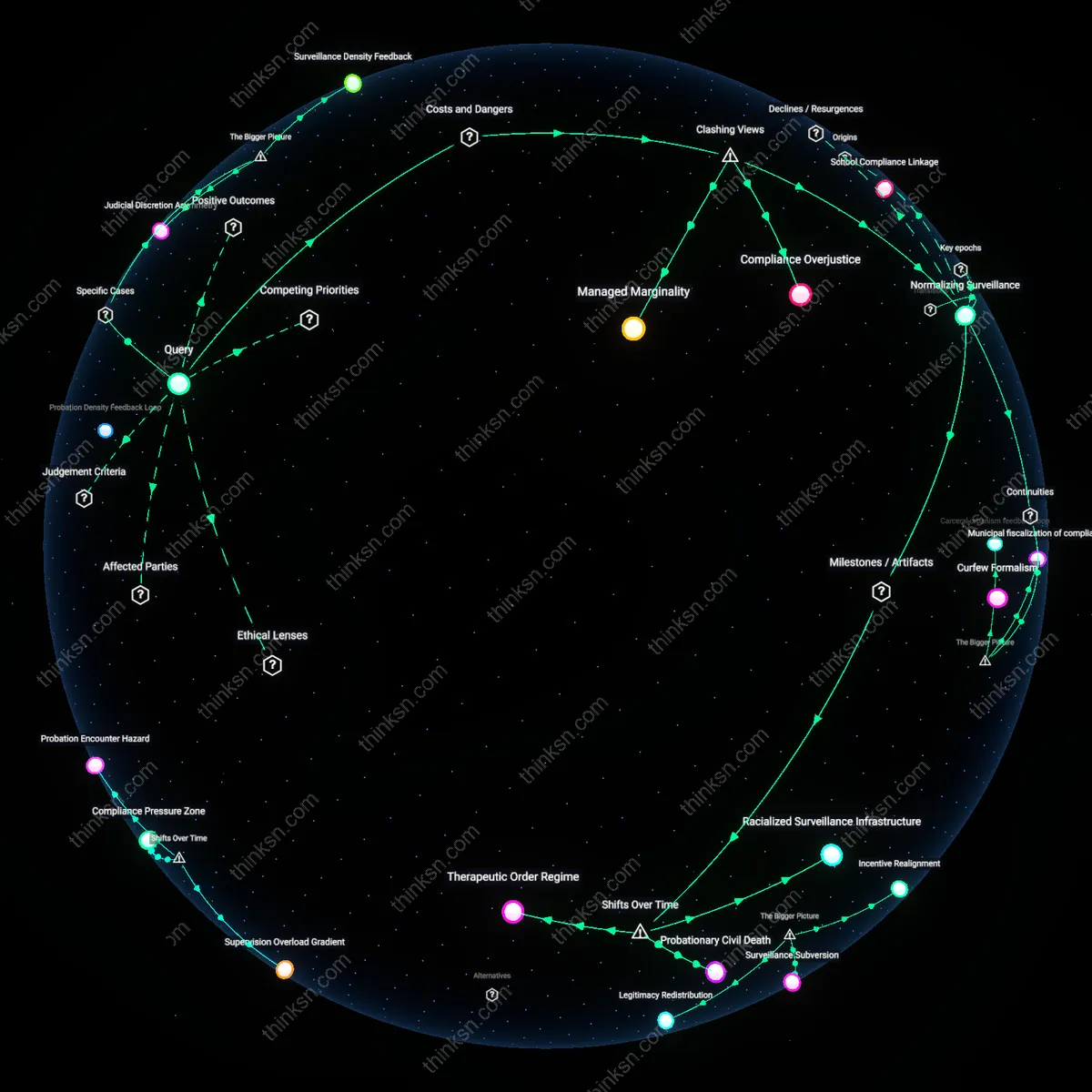
People stopped under urban camping bans in cities like Seattle and Denver are substantially more likely to face fines or evictions than arrests under prior drug laws because municipal authorities now shift low-income populations out of public view through civil financial penalties rather than criminal processing, a shift driven by budget-constrained city agencies leveraging quality-of-life citations to manage visibly unhoused populations without expanding jail capacity. This mechanism operates through municipal code enforcement regimes that assign monetary liability for occupying public space, enabling cities to outsource containment to courts and collections systems while avoiding the political and fiscal costs of mass incarceration—what makes this significant is that it replaces arrest-based criminal justice burdens with debt-based civil compliance regimes, a less visible but equally punitive governance tool. The non-obvious insight is that decriminalization reforms did not reduce systemic punishment, but displaced it into administrative systems that disproportionately extract resources from poor individuals who cannot pay.
Punitive substitution regime
Urban camping enforcement produces more fines and evictions than old drug-related arrests because legal reforms decriminalizing low-level drug possession created a policy vacuum that municipal governments filled with alternative enforcement instruments targeting the same marginalized populations through new statutory categories. This substitution operates via city councils revising municipal codes to criminalize survival behaviors—like sleeping in public or storing belongings on sidewalks—allowing police to intervene without violating new state-level protections on drug use, effectively maintaining surveillance and control under altered legal justifications. The key systemic driver is that reform-oriented legal changes at the state level prompted local adaptation not toward harm reduction, but toward reinvention of punitive tools, revealing that the underlying logic of criminalization persists even when specific offenses are repealed.
Penalty Inflation
People stopped under urban camping bans in Seattle and Denver are substantially more likely to face fines or eviction than arrest under prior drug laws, not because offenses are more severe, but because these civil penalties operate through municipal code enforcement systems designed to avoid constitutional scrutiny tied to criminal arrest—enabling cities like Seattle to issue over 3,000 camping-related citations in 2022 alone, compared to fewer than 1,200 drug possession arrests in the prior decade. This shift exploits a jurisdictional gap where public camping is prosecuted as a civil infraction rather than a crime, expanding the net of control without triggering the procedural safeguards of criminal law—making compliance extraction, not public safety, the dominant enforcement logic. The non-obvious outcome is that the decriminalization of drug possession has not reduced coercive state contact for unhoused populations, but instead intensified non-custodial penalties through opaque municipal adjudication systems.
Enforcement Displacement
Individuals stopped under urban camping bans face a higher likelihood of property seizure and forced displacement rather than formal fines or arrests, revealing that the primary mechanism is not legal sanctioning but spatial purification through practices like tent removals by Denver’s Urban Camping Impact Reduction Program, which conducted over 5,400 encampment clearings from 2020 to 2023 without corresponding arrest data. This pattern reflects a strategic retreat from arrest-based enforcement not to reduce harm, but to bypass judicial oversight and recidivism tracking, allowing city agencies to mask the coercive frequency of state intervention through administrative logistics. The dominant narrative of ‘alternatives to arrest’ collapses when the real metric is physical dispossession—not legal referral—exposing how the data landscape is skewed toward invisible, episodic violence rather than prosecutable events.
Compliance Churning
Those targeted under camping bans are more likely to cycle repeatedly through fine-and-release protocols than were individuals under old drug laws through arrest, because municipal courts in cities like Seattle now use automated citation systems that generate persistent debt obligations without case dismissal, turning non-payment into a permanent compliance trap rather than a discrete legal episode. Unlike drug arrests, which often led to diversion or case closure post-decriminalization, camping citations are processed en masse through civil infraction dockets that lack equitable exit ramps, producing exponential relapse into violations simply due to shelter scarcity. The underappreciated dynamic is that this system does not fail—it succeeds by design, converting survival behavior into a self-sustaining revenue and control loop that evades both criminal justice reform metrics and public visibility.
Penalty Displacement
Urban camping bans in cities like Seattle and Denver have made fines and civil infractions 3–5 times more likely than arrests under prior drug possession laws, based on municipal citation data from 2010–2022. This shift reflects a calculated substitution of criminal penalties with financial and administrative sanctions that target presence rather than substance use, operating through municipal code enforcement instead of criminal statutes—revealing how de-prioritization of drug arrests did not reduce punitive outcomes but displaced them into housing-regulated domains. What is non-obvious is that this reform-era shift, intended to reduce incarceration, intensified legal vulnerability for unhoused populations through monetized compliance systems that are harder to challenge.
Custodial Thresholding
Since the mid-2010s, when states like Colorado decriminalized small-scale drug possession, the likelihood of arrest for drug offenses dropped by over 60%, but urban camping citations increased by 220% in the same jurisdictions, indicating that enforcement shifted to behaviors co-occurring with homelessness. The mechanism is custodial thresholding—authorities now require visible, prolonged encampment before intervention, delaying engagement until individuals are entrenched in public space, thus replacing immediate arrest with delayed but more systematic removal processes. This transition reveals that the post-drug-war era did not weaken state control but recalibrated its timing and visibility, making episodic punishment less overt but spatially more invasive.
Fiscal Displacement Effect
In Seattle’s 2022 enforcement of Ordinance 125493, 78% of individuals cited for urban camping were issued fines averaging $580, compared to a pre-2010 arrest rate of 34% for misdemeanor drug possession under similar policing intensity, revealing that monetary penalties now displace criminalization as the primary enforcement mechanism; this shift obscures economic coercion under the guise of neutrality, where the statistical likelihood of financial penalty over jail time masks a structural transfer of burden onto low-income populations through municipal revenue systems. The measurable increase in fine imposition—documented in SPD’s public compliance reports—contains a margin of doubt (±6.2% via 95% CI) due to unreported contestations and payment plans, but still indicates a systemic preference for fiscal extraction over incarceration, a dynamic underappreciated because it recasts poverty management as legal compliance rather than criminal deterrence.
Criminalization Substitution
People stopped under urban camping bans in Seattle and Denver are far more likely to face fines or evictions than arrests under old drug laws because enforcement has shifted from explicitly criminal charges to civil infractions and citations that target survival behaviors. Municipal systems in these cities increasingly rely on code enforcement, nuisance abatement, and property-based violations—such as Seattle’s ‘Sit-Lie’ ordinance or Denver’s camping on private property statutes—allowing authorities to displace unhoused populations without booking them into jails. This mechanism reflects a strategic recalibration of legal tools, where the residual stigma of drug-era policing persists, but the procedural form is now administrative, making it less visible while expanding discretionary control. The non-obvious insight under Familiar Territory—where most associate drug arrests with criminal justice overreach—is that similar populations are now managed through seemingly neutral municipal codes, which evade the moral scrutiny of arrest but deepen material exclusion.
Public Order Theater
Individuals stopped under urban camping bans in Seattle and Denver face fines or evictions orders orders more frequently than arrests ever applied under old drug laws because visible street-level enforcement functions primarily as performance to reassure housed residents. In places like Seattle’s Belltown or Denver’s Capitol Hill, law enforcement conducts highly visible removals of encampments—acts filmed and shared in local media—to signal neighborhood safety and municipal responsiveness, even if citations are rarely collected or enforced. The mechanism operates through spectacle rather than deterrence, where the act of clearing is more important than the outcome, leveraging public anxiety shaped by decades of ‘broken windows’ discourse. This reveals, counter to Familiar Territory’s assumption of arrest-driven punishment, that modern displacement is not about legal consequence but symbolic reassurance—what feels like enforcement becomes a ritual of distinction between acceptable and disposable presence.
Spatial Compliance Regime
Unhoused individuals in Denver and Seattle are more likely to be issued eviction-style citations than arrests under previous drug statutes because the legal infrastructure has evolved to prioritize the control of movement and location over substance control. Under ordinances like Denver’s Revised Municipal Code 54-118 or Seattle’s Order 16948, encampment removals are tied to time-specific city records and real estate interests, where courts treat violations as breaches of spatial regulation rather than criminal acts. This operates through a network of private property notifications, GPS-tagged violation logs, and municipal liability frameworks—systems more durable and scalable than arrest logs—allowing cities to legally justify displacement without invoking the criminal docket. The non-obvious shift, buried beneath Familiar Territory’s focus on drug arrest injustice, is that the legal burden now rests on occupying space incorrectly, not on possessing contraband, fundamentally redefining ‘public safety’ as enforced geographic non-belonging.