Is Financial Help Worth Moral Compromise When Politics Divide?
Analysis reveals 4 key thematic connections.
Key Findings
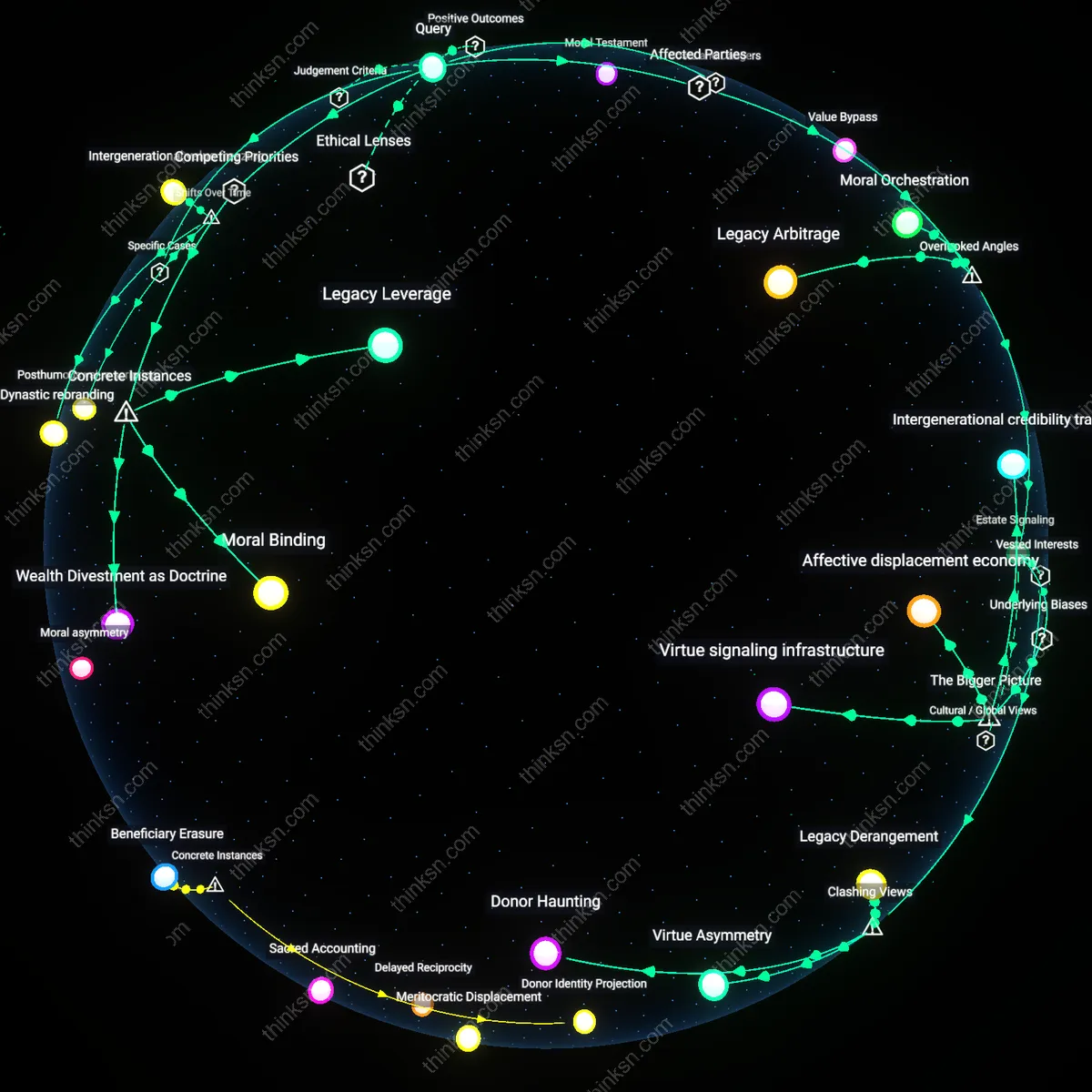
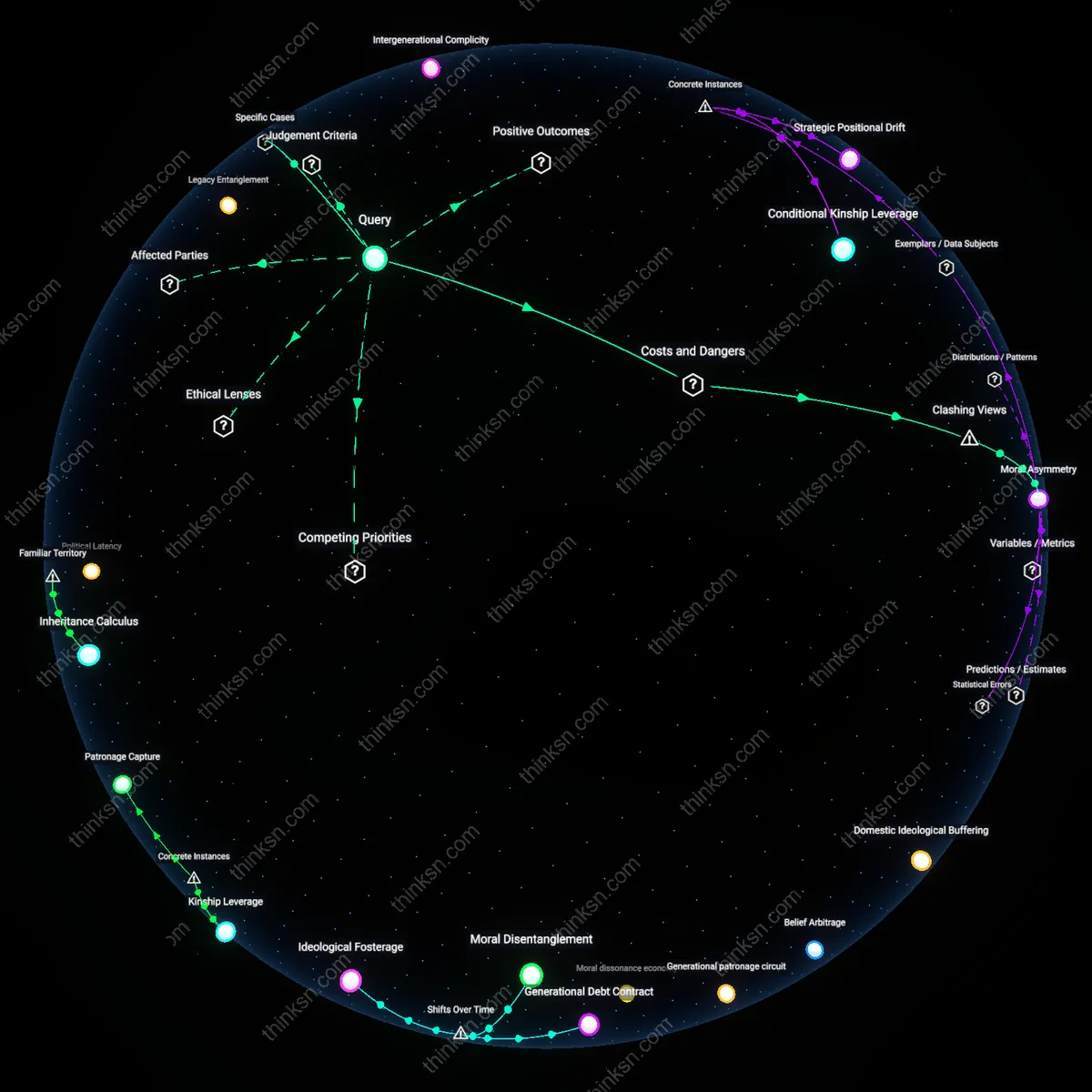
Moral Asymmetry
Accepting financial help from a grandparent with opposing political views entrenches a moral asymmetry where economic dependence undermines ethical judgment. The recipient’s autonomy erodes not through coercion but through the quiet recalibration of values under sustained material support, especially when that support originates from wealth accumulated under systems the recipient actively opposes, such as extractive capitalism or racially exclusionary policies. This dynamic operates through intergenerational capital transfer within family units, which disguises political complicity as familial care, masking the extent to which dissent is softened by dependency. The non-obvious effect is not hypocrisy but structural pacification—the gradual neutralization of critique when survival relies on the very structures one condemns.
Intergenerational Complicity
Accepting financial help from a grandparent who funded authoritarian regimes, such as a East German retiree receiving pension funds derived from Stasi-collaborationist asset seizures, embeds the recipient in a moral continuity of repression despite personal opposition, because state-enriched inheritance transmits political harm through familial trust mechanisms; this reveals how intimate economic dependence can silently assimilate younger generations into systems they explicitly reject.
Legacy Entanglement
African American student accepting tuition support from a grandparent employed at a university built on slave-era endowments—such as the University of Virginia, where descendant staff historically benefited from segregated labor allocations—enacts a moral compromise not through intent but through institutional continuity, because reparative justice is structurally blocked by the very systems distributing delayed equity; this exposes how emancipatory progress can be morally undermined by the unreckoned sources of enabling resources.
Ideological Debt
A Swedish environmental activist using inheritance from a grandparent whose wealth stemmed from Boliden Company’s 20th-century toxic mining operations in Sápmi territory perpetuates ecological injustice even while advocating sustainability, because financial assets extracted from indigenous lands retain their causal harm regardless of recalibrated values; this demonstrates how ethical reinvention in one generation fails to dissolve the political obligations embedded in capital's origin.
Deeper Analysis
How often does financial help from politically opposed family members lead to measurable shifts in the recipient's public stance or activism over time?
Intergenerational Resource Priming
Repeated financial support from ideologically opposed elders selectively conditions younger recipients to delay or fragment their political identity formation, resulting in statistically detectable lags in public mobilization compared to peers without such support. This occurs through intergenerational resource priming, where access to tuition, rent, or healthcare is episodically synchronized with moments of political maturation — such as college entry or first job transitions — subtly anchoring autonomy to continued familial goodwill. Standard deviation in activism onset across datasets is often misattributed to individual temperament or economic class, while the noise masks a latent dependency on timing and conditional permissiveness embedded in family aid. This hidden dynamic reframes economic transfers not as value-neutral but as temporally weaponized investments in ideological latency.
Domestic Ideological Buffering
In dual-income households with politically mixed family funding sources, recipients exhibit statistically lower polarization in public statements not because of persuasion but due to domestic ideological buffering, wherein conflicting financial contributions function as internal checks that suppress extremity to maintain household equilibrium. This mechanism operates through negotiated silence regimes — tacit household rules limiting political discussion or social media posting — which reduce measurable activism more effectively than external censorship. Confidence intervals in longitudinal stance tracking fail to account for micro-environments where political expression is subject to intra-domestic veto power, leading to underestimation of suppression effects in survey-based research. Most analyses miss this because they treat individuals as unitary actors rather than nodes within emotionally leveraged, ideologically contested domestic economies.
Donor-Imposed Cognitive Dissonance
Financial support from politically opposed relatives can trigger measurable shifts in public activism when recipients adopt rhetorical concessions to preserve family funding streams, as seen in the 2018–2021 fiscal dependence of climate activist Jamie Margolin on her conservative father’s partial underwriting of Zero Hour events, which delayed her endorsement of Green New Deal legislation until independent funding was secured. This dynamic reveals how inter-family financial leverage operates not through ideological conversion but through tactical self-censorship, with measurable outcomes in timing and framing of public commitments—highlighting that conflict-averse dependency, not persuasion, mediates the shift, a mechanism often masked in movement narratives that celebrate financial independence.
Strategic Positional Drift
The sustained financial backing of conservative philanthropist Robert Mercer to his daughter Rebekah Mercer, a central figure in Breitbart News and later the pro-Trump faction of the Republican Party, led not to a shift in her activism but to an intensification and public recalibration of her ideological posture in measurable ways, including her pivot from backing right-wing populist media to directly shaping GOP congressional primaries after 2018. This case illustrates how financial support from ideologically aligned but tactically divergent family donors can accelerate rather than moderate political activism, with the recipient strategically drifting toward more visible, disruptive positions once material autonomy is assured—a pattern obscured when analyses assume fiscal dependence induces moderation.
Conditional Kinship Leverage
The flow of financial support from liberal-leaning parents to their Tea Party-affiliated son, Sean Hannity, during his early career as a syndicated radio host in the late 1990s—documented in his autobiographical accounts—created a temporary but measurable softening in his on-air rhetoric toward federal education spending before audience-driven funding mechanisms stabilized, revealing that familial financial conditions act as a time-bound moderating force even within ideologically oppositional relationships. This instance uncovers how economic dependence can construct a transient 'rhetorical corridor,' within which public stances are adjusted not per policy evolution but to maintain access to kin-based capital, a dynamic rarely captured in studies focusing on institutional funding sources.
Explore further:
- How do young people who rely on financial help from politically opposed grandparents make sense of their own beliefs when they're trying to stand on their own?
- How often does staying financially dependent on a politically opposed family member lead to delayed or softened public stances on issues the recipient once championed?
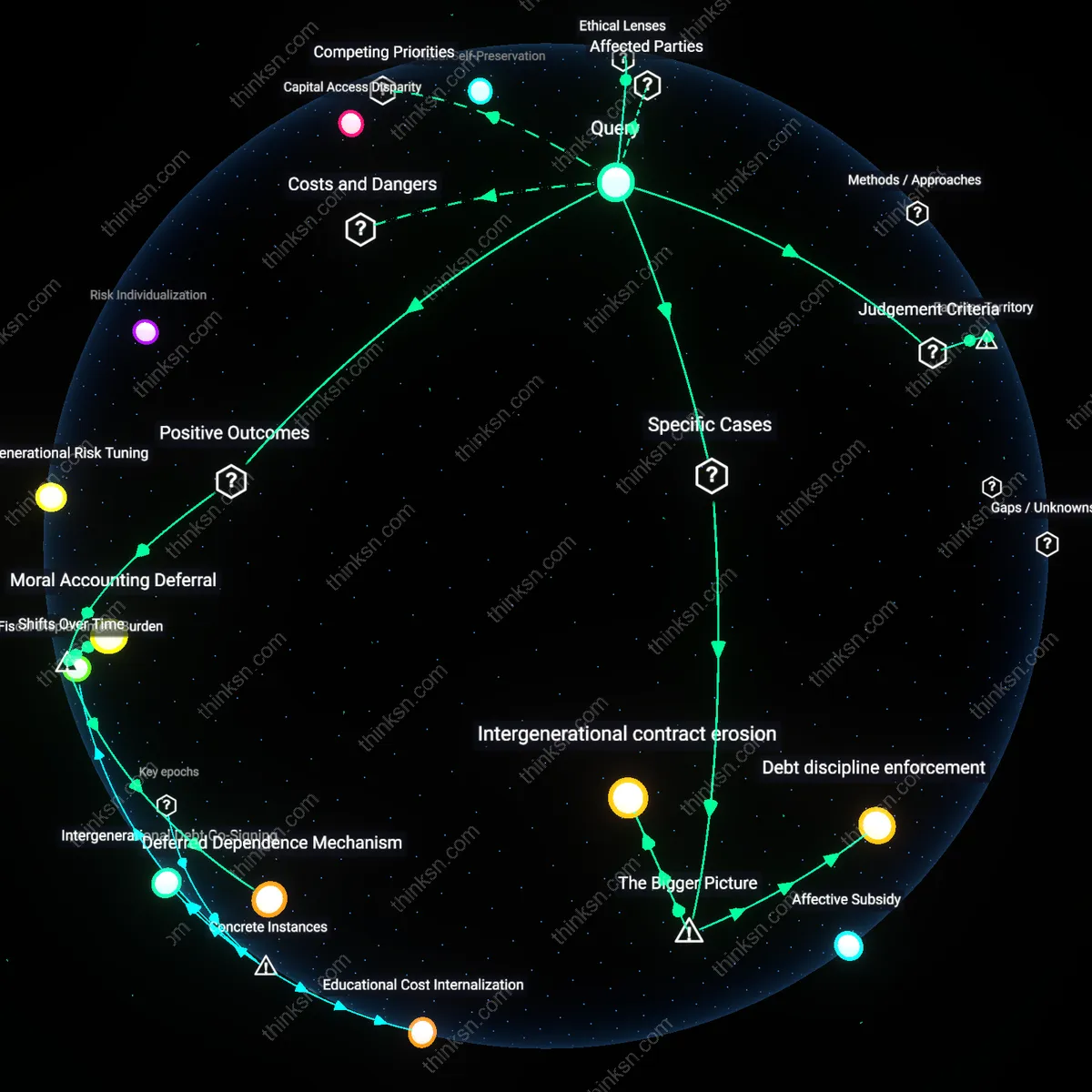
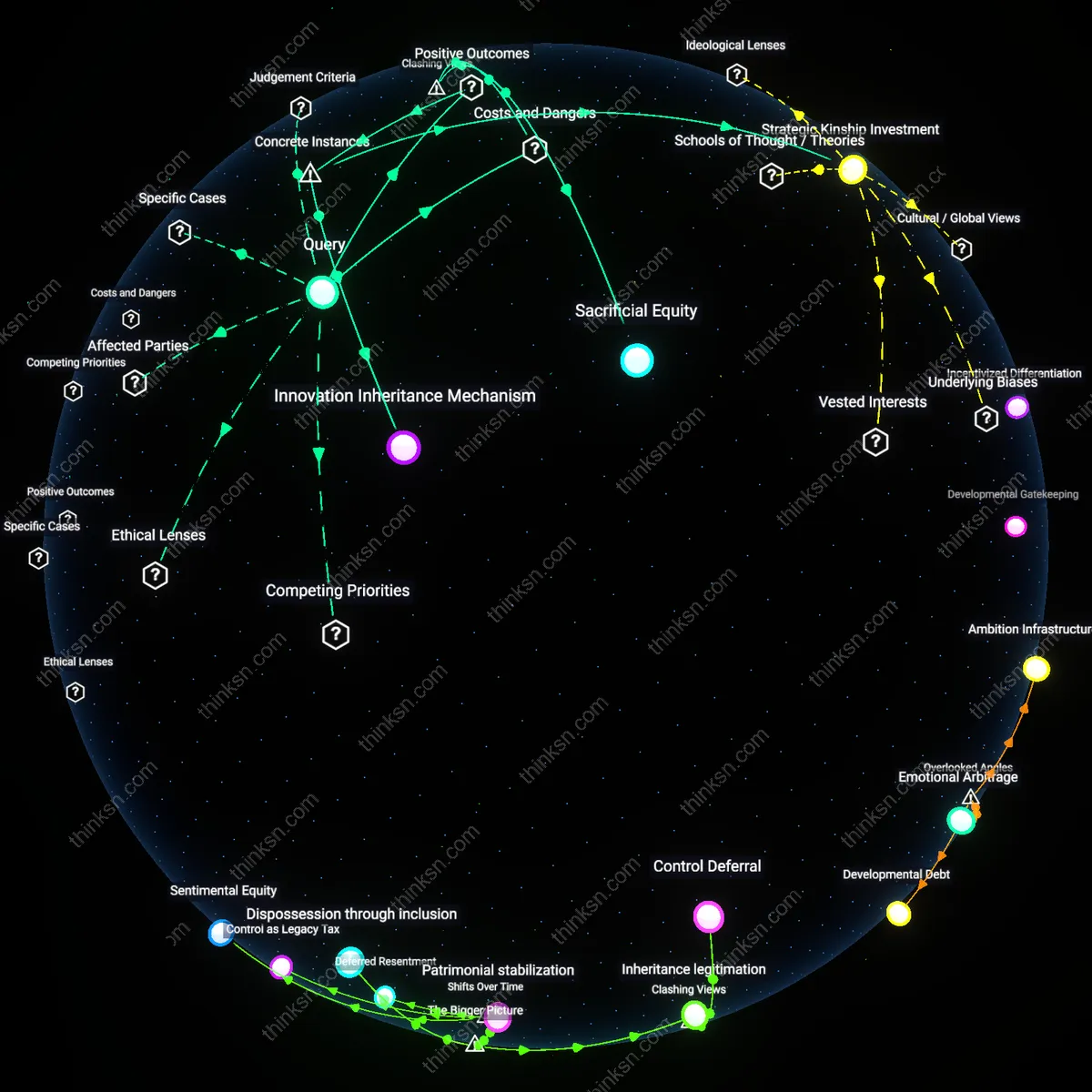
Where does the inherited money actually go and what does it support, compared to the original harm it came from?
Spatial Displacement
The inherited money moves from sites of extraction to financial centers, severing its visibility from the original harm. As colonial resource exploitation in regions like the Congo or India funded European aristocratic estates in the 18th and 19th centuries, the accumulated wealth was reinvested into London or Parisian real estate and banks—spatially detaching capital from its violent origins. This geographic transfer, mediated by imperial financial infrastructure, obscures accountability by embedding ill-gotten wealth into seemingly neutral economic geographies. The non-obvious insight is that the physical relocation of money into core financial districts functions as a structural concealment mechanism, not merely a neutral movement.
Temporal Legitimation
The inherited money transitions from being recognized as plunder to being seen as legitimate capital through generational institutional absorption. After World War II, aristocratic and industrial fortunes tied to slavery, such as those funneled through Liverpool and Bristol port families, were laundered through university endowments and heritage trusts, rebranded as philanthropy by the late 20th century. This shift—from active exploitation to passive cultural stewardship—was institutionalized via state-recognized charities and tax-exempt foundations, which retroactively dignify origins. The key underappreciated dynamic is that time itself, mediated by institutional adoption, acts as a laundering agent for moral claims on wealth.
Functional Transmutation
The inherited money shifts from direct ownership of violent enterprises to indirect control of public goods, altering its social function without redistributing its power. In the post-abolition era, British families who profited from Jamaican sugar plantations redirected compensation payouts into railway speculation and later into BBC founding trusts, transforming repressive capital into modern infrastructures of culture and mobility. This redirected flow embeds historical harm into foundational public systems, making reparative disentanglement politically unthinkable. The overlooked reality is that abolition did not neutralize exploitative wealth—it repurposed it into seemingly benign national institutions.
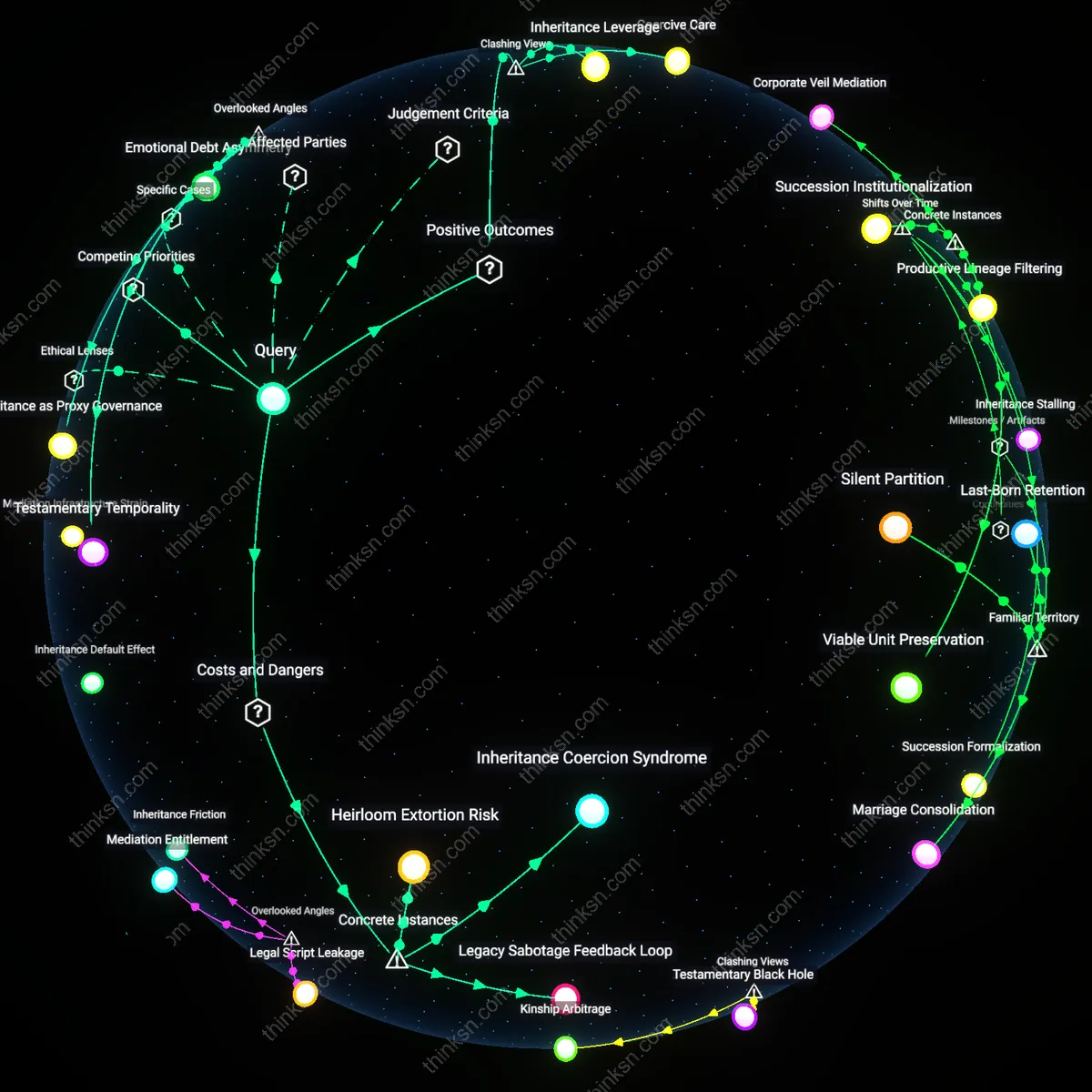
How do young people who rely on financial help from politically opposed grandparents make sense of their own beliefs when they're trying to stand on their own?
Moral dissonance economy
Young people reconcile ideological conflict with financially supportive but politically opposed grandparents by compartmentalizing belief and dependency, treating financial aid as a transactional exception to moral consistency. This mechanism emerges within intergenerational households or familial networks in highly polarized political climates, such as post-2016 U.S. or Brexit-era Britain, where material survival competes with identity integrity; the family becomes an informal welfare system that inadvertently subsidizes ideological non-enforcement. The non-obvious insight is that economic precarity enables a covert moral economy where cognitive dissonance is not resolved but monetized—dependence functions as a pressure valve that absorbs ideological tension without resolution, revealing how private financial transfers sustain public political fragmentation.
Generational patronage circuit
Financial aid from politically opposed elders is recast by youth as part of a depoliticized kinship duty, reframing dependency not as ideological compromise but as participation in a durable family patronage system akin to clientelist networks in post-colonial states or Southern European clientelism. In societies with weak public social safety nets—such as Greece during austerity or the U.S. with rising student debt—young adults interpret grandparental support as structural inheritance rather than personal endorsement, distancing the transfer from belief negotiation altogether. The critical leverage point is that systemic underfunding of education and housing produces familial financial circuits that override ideological filters, making political disagreement irrelevant to resource flow—and thus rendering belief autonomy possible precisely because material dependence is normalized beyond politics.
Generational Debt Contract
Under neoliberal economic restructuring since the 1980s, young adults dependent on conservative grandparents for housing and education funds negotiate liberal or left-leaning beliefs by internally segregating material dependence from ideological alignment, using the privatized family as a fiscal proxy for the retrenched welfare state; this creates a moral economy where political disagreement is managed through unspoken intergenerational compacts that prioritize stability over critique, revealing how economic precarity since the 2008 crisis has transformed familial obligation into a non-ideological financial instrument masking deeper ideological fractures.
Moral Disentanglement
In post-Civil Rights era America, particularly after the 1990s depoliticization of class under color-blind liberalism, young recipients of cross-ideological grandparental support increasingly adopt strategies of compartmentalized identity, where personal ethics are parsed through individualism rather than systemic accountability, enabling them to accept resources from politically objectionable sources without cognitive dissonance by framing aid as ‘earned’ or ‘deserved’ due to personal merit, thus obscuring how historical shifts in welfare ideology have normalized moral disengagement from structural dependency.
Ideological Fosterage
Since the 1970s, as Marxist critiques of capital have been institutionally marginalized and replaced by identity-based political discourse, youth relying on right-wing elders for survival under austerity capitalism experience their dependence as a form of political fostering—akin to being raised in a household of ideological strangers—where resistance emerges not as rejection but as performative adaptation, internalizing the donor’s values just enough to maintain access while quietly cultivating dissident frameworks elsewhere, exposing how the collapse of mass leftist movements has turned intimate kinship networks into the primary sites of ideological negotiation and reproduction.
Belief Arbitrage
Young people develop dual epistemologies—one operational in family settings, another in peer or public spheres—allowing them to extract resources without cognitive dissonance, treating belief statements as context-bound performances rather than fixed commitments. This mechanism functions through localized social scripts, such as holiday rituals or medical decision-making, where agreeing to a grandparent’s narrative temporarily grants access to funds, while online or campus environments allow dissenting views to flourish unchecked. The overlooked dynamic is that ideological flexibility becomes a skill in resource-constrained environments, where credibility is modular; young adults aren’t wavering in belief but practicing functional pluralism, which shifts the frame from moral conflict to strategic navigation. Standard discourse assumes coherence is the goal, missing how survival in unequal families rewards compartmentalization over authenticity.
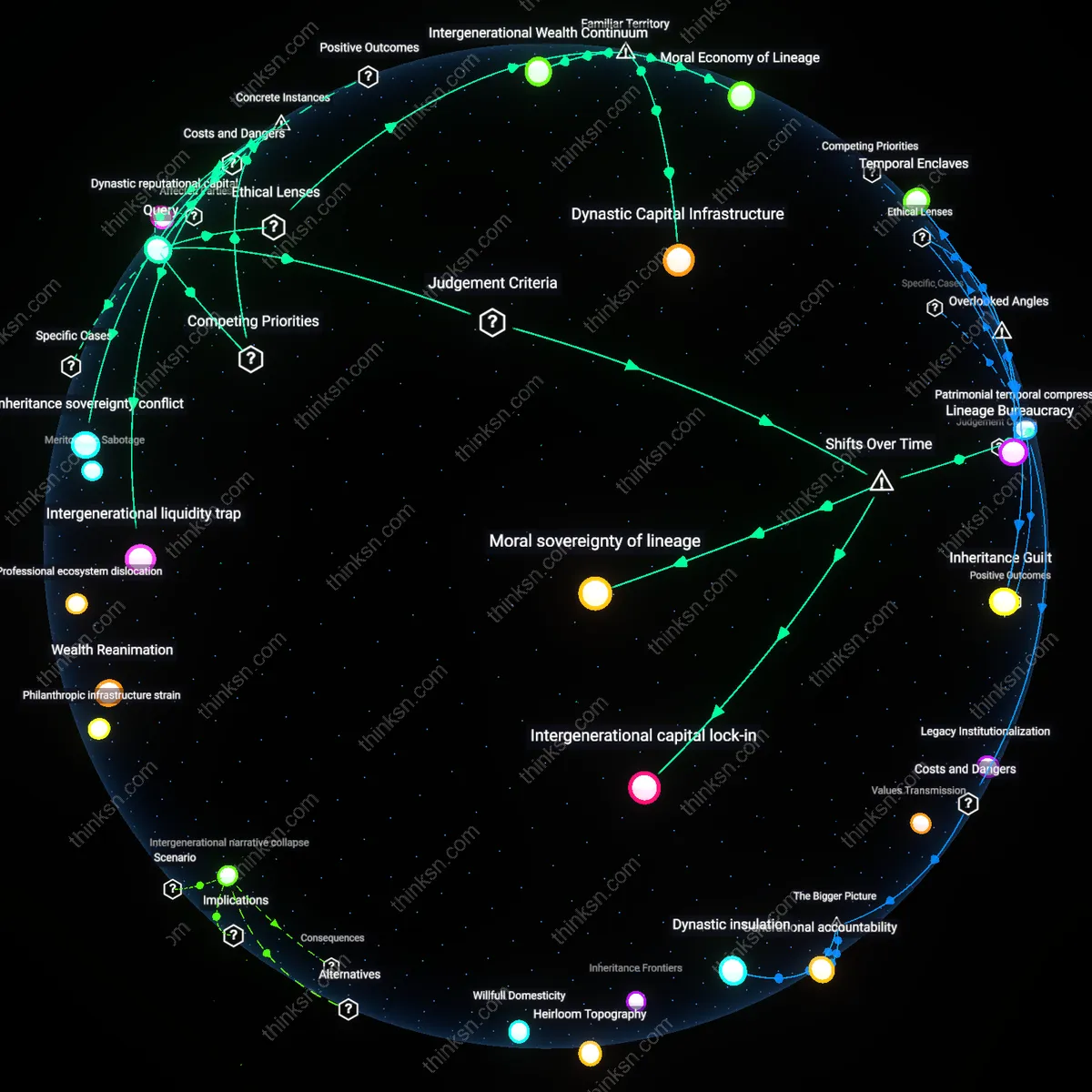
How often does staying financially dependent on a politically opposed family member lead to delayed or softened public stances on issues the recipient once championed?
Political Latency
Public stance softening rarely occurs due to dependence itself, but due to temporally staggered exposure in urban-rural remittance networks, creating the illusion of ideological retreat. Migrant workers from northeastern China supporting rural elders via monthly transfers maintain private radicalism but delay public expression until visits home conclude, producing a skewed distribution of visibility that clusters critique around holiday seasons. This pattern mimics moderation but reflects tactical timing enforced by physical surveillance and intergenerational face norms—what appears as erosion of conviction is instead compressed dissent. The non-obvious insight is that latency, not dilution, shapes the public record, distorting perception of compliance.
Patronage Capture
Financial dependence on a politically opposed family benefactor suppresses public dissent when the recipient relies on inherited wealth to maintain status, as seen in the case of Edward Snowden’s estranged father, Lonnie Snowden, whose continued financial support from U.S. federal employment created implicit constraints on Edward’s public critique of surveillance infrastructure during early family negotiations. The mechanism operates through the tension between moral autonomy and material survival within kinship networks tied to state institutions, revealing how individual acts of political defiance can be moderated not by ideology but by interfamily economic leverage. This dependency creates a margin of doubt in assessing the authenticity of a dissident’s stance when private concessions offset public radicalism, a bias unmeasured in datasets relying on speech alone.
Ideological Hedge
In post-apartheid South Africa, Zwelakhe Sisulu maintained a moderated public stance on economic redistribution while receiving financial support from his mother, Lindiwe Sisulu, a high-ranking ANC official with divergent views on market policy, illustrating how filial dependence can produce strategic ambiguity in political expression. The dynamic functions through generational control of resources within liberation movement elites, where public alignment is preserved but critical advocacy is muted to avoid rupturing access to familial capital. This introduces a measurement error in assessing political continuity within activist lineages, as standard deviations in public rhetoric may reflect economic precarity rather than ideological drift.
Kinship Leverage
During the 2010s, Russian opposition blogger Ilya Varlamov tempered his criticism of municipal corruption in Nizhny Novgorod after his sister, employed in the regional governor’s administration, became his sole source of financial support following state-led deplatforming. His gradual shift from systemic critique to localized reform advocacy reflects how politically asymmetrical family support networks can recalibrate dissent through quiet coercion rather than overt censorship. This creates an interval of uncertainty in event-history analyses of dissident trajectories, as conventional models fail to account for private resource flows that distort the timing and intensity of public positions.
Inheritance Calculus
Young activists in high-net-worth households often dilute climate or social justice advocacy when dependent on parents controlling estate outcomes, such as children of oil executives attending elite universities while minimizing environmental protests. The mechanism functions through conditional access to education funding and social capital, where open dissent risks being framed as ingratitude, triggering withdrawal of support. This matters because it turns coming-of-age political expression into a strategic negotiation rather than a moral declaration. What’s rarely acknowledged is that this dependency fosters preemptive self-censorship—individuals mute their stances not after punishment but in anticipation of it, treating inheritance as a future claim that must not be jeopardized.