Decarcerated care corridors
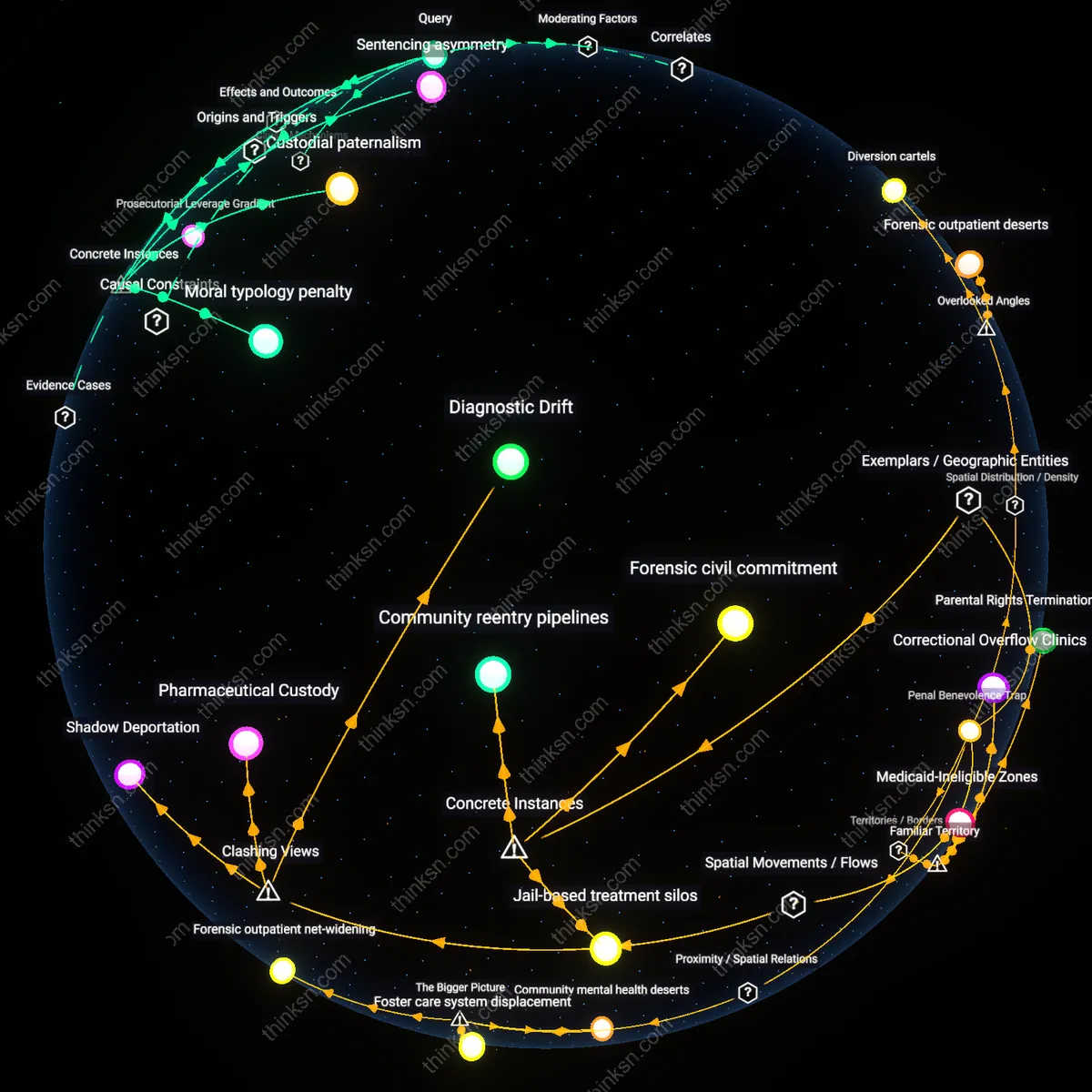
Women sentenced longer due to mental health conditions began receiving care in regional community-based behavioral health hubs in states like Oregon and New York after a pivotal shift in the early 2010s, when court-mandated diversion programs redirected justice-involved individuals from prisons to specialized outpatient networks. This transition emerged from judicial recognition of systemic prison incompatibility with chronic psychological treatment, catalyzed by lawsuits such as those following the 2011 Ashker v. Brown settlement that indirectly pressured reforms for women’s mental health sentencing. The mechanism operates through cross-agency coordination between state health departments and judicial districts, which now treat prolonged sentences as structural barriers to therapeutic continuity, revealing that the move from punitive to therapeutic jurisdiction was not a linear policy shift but a function of spatialized care redistribution outside carceral zones.
Forensic outpatient deserts
Women sentenced longer due to comorbid mental health and legal severity are disproportionately channeled into community-based forensic outpatient programs that do not exist in their residential areas. These mandated treatment plans assume geographic access to specialized dual-diagnosis probation tracks, but such services cluster in urban judicial hubs, leaving rural and suburban women spatially isolated from court-ordered care. The mismatch between sentencing mandates and service distribution transforms probation into a structural barrier rather than an alternative to incarceration—revealing that geographic absence, not clinical neglect, is the primary mechanism of care failure. This spatial void—where legal requirements precede and outpace health infrastructure—is rarely mapped in corrections policy, which presumes service availability as a baseline.
Diversion cartels
Women labeled as high-risk due to mental health histories are often placed in informal, non-state-run diversion programs operated by faith-adjacent networks in semiprivate residential facilities that are neither licensed as treatment centers nor monitored by health authorities. These programs emerge in legal gray zones where judges seeking alternatives to incarceration outsource to trusted community intermediaries—such as church-linked recovery houses—which accept court-mandated residents in exchange for reduced liability and funding streams. The spatial density of such facilities correlates not with clinical need but with local judicial networks and property zoning loopholes, creating ad hoc care clusters that evade public oversight and standard diagnostic protocols. This shadow system of care distribution reveals that judicial patronage, not epidemiological demand, shapes where mentally ill women end up—exposing a hidden dependency between bench relationships and therapeutic geography.
Correctional Overflow Clinics
Women sentenced longer due to mental health conditions are triaged into specialized forensic psychiatric units attached to or operated under the authority of state correctional systems, such as state-run psychiatric hospitals with secure wards like those managed by departments of corrections rather than health agencies. These facilities function within the legal jurisdiction of carceral control but are physically distinct from prisons, often located in rural areas with limited oversight, where involuntary treatment and long-term commitment are enforced under medicalized legal mandates. The non-obvious truth beneath public assumptions of 'care' is that these clinics operate as de facto extensions of prison sentences, where mental health status becomes both justification for incarceration and mechanism for its extension.
Parental Rights Termination Pipeline
Women with mental health conditions who receive longer sentences are often routed into civil child welfare systems where their diagnoses are used to justify permanent termination of parental rights, severing family ties and thereby eliminating a primary off-ramp from incarceration. This occurs through coordinated jurisdictional actions between family courts and criminal courts, particularly in states where judges may mandate foster care guardianship or adoption proceedings as conditions of sentencing review. What remains hidden beneath familiar beliefs about protective care systems is how mental health sentencing directly feeds a legal border-landscape where motherhood, once criminalized, becomes the very reason care cannot be accessed outside custody.
Medicaid-Ineligible Zones
Women penalized for mental health-related offenses frequently end up in geographic and bureaucratic dead zones where federal Medicaid funding is blocked from covering treatment in institutional settings, such as residential mental health facilities with over 16 federally restricted beds—rendering most therapeutic environments financially unreachable. Because these zones are defined by regulatory thresholds rather than clinical need, care is effectively criminalized by administrative geography, pushing women into prisons where services are guaranteed by constitutional mandate, unlike in civilian mental health networks. The overlooked reality is that 'care' is structurally excluded not by capacity but by fiscal jurisdiction—where borders drawn in federal policy render treatment inaccessible precisely when it is most needed.
Community mental health deserts
Women sentenced longer due to unmet mental health needs often end up in residential treatment centers located in economically depressed neighborhoods with underfunded public health infrastructure. These centers are frequently clustered near urban margins where low property values and weak political advocacy enable their siting, yet proximity to specialized psychiatric hospitals or state-funded clinics is minimal, reinforcing care fragmentation. The key mechanism is zoning policy combined with Medicaid reimbursement structures that incentivize placement over therapeutic access, making it possible for courts to outsource mental health supervision without ensuring continuity—what is underappreciated is how spatial isolation becomes a proxy for risk management in lieu of care efficacy.
Foster care system displacement
Women with severe mental illness who avoid prison due to longer sentencing disparities instead enter state-regulated group homes that are functionally integrated into child welfare infrastructure, particularly when they are mothers deemed unfit under family court rulings. These placements emerge not from health systems but from child protection mandates that trigger involuntary commitment through co-occurring dependency proceedings, thereby situating mental health care within juvenile justice-adjacent facilities. The non-obvious insight is that geographic proximity to schools, social workers, and visitation courts—not psychiatric resources—determines placement, revealing how child welfare policies indirectly govern adult mental healthcare access.
Forensic outpatient net-widening
Women released into court-mandated community treatment programs are typically assigned to outpatient clinics located in high-surveillance urban zones where probation compliance is monitored through coordinated data sharing between behavioral health providers and law enforcement. These clinics cluster near transit hubs and public housing to maximize regulatory reach, but in doing so prioritize geographic convenience for monitoring over therapeutic specialization or trauma-informed staffing. The critical dynamic is that Medicaid waivers enabling integrated care also require data pooling with public safety agencies, transforming mental health access points into nodes of carceral extension, a consequence rarely acknowledged in decarceration policy debates.
Shadow Deportation
Women with mental health-related sentences are rerouted from prisons into psychiatric detention centers abroad through bilateral health agreements, such as those between U.S. states and Mexican border clinics funded by U.S. federal grants. These facilities operate under medical sovereignty claims, allowing states to discharge custodial responsibility while maintaining spatial control through cross-border health contracts. This reveals a non-punitive migration facade masking penal displacement—what appears as care is an extradition of deviance under therapeutic alibi.
Pharmaceutical Custody
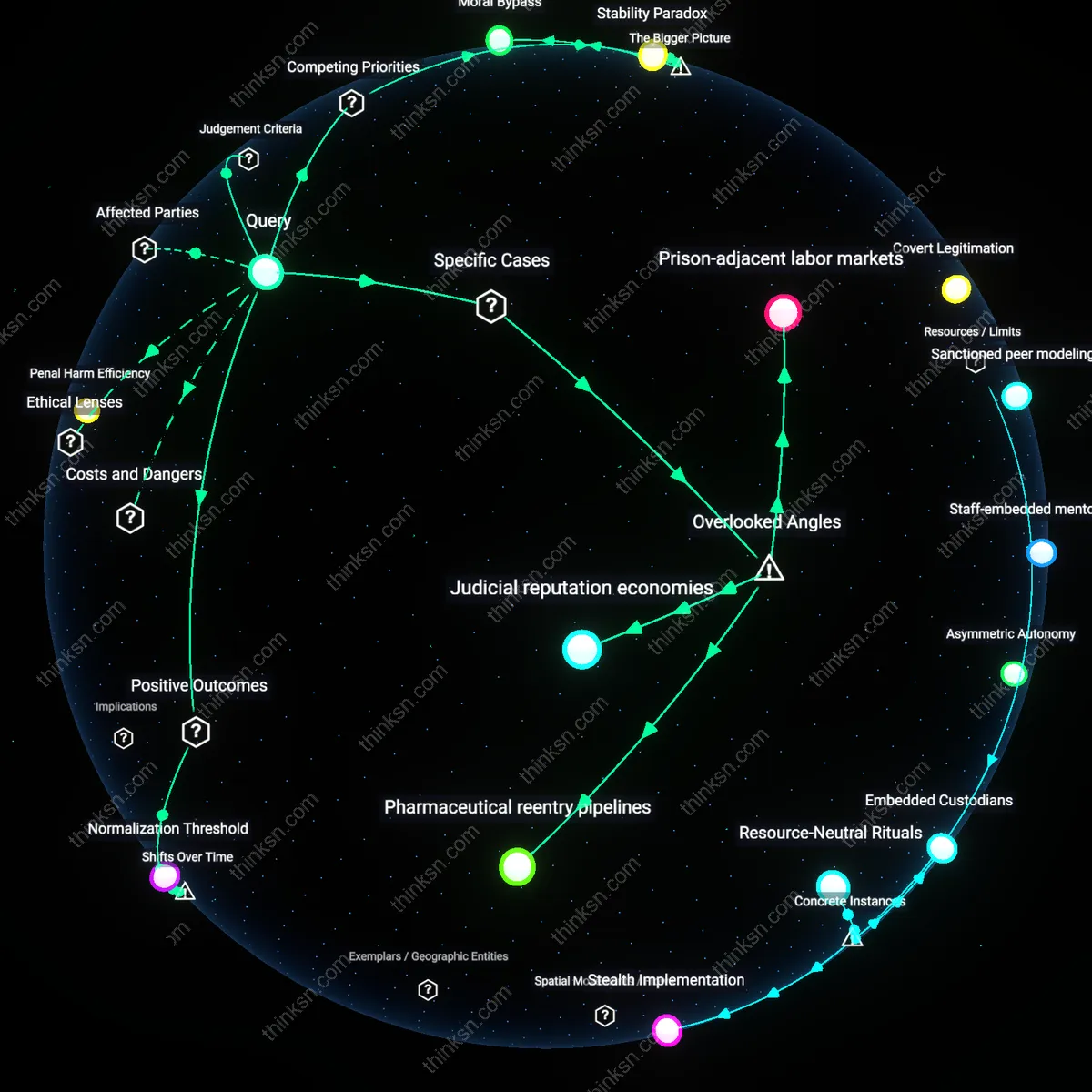
Women are channeled from court-ordered evaluations directly into residential psychopharmacological pilot programs run by biotech firms in rural Wisconsin and North Carolina, where sentencing judges accept reduced liability by transferring oversight to clinical trial protocols. These sites function as unlicensed carceral alternatives where compliance is enforced through drug regimen adherence rather than incarceration, exposing a feedback loop where mental health sentencing now feeds a covert supply chain for experimental drug monitoring. The prison is not bypassed—it is outsourced into therapeutic trial infrastructure.
Diagnostic Drift
Women initially sentenced for mental health-related offenses are systematically reclassified as 'non-compliant outpatients' and funneled into mobile crisis stabilization units operated by private equity-owned behavioral health networks in cities like Phoenix and Nashville. These units, positioned in commercial corridors between court districts and suburbs, keep women in perpetual transience rather than imprisoning them, optimizing for insurance billing cycles over continuity of care. This spatial perpetuity masks punishment as mobility, revealing that freedom is recast as circuitous clinical routing.
Forensic civil commitment
Women sentenced longer due to mental health conditions often end up in state-run forensic civil commitment facilities, such as the California Department of State Hospitals, where courts legally mandate indefinite psychiatric detention post-sentence. These institutions operate under civil law but function punitively, trapping individuals like those at Atascadero State Hospital in cycles of confinement justified by unmet 'mental illness' criteria for release. This reveals how therapeutic legal exceptions become permanent custody mechanisms under the guise of care, exposing a hidden infrastructure of non-penal incarceration.
Jail-based treatment silos
In Harris County, Texas, women with mental health diagnoses who receive longer sentences are frequently housed in specialized mental health units within county jails, such as the Mental Health Diversion Unit at the Jail Central facility, where care is administered through crisis stabilization protocols tightly coupled with law enforcement oversight. These units function as de facto psychiatric wards without clinical independence, where treatment timelines are dictated by bed availability and bail status rather than recovery, exposing how local correctional systems absorb mental health care deficits through spatially segregated, security-dominated regimes.
Community reentry pipelines
In King County, Washington, women sentenced with mental health enhancements are increasingly channeled into court-mandated community support programs like the Behavioral Health Court, which diverts individuals from prison into monitored outpatient care managed by nonprofits such as Recovery Café. These pipelines condition freedom on strict adherence to treatment plans, where relapse risks re-incarceration, revealing how therapeutic freedom is enforced through networked community agencies that extend carceral control beyond institutional walls.