Should High Equity Offset Lower Salary in Uncertain Career Moves?
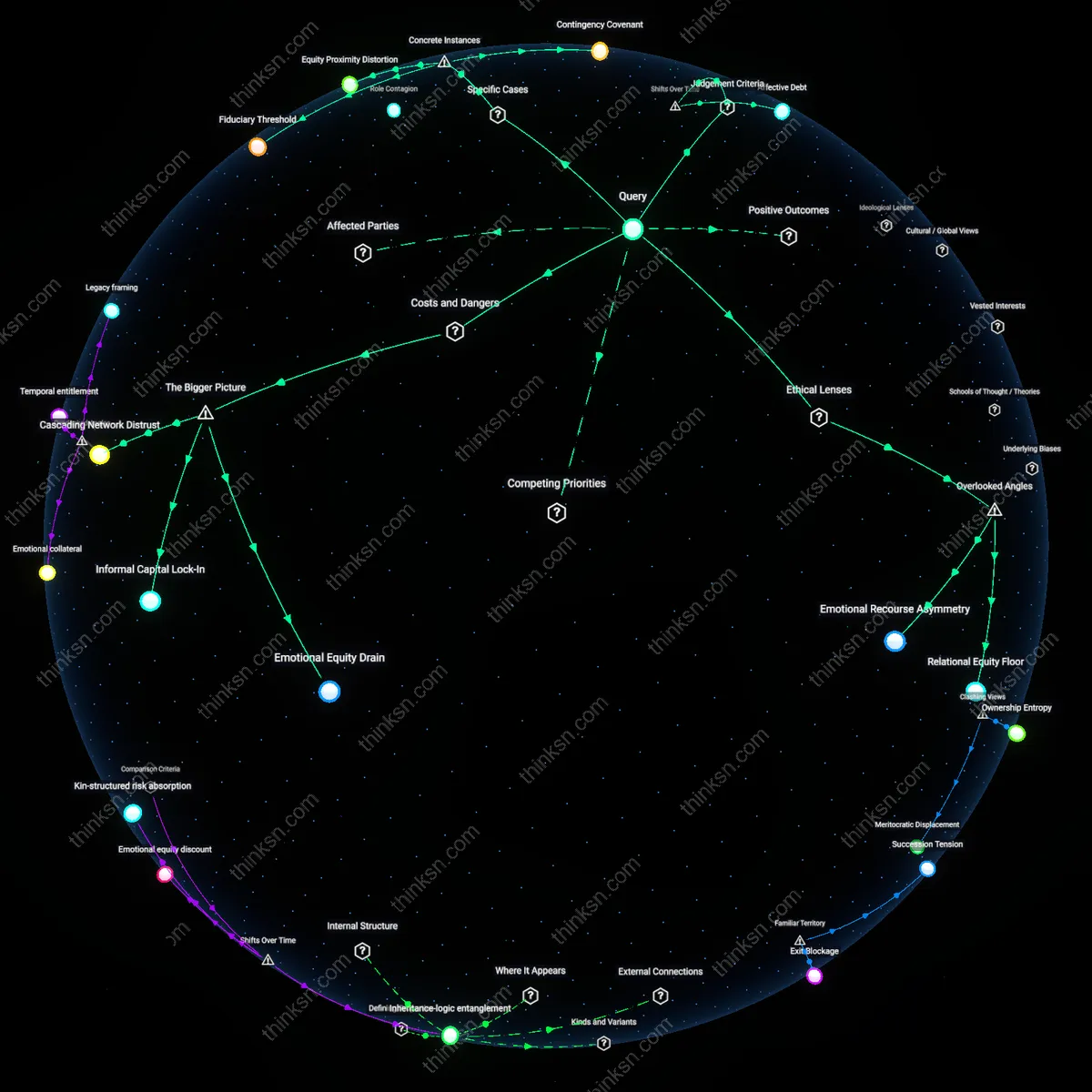
Analysis reveals 8 key thematic connections.
Key Findings
Equity Vesting Negotiation
Renegotiate the vesting schedule’s cliff and acceleration terms to secure downside protection. A senior analyst can demand a reduced cliff period or single-trigger acceleration upon acquisition, which recalibrates risk exposure when salary is cut for equity—this directly manipulates the timing and contingency levers embedded in the option agreement. Most public discourse equates equity with ‘betting on the company,’ but overlooks how vesting mechanics systematically disadvantage late-stage talent during liquidity events; adjusting these terms rebalances power without requiring valuation insights.
Compensation Benchmarking Frame
Anchor the offer comparison to industry-specific remote compensation databases like Levels.fyi or Blind to quantify the salary-equity tradeoff. By plotting the role against peer organizations that have already transitioned to remote-native models—such as GitLab or HashiCorp—the analyst converts an uncertain personal bet into a systemic benchmark. Common narratives treat remote equity roles as inherently speculative, but transparent data infrastructures now allow precise mapping of how much equity typically compensates for salary dips in stable tech markets, making the decision less idiosyncratic.
Career Optionality Signal
Treat the equity grant as a credentialing mechanism that opens access to future board or strategy roles, not just financial upside. When a senior analyst accepts concentrated equity in a high-visibility remote role, they signal long-term commitment to stakeholders who control advancement pathways—such as C-suite executives or board members monitoring cap table distributions. While most interpret equity as deferred cash, its underappreciated function is as a loyalty-tracking device that gates entry into elite decision circles during inflection points like IPOs or restructuring.
Equity Trust Horizon
A senior analyst should prioritize equity in a remote role when the vesting schedule aligns with a known technological inflection anticipated by core architects of industry transformation—such as Amazon’s early cloud engineers whose restricted stock units matured during AWS’s market ascendance from 2010–2015, a period when internal belief in platform scalability outpaced public valuation. The decision to accept lower cash compensation was validated not by corporate promises but by engineers' access to internal roadmaps and infrastructure investment data, revealing that timing relative to technological readiness cycles—not equity percentage alone—determines outcome. This exposes the underappreciated reality that equity value is less a financial bet than a calibrated trust in organizational foresight and execution tempo.
Compensation Sovereignty Model
Senior analysts evaluating remote roles must treat equity as a jurisdictional claim in decentralized coordination systems, exemplified by core contributors to Ethereum during its 2015–2017 transition from proof-of-concept to decentralized platform, where early team members accepted minimal salaries in exchange for Ether allocations that functioned as governance-adjacent assets. These individuals gained influence over protocol evolution not through formal titles but through asset-backed participation in fork decisions and developer grants, demonstrating that equity in boundary-pushing remote environments can convert into decision rights within emergent technical institutions. The overlooked insight is that in digitally native organizations, equity compensates not for past labor but for future governance presence.
Institutional Fidelity Signal
A senior analyst should interpret high equity offers in uncertain remote roles as a loyalty calibration mechanism used by institutions facing existential market tests, as seen in Tesla’s satellite offices during the 2018 Model 3 production crisis, when remote software leads were granted above-market stock options to align with factory-floor urgency despite reduced base pay. These roles lacked traditional career ladders but embedded recipients in real-time escalation chains with Musk and manufacturing VPs, turning equity into a signal of inclusion within the crisis-response inner network. The subtlety lies in recognizing that equity concentration in volatile phases often marks proximity to core decision velocity, not just financial upside.
Equity Illusion
A senior analyst should reject the role because the perceived value of equity is systematically inflated by private-market pricing conventions that obscure its illiquidity and redemption risk. Private startup equity operates within a valuation regime where paper metrics are decoupled from exit probabilities, privileging optimism over cash-flow realism; this benefits founders and VCs who deploy equity as a wage subsidy. The non-obvious truth is that accepting below-market salary in exchange for equity often codifies labor exploitation under the guise of co-ownership, rendering the compromise not strategic but structural.
Autonomy Debt
A senior analyst should accept the lower salary if the remote role enables geographic and temporal dislocation from corporate oversight, creating optionality to rebuild career capital on asymmetric terms. Remote work, when untethered from time-zone compliance and management theater, allows senior analysts to reinvest time saved from commuting and office politics into skill arbitrage—such as domain specialization or public writing—that can later be monetized independently. This reframes the salary-equity trade not as financial risk but as a stealth accumulation of professional sovereignty, directly challenging the assumption that career trajectory must be linear and institutionally validated.