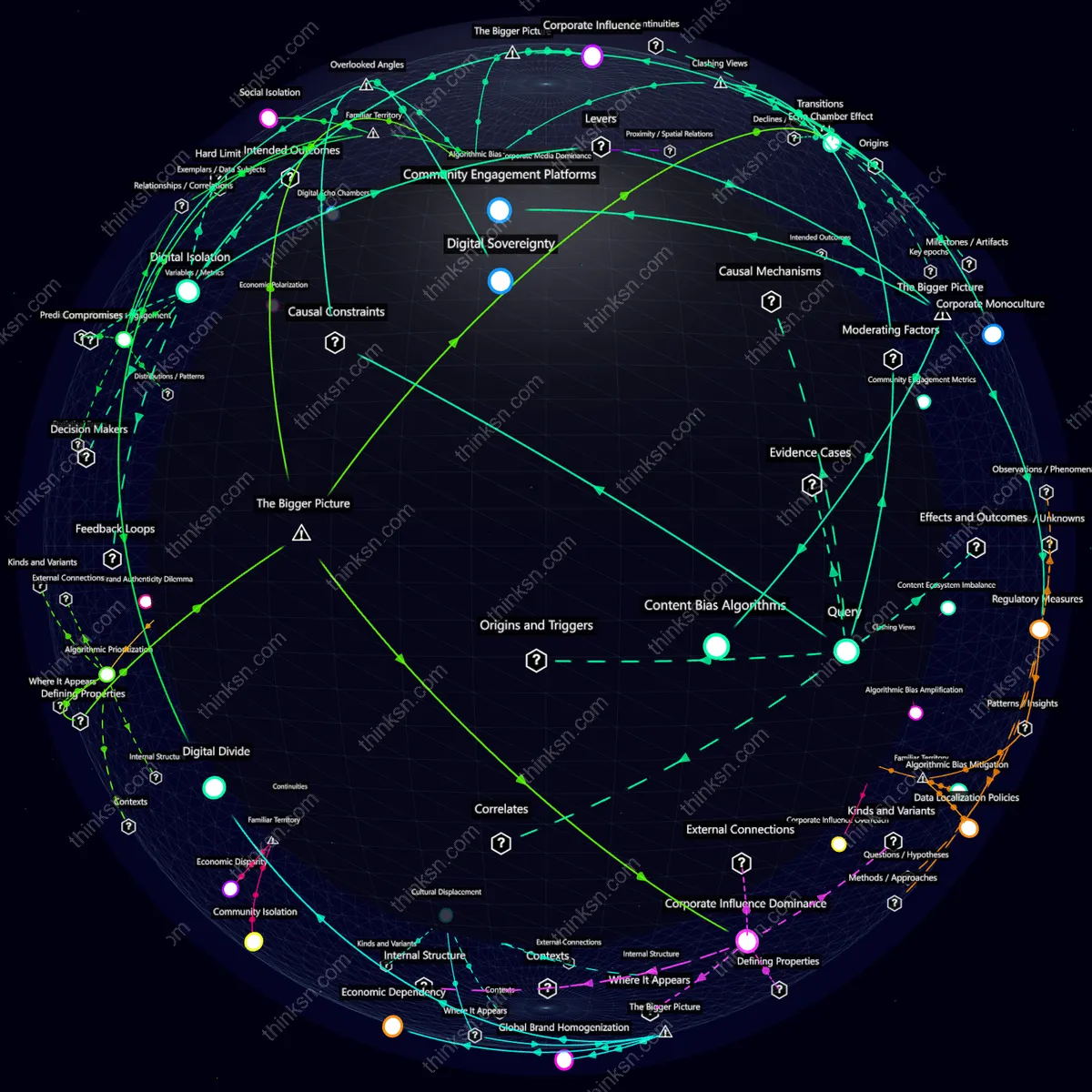
Impact of Social Media Algorithms on Community Cohesion
Analysis reveals 5 key thematic connections.
Key Findings
Algorithmic Bias
Prioritizing corporate content over local content can amplify algorithmic bias, where social media algorithms favor larger entities with more resources. This shifts user attention away from diverse local voices, potentially undermining community cohesion by reducing the visibility of niche or marginalized perspectives.
Corporate Monoculture
The dominance of corporate content can foster a 'corporate monoculture', where local businesses and individuals struggle to gain traction. This creates an uneven playing field that may alienate smaller community members, leading to decreased engagement and social fragmentation within the community.
Echo Chamber Effect
By prioritizing corporate content, social media platforms can exacerbate the echo chamber effect, where users are exposed only to similar viewpoints. This polarization reduces cross-community dialogue and understanding, undermining the fabric of community cohesion by limiting exposure to varied local narratives.
Digital Sovereignty
Prioritizing corporate content over local content on social media can erode digital sovereignty by reducing the visibility of locally relevant information. This diminishes community identity and trust, as residents feel their unique perspectives are sidelined in favor of broader commercial narratives.
Community Engagement
Reduced visibility of local content can lead to lower levels of engagement from both residents and local businesses, as they may perceive social media platforms less relevant or representative of their needs. This disengagement weakens the fabric of community networks and collective action.
Deeper Analysis
How does prioritizing corporate content over local content on social media platforms evolve the echo chamber effect, and what are its implications for community cohesion over time?
Algorithmic Bias
Social media platforms prioritizing corporate content over local voices amplifies algorithmic bias, marginalizing diverse perspectives and reinforcing corporate narratives. This undermines community cohesion by creating silos of information, where users are less likely to encounter or engage with opposing viewpoints, deepening ideological divides.
Digital Isolation
The echo chamber effect exacerbated by corporate content dominance isolates individuals from broader societal conversations and local issues. This digital isolation can lead to a sense of disconnectedness and reduced empathy towards others' experiences, hindering the formation of inclusive communities online.
Corporate Influence
Prioritizing corporate over local content grants corporations significant influence in shaping public opinion and discourse. This skewed representation can distort community values and priorities, leading to a fragile ecosystem where commercial interests overshadow communal needs, eroding trust between citizens and institutions.
What are the measurable impacts on community engagement when social media prioritizes corporate content over local content, and how do these changes stress-test the resilience of community cohesion?
Local Businesses
When social media prioritizes corporate content over local businesses, small enterprises struggle for visibility. This shift can lead to decreased foot traffic and sales, as community members may not see or engage with locally owned businesses' posts. Local business owners might reduce marketing efforts, further eroding the sense of community support.
Social Isolation
Prioritizing corporate content over local news and conversations on social media can exacerbate feelings of isolation among community members who rely on these platforms for connection. As community-specific information becomes less prominent, individuals may feel disconnected from their neighbors and the broader community fabric, leading to a decline in communal bonds.
Digital Divide
The push towards corporate content can widen the digital divide by disproportionately benefiting those with access to diverse resources and networks. As local voices are marginalized online, less tech-savvy or economically disadvantaged community members may feel further alienated from mainstream social media discourse, deepening socio-economic disparities.
What strategies can be formulated to mitigate digital isolation caused by prioritizing corporate content over local content in social media, and how might these interventions affect community cohesion?
Content Bias Algorithms
Corporate content bias in algorithms can significantly distort user attention away from diverse local narratives and community voices, leading to reduced engagement with socially relevant information. This creates a fragile dependency on corporate messaging platforms for social interaction, weakening the fabric of local communities.
Community Engagement Platforms
The emergence of specialized platforms designed to enhance local content visibility can offer robust alternatives to mainstream networks but may face challenges in gaining traction against established corporate entities. These platforms often require substantial investment and user migration, highlighting a trade-off between innovation and user inertia.
Regulatory Measures
Implementing regulations to mandate fair content distribution on social media can have unintended consequences if poorly enforced or perceived as censorship by tech companies. Such measures risk stifling the organic growth of local content ecosystems, leading to a complex interplay between policy intent and community dynamics.
What strategies can local businesses use to maintain community cohesion in social media when corporate content is prioritized?
Social Media Algorithms
Local businesses must navigate the ever-evolving landscape of social media algorithms, which often prioritize corporate content with larger budgets. This can lead local enterprises to engage in aggressive marketing tactics that may alienate community-focused interactions, inadvertently harming their reputation and long-term customer relationships.
Community Engagement Metrics
Focusing on engagement metrics like likes and shares can push local businesses to prioritize content that maximizes these numbers over meaningful community interaction. This strategy risks creating shallow connections with the audience, undermining genuine community cohesion and potentially alienating loyal customers who value authentic interactions.
Digital Marketing Budgets
Local businesses often operate on tight budgets, making it challenging to compete with larger corporations for digital ad spaces. This financial disparity can force local enterprises into more creative but riskier marketing strategies, such as leveraging user-generated content or collaborating with influencers, which may not always align with their brand identity.
What are the emerging regulatory measures being considered to balance corporate content with local community voices on social media platforms, and how might these measures impact community cohesion from diverse perspectives?
Community Moderation Programs
The introduction of community moderation programs as regulatory measures can empower local voices but may also fragment the user experience by imposing diverse standards across regions, leading to inconsistent enforcement and potential conflicts over content guidelines.
Algorithmic Bias Mitigation
Efforts to mitigate algorithmic bias through regulatory measures can inadvertently prioritize certain types of content deemed less controversial but may neglect valuable yet nuanced viewpoints from minority communities, undermining the diversity of online discourse.
Data Localization Policies
Regulatory moves towards data localization policies aim to protect local community voices by ensuring data is stored and processed within national borders. However, this can exacerbate digital divides by limiting access to global content and services for users in less developed regions.
How has the evolution of digital marketing budgets influenced the prioritization of corporate content over local content in social media, and what are the impacts on community cohesion over time?
Content Localization Strategies
As digital marketing budgets shifted towards global content creation and distribution platforms like Facebook and Instagram, localized content often struggled for visibility. This shift prioritized scale over depth, potentially eroding community-specific connections and cultural nuances that local content provided.
Algorithmic Prioritization
The evolution of social media algorithms has significantly influenced digital marketing budgets by changing what types of content are favored for visibility. As algorithms became more sophisticated in detecting and promoting 'engaging' global trends, smaller businesses found their local content being overshadowed, despite having a strong community presence.
Brand Authenticity Dilemma
The push towards leveraging large-scale digital marketing budgets to achieve global brand recognition has led many companies to prioritize corporate-produced content over authentic, grassroots-generated content. This strategy can backfire as consumers increasingly value genuine connections and local relevance, potentially undermining community trust.
What are effective strategies for community moderation programs to mitigate negative impacts on community cohesion when social media prioritizes corporate content over local content?
Content Ecosystem Imbalance
Prioritizing corporate content over local content can skew the community's information ecosystem, leading users to perceive their voices as less valued. This imbalance may foster resentment and disengagement among local contributors, weakening social bonds within the community.
Algorithmic Bias Amplification
Community moderation programs that rely on algorithmic recommendations risk amplifying existing biases when corporate content is favored. Users from marginalized communities might feel alienated as their content and perspectives receive less visibility, deepening social divides within the community.
Corporate Influence Overreach
Moderation policies that cater to corporate interests can be perceived as undermining the integrity of user-generated content, leading to a loss of trust in moderation systems. This overreach may encourage users to seek alternative platforms where their voices are more likely to be heard and valued.
What is the architectural structure and relationships of algorithmic prioritization in social media platforms that prioritize corporate content over local content, and how do these affect community cohesion?
Echo Chamber Effect
Algorithmic prioritization amplifies corporate content, creating an echo chamber where local creators' visibility wanes. This reduces diversity in users' feeds and stifles alternative voices, weakening community resilience.
Corporate Influence Dominance
Prioritizing corporate content grants larger companies undue influence over public discourse, squeezing out smaller businesses and individuals. This dominance can distort market perceptions and consumer choices, undermining local economic dynamism.
Algorithmic Bias
The algorithm's bias towards corporate interests can lead to systemic discrimination against marginalized creators who rely on social media for visibility. This exclusion exacerbates inequality and hampers community cohesion by alienating diverse voices.
Explore further:
- What is the static mapping of components, categories, relationships, and spatial distribution that illustrates how corporate influence dominance affects community cohesion when prioritizing corporate content over local content in social media?
- What is the impact of algorithmic bias in social media algorithms that prioritize corporate content over local content on community cohesion within specific geographic regions?
What is the impact of algorithmic bias in social media algorithms that prioritize corporate content over local content on community cohesion within specific geographic regions?
Community Voice Suppression
Algorithmic bias in social media prioritizing corporate content silences local voices and reduces visibility for grassroots initiatives, eroding the sense of community identity and collective action among residents.
Corporate Media Dominance
The dominance of corporate media narratives through algorithmic bias can skew public perception towards commercial interests over authentic community stories, fostering a disconnect between local needs and global discourse.
Digital Divide Amplification
Algorithmic bias that favors large-scale content amplifies the digital divide by marginalizing diverse voices in urban versus rural settings, deepening socio-economic inequalities and undermining inclusive dialogue.
Digital Echo Chambers
Algorithmic bias in social media amplifies digital echo chambers, reinforcing corporate content over local voices. This distorts users' perception of community relevance and engagement patterns, fostering isolation from diverse viewpoints and hindering the formation of cohesive online communities.
Economic Polarization
Prioritizing corporate content can exacerbate economic polarization by privileging established brands over local businesses. This shift in digital visibility undermines small-scale entrepreneurship and community-driven economies, leading to a fragmented social fabric that pits local interests against global market forces.
Cultural Displacement
The dominance of corporate content can lead to cultural displacement within specific geographic regions, diminishing the visibility and value of local culture and heritage. This subtle form of cultural erasure risks alienating younger generations from their roots, creating a generational divide over the digital representation of community identity.
Explore further:
- How does prioritizing corporate content over local content on social media amplify the digital divide and affect community cohesion over time?
- What are the static components, categories, and relationships involved in cultural displacement when prioritizing corporate content over local content on social media platforms?
How does prioritizing corporate content over local content on social media amplify the digital divide and affect community cohesion over time?
Algorithmic Bias
Prioritizing corporate content over local content on social media platforms can exacerbate algorithmic bias, as algorithms may favor larger, more profitable entities at the expense of diverse voices and perspectives. This skew can deepen societal divides by silencing marginalized communities.
Community Isolation
By amplifying corporate-driven content over local insights, social media platforms risk isolating individuals from their immediate community context, weakening social ties and communal resilience. Over time, this can lead to a hollowing out of community cohesion, making it harder for locals to address shared challenges.
Economic Disparity
The dominance of corporate content in digital spaces can fuel economic disparity by limiting opportunities for small businesses and local entrepreneurs. This imbalance not only affects their visibility but also their ability to engage with potential customers, reinforcing existing economic inequalities.
What are the static components, categories, and relationships involved in cultural displacement when prioritizing corporate content over local content on social media platforms?
Global Brand Homogenization
When multinational corporations prioritize their global content over locally relevant material on social media, they contribute to a homogenized cultural landscape. This can lead to the erosion of local traditions and identities, as seen in India where brands like McDonald's and Starbucks have struggled to adapt culturally specific offerings.
Digital Divide
Cultural displacement through prioritizing corporate content exacerbates the digital divide by marginalizing communities that rely on localized social media engagement. In Brazil, for example, this has led to a disconnect between urban tech-savvy users and rural populations who may not relate to or understand globalized content.
Economic Dependency
The shift towards culturally displaced corporate content can create economic dependencies where local media and small businesses struggle due to lack of visibility. This is evident in Southeast Asian markets, where the dominance of Western social platforms leads to fewer opportunities for indigenous entrepreneurs to reach their target audience.