AI Algorithms in Trading: Risk of Feedback Loop and Market Volatility
Analysis reveals 5 key thematic connections.
Key Findings
Market Feedback Loops
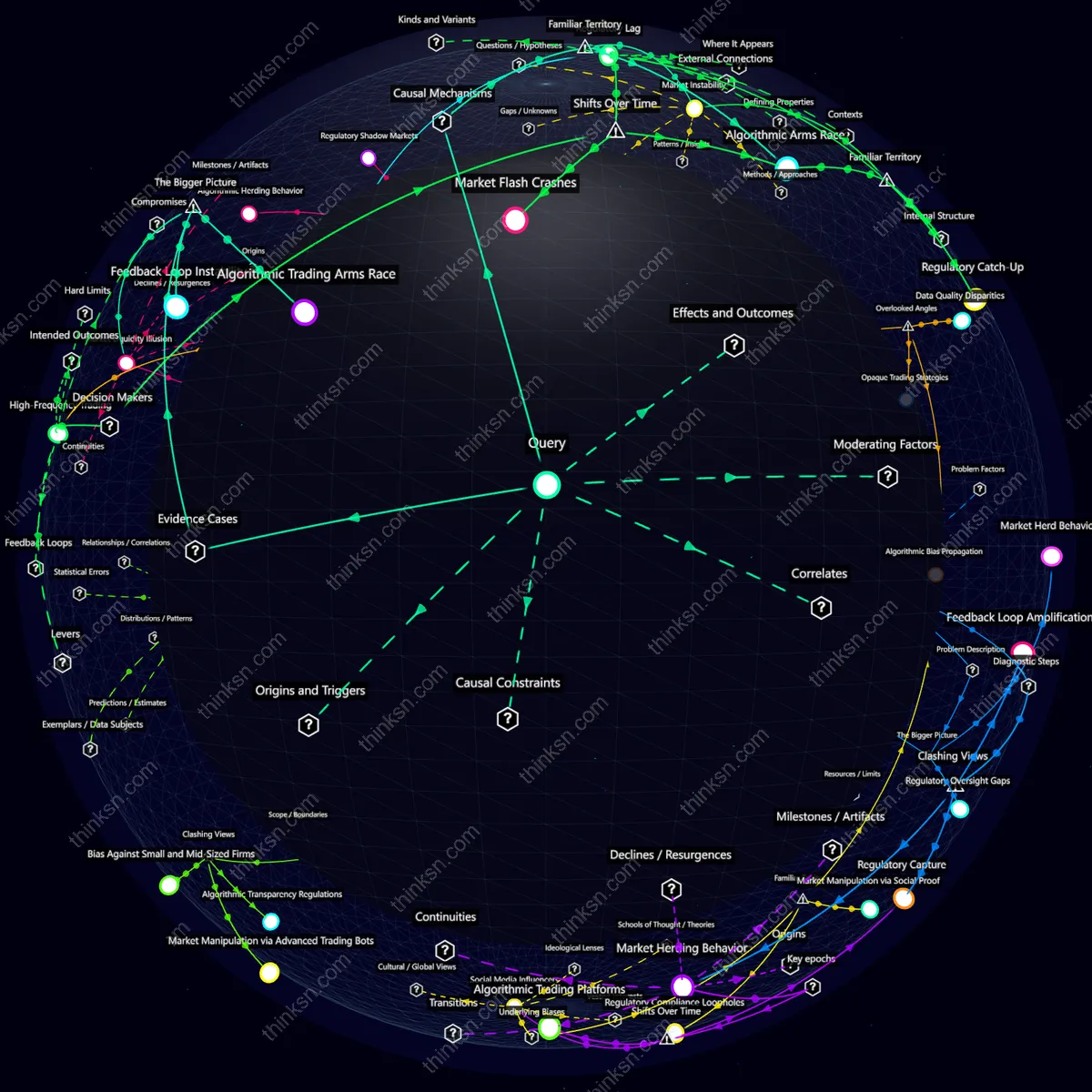
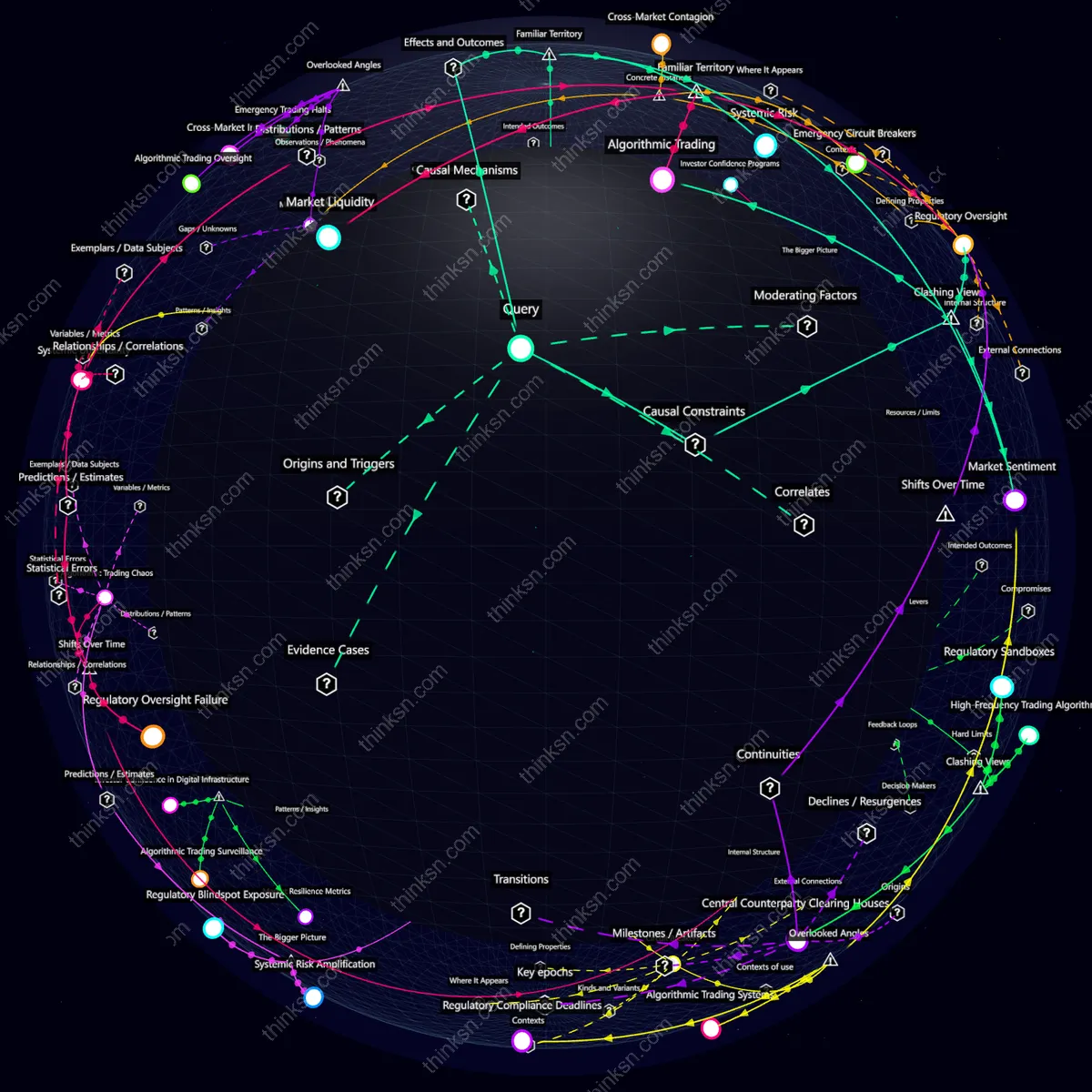
AI algorithms can amplify market volatility through feedback loops when they react to slight price changes by triggering large-scale trades. This rapid, algorithmic response can destabilize markets, leading to flash crashes and increased economic instability.
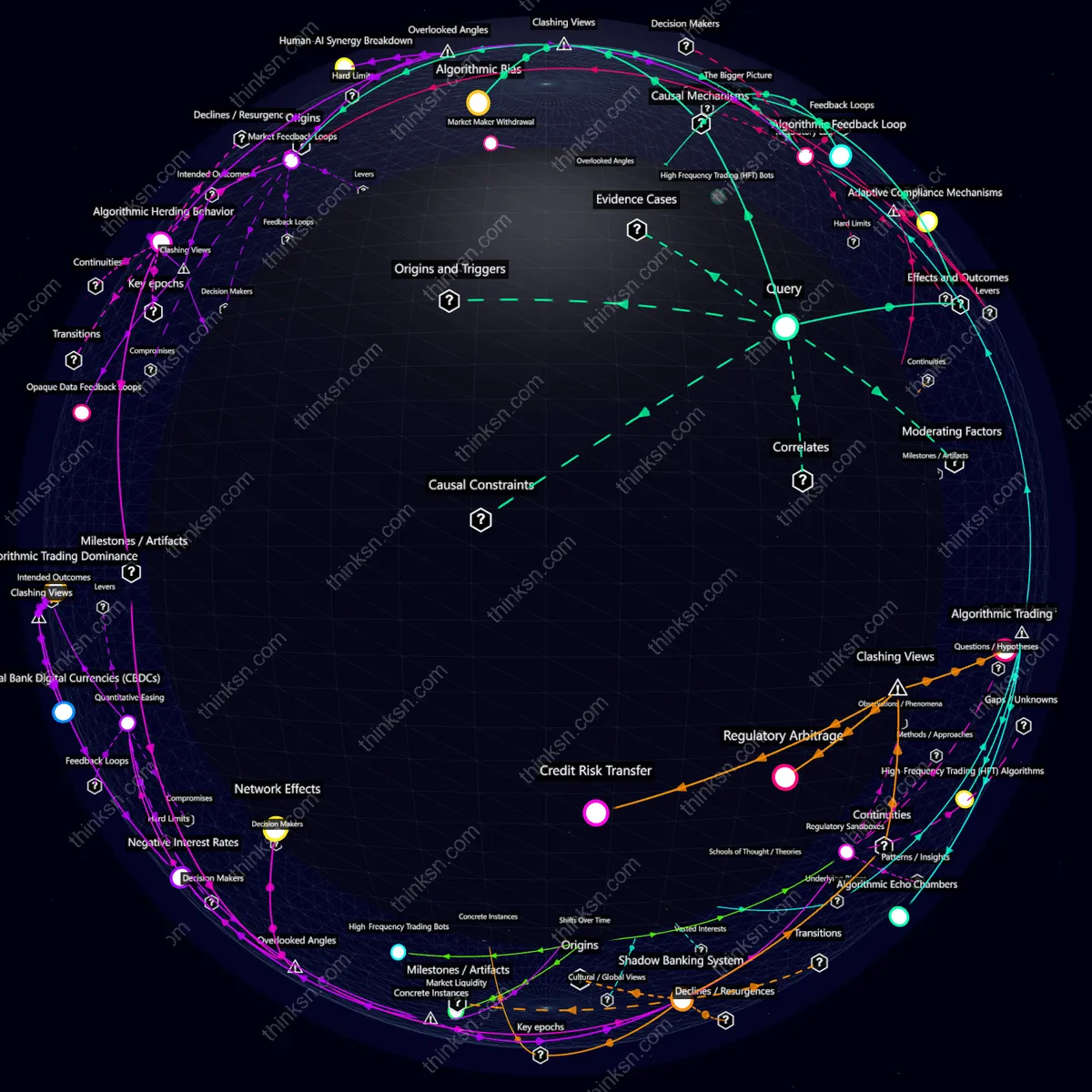
Algorithmic Bias
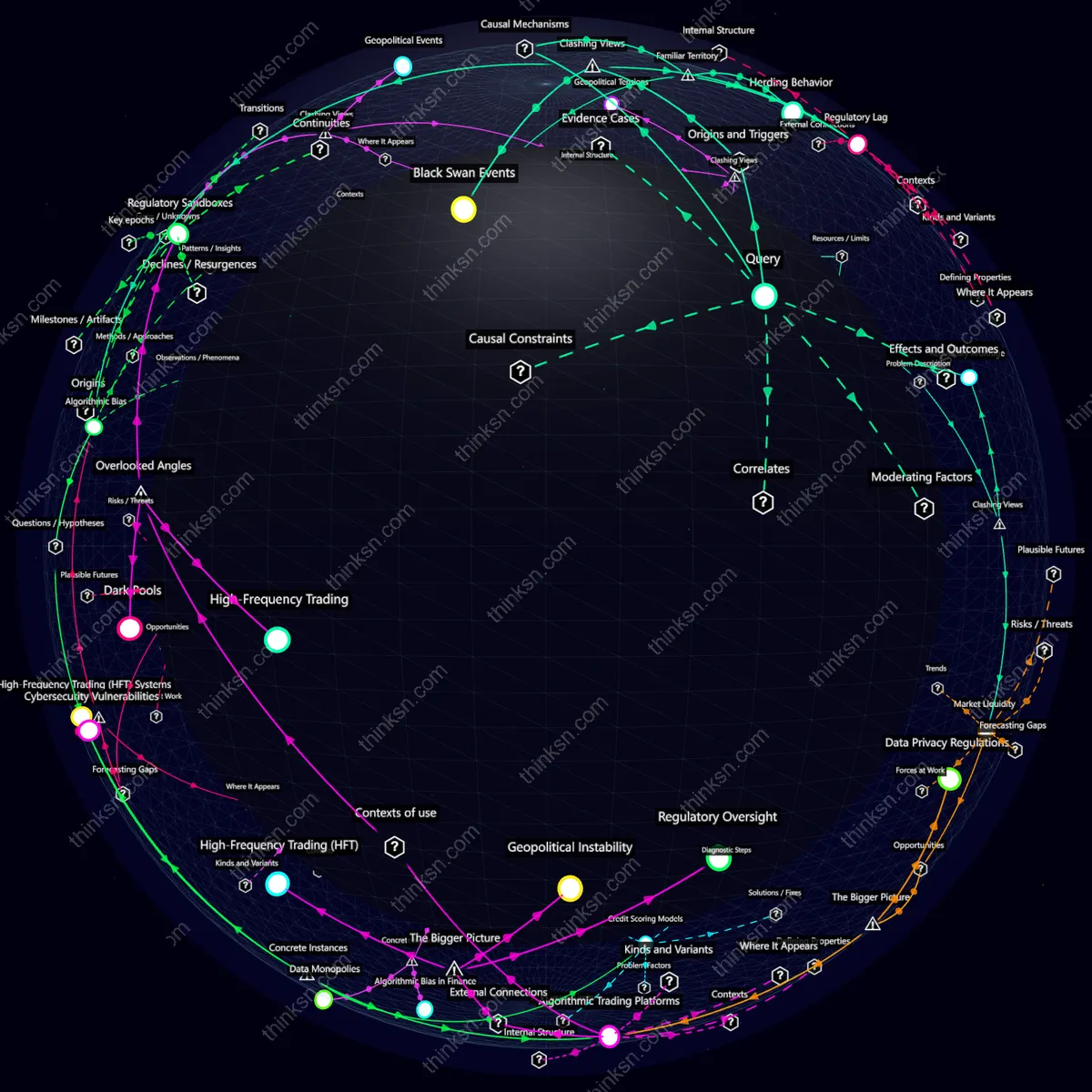
If AI trading systems are trained on biased historical data, they may perpetuate or exacerbate existing market inequalities, reinforcing underperforming assets or unfairly penalizing certain sectors. This can lead to a misallocation of capital and undermine economic stability over the long term.
Regulatory Lag
The rapid evolution of AI in trading outpaces regulatory frameworks, leaving gaps that unethical actors might exploit for profit. Without robust oversight, AI-driven strategies could destabilize markets by encouraging speculative behavior and exacerbating financial risks.
Algorithmic Feedback Loop
The proliferation of AI trading algorithms can create self-reinforcing feedback loops where small market fluctuations are rapidly amplified by automated buying and selling, leading to increased volatility. This phenomenon is exacerbated in times of economic uncertainty, as traders may pull out quickly, causing sudden drops or spikes in asset values.
Market Liquidity Crisis
AI-driven trading strategies can lead to a sudden withdrawal of liquidity during market stress events, as algorithmic traders may be programmed with strict risk aversion protocols that trigger rapid exit strategies. This can result in market freezes or sharp declines, making it difficult for human investors and institutions to manage their portfolios effectively.
Deeper Analysis
What strategies can regulators implement to mitigate the risks of regulatory lag exacerbating market volatility caused by AI algorithms in trading?
Technological Advancement
As AI-driven trading algorithms rapidly evolve, regulatory bodies struggle to keep pace, leading to a widening gap between technological innovation and legal frameworks. This lag can embolden rogue traders or startups to exploit loopholes, increasing market volatility and systemic risks.
Market Feedback Loops
Regulatory lag exacerbates feedback loops in financial markets where AI-driven trades trigger cascading events that regulators cannot predict or control. This unpredictability can lead to sudden market crashes, undermining investor confidence and causing significant economic damage.
Adaptive Compliance Mechanisms
The implementation of adaptive compliance mechanisms requires continuous monitoring and adjustment by regulatory bodies, which can be resource-intensive and slow-moving compared to the agility of AI systems. This dependency on human oversight creates a fragile point in market stability.
Explore further:
In what ways might AI-driven trading algorithms contribute to a market liquidity crisis, and what novel insights or hidden assumptions are there regarding their role in economic instability?
High Frequency Trading (HFT) Bots
The reliance on HFT bots can amplify market volatility during a liquidity crisis by triggering rapid sell-offs when algorithms detect slight shifts in trading patterns, exacerbating the scarcity of available assets and deepening price instability.
Algorithmic Feedback Loops
Unintended feedback loops between AI-driven trading algorithms can create echo chambers where similar strategies reinforce each other, leading to sudden market disruptions as these systems rapidly scale trades based on limited data, potentially causing liquidity to evaporate unexpectedly.
Market Maker Withdrawal
During a liquidity crisis, automated market makers may withdraw from providing necessary trading liquidity due to risk aversion or regulatory concerns, leaving human traders and less sophisticated algorithms vulnerable to extreme price fluctuations and lack of depth in order books.
What strategies can be formulated to mitigate market volatility caused by feedback loops involving AI algorithms in trading?
Algorithmic Herding Behavior
As AI trading algorithms react to market signals, they can inadvertently create echo chambers where similar strategies reinforce each other, amplifying volatility and leading to herd behavior. This behavior is fragile as small changes in algorithm parameters or data inputs can trigger sudden shifts, causing significant market instability.
Regulatory Lag
Market regulators often struggle to keep pace with the rapid evolution of AI trading technologies, creating a regulatory lag that leaves gaps where unscrupulous actors may exploit vulnerabilities. This dynamic risk escalates when AI systems learn and adapt faster than rules are updated, leading to unintended market distortions and systemic risks.
Human-AI Synergy Breakdown
While AI algorithms aim to enhance human trading decisions through data-driven insights, the reliance on such technology can erode critical thinking skills among traders. This dependency can lead to a breakdown in human oversight when unexpected market conditions occur, exacerbating risks and volatility as human intervention becomes ineffective or too late.
Regulatory Shadow Markets
The rise of AI in trading has created regulatory blind spots, leading to the emergence of shadow markets where unregulated algorithms operate. These markets can distort prices and liquidity metrics, undermining traditional financial instruments and posing risks to market integrity.
Opaque Data Feedback Loops
AI models often rely on opaque data feedback loops that amplify biases and errors in real-time trading decisions. This opacity makes it difficult for regulators and traders to assess the true risk profile of AI-driven trades, leading to systemic vulnerabilities.
Explore further:
- How does algorithmic herding behavior evolve over time in financial markets and contribute to increased market volatility and economic instability through feedback loops?
- How might regulatory shadow markets contribute to increased market volatility and economic instability when AI algorithms are used in trading?
How does algorithmic herding behavior evolve over time in financial markets and contribute to increased market volatility and economic instability through feedback loops?
Network Effects
Algorithmic herding behavior amplifies network effects in financial markets, as algorithms learn from each other's trades, leading to a rapid homogenization of trading strategies. This can create echo chambers where market signals are distorted and ignored, increasing systemic risk.
Regulatory Sandboxes
The introduction of regulatory sandboxes for fintech innovation can paradoxically accelerate algorithmic herding behavior by creating environments where similar technologies are tested simultaneously. This concentration accelerates the adoption of risky trading strategies that may not be fully understood or regulated.
Quantitative Easing
Central bank policies like quantitative easing often lead to market conditions favorable for algorithmic herding, as low interest rates and high liquidity encourage speculative investment. This can create a feedback loop where automated trading exacerbates economic instability during policy shifts.
Explore further:
- How might regulatory sandboxes be utilized to explore and mitigate potential feedback loops caused by AI algorithms in trading, thereby preventing market volatility and economic instability?
- What alternative strategies could central banks employ to mitigate market volatility and economic instability caused by AI trading algorithms, considering the implications of quantitative easing?
How might regulatory shadow markets contribute to increased market volatility and economic instability when AI algorithms are used in trading?
Algorithmic Trading Loopholes
AI-driven trading algorithms exploit regulatory shadow markets to bypass oversight, amplifying market volatility. When these systems misinterpret signals in the shadows, they can trigger cascading sell-offs or speculative bubbles that undermine financial stability.
Regulatory Arbitrage Opportunities
High-frequency traders use AI to navigate complex regulations by shifting trades into shadow markets where oversight is lax. This creates a race-to-the-bottom for regulators, leading to increased systemic risk and potential market crashes when such practices are exposed or fail.
Data Manipulation Techniques
In the digital age, sophisticated AI algorithms manipulate data within regulatory shadow markets to create misleading signals. This can distort real-time market analysis for both regulators and investors, exacerbating volatility and economic instability as accurate information becomes scarce.
What alternative strategies could central banks employ to mitigate market volatility and economic instability caused by AI trading algorithms, considering the implications of quantitative easing?
Negative Interest Rates
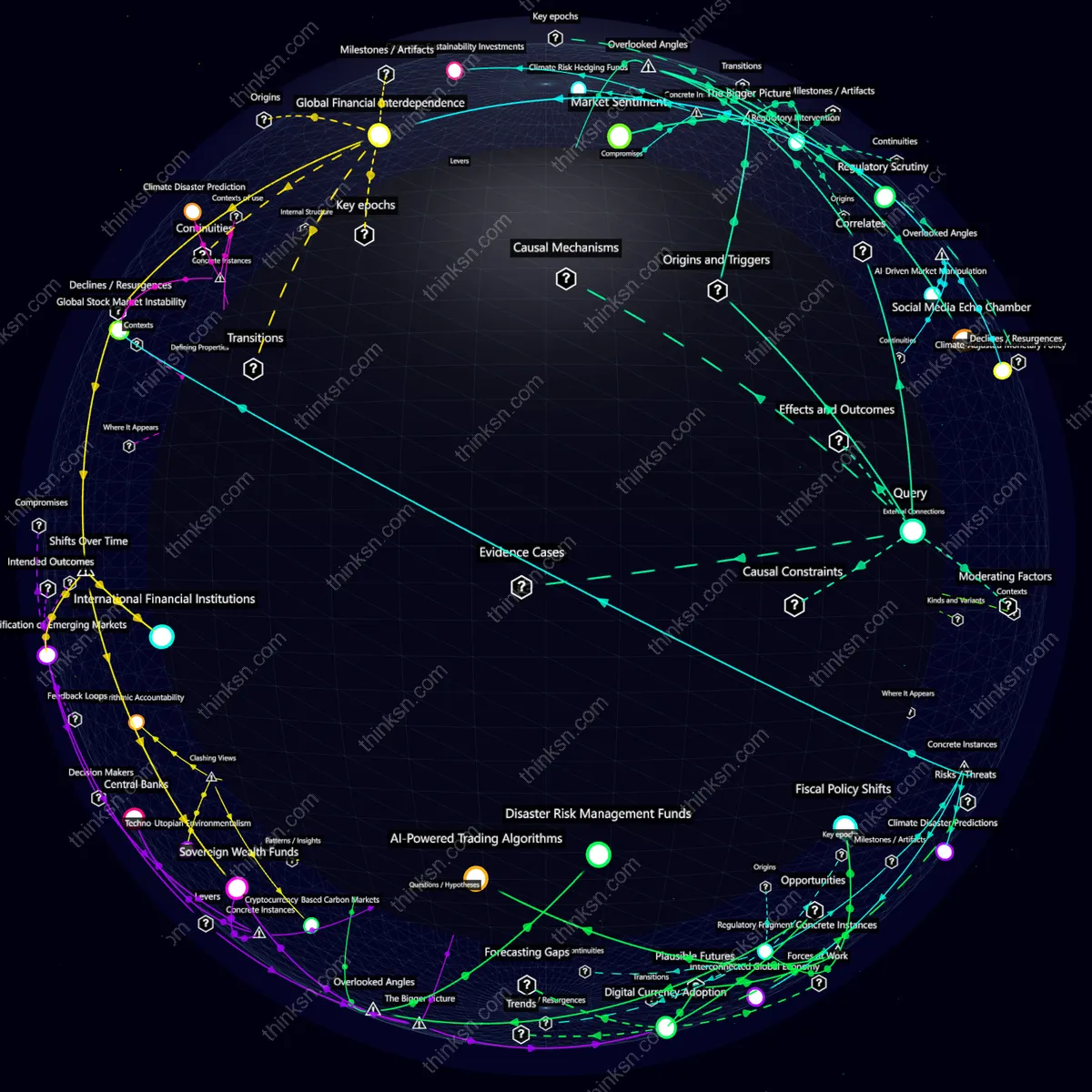
Central banks implementing negative interest rates as a response to quantitative easing can lead to unexpected behaviors in financial markets. For instance, during the European Central Bank's (ECB) implementation of negative rates in 2014, pension funds and insurance companies faced challenges due to lower yields on bonds, driving them into riskier assets.
Currency Depreciation
Quantitative easing often leads to currency depreciation as a side effect. In Japan's case during the early 2000s, extensive QE led to significant yen weakening against other major currencies, impacting export competitiveness and inflation levels globally.
Shadow Banking System
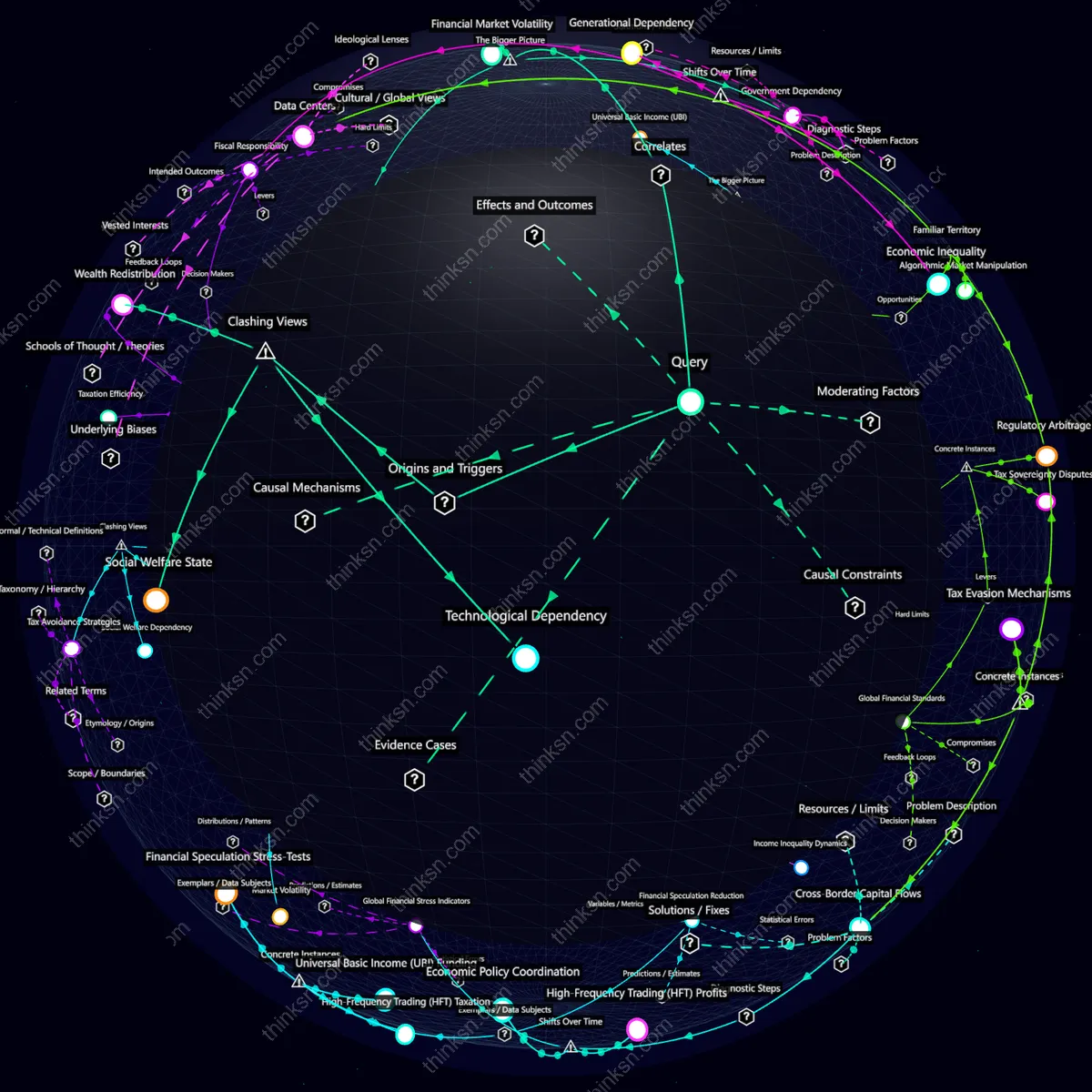
The expansion of shadow banking systems in response to quantitative easing can introduce systemic risks. As seen during the 2008 financial crisis, when traditional banks turned to complex financial instruments through shadow banking entities, it exacerbated market instability and made regulatory oversight more challenging.
Algorithmic Trading Dominance
The rise of algorithmic trading amplifies the impact of quantitative easing on market volatility. Central banks may struggle to achieve their inflation targets without exacerbating financial instability, as automated systems can trigger rapid price movements and liquidity crises that quantitative easing alone cannot address.
Central Bank Digital Currencies (CBDCs)
The introduction of CBDCs as an alternative monetary tool could reshape the implementation of quantitative easing. While promising enhanced control over money supply and financial stability, CBDCs also risk widening the digital divide and increasing privacy concerns among citizens.
Explore further:
- What are the potential hidden assumptions and emerging insights regarding how AI-driven trading algorithms might exacerbate currency depreciation and its role in market volatility and economic instability?
- How has the integration of AI algorithms in trading influenced the evolution of the shadow banking system, and what are the potential causal mechanisms leading to increased market volatility and economic instability over time?
How has the integration of AI algorithms in trading influenced the evolution of the shadow banking system, and what are the potential causal mechanisms leading to increased market volatility and economic instability over time?
Algorithmic Trading Platforms
The rise of algorithmic trading platforms has amplified the shadow banking system's reliance on complex financial instruments and high-frequency trading, increasing systemic risks such as flash crashes due to AI-driven rapid transactions.
Regulatory Arbitrage Opportunities
Financial institutions exploit regulatory arbitrage opportunities by moving assets into unregulated shadow banking sectors, where AI algorithms optimize for profit but often at the expense of transparency and stability, potentially leading to market distortions.
Market Liquidity Illusions
AI-driven trading creates an illusion of liquidity in the markets as automated systems can rapidly match buy and sell orders. However, this can mask underlying vulnerabilities; when AI algorithms face unexpected conditions, liquidity can suddenly evaporate, causing severe disruptions.
Algorithmic Trading
The integration of AI-driven algorithmic trading in the shadow banking system has intensified market volatility by automating high-frequency trades that can amplify price swings and liquidity risks. Financial institutions, such as hedge funds and investment banks, face a precarious balance between profit maximization and systemic stability.
Regulatory Arbitrage
Shadow banking entities exploit regulatory gaps to offer financial services outside traditional bank oversight, leading to an opaque and interconnected network of off-balance-sheet vehicles. This practice undermines the integrity of capital requirements and liquidity buffers intended to protect against systemic risk, thus posing a significant threat to economic stability.
Credit Risk Transfer
The use of AI algorithms in structuring complex financial instruments for credit risk transfer can mislead investors about underlying risks. By securitizing loans and spreading them across various assets, these systems may inadvertently create more fragile dependencies within the financial system, increasing systemic vulnerability.
Explore further:
- What strategies can be formulated to mitigate the risk of increased market volatility and economic instability caused by feedback loops in algorithmic trading platforms?
- How might AI algorithms in trading contribute to market liquidity illusions, and what are the potential implications for economic stability from a perspectival analysis?
What strategies can be formulated to mitigate the risk of increased market volatility and economic instability caused by feedback loops in algorithmic trading platforms?
High-Frequency Trading Bots
High-frequency trading bots can exacerbate market volatility by reacting to price changes faster than human traders, leading to rapid and unpredictable swings. When these bots are interconnected through similar algorithms, small market perturbations can trigger a cascade of trades that amplify instability.
Regulatory Sandboxes
Regulatory sandboxes allow financial regulators to test new technologies in controlled environments but may inadvertently encourage risky behavior if not properly monitored. These sandboxed experiments often fail to account for systemic risks, leading to potential real-world vulnerabilities once fully implemented.
Market Liquidity
Algorithmic trading platforms can significantly impact market liquidity by withdrawing orders at high speeds during volatile periods, creating sudden dry spells that deepen price drops and hinder recovery. This fragility is amplified in less liquid markets where algorithmic traders' actions are more influential.
How might AI algorithms in trading contribute to market liquidity illusions, and what are the potential implications for economic stability from a perspectival analysis?
High-Frequency Trading (HFT) Algorithms
HFT algorithms can create market liquidity illusions by rapidly executing large volumes of trades that appear to increase liquidity, but in reality these trades often cancel out or lead to rapid price fluctuations. This creates a false sense of security for smaller investors and institutions who may rely on the perceived stability to make investment decisions, potentially leading to market instability when real liquidity is not present.
Algorithmic Echo Chambers
The proliferation of AI-driven trading algorithms can lead to algorithmic echo chambers where similar strategies amplify each other's signals, reinforcing false trends and creating a skewed perception of market conditions. This distortion can mislead traders about the true state of the market, leading to overconfidence in certain asset classes or sectors that may be illiquid in reality.
Regulatory Lag
The rapid evolution of AI trading systems outpaces regulatory oversight, creating a gap where these advanced algorithms can exploit loopholes and create illusions of market liquidity. This lag not only benefits the developers and early adopters of such technologies but also increases systemic risk as regulators struggle to keep up with technological advancements.