Stock Market Reacts to Cash Transaction Ban: Investor Implications Explained
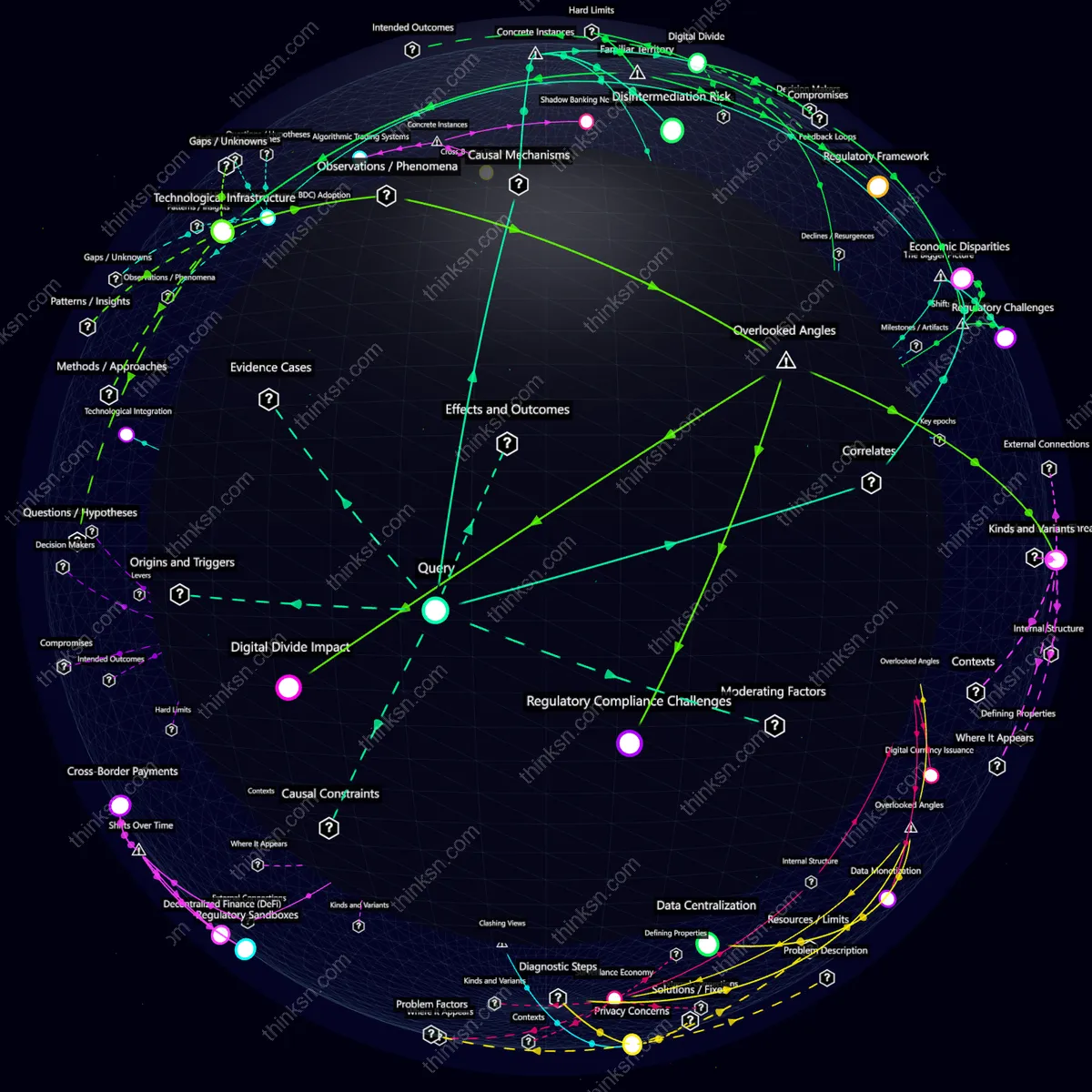
Analysis reveals 5 key thematic connections.
Key Findings
Black Market Circumvention
Government bans on high-value cash transactions aimed at curbing black markets may inadvertently drive illegal activities underground. Investors would be concerned about the emergence of new, more sophisticated evasion techniques, such as digital currencies or alternative payment methods that are harder to track and regulate.
Investor Confidence
The introduction of such bans can significantly impact investor confidence in the economy's stability and transparency. Uncertainty over enforcement and potential backlash from affected industries could lead to market volatility, as investors weigh the risks against expected returns on investment in sectors that rely heavily on cash transactions.
Regulatory Arbitrage
As countries implement different regulations regarding high-value cash transactions, savvy financial actors might exploit these discrepancies through regulatory arbitrage. Investors would scrutinize how domestic policies compare to international standards and opportunities for cross-border operations that evade stringent local restrictions.
Black Market Activities
A government-imposed ban on high-value cash transactions aimed at curbing black markets could paradoxically drive illicit activities underground and increase reliance on digital currencies, making it harder for authorities to track such transactions. This shift can exacerbate the informal economy's resilience and create new challenges in regulatory enforcement.
Stock Market Volatility
Such a ban would likely cause significant short-term volatility in stock markets as investors react to uncertainty about economic impacts, particularly affecting sectors like real estate and luxury goods. Long-term effects could vary based on the effectiveness of alternative regulatory measures put in place.
Deeper Analysis
How might a government-imposed ban on high-value cash transactions affect investor confidence and what emerging insights can we discover from this scenario regarding market behavior?
Capital Flight
A government-imposed ban on high-value cash transactions can prompt wealthy investors to move their assets abroad in search of more favorable conditions, leading to a significant outflow of capital. This capital flight not only depletes local liquidity but also signals to international markets that the country may be experiencing economic instability or policy unpredictability, further eroding investor confidence.
Black Market Expansion
The ban on high-value cash transactions can inadvertently fuel a growth in underground economies and black market activities as individuals seek alternatives to manage large sums of money outside formal channels. This expansion can undermine the effectiveness of government policies intended to regulate financial activity, leading to increased economic uncertainty and decreased investor confidence due to perceived systemic risks.
Digital Currency Adoption
Restrictions on high-value cash transactions may accelerate the adoption of digital currencies as a means to circumvent these limitations. While this shift can offer new opportunities for financial innovation, it also introduces vulnerabilities related to cybersecurity and regulatory oversight. Investors might be wary of increased volatility or lack of regulation in digital currency markets, impacting their overall confidence in traditional economic frameworks.
Currency Circulation
A government-imposed ban on high-value cash transactions can severely disrupt currency circulation, leading to reduced liquidity in the informal economy. This shift might initially boost investor confidence by deterring illicit activities and tax evasion but could also create systemic fragility as businesses struggle with restricted access to traditional banking services.
Electronic Payment Systems
The surge towards electronic payment systems due to the ban on high-value cash transactions can enhance transparency and security, potentially increasing investor confidence. However, this transition exposes vulnerabilities such as cybersecurity threats and operational disruptions that could undermine market stability if not adequately addressed by regulatory bodies.
Regulatory Compliance
Increased scrutiny from regulators to enforce the ban on high-value cash transactions can lead to stringent compliance requirements for businesses. While this may improve investor confidence by reducing financial crime, it also imposes significant operational and financial burdens on companies, particularly small enterprises, potentially leading to a slowdown in business growth and innovation.
Explore further:
- What are the potential impacts on capital flight from investors' reactions to a government-imposed ban on high-value cash transactions aimed at curbing black markets?
- How might the evolution of electronic payment systems over time affect stock market investor reactions to a government-imposed ban on high-value cash transactions aimed at curbing black markets?
What are the potential impacts on capital flight from investors' reactions to a government-imposed ban on high-value cash transactions aimed at curbing black markets?
Foreign Direct Investment
A government ban on high-value cash transactions can drive investors to seek safe havens abroad, significantly reducing Foreign Direct Investment (FDI) in the affected country. This shift diverts capital from domestic projects to foreign ventures, exacerbating economic inequality and stifling growth in local industries.
Currency Devaluation
Investors' loss of confidence due to restrictive cash policies can trigger a rapid outflow of currency reserves, leading to significant devaluation of the national currency. This depreciation undermines trade balances and raises import costs, making essential goods more expensive for consumers while reducing export competitiveness.
Economic Uncertainty
The imposition of such bans can create an atmosphere of economic uncertainty, prompting not only wealthy individuals but also multinational corporations to reconsider their investment strategies. This heightened risk perception further intensifies capital flight and discourages new investments, creating a vicious cycle that hampers economic recovery.
Explore further:
- How might currency devaluation impact stock market investors' reaction to a government-imposed ban on high-value cash transactions aimed at curbing black markets?
- How might a government-imposed ban on high-value cash transactions contribute to economic uncertainty over time and what mechanisms could investors expect in response?
How might the evolution of electronic payment systems over time affect stock market investor reactions to a government-imposed ban on high-value cash transactions aimed at curbing black markets?
Digital Wallets
The rise of digital wallets has shifted consumer behavior towards non-cash transactions, increasing reliance on electronic payment systems. However, this shift also exposes users to cybersecurity risks and privacy concerns, complicating government efforts to curb black markets through high-value cash transaction bans.
Regulatory Compliance
As governments implement stricter regulations on financial transactions, electronic payment providers must adapt by integrating robust compliance measures. This can lead to delays in service rollouts and increased costs for businesses, potentially stifling innovation if not managed carefully.
Stock Market Volatility
A government-imposed ban on high-value cash transactions could trigger stock market volatility as investors reassess the impact of such measures on electronic payment systems. Investors may react with caution to companies heavily reliant on traditional cash flows, while others might view it as an opportunity for digital transformation and growth.
How might currency devaluation impact stock market investors' reaction to a government-imposed ban on high-value cash transactions aimed at curbing black markets?
Black Market Activity
Currency devaluation can exacerbate black market activity as individuals seek to protect the value of their assets. When a government imposes bans on high-value cash transactions, this often forces such activities underground, intensifying reliance on alternative currencies and bartering systems. This shift can create new opportunities for money laundering and corruption, undermining efforts to curb illicit trade.
Stock Market Volatility
Currency devaluation frequently triggers stock market volatility as investors react to the perceived economic instability. The imposition of a ban on high-value cash transactions by the government can further amplify this volatility, with unpredictable impacts on investor confidence and corporate valuations. Companies heavily reliant on foreign trade and international investments are particularly vulnerable, potentially leading to sharp declines in their stock prices.
Inflation Expectations
Currency devaluation often raises inflation expectations as the purchasing power of a nation's currency diminishes. A government-imposed ban on high-value cash transactions can exacerbate this issue by creating uncertainty about future monetary policies and economic stability. This heightened uncertainty can lead to a rapid increase in commodity prices, including basic necessities like food and fuel, disproportionately affecting lower-income populations.
How might a government-imposed ban on high-value cash transactions contribute to economic uncertainty over time and what mechanisms could investors expect in response?
Cash Transaction Shadow Economy
A government-imposed ban on high-value cash transactions could push significant economic activities underground, fostering a shadow economy that thrives in opacity and illicit trade. This shift can lead to reduced tax revenue and increased challenges for regulatory oversight, exacerbating systemic risks and undermining investor confidence.
Investor Speculation and Market Volatility
In response to economic uncertainty caused by the ban on high-value cash transactions, investors might engage in speculative trading, amplifying market volatility. This behavior can create a feedback loop where perceived risks attract further risk-taking, leading to unpredictable shifts in asset values that destabilize financial markets.
Central Bank Digital Currency Adoption
As economic uncertainty intensifies due to restricted cash transactions, central banks may accelerate the adoption of digital currencies as a means to maintain control over monetary policy and enhance transaction transparency. However, this could fragment currency usage across different digital platforms, complicating international trade and increasing financial disparities.
How might a government-imposed ban on high-value cash transactions impact stock market volatility over time?
High-Value Cash Transactions
A government-imposed ban on high-value cash transactions can lead to a sudden shift in market liquidity and investor behavior, as wealthy individuals and corporations turn to alternative financial instruments. This transition increases systemic risk by concentrating wealth in fewer, more volatile assets, potentially leading to speculative bubbles or rapid price declines.
Black Market Activity
The prohibition of large cash transactions may spur an expansion of the black market as illicit activities seek new channels for financial exchange. This underground economy can distort official economic metrics and exacerbate volatility by introducing unpredictable flows of unreported funds, undermining investor confidence in market integrity.
Regulatory Arbitrage
Financial institutions may exploit regulatory gaps to offer services that mimic the function of banned high-value cash transactions, such as complex derivatives or offshore accounts. This behavior can lead to increased systemic risk and market instability as speculative activities flourish in these shadowy corners of finance.
What potential impacts could the adoption of Central Bank Digital Currency have on stock market investors' reaction to a government-imposed ban on high-value cash transactions aimed at curbing black markets?
Digital Wallet Security
The adoption of Central Bank Digital Currency (CBDC) requires robust digital wallet security to prevent hacking and fraud. However, as the government imposes bans on high-value cash transactions, investors may shift significant wealth into CBDC wallets. If these systems are compromised, investor confidence could plummet, leading to massive sell-offs in stock markets.
Regulatory Oversight
CBDC adoption necessitates stringent regulatory oversight to ensure compliance and prevent illegal activities like money laundering. However, overly restrictive regulations can stifle innovation and discourage tech-savvy investors who prefer less regulated digital currencies, potentially leading to an exodus of investment capital from traditional markets.
Parallel Cash Economies
The imposition of high-value cash transaction bans alongside CBDC adoption might inadvertently foster parallel cash economies using alternative forms of currency or bartering systems. This could destabilize the formal economy, causing stock market investors to lose faith in government monetary policies and leading to unpredictable financial market volatility.
Explore further:
- How might the security and adoption trends of digital wallets evolve in response to a government-imposed ban on high-value cash transactions, and what are the potential implications for stock market investors?
- How does regulatory oversight in the form of a government-imposed ban on high-value cash transactions affect the structure and components of stock market investor behavior and sentiment?
How might the security and adoption trends of digital wallets evolve in response to a government-imposed ban on high-value cash transactions, and what are the potential implications for stock market investors?
Regulatory Arbitrage Opportunities
A government ban on high-value cash transactions could create regulatory arbitrage opportunities for digital wallet providers in countries with less stringent regulations, leading to a surge in cross-border transactions and potentially destabilizing local financial systems if not managed carefully.
Consumer Privacy Concerns
Increased adoption of digital wallets driven by cash transaction bans may expose consumers to heightened privacy risks due to the detailed tracking capabilities of these platforms, raising ethical concerns about data ownership and usage rights that could undermine trust in digital wallet providers.
Technological Inequity Gaps
While some populations readily embrace advanced digital wallets, others may face significant barriers due to lack of access to smartphones or reliable internet, exacerbating existing socio-economic divides and potentially leading to new forms of financial exclusion for marginalized groups.
Regulatory Compliance
A government-imposed ban on high-value cash transactions could accelerate the adoption of digital wallets due to regulatory compliance requirements. However, this may also introduce new vulnerabilities as users rush to adopt untested security protocols, leading to increased cyberattacks targeting digital wallet platforms.
Consumer Privacy
As more financial transactions move from cash to digital wallets in response to government bans, concerns over consumer privacy could spike. This shift might lead to a backlash against companies perceived as handling personal data irresponsibly, creating a competitive advantage for firms prioritizing robust privacy protections.
Investor Sentiment
Stock market investors may experience volatility in response to the evolving digital wallet landscape post-cash ban. Companies that fail to adapt swiftly or address security concerns adequately could see their stock prices plummet, while those innovating in secure payment solutions might attract significant investment interest.
Explore further:
- How might technological inequity gaps affect stock market investors' perceptions and reactions to a government-imposed ban on high-value cash transactions aimed at curbing black markets?
- How might government-imposed bans on high-value cash transactions evolve over time in terms of consumer privacy concerns and their impact on stock market investor behavior?
How might technological inequity gaps affect stock market investors' perceptions and reactions to a government-imposed ban on high-value cash transactions aimed at curbing black markets?
Digital Payment Divide
The digital payment divide exacerbates economic disparities between those with access to advanced financial technologies and those without. When a government imposes a ban on high-value cash transactions, investors relying on outdated or non-existent technological solutions may face significant liquidity risks, further marginalizing economically disadvantaged populations who lack alternative payment methods.
Internet Accessibility Gaps
Internet accessibility gaps can distort stock market perceptions among investors. A sudden ban on high-value cash transactions might prompt a surge in digital trading activities for those with reliable internet access, while others lag behind due to poor connectivity or lack of devices. This disparity could lead to overvaluation of certain stocks as informed trading increases, masking broader economic instability.
How might government-imposed bans on high-value cash transactions evolve over time in terms of consumer privacy concerns and their impact on stock market investor behavior?
Digital Currency
The shift towards digital currency systems poses a significant risk to consumer privacy. As governments mandate the use of digital payment methods for high-value transactions, citizens may become more susceptible to surveillance and data breaches. This transition could also exacerbate income inequality by disproportionately affecting those without access to advanced technology or reliable internet.
Data Aggregation
The implementation of strict cash transaction bans can lead to increased data aggregation by financial institutions, potentially creating a fragile dependency on centralized systems. This not only raises concerns about the security and integrity of personal financial information but also limits consumer autonomy in choosing alternative or anonymous payment methods.
Investor Sentiment
Consumer privacy regulations have a profound impact on investor sentiment within the stock market, particularly regarding tech companies that collect vast amounts of user data. As governments impose stricter controls over high-value transactions, there is an inherent risk of undermining public trust in these corporations, leading to volatility and potential financial losses for shareholders who are heavily invested in such enterprises.