Why States Pay Differently for the Same Auto Insurance?
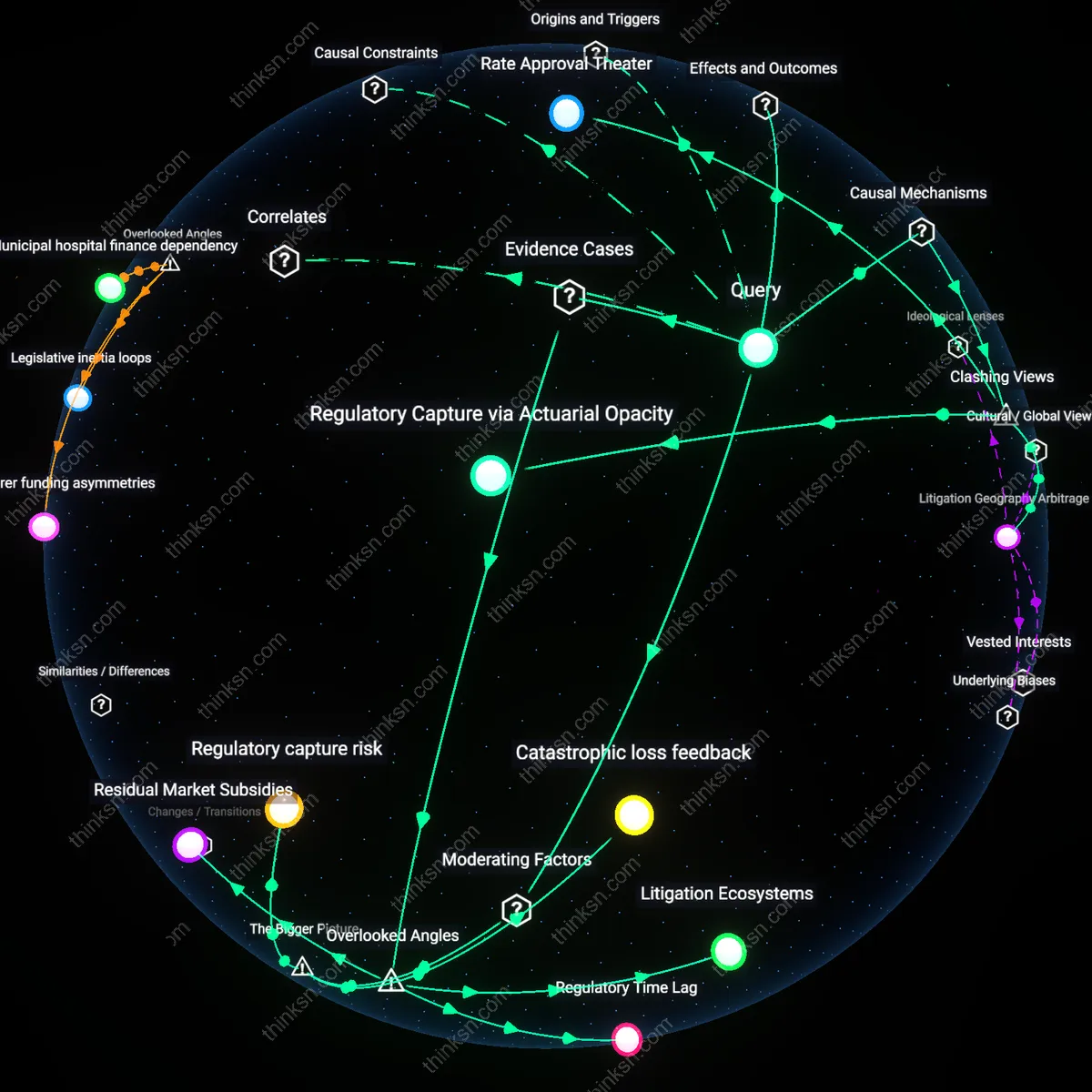
Analysis reveals 10 key thematic connections.
Key Findings
Regulatory Capture via Actuarial Opacity
Insurers exploit the technical complexity of rate-setting processes to embed favorable assumptions in state filings, making superficially similar risk profiles yield wildly different premiums. By framing actuarial models as neutral and data-driven, companies obscure how discretionary inputs—like projected legal costs or repair inflation—inflate rates in states with weak regulatory audit capacity, such as Oklahoma versus Minnesota. This mechanism reveals that the appearance of actuarial objectivity functions as a shield against political intervention, even where accident rates are comparable, privileging insurer-defined risk logic over public interest scrutiny.
Litigation Geography Arbitrage
Insurers calibrate state rates not to accident frequency but to anticipated tort environment severity, which varies unpredictably between states with similar crash data—such as Louisiana and Connecticut—due to divergent jury award trends and medical billing practices. Because state regulators permit insurers to project future claims costs based on volatile litigation climates, companies effectively import risk assessments from high-payout jurisdictions into seemingly low-risk ones, distorting price signals. This exposes the fiction that auto rates reflect local driving behavior, revealing instead a system where insurers leverage cross-jurisdictional legal uncertainty to justify premium spikes absent in more predictable courts.
Rate Approval Theater
In states like Texas and Indiana, regulators maintain the appearance of oversight while institutionalizing delayed or rubber-stamp approval of rate changes, allowing insurers to operate as de facto price-setters through anticipatory filings. Because carriers can implement increases by filing notices rather than awaiting substantiated approval, they create irreversible pricing momentum that neutralizes public utility commissions’ influence. This ritualized but non-adversarial process reveals that regulatory structure—defined by procedural leniency rather than accident data—becomes the dominant pricing variable, undermining the assumption that oversight equates to effective cost control.
Regulatory capture latency
The rise of state-based insurance comissions in the 1970s created openings for incumbent insurers to shape rate-review protocols, allowing carriers with entrenched market share to influence approval timelines and criteria. Insurers leveraged their actuarial authority and lobbying resources to embed complex, state-specific filing requirements that disadvantaged new entrants, even in states with comparable loss experience. This delayed responsiveness to competitive threats and locked in pricing differentials long after accident rates converged, revealing how time lags in regulatory adaptation became exploitable assets—what regulation intended to control, delay allowed insurers to steer.
Regulatory capture risk
Divergent state insurance pricing despite similar accident rates is primarily driven by uneven political influence of incumbent insurers on state regulatory bodies. In states like Florida and Texas, dominant carriers fund legislative campaigns and regulatory appointments, directly shaping rate-approval processes and solvency thresholds, which allows them to sustain higher premiums under the guise of risk calibration. This mechanism reveals how insurer lobbying transforms ostensibly neutral regulation into a barrier to entry, amplifying pricing power where oversight is politically embedded. The non-obvious implication is that regulatory structure—not risk itself—becomes the active variable in pricing divergence.
Tort system divergence
Variation in auto insurance costs between states with comparable crash frequencies stems from structural differences in liability determination and compensation frameworks, such as no-fault versus at-fault systems. States like Michigan (historically no-fault with unlimited medical benefits) impose higher cost burdens on insurers, which are passed through to premiums, whereas at-fault regimes like Tennessee’s distribute liability more narrowly. This legal architecture alters insurers’ loss exposure irrespective of accident rates, making tort design a pivot point in pricing outcomes. The underappreciated dynamic is that legal infrastructure, not underwriting discretion, anchors regional cost expectations.
Catastrophic loss feedback
Auto insurance pricing disparities emerge from indirect exposure to regional non-collision risks—such as hurricanes in coastal states—which inflates overall underwriting costs and forces cross-line subsidization. In Louisiana, insurers embed anticipated hurricane-related claim surges and fraud monitoring into auto policies, effectively socializing disaster costs across all policyholders. Reinsurance market pressures amplify this effect, as carriers adjust personal lines profitability to offset commercial exposures. The overlooked reality is that geographic peril, not driver risk, becomes a silent price driver through balance sheet holism.
Litigation Ecosystems
Differences in auto insurance pricing between states with similar accident rates are driven primarily by variations in state-specific tort environments and post-accident legal processing costs, not loss frequency. In Florida, for example, the prevalence of 'insurance fraud mills' and no-fault auto insurance has created a profitable litigation ecosystem where attorneys and medical clinics collude to generate fraudulent claims, inflating industry-wide costs. This dynamic—where procedural leniency and financial incentives amplify legal risk—forces insurers to price not for crash risk but for adjudication risk, revealing that regulatory tolerance for opportunistic litigation shapes premiums more than road safety. Most pricing analyses ignore this second-order legal economy, focusing instead on driver behavior or repair costs.
Regulatory Time Lag
Auto insurance pricing disparities persist despite similar accident rates because regulatory approval processes for rate changes operate on fixed, inflexible schedules that decouple pricing from real-time risk updates. In Michigan, former monopolistic reliance on the 'assigned risk pool' and long approval cycles delayed competitive responses even after market liberalization, embedding structural inertia into premiums. Insurers cannot adjust quickly to localized safety improvements, causing outdated risk assessments to persist in pricing models long after on-road conditions change. This regulatory time lag is rarely factored into market efficiency narratives, which assume dynamic responsiveness, but instead reveals that bureaucratic calendar constraints, not actuarial intent, sustain geographic price gaps.
Residual Market Subsidies
Cross-state premium differences emerge because mandatory participation in residual market mechanisms—like California’s Automobile Assigned Risk Plan—requires profitable urban insurers to subsidize high-risk rural pools, distorting average rates independent of local accident data. In Texas, carriers selling voluntary policies in low-collision cities like Plano still absorb mandatory losses from windstorm-prone Gulf Coast zones through the Texas Automobile Insurance Plan Association. This forced cross-subsidy is invisible in public rate filings but structurally inflates base prices where demand is most elastic. Standard analyses overlook how legally imposed solidarity obligations, not risk segmentation, generate pricing anomalies between statistically similar regions.