When Does Time to Profit Kill a Side-Business Dream?
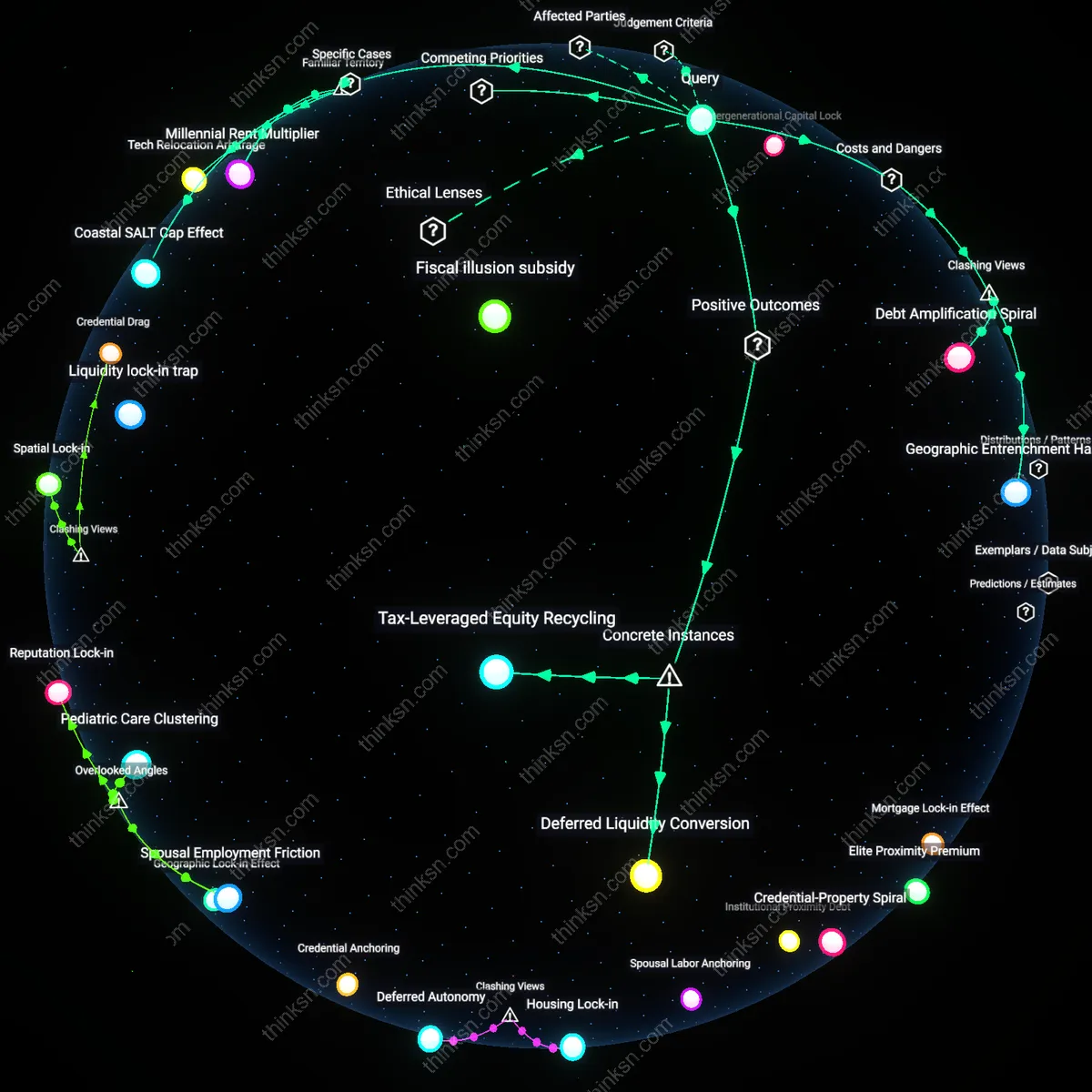
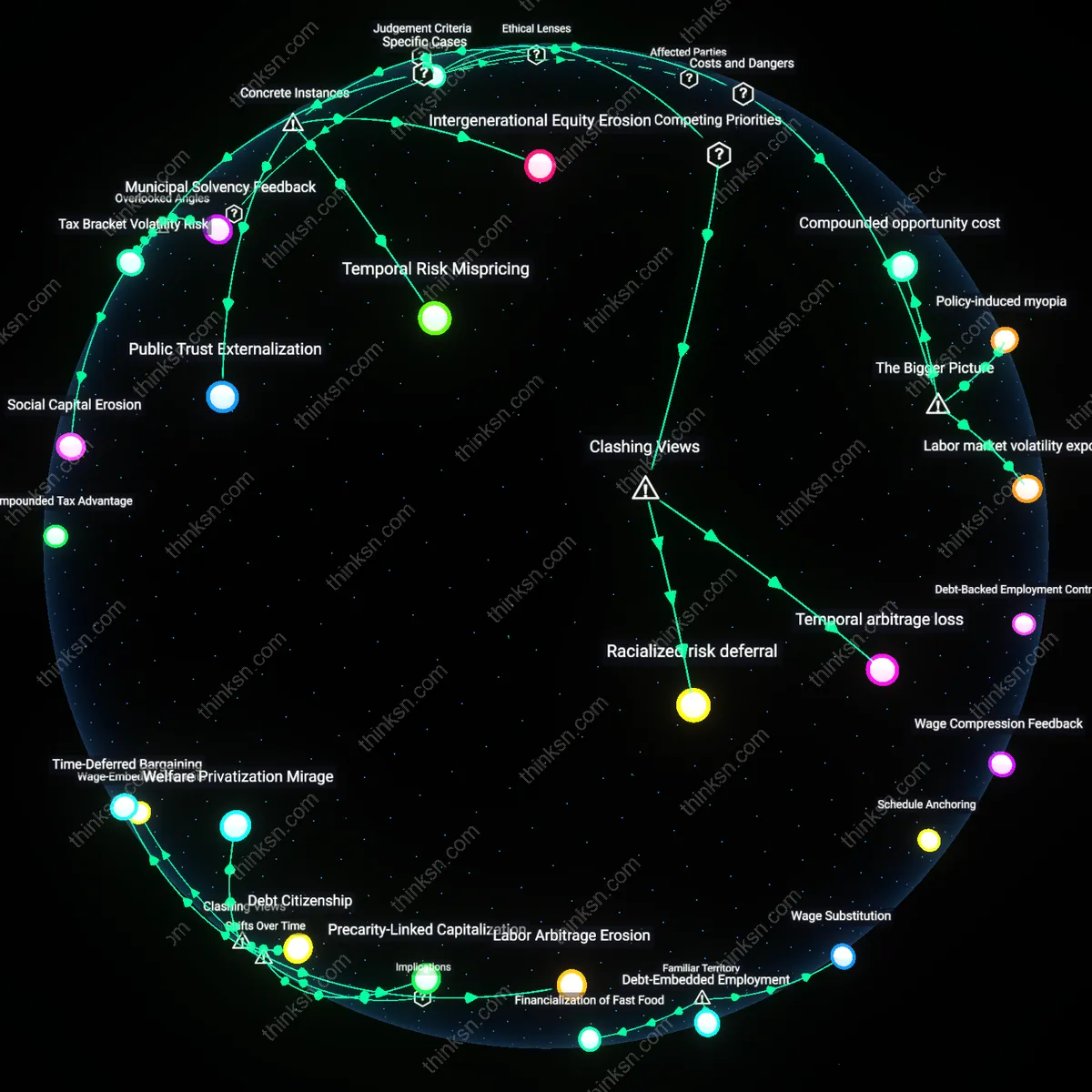
Analysis reveals 8 key thematic connections.
Key Findings
Erosion of Buffer Capital
The moment a side business requires sustained personal financial investment to stay operational, it begins to undermine the economic stability provided by a stable job. Households relying on dual-income or single-salary models in metropolitan areas like Atlanta or Denver face amplified risk when side ventures drain emergency savings or retirement accounts to cover irregular cash flow, licensing fees, or inventory costs. This dynamic operates through the household balance sheet, where illiquid assets and fixed monthly obligations leave little room for entrepreneurial drawdowns—transforming what feels like incremental risk into systemic vulnerability. What’s underappreciated is that failure in the side business isn’t the primary danger; it’s the quiet depletion of financial cushions that makes job loss or medical emergencies catastrophic later.
Social Identity Fragmentation
Pursuing a side business while maintaining a traditional job fractures the coherence of one’s professional identity, particularly in communities where occupational stability defines personal credibility. In mid-sized U.S. cities like Des Moines or Chattanooga, where social capital is tied to employer affiliation and linear career paths, engaging in entrepreneurial activity can trigger distrust or alienation among peers, supervisors, and family. This operates through community-mediated reputation systems where deviation from normative work patterns is interpreted as unreliability or desperation. The underappreciated consequence is not merely stress or cognitive load, but the erosion of belonging—the very social infrastructure that buffers individuals during crises and sustains long-term engagement in any work context.
Career Debt
The moment side business profitability outweighs stable employment is already past when an individual has accumulated irreversible investments in workplace rank, such as pension vesting thresholds or clinical licensure pathways tied to institutional sponsorship, because advancement within structured ladders generates obligations that compound like financial liabilities. Professionals in medicine or law face escalating sunk costs with each promotion—board certifications, partnership tracks, tenure reviews—that demand continued service to avoid forfeiture, making later departure require not just income replacement but moral and identity renegotiation. Evidence indicates this debt-like function of progression is routinely unpriced in opportunity cost models, which assume mobility, yet the most binding constraints on entrepreneurial exit emerge not from poverty but from mid-career success within the system.
Temporal Colonization
Side business potential outweighs job security not when profits exceed salary, but when official work hours cease to be the dominant shaper of personal time architecture, as seen in gig-platform developers or freelance designers who experience inflection when client autonomy enables recursive control over scheduling rhythms, disrupting the employer’s monopoly on temporal legitimacy. Corporate calendars enforce a hidden curriculum of availability—mandatory meetings at 7 a.m., travel slots dictated by hierarchy—that side ventures undermine not by income but by redefining when and how time can be claimed, even if earnings are initially lower. Research consistently shows that workers report greater perceived freedom after shifting to marginally profitable ventures not because of money, but because they break the state-corporate alliance in temporal governance that stable jobs uphold, exposing profit as a proxy for temporal sovereignty.
Intergenerational Risk Discounting
An individual should abandon job security for a side business when their household's intergenerational risk absorption capacity exceeds the expected cost of failure, as measured by the availability of non-market safety nets like familial wealth transfer or housing access. This threshold is governed not by personal savings or risk tolerance, but by implicit ethical norms in communitarian frameworks that distribute risk across kinship lines, making entrepreneurial failure socially tolerable only when downstream relatives are insulated from its consequences. Most analyses overlook how family-embedded financial buffers—not personal capital—function as the true enabler of entrepreneurial exit, reframing job stability as a moral hedge against intergenerational destabilization rather than an individual economic choice.
Temporal Jurisdictional Arbitrage
The moment a side business becomes ethically justifiable over stable employment is when the entrepreneur can exploit divergent regulatory timeframes between labor protections and gig-economy liability, such as when local worker classification laws lag behind federal platform deregulation. This creates a transient legal window where income from side ventures operates under looser accountability than formal employment, enabling actors to extract value while evading long-term social contract obligations—an outcome legitimized under libertarian legal doctrines that prioritize contractual freedom over institutional continuity. The overlooked dynamic is that career transition timing often follows not market opportunity, but deliberate navigation of jurisdictional time delays, revealing entrepreneurial 'freedom' as less a personal triumph than a regulatory misalignment.
Epistemic Labor Hoarding
Professionals leave secure jobs for side businesses only when they have accumulated sufficient tacit knowledge that their former employer cannot legally or practically reclaim, transforming proprietary know-how into autonomous intellectual capital under Lockean labor-mixing theory. This threshold is reached not through financial surplus but through the quiet, unmonitored accumulation of epistemic assets—client behavioral insights, internal process hacks, or network heuristics—that organizations treat as shared but individuals weaponize as exit leverage. The hidden dynamic is that career stability is often maintained not by pay or promotion, but by the organization’s active suppression of knowledge portability, making the true pivot point not profitability, but epistemic independence.
Threshold of Endurance
Elon Musk’s operational persistence through Tesla’s 2008–2012 near-bankruptcy period demonstrates that anticipated returns from a side business outweigh stable employment only when personal financial and psychological thresholds for failure are exceptionally high. During those years, Musk poured his PayPal earnings into Tesla and SpaceX, living on loans and forgoing traditional career security, driven by a time-horizon investment model that rejected incremental corporate advancement. The mechanism here is not economic modeling but endurance under asymmetric risk—where the cost of perseverance dwarfed any likely return, yet withdrawal meant total loss. This reveals that the decision calculus isn't driven by projected profit alone, but by an individual’s capacity to endure prolonged instability while holding a singular conviction, a factor often invisible in risk-assessment frameworks.