Is AT&Ts Split a Blueprint for Breaking Up Cloud Monopolies?
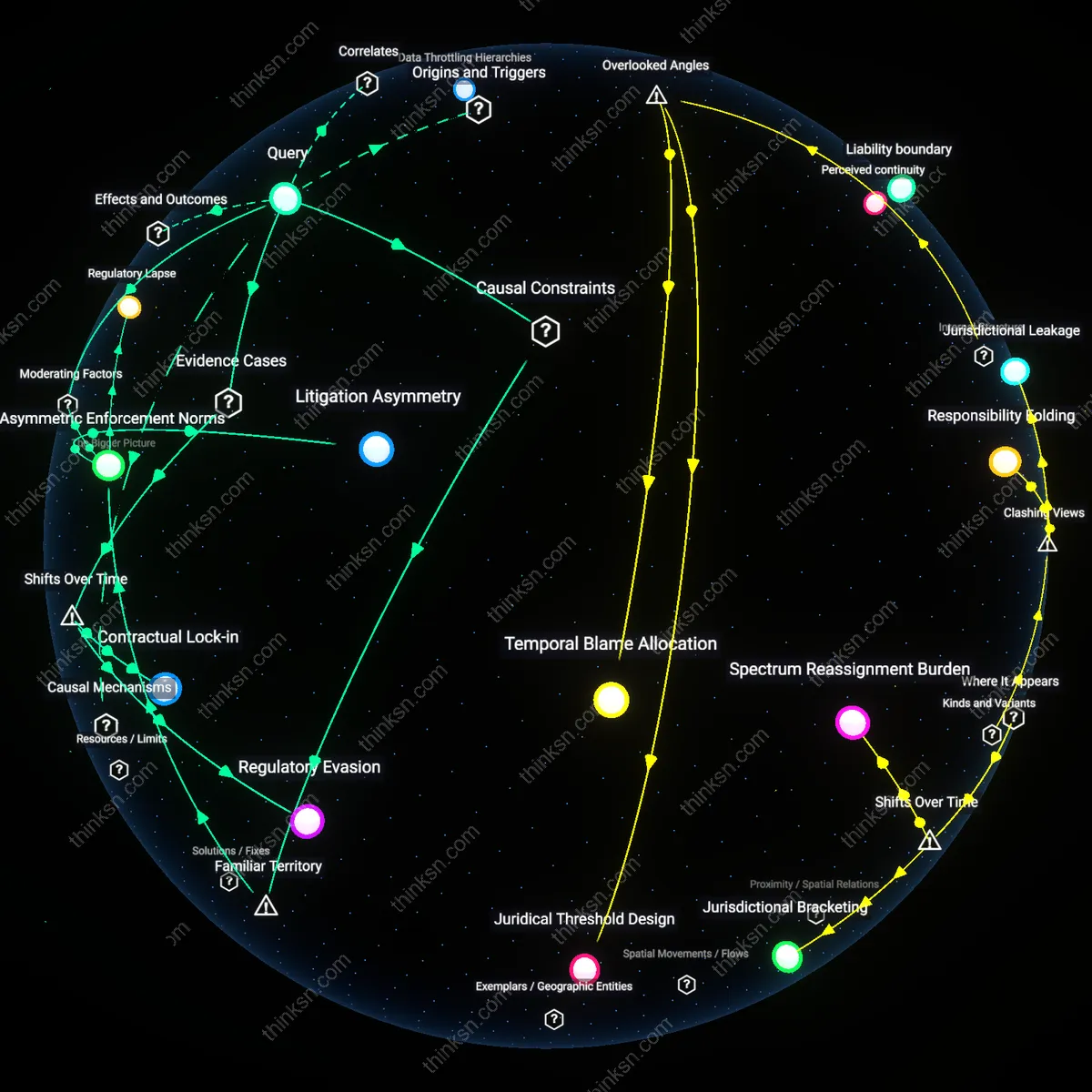
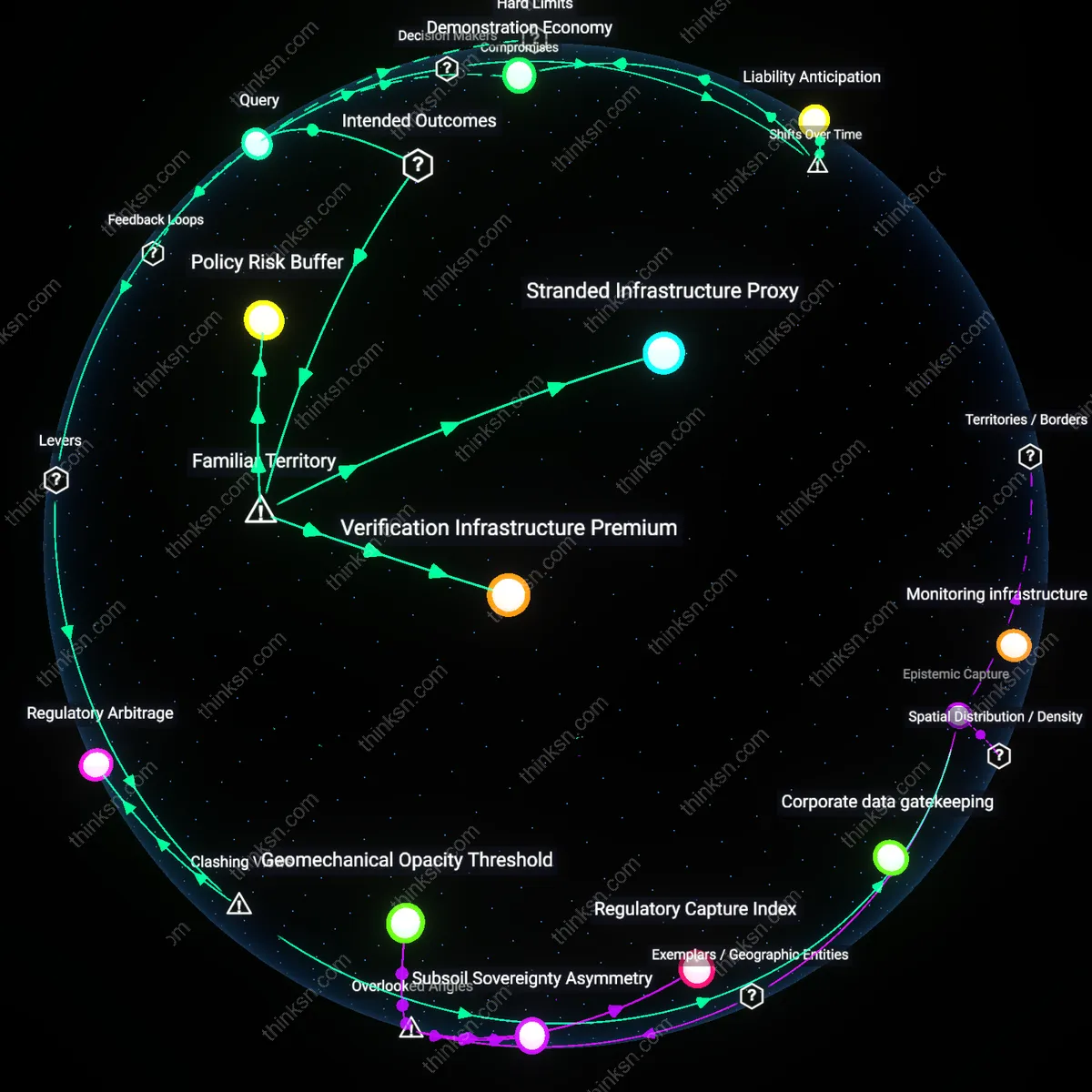
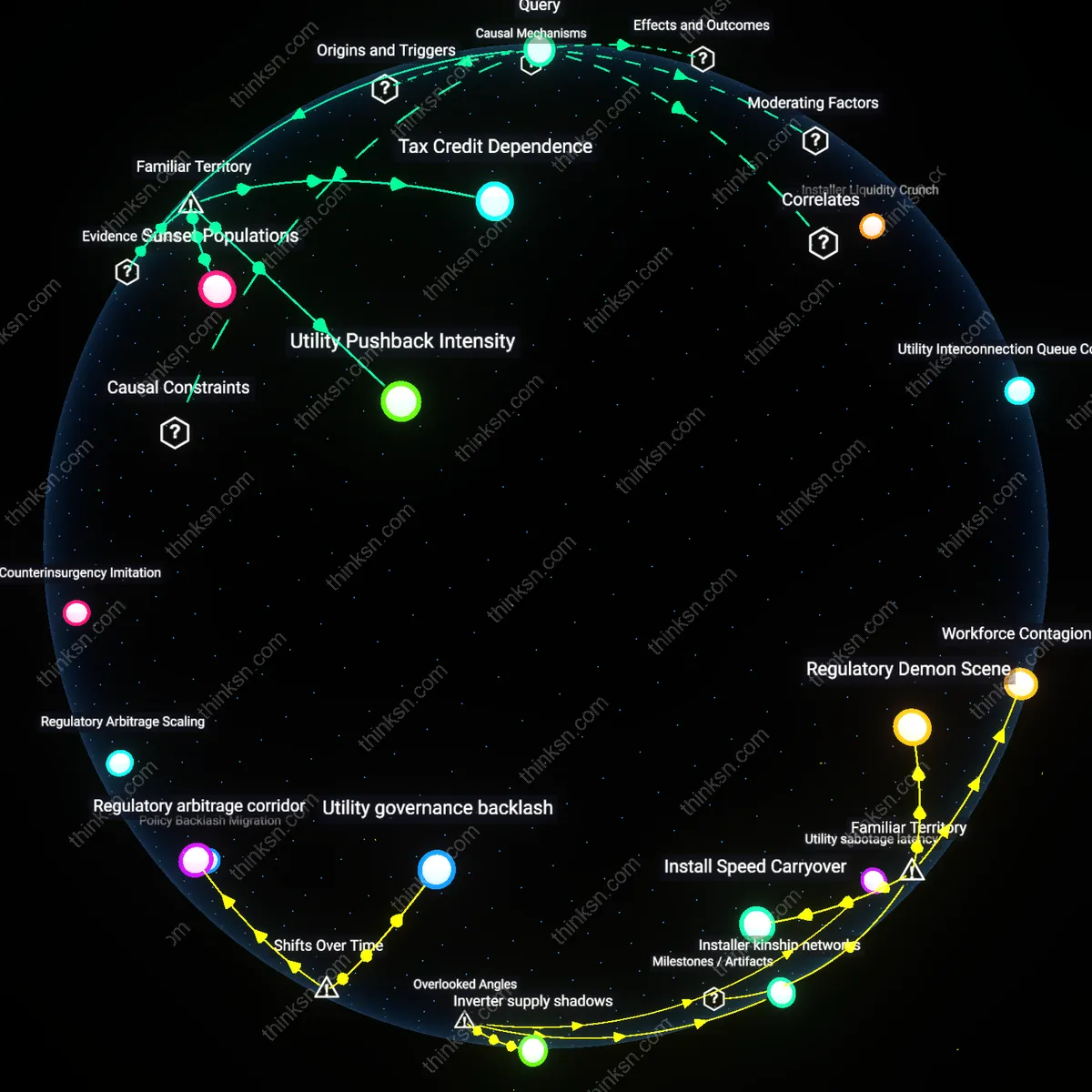
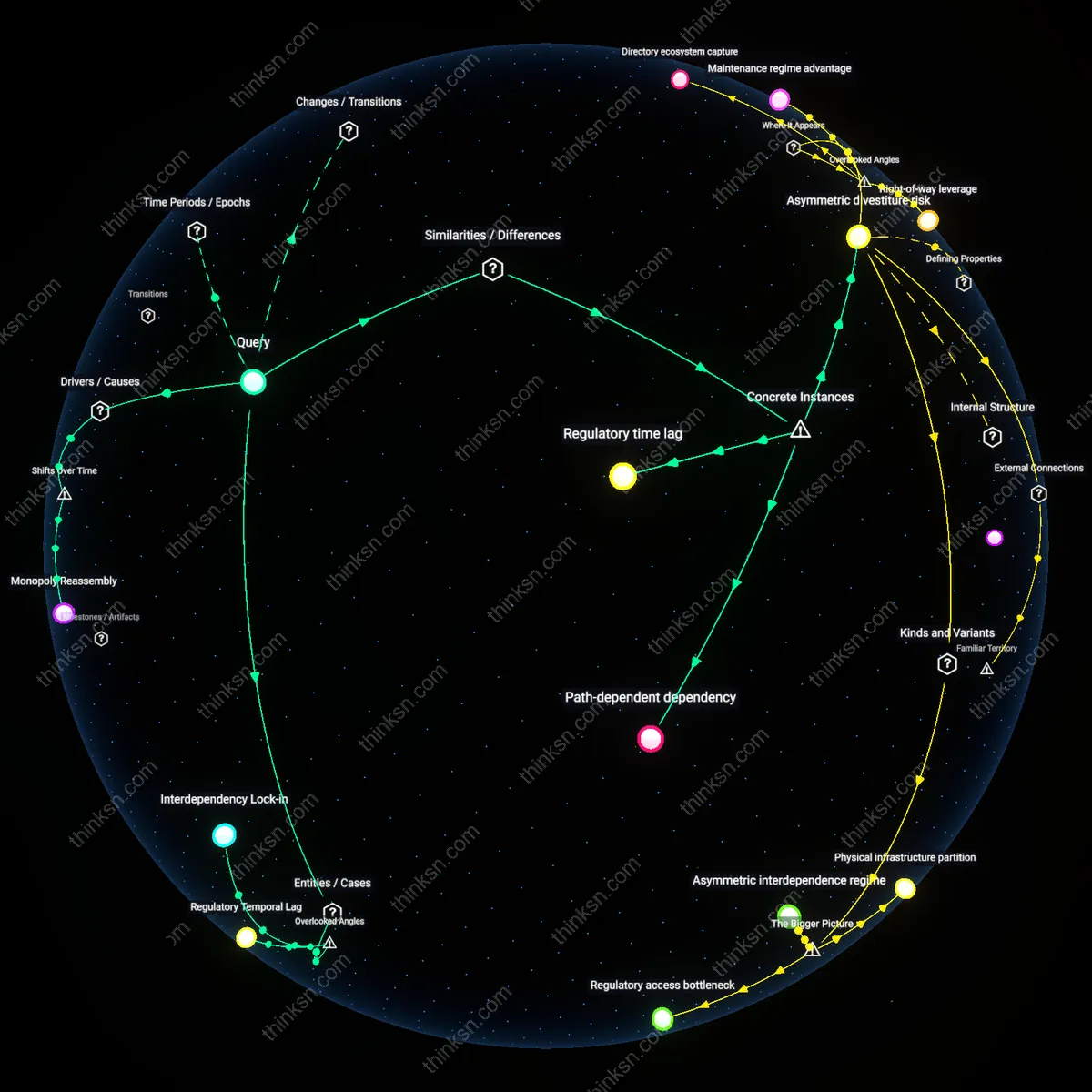
Analysis reveals 8 key thematic connections.
Key Findings
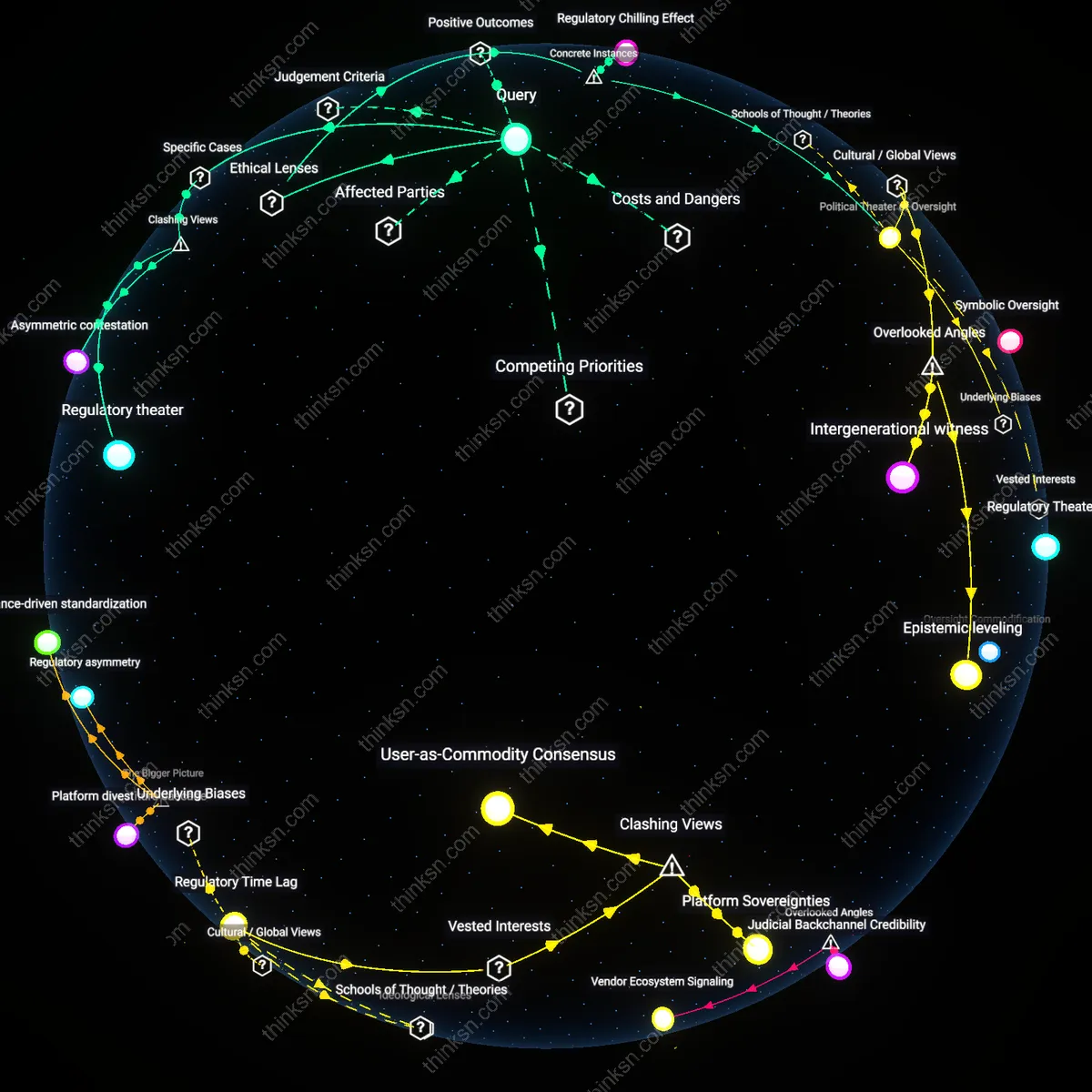
Regulatory Temporal Lag
The AT&T breakup demonstrates that regulatory action consistently lags behind infrastructural entrenchment, meaning structural separation of today's cloud monopolies will address yesterday’s power topography, not tomorrow’s. The breakup resolved Ma Bell’s control over physical lines and long-distance access, but the real shifts had already occurred toward digital switching and data services; similarly, mandating separation between cloud compute, storage, and networking today may miss how control is now consolidating around proprietary AI models and data feedback loops that operate above the infrastructure layer. This overlooked dimension—regulatory time slippage—reveals that structural remedies are retroactive by design, often codifying competition in domains the monopolist has already transcended, thereby preserving dominance in reconfigured form rather than diffusing it.
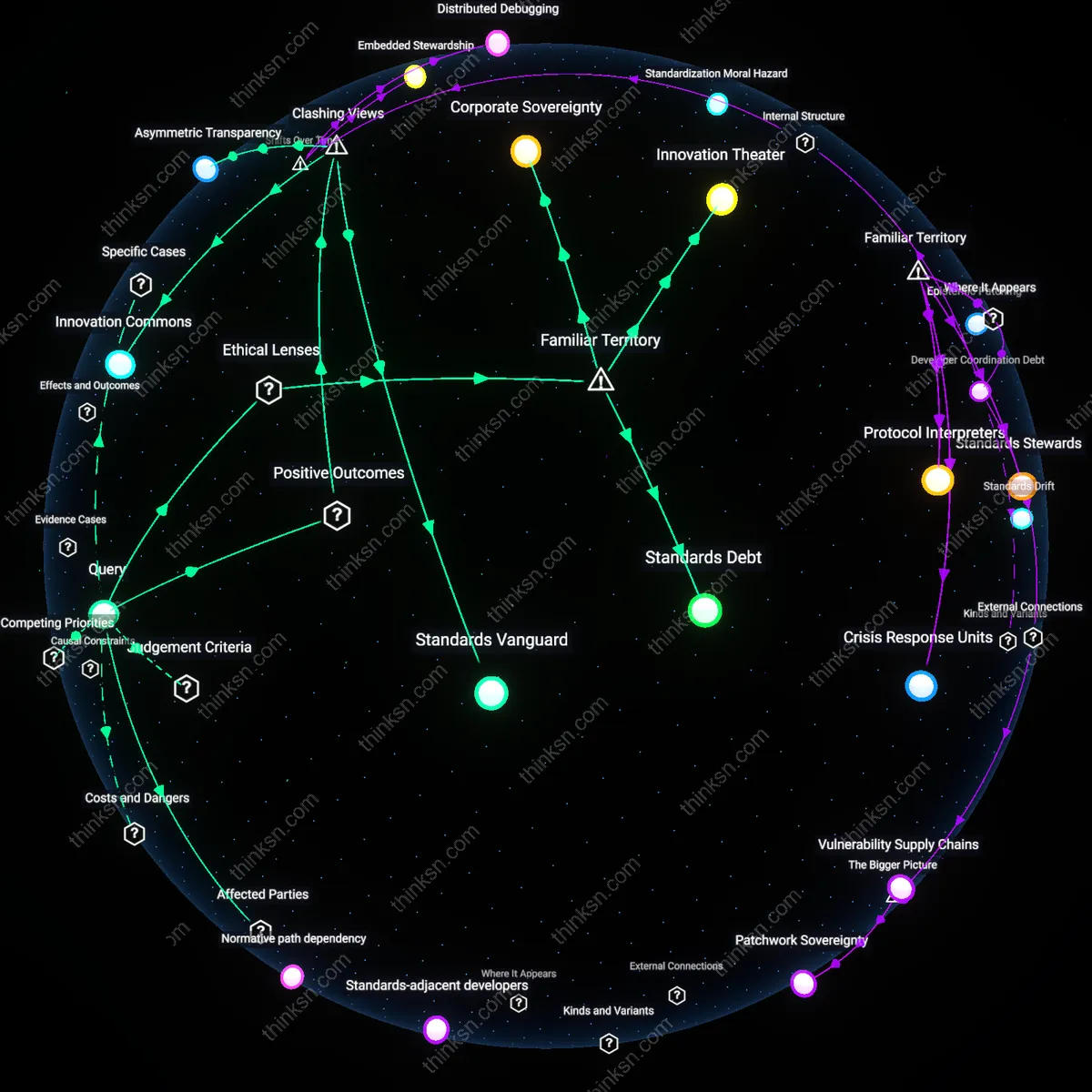
Interdependency Lock-in
The divestiture of AT&T’s regional operating companies unintentionally strengthened Bell Labs and Western Electric by maintaining centralized R&D and equipment procurement, illustrating that structural separation can deepen reliance on shared, monopolized subsystems even while fragmenting surface ownership. Today’s cloud providers like AWS, Azure, and GCP offer modular services, but their customers become locked into integrated development toolchains, identity systems, and telemetry pipelines that are functionally inseparable despite being technically distinct. The non-obvious insight is that fragmentation at the service boundary does not weaken control if interdependency is shifted to opaque middleware layers—what persists is not ownership of infrastructure but command over system coherence, an outcome most structural proposals fail to disrupt.
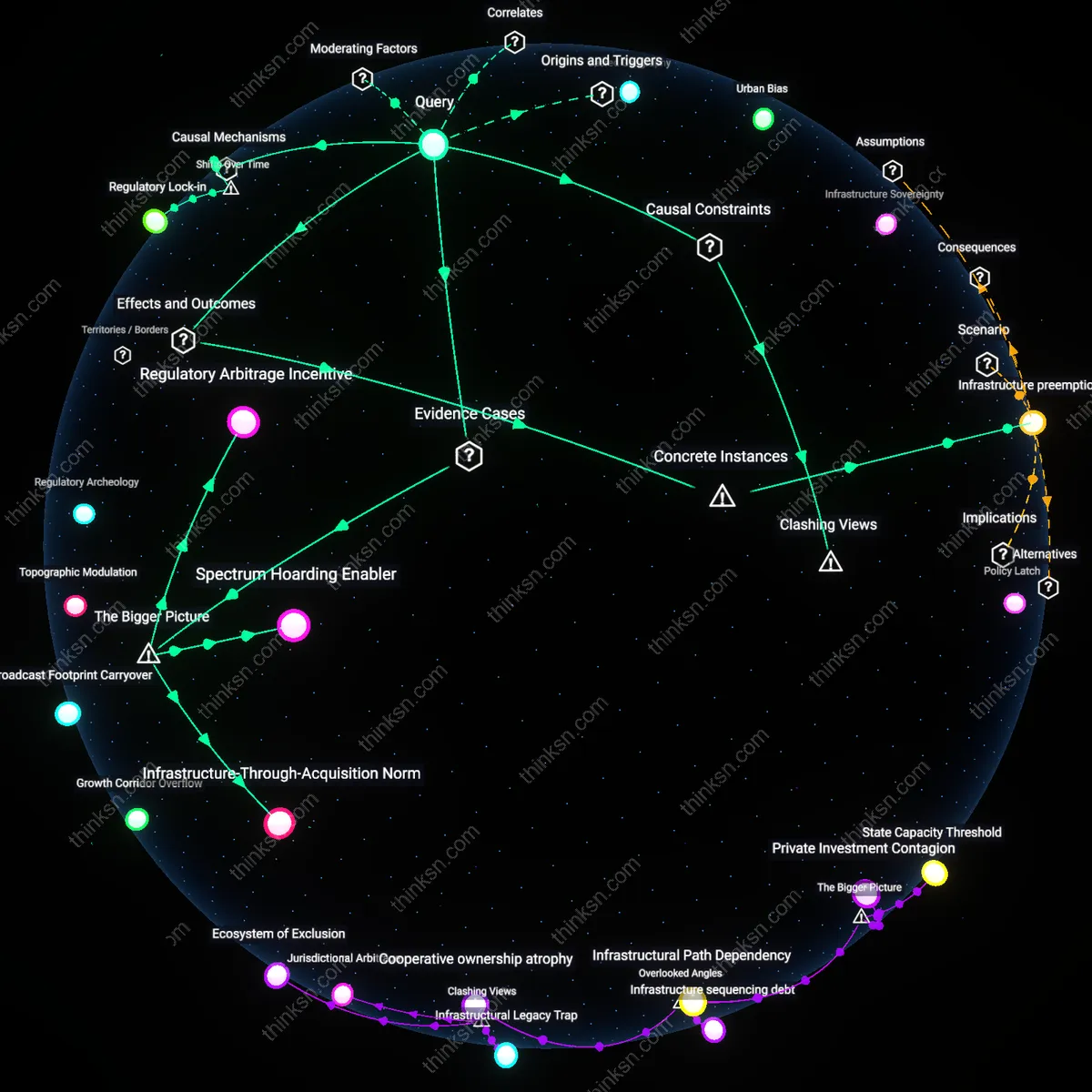
Labor Knowledge Monopoly
After the AT&T breakup, the Bell System’s engineers remained the only workforce fluent in end-to-end network operations, giving the newly independent entities no real autonomy in network redesign or innovation despite legal separation. Likewise, today’s cloud monopolies internalize not just infrastructure but the concentrated expertise in distributed systems, capacity forecasting, and failure topology—knowledge rarely transferable through APIs or documentation. This unseen bottleneck, where structural division fails without parallel dispersion of tacit operational mastery, means that breaking up cloud giants without mandated knowledge transfer or workforce redistribution simply creates dependent satellites orbiting the same cognitive core, undermining the goal of genuine competitive divergence.
Regulatory time lag
The 1984 AT&T breakup unfolded only after two decades of legal proceedings, revealing that structural separation responds to monopoly harm long after market distortion has solidified—demonstrated when the U.S. Department of Justice’s 1956 consent decree failed to prevent Bell System’s reconsolidation of control over emerging long-distance data networks by the 1970s. This delay meant competitive entry was throttled not by technical infeasibility but by institutional inertia, illustrating how regulatory processes become outdated while monopolists adapt incrementally within oversight blind spots. The non-obvious insight is that structural remedies are retroactive by design, making them ill-suited to preemptive intervention in fast-evolving infrastructural markets like cloud computing where dominance is embedded in software-defined control layers rather than physical lines.
Asymmetric divestiture risk
When AT&T was broken up in 1984, the Regional Bell Operating Companies (RBOCs) inherited local infrastructure but were legally restricted from owning interexchange networks, whereas the divested long-distance and equipment arms like AT&T Technologies became technologically autonomous but lost guaranteed access to last-mile deployment channels. This asymmetry inadvertently advantaged new entrants like MCI and Sprint in long-haul services, but constrained innovation at the edge—a dynamic mirrored when Amazon Web Services, after enabling third-party competitors via its marketplace, later leveraged proprietary control over compute and API layers to prioritize its own services, such as Amazon’s use of internal telemetry data to refine competing offerings like AWS Lambda over external serverless startups. The overlooked mechanism is that structural separation can unintentionally redistribute power unevenly across layers, creating new dependencies masked as neutrality.
Path-dependent dependency
After the AT&T breakup, the Federal Communications Commission mandated the Bell companies to provide interconnection and equal access to network elements under the 1996 Telecommunications Act—a policy derived from the assumption that physical infrastructure remained the bottleneck, yet this failed to anticipate how software-defined provisioning would shift dominance to orchestration platforms, as seen when Google Cloud leveraged proprietary deployment tools like Borg to enforce vendor lock-in despite relying on third-party fiber infrastructure. Unlike the Ma Bell era, where physical plant ownership equated to control, today’s cloud monopolies exert influence through algorithmic resource allocation and metadata capture, a shift evident when Microsoft Azure prioritized internal workloads during Azure Stack scaling crises in 2020, revealing that separation of ownership does not preclude control through protocol-level gatekeeping. The underappreciated truth is that structural remedies fix yesterday’s chokepoints while new dependencies form in invisible coordination systems.
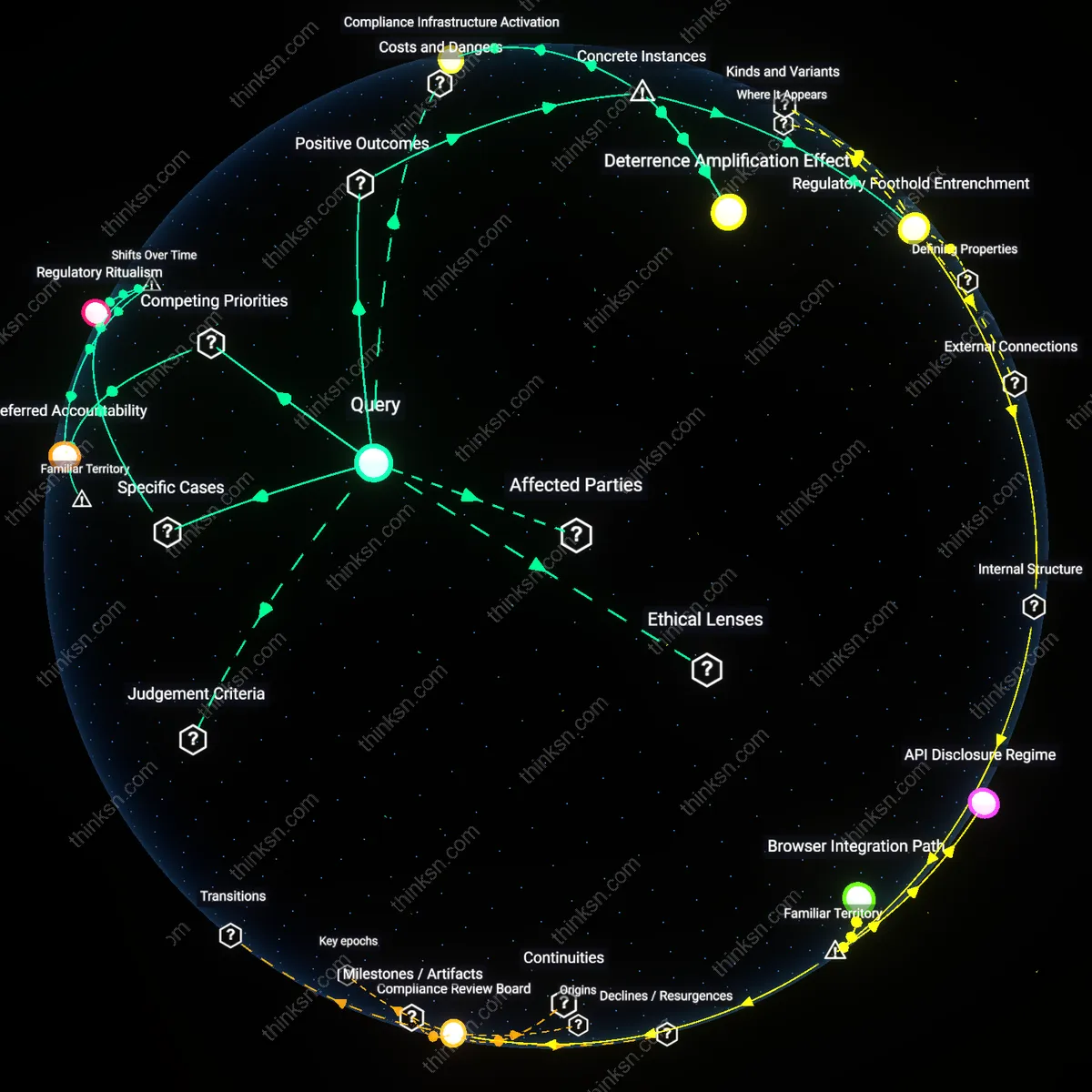
Regulatory Preemption
The breakup of AT&T in 1984 was driven by decades of antitrust litigation initiated by the U.S. Department of Justice, which identified the Bell System’s vertical integration as a barrier to innovation and market entry—this regulatory intervention predated and shaped the emergence of competitive long-distance carriers and equipment makers. The shift from a state-sanctioned monopoly to a deregulated telecommunications landscape in the 1980s revealed that structural separation could only occur after the state withdrew its protective stance, a transition enabled by changing legal interpretations of anticompetitive behavior under the Sherman Act. This moment exposed the underappreciated role of judicial and administrative institutions as preemptive architects of market structure, not merely responders to it.
Monopoly Reassembly
Despite the structural separation mandated in 1984, the telecommunications industry experienced a wave of consolidation starting in the late 1990s, culminating in the recombination of many RBOCs and eventually the reformation of AT&T as an integrated provider—this reversal illustrates how market incentives and regulatory relaxation under the Telecommunications Act of 1996 enabled the reassembly of vertically aligned entities under new corporate forms. The arc from breakup to reintegration reveals that structural separation is not a permanent fix but a temporary disruption within a longer cycle of monopolization, driven by capital mobility and shifting policy priorities. The underappreciated insight is that separation can create conditions that instead accelerate future consolidation by clarifying asset value and market segmentation.