Is a HELOC Worth Stress to Avoid Payday Loan Debt?
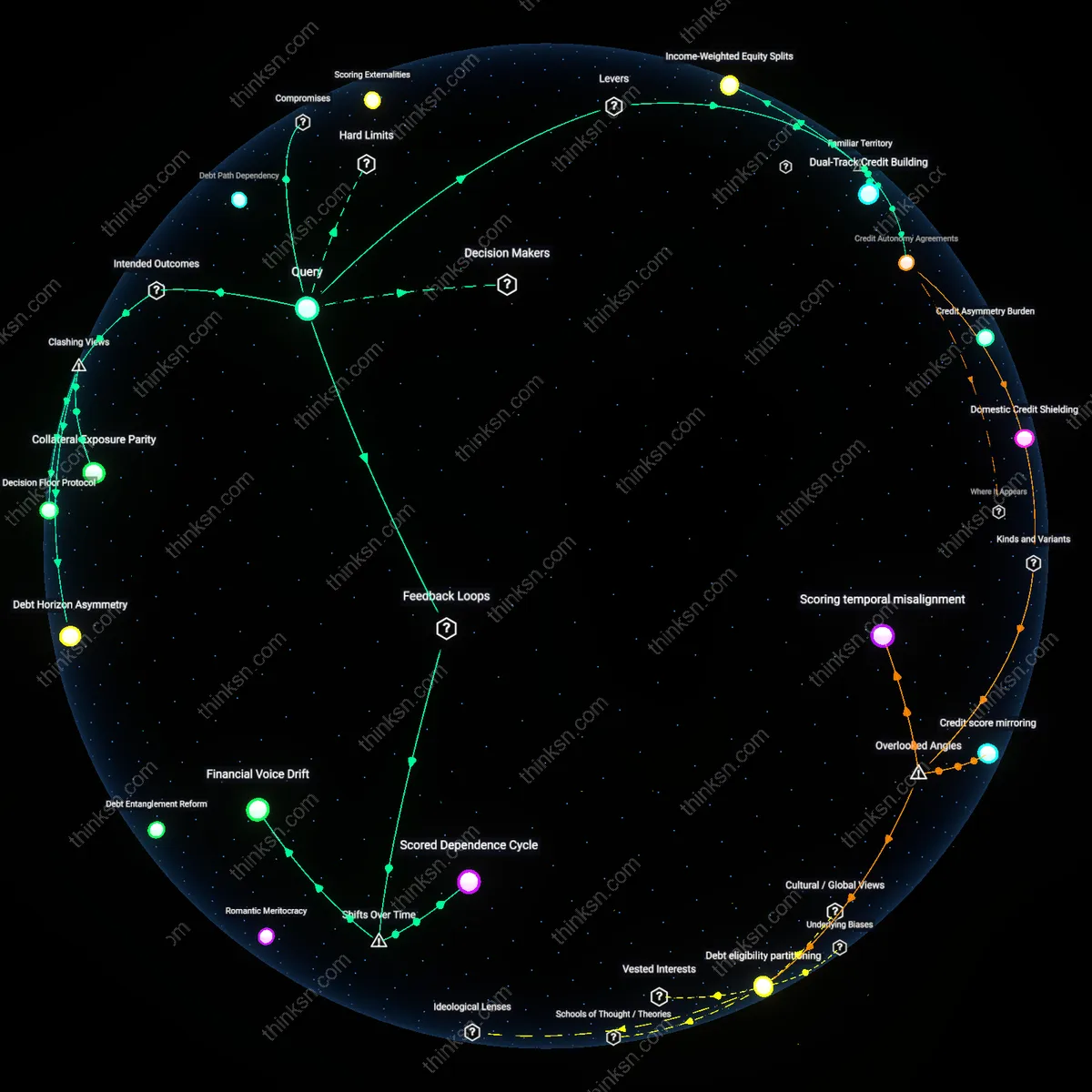
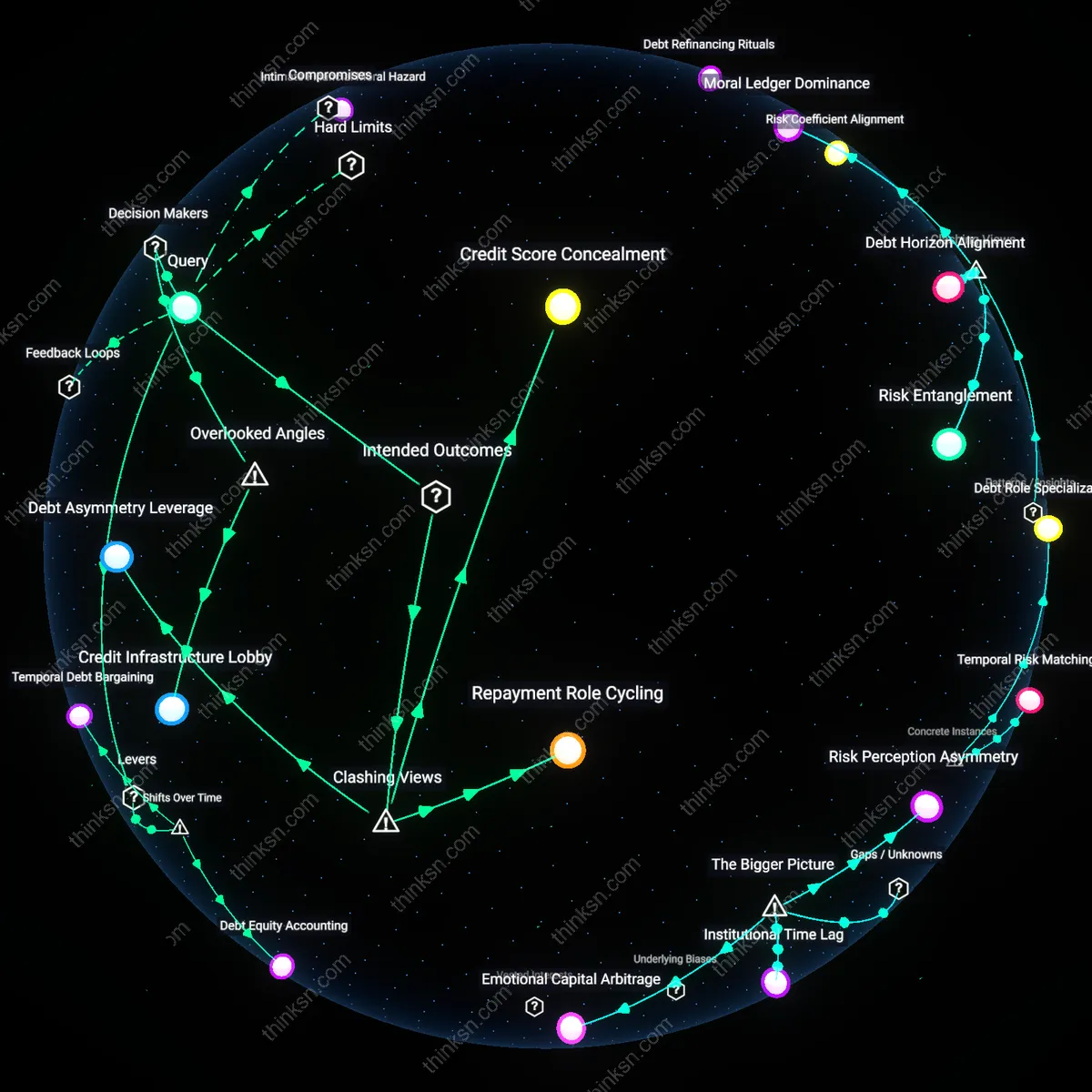
Analysis reveals 7 key thematic connections.
Key Findings
Temporal liquidity signaling
Maintaining a high-interest payday loan while shifting daily spending to a low-interest HELOC can rationally preserve access to informal credit networks in cash-dependent local economies. In neighborhoods with weak banking penetration—such as parts of South Los Angeles or rural Mississippi—frequent, small-dollar lending relationships function as trust-based systems where consistent repayment, even at high interest, signals reliability to lenders who may extend emergency credit outside formal channels. This dynamic is overlooked because mainstream financial discourse treats debt instruments as functionally substitutable, but the non-obvious value lies in the social credibility accrued through visible, short-cycle loan servicing, which can be more immediately protective in income-volatile environments than nominal interest minimization.
Cognitive load redistribution
It can be rational to segregate financial stress across loan types because psychological burden is not additive but domain-specific, and allocating acute anxiety over payday loan payments frees mental bandwidth for long-term household planning mediated through HELOC-managed cash flow. For example, low-income service workers in cities like Phoenix or Houston may deliberately retain payday debt not for financial flexibility but to externalize immediate financial fear into a single, ritualistic monthly crisis, effectively quarantining anxiety so that use of the HELOC for groceries or utilities feels psychologically 'safe' and routine. This mechanism is rarely acknowledged because economic models assume emotional costs scale uniformly with interest rates, yet the hidden benefit is a deliberate compartmentalization that enhances executive functioning under scarcity.
Debt Compartmentalization
Yes, it can be rational to maintain a high-interest payday loan while using a low-interest HELOC for daily expenses because households under acute financial surveillance—such as those monitored by credit-constrained landlords or payday lenders—strategically isolate debt types to avoid triggering enforcement mechanisms; the psychological stress of wage garnishment or loan rollover penalties from payday lenders is perceived as more immediate and physically coercive than the deferred, amortized risk of home equity depletion, leading borrowers to treat the debts as non-fungible despite economic theory assuming fungibility. This separation allows tactical allocation of risk, where the home acts as a financial shock absorber precisely because its equity is shielded from most unsecured creditors, making the HELOC a 'clean channel' for liquidity. The insight here—rarely captured in standard utility models—is that psychological stress is not a uniform disutility but a structurally distributed constraint shaped by power asymmetries in debt enforcement, revealing a rationality embedded in survival logistics rather than interest rate optimization.
Collateral Hierarchy
Yes, because the home is not merely an asset but a socially protected fortress—maintaining a HELOC, even at volume, preserves access to a tier of credit that institutions treat as 'responsible' borrowing, whereas payday loans, though costlier, are stigmatized but operationally tolerated as marginal; households thus accept higher interest on the latter to preserve the former’s usability and social legitimacy. Banks, credit agencies, and even family networks interpret HELOC usage as fiscal prudence, while payday reliance signals collapse, regardless of actual cash flow outcomes. This dual perception allows tactical misallocation of debt instruments to manage reputational risk, which in high-surveillance neighborhoods or job markets can be more damaging than interest expense. The overlooked dynamic here is that rationality operates across a hierarchy of collateral legitimacy, not just interest spreads, where the psychological cost of social exclusion outweighs the quiet compounding of HELOC debt.
Debt Stigma Shadow
It can be rational to prioritize visible financial order over optimal debt allocation because homeowners fear social judgment more than interest costs. Families maintaining a middle-class appearance often use home equity lines to erase visible credit card debt or overdrafts, whose presence signals instability to neighbors, teachers, or in-laws—this theater of solvency matters most in suburban cul-de-sacs where reputation shapes access to social capital. The non-obvious insight is that the HELOC is not financially optimal but socially defensive, absorbing small expenses not to save interest but to hide distress from others who equate financial privacy with personal discipline.
Liquidity Theater
It is rational to treat payday loans as fixed expenses and HELOCs as flexible buffers because unemployment risk makes predictability more valuable than interest savings. Workers in seasonal or gig jobs accept higher debt costs on payday loans not due to poor planning, but because they treat them as certain monthly outflows—like rent—while keeping HELOCs as irregular, emergency-only cushions they dare not touch even for groceries. The familiar association of HELOCs with ‘home safety’ rather than spending means people psychologically assign them to crises only, preserving a sense of control despite objectively higher efficiency in consolidating debt.
Interest Hierarchy
It can be rational to accept high-interest loans when their psychological burden is rendered invisible by institutional framing, whereas low-interest debt feels costly when self-managed. Payday loans, though expensive, are often automated and externalized—deducted directly from paychecks—so borrowers mentally classify them as ‘already paid,’ while HELOC spending requires active, visible choices that trigger financial guilt. The overlooked mechanism is that interest cost alone doesn’t drive stress; the locus of decision-making effort does, making self-directed low-interest credit feel heavier than passive high-interest extraction.