Should You Start Mammograms Sooner with Breast Cancer in Your Family?
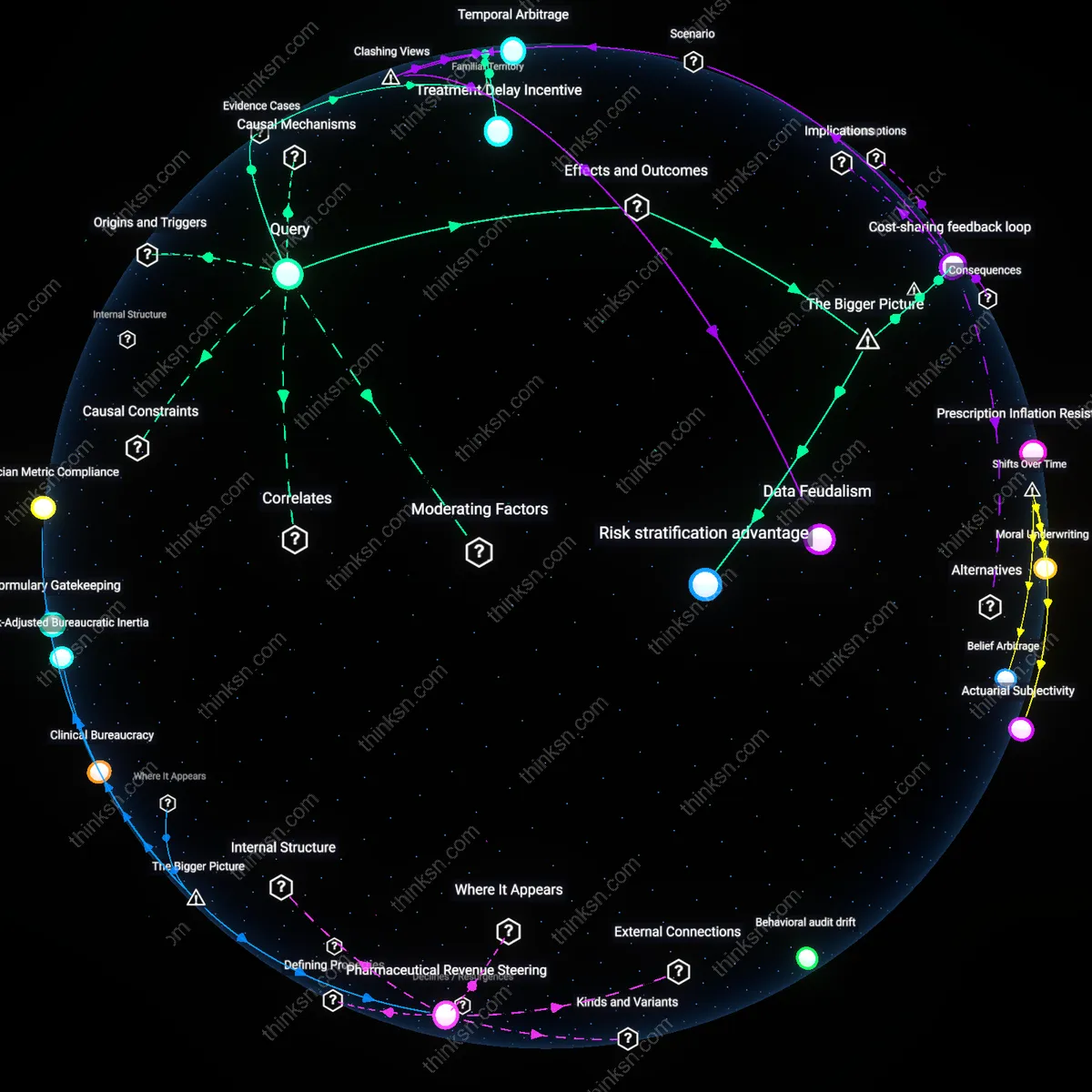
Analysis reveals 11 key thematic connections.
Key Findings
Guideline Authority Mapping
Consult national medical specialty societies to identify which organization’s screening thresholds align with the most current genomic-risk models. Radiologists and epidemiologists at institutions like the American Cancer Society and the US Preventive Services Task Force base their divergent recommendations on distinct interpretations of risk-weighted mortality reduction, where the non-obvious tension lies not in clinical accuracy but in how each defines ‘moderate risk’ within population-level statistics. This step reveals that guideline conflict often stems from institutional risk modeling choices, not contradictory data.
Personal Risk Narrative
Construct a family health timeline that maps diagnosed ages, cancer types, and genetic testing outcomes to replace abstract ‘moderate risk’ labels with a narrative of biological context. Primary care physicians and patients jointly interpret this timeline to calibrate screening onset, leveraging the underappreciated insight that individuals recall risk as episodes and exceptions — not probabilities — making lived patterns more influential than population averages in decision-making.
Clinical Pathway Alignment
Align screening initiation with the protocols of breast centers that integrate imaging, genetics, and risk counseling in one network, such as those affiliated with NCI-designated cancer centers. These systems operate on a logic of cascade coordination, where the non-obvious value is not in early detection alone but in activating a pre-defined clinical response track upon abnormal findings, turning timing into a gateway for speed-to-care rather than just risk stratification.
Regulatory Epistemology
A U.S. Preventive Services Task Force (USPSTF) 2009 revision recommending delayed mammography for average-risk women exposed how liberal technocracies delegate medical authority to evidence-based panels that deprioritize individual risk stratification in favor of population-level cost-benefit thresholds, thereby forcing individuals with moderate family histories into a diagnostic limbo between personal risk and standardized protocol; this mechanism reveals that even scientifically grounded guidance functions ideologically when it institutionalizes a threshold of actionable risk that excludes familial patterns not yet pathologized, making visible how liberalism operationalizes autonomy not as personalized care but as adherence to rationalized norms.
Bureaucratic Conservatism
In 2012, the Canadian Task Force on Preventive Health Care maintained a conservative screening recommendation (beginning at age 50) despite rising advocacy for earlier screening, reflecting a social-conservative preference for institutional continuity, risk aversion to overdiagnosis, and skepticism toward medicalizing midlife womanhood—this stance preserved centralized control over public health messaging and limited expansion of state-funded services, illustrating how bureaucratic inertia in publicly funded systems reinforces ideological commitments to fiscal restraint and the procedural integrity of long-standing guidelines, even when familial risk factors create pressure for individualized deviation.
Biomedical Precarity
In the aftermath of the 2013 *Myriad Genetics* Supreme Court case, which invalidated patents on BRCA genes, patients with moderate family histories found themselves in a new diagnostic landscape where commercial testing became more accessible but insurance coverage for early screening remained tied to narrow genetic criteria—this shift exposed how marketized health systems produce a class of biologically precarious individuals who fall outside categorical disease definitions yet carry measurable risk, revealing that conflicting screening guidelines are not merely clinical disagreements but structural artifacts of a system that only intervenes when biology is both commodified and pathologized.
Kin-mediated risk appraisal
Someone with a moderate family history of breast cancer should defer initial screening decisions to elder female kin in collectivist cultures because elders serve as custodians of familial health narratives and moral authority over bodily interventions, a role institutionalized in Confucian-heritage societies like South Korea and Vietnam; this mechanism supersedes clinical guidelines by embedding medical choices within intergenerational duty and reputational continuity, revealing how non-Western frameworks treat risk as a communally held responsibility rather than an individual calculation.
Epistemic pluralism burden
A person should interpret conflicting mammography guidelines as symptoms of divergent evidentiary regimes shaped by national insurance structures, such as the UK’s NICE protocols prioritizing population-level cost-effectiveness versus the US’s specialty-society guidelines influenced by defensive medicine and patient advocacy lobbies; this split institutionalizes a dual standard where clinical advice becomes inseparable from fiscal governance, exposing how citizens in pluralistic health systems bear cognitive labor to reconcile medicine with financing logics.
Surveillance ritual deferral
In Orthodox Jewish communities in Brooklyn and Bnei Brak, women with familial breast cancer risk often delay screening until symptoms arise or marital permission is granted, not due to ignorance but because bodily surveillance is ritually governed by halakhic supervision and niddah norms that condition medical timing on spiritual purity cycles; this illustrates how religious time—rather than biological risk probability—structures preventive care access, making secular early-detection paradigms structurally incompatible with theist temporal regimes.
Liability infrastructure
Someone with a moderate family history of breast cancer should delay screening initiation until 50 because medical specialty societies that dominate guideline panels benefit from minimizing malpractice exposure in younger age brackets where overdiagnosis risks are highest. These societies, like the American College of Radiology, promote earlier screening but face asymmetric liability if they undercall cancer in women under 50, while false positives in younger patients rarely trigger litigation; this creates a hidden incentive to recommend earlier, more frequent imaging regardless of net benefit. The real driver isn't clinical consensus but liability anticipation embedded in malpractice law, insurance underwriting, and tort norms—what constitutes 'standard of care' is shaped more by legal risk dispersion than by epidemiological precision. This shifts responsibility from patient-specific risk modeling to defensive adherence to early-screening norms, an invisible force rarely acknowledged in shared decision-making. Most discussions ignore how injury law scaffolds clinical guidelines, mistaking legally defensible thresholds for medically optimal ones.
Risk literacy arbitrage
An individual with moderate family history should prioritize engagement with non-clinical interpretive communities—such as patient-led breast cancer forums or biostatistics literacy collectives—because mainstream guidelines exploit a widespread deficit in Bayesian reasoning to frame screening as uniformly beneficial, while obscuring how prior probability shapes test reliability. Organizations like the U.S. Preventive Services Task Force present population-level sensitivity data without contextualizing how a woman with 2x baseline risk still has a low absolute probability of disease, making false positives structurally inevitable; advocacy groups funded by imaging or pharmaceutical interests amplify fear of missing cases, while downplaying reclassification or anxiety harms. The unspoken dynamic is that guideline comprehension requires numeracy skills most providers lack and most institutions won’t teach—creating an epistemic gap that powerful actors actively preserve to sustain screening adherence. The real conflict isn't between guidelines, but between statistical transparency and the institutional maintenance of clinical uncertainty as a governance tool.